GM 3.6 V6 LFX (305 HP) – Experiences, problems, fuel consumption and used car buying guide
Key points (TL;DR)
- Type and power: Robust naturally aspirated V6 petrol engine with 305 HP (227 kW) and 358 Nm of torque.
- Camshaft drive: Uses a timing chain (more precisely, three chains) which requires regular oil changes to avoid stretching.
- Maintenance: Oil must be changed at a maximum of 10,000 km. Ignoring this rule leads to expensive timing failures.
- Fuel consumption: Quite high in the city (often over 14 l/100 km), but efficient and relaxed on the highway.
- LPG (Autogas): Very expensive installation (depends on the market) because the engine has direct injection (SIDI).
- Gearbox: Usually comes with automatic transmissions (6 and 8 speeds). Jerking from the gearbox often indicates a problem with the torque converter (wandler) or old oil.
Contents
- Introduction: About the engine and its applications
- Technical specifications
- Reliability and maintenance
- Specific parts and costs
- Fuel consumption and performance
- Additional options and modifications
- Transmission and drivetrain
- Buying used and conclusion
Introduction: About the engine and its applications
The engine with the code LFX belongs to General Motors’ "High Feature" family of V6 engines. It was introduced as an evolution of older versions (such as the LLT), bringing a lighter construction (integrated exhaust manifolds in the cylinder head), better-optimized direct injection and a more reliable timing system. With its 305 horsepower and linear power delivery typical of large naturally aspirated engines, this unit became the backbone of heavier vehicles such as pickups and large SUVs/sedans.
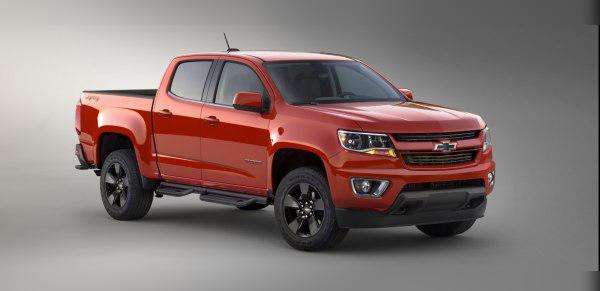
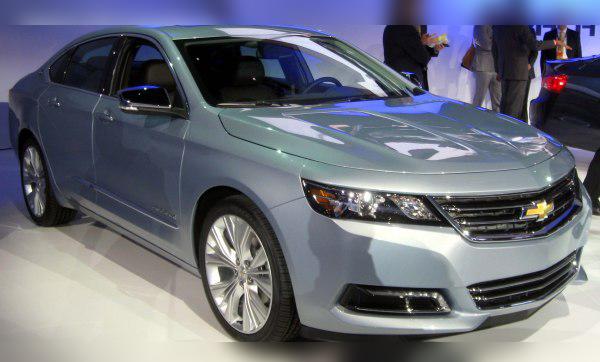
It was installed in workhorses such as the Chevrolet Colorado II, the spacious SUV Chevrolet Equinox II, as well as large passenger sedans like the Chevrolet Impala X. Regardless of body style, this engine offers refined operation and a large power reserve, but it requires a specific maintenance approach compared to smaller European turbo engines.
Technical specifications
| Specification | Data |
|---|---|
| Name / Engine code | GM 3.6L V6 SIDI (LFX) |
| Displacement | 3556 cc (3.6 liters) |
| Power | 227 kW (305 HP) |
| Torque | 358 Nm |
| Injection type | Direct injection into the cylinder (SIDI) |
| Turbo / Naturally aspirated | Naturally aspirated engine |
| Fuel type | Petrol (gasoline) |
Reliability and maintenance
Does this engine have a timing belt or a chain?
This engine uses a timing chain drive. More precisely, it has a fairly complex system consisting of three chains to connect the crankshaft and four camshafts. Although the LFX is significantly more reliable than its predecessors in terms of chain stretching, the timing system is still sensitive to lubrication quality.
What are the most common failures on this engine?
This unit is generally considered durable, but it has a few specific weak points:
- Timing chain stretch: Occurs exclusively on vehicles where owners followed extended service intervals (over 15,000 km) or allowed the oil level to drop below minimum. Symptoms are rattling from the engine bay during cold start and the "Check Engine" light coming on with errors related to camshaft position.
- Carbon buildup on intake valves: Since this is an engine with direct injection, fuel does not wash the intake valves. Over time, carbon from the PCV system (crankcase ventilation system) builds up. Symptoms include rough idle, loss of power and hesitation. It is recommended to clean the valves with walnut shell blasting every 80,000–100,000 km.
- PCV valve: It often clogs or fails, which leads to increased oil consumption and crankcase pressure.
At what mileage is the “major service” done?
A classic "major service" with timing belt replacement does not exist. However, the serpentine belt, tensioners and water pump are regularly replaced, which is recommended at around 100,000 to 120,000 km. Replacement of the timing chain itself is not prescribed as a regular service, but if symptoms of stretching appear (most often around 150,000 to 200,000 km), the complete chain set is replaced, which is very expensive (depends on the market) because it requires serious labor and lowering the engine.
Oil and regular services
The engine takes about 5.7 liters of oil (with filter change). The recommended grade is 5W-30, mandatory with dexos1 Gen 2 or Gen 3 specification. To preserve the chain, it is absolutely crucial that the oil change interval is no more than 10,000 km or once a year.
Does it consume oil between services?
Yes, oil consumption is normal for this engine. Due to the PCV system and high operating temperatures, it is normal to consume about 0.5 to 1 liter of oil per 10,000 km. If it consumes more, the problem should definitely be sought in a blocked PCV valve, leaks at the seals or worn piston rings (which is rare if it has been regularly maintained).
At what mileage are the spark plugs replaced?
The manufacturer recommends replacing the iridium spark plugs at around 160,000 km, however in practice it is advisable to replace them at 100,000 km. When replacing the spark plugs, it is often necessary to remove the intake manifold (especially for the rear bank of cylinders on transversely mounted engines in the Impala/Equinox), which slightly increases labor cost in the workshop.
Specific parts (costs)
Does the engine have a dual-mass flywheel?
Almost all models paired with this engine (Impala, Colorado, Equinox) on the European and global market use a classic automatic transmission with a torque converter (wandler). Therefore, they do not have a dual-mass flywheel or a clutch kit. Models with a manual gearbox are extremely rare (mainly work versions in America); if you come across one, it has a dual-mass flywheel which is expensive (depends on the market).
Injection system and injectors
The system uses high-pressure direct petrol injection (SIDI - Spark Ignition Direct Injection). It has a mechanical high-pressure fuel pump (HPFP) driven by the camshaft. The injectors are generally reliable, but very sensitive to poor fuel quality. They can clog, causing so-called "misfire" (misfiring). Replacing direct injection injectors falls into the category of – very expensive (depends on the market).
Turbo, DPF, EGR, AdBlue
Since this is a pure naturally aspirated petrol engine, it DOES NOT HAVE a turbocharger, DPF filter or AdBlue system. This significantly reduces maintenance costs compared to modern diesels. It also does not have a classic external EGR valve in the sense that diesels do; instead, exhaust gas recirculation is controlled via variable valve timing (VVT) by changing the camshaft angle, which is a completely safe system that does not clog.
Fuel consumption and performance
What is the real fuel consumption in city driving?
This is a large-displacement engine (3.6L), so you should not expect miracles in the city. In heavy vehicles such as the Chevrolet Colorado (pickup) or AWD Equinox, city consumption ranges between 13.5 and even 16 liters per 100 km. In lighter conditions and in the Impala it can drop to around 12 l/100 km, but that is rare in stop-and-go traffic.
Is this engine “lazy” for the weight of the car?
With a full 305 HP (227 kW) and 358 Nm of torque, this unit is absolutely not lazy, even in the heaviest Crew Cab versions of the Colorado pickup. Although it does not have the low-end torque punch of a turbo diesel, it delivers power extremely linearly and pulls fantastically at medium and high revs. Overtaking on country roads is done effortlessly.
Behavior on the highway and cruising at 130 km/h
On the highway, the LFX shows its best side. Fuel consumption drops to a reasonable 8.5 to 10 liters per 100 km. Thanks to modern six-speed and eight-speed automatic transmissions with long gear ratios, at 130 km/h the engine cruises at very low and pleasant revs (usually between 1,900 and 2,200 rpm, depending on the vehicle’s differential). Sound insulation at these revs is excellent and the engine is barely audible in the cabin.
Additional options and modifications
Is this engine suitable for LPG (autogas) conversion?
It is not recommended for a standard LPG conversion. Since the engine has direct injection (the injectors are directly in the combustion chamber), a standard sequential LPG system cannot be installed, because the petrol injectors would burn out due to the lack of petrol flow that cools them. Installation of a special system with liquid injection through the original injectors, or a hybrid system that constantly injects a certain percentage of petrol, is required. Such systems are from the outset very expensive (depends on the market), and given the fuel consumption, the cost-effectiveness of installation is questionable for drivers who do not cover huge mileages.
How much can this engine be safely “chipped” (Stage 1)?
Given that the unit is naturally aspirated, the potential for "chipping" is minimal. By software tuning of the ignition and injection maps you will gain at most +15 to +20 HP and about 15 Nm of torque. In real-world driving you will not notice a dramatic difference, so a Stage 1 remap is not the smartest investment unless combined with exhaust and intake modifications.
Transmission and drivetrain
Which gearboxes are used and what are the common issues?
In about 95% of cases on the global market, this unit comes paired with automatic transmissions (the six-speed GM 6T70 in FWD/AWD passenger vehicles or 6L50 / 8L45 in RWD/4WD vehicles such as the Colorado).
The most common problem with the automatics (especially the 8-speed 8L45) is the so-called "TCC Shudder" (torque converter vibration). Drivers describe it as driving over rough asphalt or a vibration during acceleration in higher gears. The solution is usually a "flush" of the transmission under pressure and replacement of the old oil with a special, revised Mobil 1 synthetic fluid. If ignored, the torque converter (wandler) itself fails, which is extremely expensive (depends on the market).
At what interval should the automatic transmission be serviced?
Do not trust service books that say the oil is "lifetime". To preserve the automatic transmission, the oil and filter in the gearbox should definitely be changed every 60,000 km and at the latest every 80,000 km.
Buying used and conclusion
What exactly should be checked before buying?
- Cold start: This is the most important test for this engine. Be sure to insist that the engine is completely cold (not started that day) before you start it. Listen carefully for the first 3 to 5 seconds. Any strong rattling, clattering or metallic noise from the front of the engine means that the timing chain is stretched and that an expensive repair awaits you.
- Oil condition: Pull out the dipstick. If the oil is pitch black, thick or has traces of metal shavings, the engine has not been properly maintained. A level at minimum indicates an owner who did not pay attention to oil consumption.
- Test drive and gearbox: Drive the car and gently accelerate under light load in the highest gear. If you feel a slight jerk or vibration that goes through the whole body shell (shudder), the gearbox requires service and potential torque converter overhaul.
- Diagnostics: Check stored fault codes (especially P0008 or P0017 which are a direct sign of poor camshaft synchronization due to chain issues). Check the Long Term Fuel Trims (if they are too far in the negative or positive, it may indicate a problem with the HPFP fuel pump, injectors or unmetered air).
Final conclusion: Who is this engine for?
The GM 3.6 V6 LFX engine is intended for drivers who want the robustness of a naturally aspirated engine without the complexity of turbochargers and expensive diesel exhaust after-treatment systems. It is fantastic for long journeys, towing light and medium trailers and offers excellent ride comfort and refinement. It is not a good choice for people who mostly drive in congested city centers because the fuel consumption will be an unpleasant surprise, nor for those who neglect regular servicing. Regular replacement of high-quality engine oil (max. every 10,000 km) is the key to the longevity of this unit.