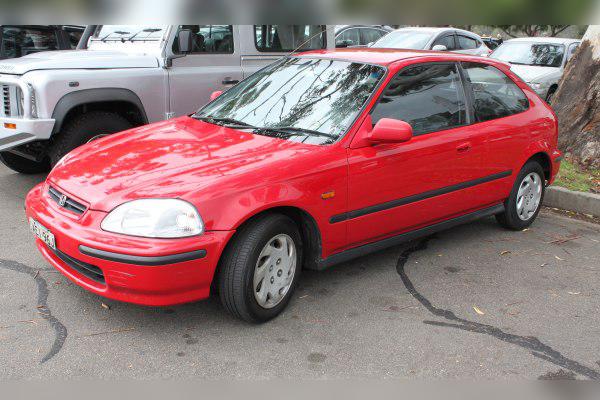
Honda Civic D16Y2 (1.6 114 HP): Experiences, problems, fuel consumption and buying used
Key points (TL;DR)
- Reliability: Extremely durable engine, but given the age, most examples suffer from wear and poor maintenance.
- Oil consumption: The main weak point of engines from this generation. Stuck piston rings and worn valve stem seals can lead to serious oil consumption.
- Maintenance: Simple and affordable. The engine uses a timing belt, and suspension and mechanical parts are easy to find.
- Performance: Very lively engine, ideal for the light sixth‑generation Civic body. It needs high revs to deliver its full power.
- LPG: Handles LPG very well, provided that valve clearances are adjusted manually.
- Flywheel and clutch: Uses a conventional (solid) flywheel, so clutch replacement costs are minimal.
Contents
- Introduction: About the D16Y2 engine
- Technical specifications
- Reliability and maintenance
- Specific parts and costs
- Fuel consumption and performance
- Extras, LPG and remapping
- Gearbox and drivetrain
- Buying used and conclusion
Introduction: About the D16Y2 engine
In the 1990s Honda caused a real stir with its light hatchbacks and engines that love high revs. The D16Y2 designation refers to a 1.6‑liter engine that was mostly installed in the sixth‑generation Honda Civic (as well as in certain fastback versions based on the Rover platform). This is an old‑school engine – without a bunch of sensors that throw you into safe mode, but with a character that puts a smile on your face. Thanks to its 114 hp and reliability, it is still highly sought after among Japanese‑car enthusiasts, although finding a well‑preserved example has become a real art.
Technical specifications
| Parameter | Specification |
|---|---|
| Engine code | D16Y2 |
| Displacement | 1590 cc |
| Power | 84 kW (114 hp) |
| Torque | 144 Nm |
| Fuel type | Petrol (Gasoline) |
| Injection type | Multi‑point (PGM‑FI) |
| Aspiration | Naturally aspirated |
Reliability and maintenance
Timing belt and major service
This engine uses a conventional timing belt to drive the camshaft. The system is extremely simple and trouble‑free if replaced regularly. The major service, which includes replacement of the belt, water pump and tensioner, is recommended every 100,000 km or every 5 to 6 years. Exceeding this interval is a risk – if the belt snaps, pistons and valves will inevitably collide (catastrophic engine failure).
Oil, viscosity and “thirsty” rings
The sump holds a modest 3.3 to 3.5 liters of oil (depending on filter size). Due to the age of the design, the optimal choice is a proven 10W‑40 grade. And now we come to the main topic – oil consumption. Japanese engines from this period, once they rack up serious mileage or are abused when cold, suffer from stuck piston rings and hardened valve stem seals. For a “veteran” like this, normal consumption is considered to be around 1 to 1.5 liters per 10,000 km. However, if the engine is using more than half a liter per 1,000 km, prepare for an overhaul and opening the block.
Most common failures and spark plugs
Besides oil consumption, the biggest headache is the distributor (the ignitor and coil inside it tend to fail due to heat and age). Symptoms include jerking while driving or the engine cutting out completely and refusing to start until it cools down. Oil leaks from the valve cover gasket and from the VTEC solenoid (on variants that have it) are also common.
As for spark plugs, Honda doesn’t require anything fancy – standard copper NGK or Denso plugs work flawlessly and should be replaced every 40,000 km. Iridium plugs last significantly longer, but there is no real need for them on an older naturally aspirated engine.
Specific parts and costs
If you’re coming from the world of modern diesels, maintaining a D16Y2 will feel like a walk in the park. Forget about sky‑high bills because this engine does not have a dual‑mass flywheel – power is transmitted to the gearbox via a conventional solid flywheel. The fuel system is Honda’s legendary PGM‑FI (multi‑point injection). Petrol injectors are virtually indestructible; they rarely cause issues, and if they do get clogged by poor‑quality fuel, ultrasonic cleaning brings them back to life.
There is also no turbocharger (it’s naturally aspirated), so you don’t have to worry about turbo cooling or expensive rebuilds. Since this is a 1990s petrol engine, it naturally has no DPF filter or AdBlue system, which means no hassle with regeneration in city driving. The EGR valve is also absent in the usual form we see on newer cars, so the intake manifold stays relatively clean during operation.
Fuel consumption and performance
Is it sluggish?
Not at all. With 114 hp pushing a body that barely weighs a ton (depending on trim and model), a Civic with this engine is a real little screamer. The engine needs to be revved high to deliver the full 144 Nm, but it responds eagerly to throttle inputs thanks to well‑calibrated injection and a light rotating assembly.
Fuel consumption
In real‑world city driving, expect consumption between 8.5 and 10 l/100 km, depending on how heavy your right foot is and traffic conditions. On open roads this drops to a respectable 6 to 7 liters. However, on the motorway things are less ideal. Due to the relatively short gear ratios, at 130 km/h the engine spins at a high 3800 to 4000 rpm. Fuel consumption then rises, and cabin noise becomes quite tiring on long trips. This is not a car for pan‑European touring, but rather for twisty roads and urban environments.
Extras, LPG and remapping
LPG conversion
This engine works very well with a sequential LPG system, making running costs extremely low. However, there is one golden rule among mechanics: Honda engines do not have hydraulic lifters. Running on LPG increases combustion temperatures, so it is essential to adjust valve clearances with feeler gauges every 20,000 to 30,000 km. If this is neglected, the valves will burn and you’ll be facing an expensive cylinder‑head rebuild.
Remapping (Stage 1)
In short – forget it. On an old 1.6‑liter naturally aspirated petrol engine, a so‑called Stage 1 remap is a complete waste of money. The gain is in the range of 3 to 5 horsepower, which you absolutely won’t feel in everyday driving. You’re better off investing that money in quality tyres and refreshing the suspension.
Gearbox and drivetrain
With this engine, the sixth‑generation Civic was most commonly offered with a 5‑speed manual gearbox (the famous S40 series), and much less often with an old‑school 4‑speed automatic. The automatic is reliable if the oil is changed regularly, but it significantly dulls the engine’s dynamics and performance.
The manual gearbox is sniper‑precise when in good condition, but suffers from typical Honda age‑related issues. Due to enthusiastic drivers, the synchros often wear out (especially when shifting from first to second, and into third), which shows up as characteristic grinding during fast shifts. Also pay attention to any humming noise when the clutch is released in neutral – this is a sign that the input shaft bearing is failing (a common issue that requires removing the gearbox). The gearbox oil should be changed every 60,000 km, and you should use only genuine Honda MTF (Manual Transmission Fluid) – any other oil worsens synchro operation and shortens gearbox life.
As mentioned, the car has a solid flywheel, so the complete clutch kit (pressure plate, disc, release bearing) is very affordable and relatively easy to replace.
Buying used and conclusion
What to check on the lot?
When looking at a car like this, mechanical issues are easier to sort out than bodywork. The biggest enemy of Civics from this era is rust – be sure to check the rear arches, sills and underbody. If the bodywork is sound (and, more importantly, not letting water into the cabin), move on to the engine.
After the engine has warmed up to operating temperature, ask someone to hold the revs high (over 5000 rpm) and then suddenly let off the throttle. If you notice a cloud of blue smoke from the exhaust, it’s a clear sign that the rings or valve stem seals are done and the car is burning a lot of oil. Listen to the engine at idle; it should run smoothly, without metallic rattling. Rattling often points to poorly adjusted valves. Diagnostics (if the car has an OBD port, depending on the year) won’t tell you much on these engines – your ears, the exhaust smoke and a visual inspection for leaks on the block are your best mechanics.
Who is it for?
The D16Y2 engine is an excellent choice for younger drivers, enthusiasts and anyone wanting a reliable and very agile hatchback on a modest budget. If you find an example that isn’t rotten underneath and doesn’t puff blue smoke from the exhaust, you’ll get a great, fun car. This engine forgives many mistakes (except running low on oil) and is one of the best examples of the golden era of Japanese engineering, before electrification and fake engine sounds from speakers.