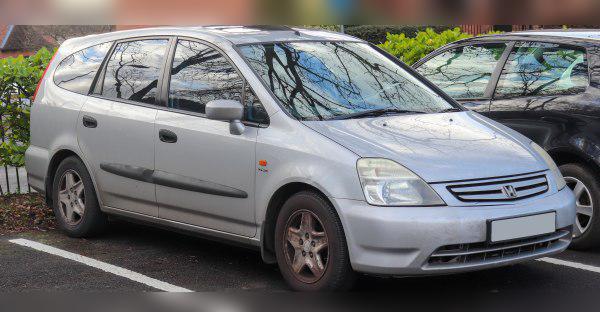
Honda K20A1 (2.0 i-VTEC): Experiences, issues, fuel consumption and buying used
When talking about Honda engines from the 2000s, the K-series has an almost mythical status. However, not all engines from this series are meant for racing and high revs like those in Type-R models. The K20A1 is the “workhorse” of this family, an engine designed to provide a balance between power and usability in larger bodies such as the Honda Stream (MPV) and even the CR-V (where it carries a similar designation K20A4). With its 158 hp and i-VTEC technology, this is a unit that promises Honda reliability, but it comes with a few specific quirks that every potential owner needs to know about, especially considering the age of these vehicles.
Key points (TL;DR)
- Timing drive: Uses a chain instead of a belt, which reduces regular maintenance costs but requires inspection at higher mileage.
- Problematic camshaft: One of the few serious mechanical issues is wear (pitting) of the exhaust camshaft on early series.
- Performance: Loves high revs. Below 3,000 rpm it can feel a bit “sleepy” in a heavier body.
- Valves: No hydraulic lifters. Valve clearance must be adjusted manually every 40,000 km (crucial for longevity).
- LPG (Autogas): It is possible to install, but Honda has “soft” valve seats. Requires a system with valve lubrication or very frequent valve clearance checks.
- Fuel consumption: Combined with 4WD and a heavy body (Stream), it is not a low consumer in city driving.
- Conclusion: Extremely durable engine if regularly serviced and if quality oil has been used.
Contents
- Technical specifications
- Reliability and maintenance
- Specific parts (costs)
- Fuel consumption and performance
- Additional options and modifications
- Gearbox and drivetrain
- Buying used and conclusion
Technical specifications
| Parameter | Data |
|---|---|
| Engine code | K20A1 |
| Displacement | 1998 cc (2.0 L) |
| Power | 116 kW (158 hp) at 6500 rpm |
| Torque | 190 Nm at 4000 rpm |
| Fuel type | Petrol (Gasoline) |
| Induction | Naturally aspirated |
| Injection system | Multipoint (MPI) |
| Configuration | Inline 4-cylinder, DOHC, i-VTEC |
Reliability and maintenance
Timing system: Chain or belt?
The K20A1 engine uses a timing chain. In theory, this chain is designed to last as long as the engine itself. In practice, however, chain life depends on oil quality and change intervals. Chain stretch can occur at mileages over 200,000 km or earlier if the engine has been neglected. Symptoms of a stretched chain are rattling on cold start and the “Check Engine” light coming on due to desynchronization of the camshaft and crankshaft sensors.
Most common failures
Although this is one of the most reliable petrol engines, there are some specific issues:
- Camshaft (pitting): This is a specific weakness of early K20 series (including A1). The lobes on the exhaust camshaft can get damaged (pitting/flaking). The symptom is a metallic rattle from the cylinder head. The cause is often a combination of poorer material quality in that series and irregular oil changes.
- VTEC solenoid and oil leaks: The VTEC solenoid gasket hardens over time and starts to leak oil. It’s a cheap repair, but it can make a mess in the engine bay.
- IACV (idle air control valve): The idle control valve can get dirty, causing fluctuating idle (“hunting idle”). Cleaning usually solves the problem.
- Valve adjustment: This engine does not have hydraulic lifters. Valve clearance must be checked and adjusted mechanically every 40,000 km. If this is ignored, the valves (especially exhaust) can burn, or the engine can become noisy.
Service intervals and oil
Minor service is recommended every 10,000 km (or once a year). A “major service” in the classic sense (timing belt replacement) does not exist, but at around 100,000–120,000 km the auxiliary (serpentine) belt that drives the alternator, A/C and water pump is replaced, along with the water pump itself and tensioners.
The engine takes approximately 4.2 litres of oil (including the filter). The recommended grade is 5W-30 or 5W-40, fully synthetic. For older engines with higher mileage, 5W-40 is often a better choice for improved protection at higher temperatures.
Oil consumption
Honda VTEC engines are known to “drink” a bit of oil, especially if driven at high revs (when VTEC engages). Consumption of up to 0.5 litres per 1,000 km is considered acceptable in factory documentation, but in reality, a healthy engine should not consume more than 1 litre between service intervals (over 10,000 km) under normal driving. Increased consumption may indicate stuck piston rings or worn valve stem seals.
Spark plugs
Spark plug replacement depends on the type. If you use standard nickel plugs, the interval is about 30,000–40,000 km. If you use iridium plugs (which are the factory recommendation for i-VTEC), they can last up to 100,000 km.
Specific parts (costs)
Flywheel and clutch
Good news for K20A1 owners (especially in the Stream model) is that this engine, in most cases paired with a manual gearbox, uses a solid (single-mass) flywheel. This drastically reduces clutch replacement costs compared to modern diesels or newer turbo petrol engines. The clutch kit is relatively affordable (depending on the market).
Fuel injection system and injectors
It uses classic indirect multipoint fuel injection. Petrol injectors on this engine are extremely durable and rarely cause problems. They are not as sensitive as piezo injectors in direct injection systems. Occasional ultrasonic cleaning at high mileage can restore smooth running.
Turbo, DPF, EGR
- Turbo: The engine is naturally aspirated, so it has no turbocharger. This eliminates potentially expensive turbo failures.
- DPF: As a petrol engine of that era, it has no DPF filter.
- EGR: It has an EGR valve for exhaust gas recirculation. It can clog with soot, causing dashboard error codes and poorer running, but in most cases it can be cleaned.
- AdBlue: There is no AdBlue system.
Fuel consumption and performance
City driving
Expectations need to be realistic here. The Honda Stream is a heavy car, and the 4WD system (even though it engages on demand) adds weight and friction. In pure city driving, real-world consumption is between 11 and 13 litres per 100 km. In winter and heavy traffic it can go even higher.
Is the engine “lazy”?
The K20A1 has a “split personality”. Up to 3,000–3,500 rpm, the engine is focused on economy and can feel sluggish for overtaking, especially when the car is fully loaded. The 190 Nm of torque is only fully available at 4,000 rpm. To make this engine pull the Stream’s body properly, you have to rev it. Above 4,000 rpm, when the i-VTEC system optimizes valve operation, the engine becomes lively and very capable.
Highway
This is not an ideal high-speed cruiser due to its gearing. With the 5-speed manual gearbox, at 130 km/h the engine spins at around 3,500 to 4,000 rpm (depending on tyre size and final drive). This means noticeable engine noise in the cabin, and fuel consumption on the open road of around 8–9 litres per 100 km.
Additional options and modifications
LPG (autogas) installation
Is it suitable? Conditionally YES. Honda engines are known for having “softer” valve seats. If you plan to install LPG, it is essential to:
- Install a quality sequential system with OBD correction.
- Preferably install a valve lubrication system (“flashlube”).
- Most important: Shorten the valve adjustment interval to every 20,000 km. If this is not followed, the valves will “sink” into the cylinder head and cause an expensive cylinder head repair.
Chiptuning (Stage 1)
Since this is a naturally aspirated engine, “chiptuning” (remapping) doesn’t make much sense. A Stage 1 tune might bring an increase of about 5 to 8 hp, which is almost unnoticeable in everyday driving. It’s better to invest that money in proper maintenance, a fresh set of spark plugs and clean filters.
Gearbox and drivetrain
Types of gearboxes
With this engine in the Stream model you most commonly get:
- 5-speed manual gearbox: Precise, with short throws, typically “Honda-like”.
- 4-speed or 5-speed automatic gearbox: Classic hydraulic automatic with a torque converter.
Gearbox failures and maintenance
- Manual: Very reliable. The most common issues are not in the gearbox itself but in the clutch cylinders (master and slave) which can leak. Gearbox oil (Honda MTF) should be changed every 60,000–80,000 km.
- Automatic: Honda automatics of that era are durable if maintained. It is critical to change the oil (Honda ATF-Z1 or newer DW-1) regularly, every 40,000–60,000 km. They do not tolerate neglect. If the automatic “jerks” or hesitates when shifting, the problem is often old oil or pressure solenoids.
- 4WD system (Real Time 4WD): The Stream 4WD uses a rear “Dual Pump” differential system. It is purely hydraulic-mechanical. If you hear grinding or noise from the rear when turning the steering wheel to full lock, it means the oil in the differential has degraded. The DPSF fluid must be replaced immediately. Replacement is recommended every 40,000–50,000 km.
Buying used and conclusion
When buying a Honda Stream with the K20A1 engine, pay attention to the following:
- Cold start: Listen for chain rattling in the first few seconds.
- Engine sound: Listen to the cylinder head. Even, light ticking from the injectors is normal, but loud metallic noise or uneven running may indicate a camshaft issue or out-of-spec valve clearances.
- VTEC test: When the engine is warm, rev it over 4,500 rpm while driving. Acceleration should be linear and stronger, without “flat spots” or hesitation.
- Oil: Check the oil level. If it’s at minimum or below, this points to a careless owner, which is deadly for a K20 engine.
Conclusion: The K20A1 is an excellent example of old-school engineering. It offers enough power for family needs and, with proper maintenance (oil, valves), can easily exceed 400,000+ km without an overhaul. It is not the most economical in its class, especially in city driving, but it pays that back through reliability and cheaper maintenance compared to diesel competitors. It is ideal for those looking for a dependable family hauler and who are willing to accept slightly higher fuel consumption in exchange for peace of mind regarding breakdowns.