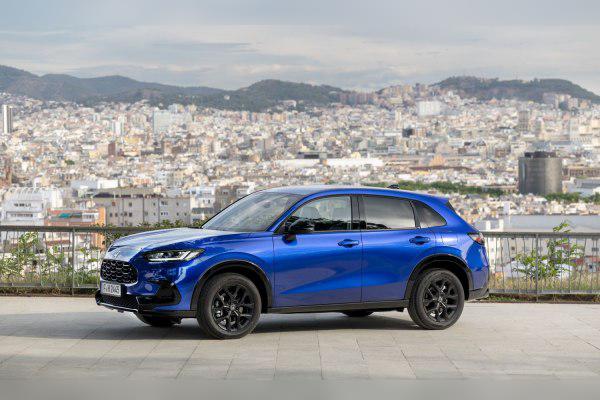
Honda L15C 1.5 VTEC Turbo (178 hp): Experiences, issues, fuel consumption and maintenance
Key points in short (TL;DR)
- Timing: Uses a timing chain, which is generally reliable and does not require frequent replacement.
- Performance: With 178 hp and 240 Nm, this is one of the liveliest engines in its class; it is not “lazy” even in an SUV body like the ZR-V.
- Potential issue: “Oil Dilution” (fuel mixing with engine oil) is a known weakness of Honda 1.5T engines, especially on short city trips in winter.
- Transmission: Comes exclusively with a CVT gearbox in the mentioned models, which requires regular oil changes every 40,000 km.
- Direct injection: Makes LPG conversion more complex and expensive, and can lead to carbon buildup on intake valves.
- Fuel consumption: Moderate on the open road, but can rise in city driving due to turbo lag and vehicle weight.
- Recommendation: An excellent choice for those who want performance, provided that maintenance intervals are strictly followed.
Contents
- Technical specifications
- Reliability and maintenance
- Specific parts and costs
- Fuel consumption and performance
- Additional options and modifications
- Transmission (CVT)
- Buying used and conclusion
Introduction
The engine designated as L15C (part of the “Earth Dreams” family) is Honda’s answer to the downsizing trend. Although Honda was long reluctant to adopt turbo petrol engines, this 1.5-liter unit has become the heart of its modern lineup. Specifically, the 178 hp variant used in the Honda ZR-V is an evolution of the older L15B7 engines seen in the Civic and CR-V. It features VTEC technology (most often on the exhaust side for better turbo spool) and direct fuel injection. The goal of this engine is to offer the power of the former 2.4 naturally aspirated engines, with the fuel consumption of a 1.6 naturally aspirated unit.
Technical specifications
| Parameter | Value |
|---|---|
| Displacement | 1496 cc (1.5 L) |
| Power | 131 kW / 178 hp |
| Torque | 240 Nm (at 1700–4500 rpm) |
| Engine code | L15C (Variants: L15C1, L15C4 etc.) |
| Injection system | Direct injection (GDI) |
| Forced induction | Mono-scroll turbocharger + intercooler |
| Number of cylinders | 4, inline |
Reliability and maintenance
Does this engine have a timing belt or chain?
The L15C engine uses a timing chain. Honda chains are generally very high quality and are designed to last the life of the engine, provided that oil changes are done regularly. Preventive replacement like with a belt is not required, unless you hear rattling at cold start.
What are the most common issues with this engine?
The most well-known problem of this engine family is oil dilution with fuel. Due to direct injection and high efficiency, the engine warms up slowly. In cold weather and during short trips, unburned fuel runs down the cylinder walls into the oil pan and mixes with the oil. The symptom is a rising oil level on the dipstick and a fuel smell in the oil. Honda addressed this with software updates that warm the engine up faster, but owners who mostly drive short distances need to change the oil more frequently.
At what mileage is the major service due?
Since the engine has a chain, a classic “major service” (timing belt replacement) does not exist. However, the serpentine belt and tensioners should be inspected every 100,000 km or 5–6 years and replaced if needed. The water pump is replaced if it starts leaking or becomes noisy.
How many liters of oil does this engine take and which grade is recommended?
The engine takes approximately 3.5 to 3.7 liters of oil (with filter). Honda strictly recommends low-viscosity oils, most commonly 0W-20 (API SN/SP standard), to ensure proper turbo lubrication and efficiency. Do not use thicker oils, as that can worsen issues with the VTEC system and the turbocharger.
Does it consume oil between services?
This engine rarely consumes oil in terms of burning it (unlike some older German engines). On the contrary, a more common problem is a rising oil level due to the aforementioned fuel mixing. If the oil level goes above the maximum mark, it is a sign that the oil has been degraded by fuel and must be changed immediately, as such oil loses its lubricating properties.
At what mileage should the spark plugs be replaced?
The spark plugs are iridium (NGK or Denso). The factory interval is often 100,000 km, but due to the turbocharger and direct injection, it is recommended to inspect or replace them at 60,000 to 80,000 km to protect the ignition coils and maintain optimal combustion.
Specific parts (costs)
Does this engine have a dual-mass flywheel?
Since the Honda ZR-V with this engine is paired with a CVT automatic transmission, it does not have a classic dual-mass flywheel like those found in manual gearboxes or DSG systems. The CVT uses a torque converter and a flex plate. This is good news, as it eliminates one expensive failure point (flywheel replacement).
What kind of injection system does it have and are the injectors problematic?
It uses direct injection (GDI) at high pressure. The injectors are precise but sensitive to poor-quality fuel. They can clog or start leaking (which contributes to the oil issue). The cost of replacing a set of injectors is high (varies by market). Also, direct injection leads to carbon buildup on the intake valves (since fuel does not wash them), so mechanical cleaning (so-called “walnut blasting”) may be needed at higher mileages.
Does this engine have a turbocharger and what is its lifespan?
Yes, it has a single Mitsubishi (MHI) TD03 turbocharger with an electronic wastegate. The turbo is small (low inertia) for quick response. With regular oil changes and allowing the engine to cool down before switching off after hard driving, the turbo can easily last over 200,000 km. Rebuilding is possible, but a new OEM unit is expensive.
Does this model have a DPF filter or EGR valve?
Being a petrol engine, it does not have a DPF, but modern models (Euro 6d-TEMP and newer) have a GPF (Gasoline Particulate Filter). The GPF is much less prone to clogging than a diesel DPF because petrol exhaust temperatures are higher. There is an EGR valve to reduce emissions; it rarely causes issues unless the engine is driven exclusively in a very gentle “pensioner” style.
Fuel consumption and performance
What is the real-world fuel consumption in city driving?
Although the engine is small in displacement, the ZR-V is a heavy SUV. In the city you can realistically expect consumption between 8.5 and 10.5 l/100 km. If trips are short and in cold weather, consumption can go up to 11 liters. The CVT helps keep revs in check, but physics still applies.
Is this engine “lazy” for the weight of the car?
Absolutely not. With 178 hp and, more importantly, 240 Nm available from as low as 1700 rpm, this engine moves the ZR-V body with ease. In-gear acceleration is excellent thanks to the turbo, and overtaking is safe.
How does the engine perform on the motorway and at what rpm does it cruise at 130 km/h?
On the motorway the engine is in its element. Fuel consumption drops to around 6.5–7.5 l/100 km. Thanks to the CVT gearbox with its “infinite” ratios, at 130 km/h the engine spins at a low 2200–2400 rpm, making for quiet and comfortable cruising.
Additional options and modifications
Is this engine suitable for LPG (autogas) conversion?
It is not an ideal candidate. Due to direct injection, expensive systems are required that either inject liquid LPG through the petrol injectors (very expensive, over 1000 EUR) or systems that use a mixture of petrol and LPG (additional petrol injection to cool the injectors). Cost-effectiveness is questionable unless you cover very high mileages.
How far can this engine be safely tuned (Stage 1)?
The L15C has potential. A Stage 1 remap (e.g. KTuner or Hondata) can safely raise power to 200–210 hp and torque to around 280–300 Nm. However, the limiting factor is the CVT gearbox. Too much torque can cause belt slip in the transmission. Mild tuning is possible, but aggressive maps should be avoided.
Transmission
Which manual and automatic gearboxes are paired with this engine?
In the ZR-V 1.5 Turbo, the standard is Honda’s CVT (Continuously Variable Transmission) from the “Earth Dreams” series. A manual gearbox is rare for the ZR-V in most markets, as this model is positioned as a family SUV where automatics are preferred.
What are the most common issues with the automatic (CVT) gearbox?
Honda’s CVT is one of the best on the market (better than the Jatco units in Nissan), but it is not indestructible. The most common problems arise due to overheating (long uphill drives at full throttle) or neglecting oil changes. Symptoms include a whining noise from the gearbox, hesitation when setting off, or jerking (even though a CVT should not jerk). Belt failure in the gearbox is extremely rare and happens only on severely neglected cars.
At what mileage should the gearbox be serviced and the oil changed?
This is critical: The oil in the CVT gearbox (specific Honda HCF-2 fluid) must be changed every 40,000 km or 2 years. Many workshops say “lifetime”, but that is a recipe for failure at around 150,000 km. Regular oil changes are cheap compared to a gearbox rebuild, which is very expensive (varies by market, often several thousand euros).
Buying used and conclusion
If you are planning to buy a used ZR-V with the 1.5 Turbo engine, pay attention to the following:
- Oil level: Pull out the dipstick. If the oil level is far above the maximum mark and the oil smells of fuel, this is a sign of a serious oil dilution problem or that the owner did not change the oil on time.
- CVT service history: Ask for proof that the gearbox oil has been changed. If the car has 100,000 km and the gearbox oil is original – walk away.
- Cold start: Listen to the chain during the first 2–3 seconds. Any metallic rattling is a red flag.
Conclusion: The Honda L15C in the ZR-V is an excellent piece of engineering. It offers a great balance of power and efficiency, far better than many competitors that often offer more sluggish engines in this class. However, it requires a meticulous owner. It is not a “fill up and drive” engine like the old naturally aspirated units. If you are willing to change the oil every 8–10 thousand kilometers and not skip gearbox servicing, this engine will serve you faithfully and dynamically.