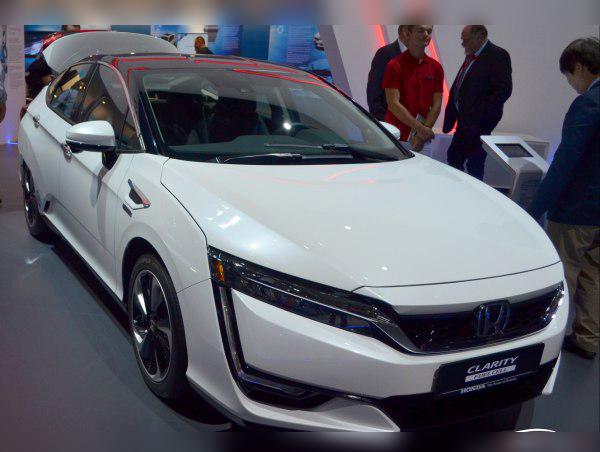
Honda LEB3 1.5 i-VTEC: Experiences, Issues, Fuel Consumption and Maintenance of the Plug-in Hybrid
Key points in short (TL;DR)
- Operating principle: This is not a conventional engine. Most of the time it works as a generator that produces electricity for the electric motor, and it drives the wheels directly only at higher speeds.
- Timing drive: It uses a reliable timing chain, which reduces regular maintenance costs.
- Atkinson cycle: The engine is extremely efficient, but it sounds different from regular petrol engines (a “whining” sound when charging the battery).
- No turbo: Naturally aspirated design means fewer parts that can fail (no turbocharger, intercooler, high-pressure system).
- A transmission that isn’t one: There is no conventional gearbox, but an e-CVT system (drive via the electric motor and a single gear ratio). Failures are rare, but expensive.
- Recommendation: Ideal for those who can charge the battery at home; otherwise the Plug-in hybrid concept loses much of its point.
Contents
- Technical Specifications
- Reliability and Maintenance
- Specific Components and Costs
- Fuel Consumption and Performance
- Additional Options and Modifications
- Transmission (e-CVT)
- Conclusion and Buying Tips
Introduction: The Heart of the Honda Clarity Plug-in Hybrid
The engine designated LEB3 (part of Honda’s L-series engines) is a specific 1.5-liter unit designed specifically for high efficiency within Honda’s i-MMD (Intelligent Multi-Mode Drive) system. It is best known for being installed in the Honda Clarity Plug-in Hybrid. Unlike the standard 1.5 engines in the Civic or HR-V models, this engine operates on the Atkinson cycle. In practice, that means it sacrifices low-end power for maximum thermal efficiency, because its main task is not to turn the wheels, but to turn the generator that produces electricity.
Technical Specifications
| Parameter | Data |
|---|---|
| Displacement | 1498 cc |
| Power (ICE engine) | 76 kW (103 hp) @ 5500 rpm |
| Power (System) | Up to 158 kW (212 hp) with the electric motor |
| Torque (ICE engine) | 134 Nm @ 5000 rpm |
| Torque (Electric) | 315 Nm (Instantly available) |
| Engine code | LEB3 |
| Injection type | Multi-point (PFI) / Port Injection |
| Induction | Naturally Aspirated |
Reliability and Maintenance
Timing system: Chain or belt?
The Honda LEB3 engine uses a timing chain for valve timing. This is great news for owners because the chain is designed to last the lifetime of the engine, provided that the oil is changed regularly. There is no scheduled replacement interval as with a belt; it is only replaced if you hear rattling or if it stretches, which is rare before 250,000 km on this model.
Most common issues and symptoms
Although Honda is known for reliability, the specifics of the hybrid drive bring certain challenges:
- Oil dilution with fuel: Since the engine frequently starts and stops (and in winter it often runs cold just to generate electricity), petrol can pass past the rings into the oil pan. The symptom is a raised oil level and a smell of petrol on the dipstick. This is less common than on the 1.5 Turbo engines, but it does happen if the car is driven only on short trips.
- Noise (“Angry Bees”): This is not a fault, but owners often think it is. When the battery is empty, the engine runs at very high revs to generate electricity, even at low vehicle speeds. The sound resembles a swarm of angry bees and is completely normal for this system.
- Inverter cooling system: In addition to the engine, there is a cooling system for the high-voltage components. The (electric) water pumps can fail, which leads to warning lights on the dashboard and loss of power.
Service intervals and fluids
A traditional “major service” (belt replacement) does not exist because of the chain. However, at around 100,000 to 120,000 km it is recommended to:
- Check valve clearances (mechanical adjustment, not hydraulic). If you hear “ticking” when the engine is cold, an inspection is needed.
- Replace spark plugs (iridium).
- Replace coolant (both for the engine and the inverter).
Engine oil: This engine requires 0W-20 oil. This viscosity is mandatory due to frequent cold starts and the need for instant lubrication. The oil capacity is about 3.3 to 3.7 liters (always check the exact amount when filling, it depends on whether the filter is replaced).
Oil consumption: Between services it should not consume a noticeable amount of oil. Consumption up to 0.5 liters per 10,000 km can be considered acceptable, but anything above that indicates a problem with the piston rings or the PCV valve.
Spark plugs: As it is a petrol engine, long-life iridium spark plugs are used. The replacement interval is usually 100,000 to 120,000 km. Do not skimp on spark plugs, because poor combustion directly affects the catalytic converter and the efficiency of the hybrid system.
Specific Components (Costs)
Dual-mass flywheel and clutch
This engine does not have a dual-mass flywheel in the traditional sense (as diesels do). Instead, it uses a flywheel with torsional vibration dampers that is connected to the generator. There is no conventional clutch that wears out by “slipping”. There is a lock-up clutch that connects the engine to the wheels at higher speeds, but it is a wet clutch inside the transmission and is designed to last as long as the car. So there are no expensive clutch kit replacements.
Fuel injection and Turbo
The system uses port fuel injection. This is excellent news! Unlike direct injection, here the fuel “washes” the intake valves, so there are no issues with carbon buildup on the valves. Injectors are simple and very rarely cause problems.
The engine does not have a turbocharger. This significantly reduces the risk of costly failures, oil leaks, and overheating problems.
EGR, DPF and GPF
The engine has an EGR valve which is crucial for operation in the Atkinson cycle. Due to the driving pattern (frequent start/stop), the EGR passage can become clogged with soot after around 150,000 km, which leads to jerking or a “Check Engine” light. Cleaning is possible and not overly expensive.
As for particulate filters, the Clarity usually does not have a GPF (Gasoline Particulate Filter) on older model years, but newer models for the European market may have a GPF to meet strict emissions standards. There is no AdBlue, as that is a system for diesel engines.
Fuel Consumption and Performance
Real-world fuel consumption
This is the most complex question with PHEV vehicles. Fuel consumption depends entirely on how often you charge the battery:
- City driving (full battery): 0.0 l/100 km of petrol + electricity. Realistic electric range is around 60–70 km.
- City driving (empty battery): When it operates as a hybrid, fuel consumption is around 4.5–5.5 l/100 km. The engine frequently starts to top up the battery.
- Highway (130 km/h): Here physics takes its toll. Aerodynamics and vehicle weight raise consumption to about 6.0–7.5 l/100 km.
Is the engine “sluggish”?
The 103 hp petrol engine alone would be too weak for the Clarity’s body, which weighs around 1800 kg. However, you never accelerate on petrol power alone. The main role is played by the electric motor with 315 Nm of torque available instantly. The car pulls very well, especially up to 60 km/h. It’s not a sports car, but it’s far from sluggish.
Highway driving
At speeds around 130 km/h, the system engages the lock-up clutch and the petrol engine drives the wheels directly (because that is most efficient at that point). The engine then runs at fixed revs (similar to being in 6th gear). If you need sudden acceleration, the clutch disengages, the engine revs up to generate electricity, and the electric motor pulls the car. Cruising is quiet and comfortable.
Additional Options and Modifications
LPG conversion
Theoretically it is possible (because it uses port injection), but it is absolutely not recommended. The engine operates in specific modes and often starts and stops within a second. LPG systems struggle to keep up with this rhythm, and the savings would be minimal because the engine already uses little fuel. You also lose trunk space, which is already reduced by the battery.
Remapping (Stage 1)
There is neither much point nor often even a practical option for a “Stage 1” tune on this engine. The engine is optimized for efficiency, not power. The car’s performance comes from the electric motor and the battery. By remapping the petrol engine you would not get noticeably better acceleration, because the bottleneck is the maximum output of the battery and electric motor.
Transmission: e-CVT (i-MMD)
How it works and what can fail?
This vehicle does not have a conventional gearbox with gears and gear ratios. It uses an e-CVT drive via the electric motor. The only mechanical gear is that single fixed ratio (direct drive) which engages at higher speeds (usually above 70–80 km/h) for cruising.
Most common failures: Mechanical failures of the drive itself are extremely rare. The system is simpler than a traditional automatic (no torque converter, no complex valve body that can stick). Potential issues are related to the electronics that control the switching of operating modes.
Transmission maintenance
Although there are no gears, there is oil. Honda recommends changing the transmission fluid (Honda ATF DW-1 or specific hybrid transmission fluid, check the owner’s manual) every 40,000 to 60,000 km. This is crucial for cooling the electric motors located inside the transmission housing. The cost is not high, and it extends the life of the system.
Used Car Purchase and Conclusion
What to check before buying?
- Battery condition (SoH): This is the most expensive component. If the electric range has dropped drastically (e.g. below 40 km in summer), the battery has degraded.
- Service history: Check whether the engine oil has been changed on time. Very dark oil in a hybrid is a bad sign.
- Engine sound: Turn on “Charge” mode while stationary. The engine will run at elevated revs. Listen for metallic rattling (chain) or loud valve ticking.
- Air conditioning: In hybrids, the A/C compressor also cools the battery. If the A/C doesn’t work, you risk battery overheating.
Conclusion
The LEB3 engine in the Honda Clarity is a masterpiece of engineering focused on efficiency. Mechanically it is very robust (chain, no turbo, port injection). The main risks are not in the engine itself, but in the complex hybrid system (battery, inverter), which can be expensive to repair out of warranty.
This engine is intended for drivers who want maximum savings, relaxed driving, and have access to a power outlet. It is not for enthusiasts seeking sound and speed, nor for those who cannot charge the battery regularly – in that case you are simply driving a heavy petrol car.