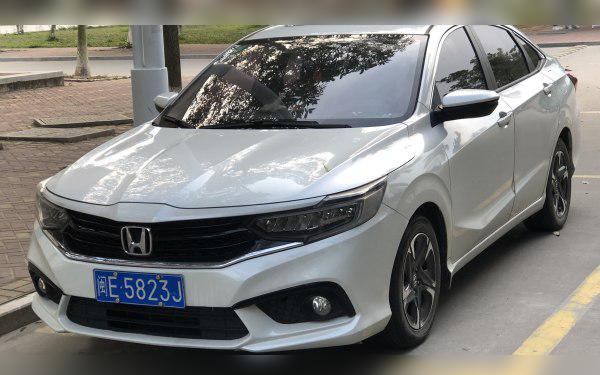
Honda P10A5 (1.0 VTEC Turbo) – Experiences, problems, fuel consumption and used car buying guide
Key points in short (TL;DR)
- Timing belt in oil (Wet Belt): This engine uses an oil-immersed timing belt. It requires strict adherence to the specified oil in order to avoid belt delamination and clogging of the oil pump.
- Three-cylinder performance: Although it has only 988 cc, the turbocharger gives it perfectly decent power (122 hp), but expect the characteristic sound and mild vibrations at idle.
- Sensitivity to fuel: The direct injection system does not tolerate poor fuel quality – there is a risk of carbon deposits on the valves.
- CVT transmission: In the Envix model it mostly comes with a CVT transmission, which requires regular oil changes and a specific driving style (no sudden jerks).
- Fuel consumption: Excellent in the city if driven moderately, but consumption rises drastically at high motorway speeds due to air resistance and small displacement.
- Maintenance: Not the cheapest to maintain in the small-engine class due to specific parts and a demanding injection system.
Contents
- Introduction and applications
- Technical specifications
- Reliability and maintenance
- Specific parts (Costs)
- Fuel consumption and performance
- Additional options and modifications
- Transmission
- Buying used and conclusion
Introduction and applications
The engine designated as P10A5 is Honda’s answer to the global downsizing trend. It is a three-cylinder 1.0‑liter turbo petrol engine that belongs to Honda’s Earth Dreams series. This specific code (P10A5) is most commonly associated with the Honda Envix model (and its twin, the Crider), which are sedans developed primarily for the Asian market, but they share their mechanics with the European tenth‑generation Civic (which uses the similar P10A2 engine).
This engine is important because it shows how Honda, known for its high‑revving naturally aspirated engines, is moving to small displacement with the help of turbocharging in order to meet strict emissions regulations while maintaining decent everyday performance.
Technical specifications
| Specification | Data |
|---|---|
| Engine displacement | 988 cc (1.0 L) |
| Configuration | R3 (3 cylinders in line) |
| Power | 90 kW (122 hp) at 5500 rpm |
| Torque | 173 Nm at 2000–4500 rpm |
| Engine code | P10A5 |
| Injection system | Direct injection (GDI) |
| Charging | Mono-scroll turbo + intercooler |
| Valve train | DOHC, VTEC (on intake), Dual VTC |
Reliability and maintenance
Does this engine have a timing belt or a chain?
This is a key point for this engine. The Honda P10A5 uses a timing belt running in oil (Wet Belt). Although Honda claims this solution is “lifetime” or lasts very long (intervals of up to 200,000 km are often quoted in some manuals), real‑world experience with similar engines (such as Ford’s EcoBoost) calls for caution. The belt rubber is in constant contact with engine oil. If you use the wrong oil or don’t change it on time, the additives and oil acidity can attack the belt. Rubber particles then flake off and clog the oil pump strainer, which leads to catastrophic engine failure.
What are the most common failures on this engine?
Apart from the potential issue with belt degradation in oil, owners report:
- Carbon buildup: Due to direct injection, the intake valves are not “washed” by fuel. Over time, soot builds up, which can reduce power and cause rough running.
- Cooling system: Some early P10 engines had overheating issues due to coolant leaks, so it is necessary to regularly check the coolant level.
- Vibrations: As a three‑cylinder, the engine naturally has an inherent imbalance. The engine mounts (hydraulic mounts) are under greater stress and can fail earlier, transmitting vibrations into the cabin.
At what mileage should the major service be done?
Although the manufacturer may specify long intervals, experienced mechanics recommend a preventive replacement of the “Wet Belt” system at around 100,000 to 120,000 km or after 6–7 years of age. The risk of the belt snapping or crumbling is too high to wait for the factory maximum. The timing kit is not cheap (depends on the market: it is among the more expensive jobs because access is complicated).
How many liters of oil does this engine take and which grade is recommended?
The engine takes approximately 3.5 to 3.7 liters of oil (with filter). Only 0W‑20 oil that meets strict Honda specifications (often API SN or newer) should be used. Warning: Using thicker oil or oil without the proper additives can destroy the timing belt and the VTEC system.
Does it consume oil between services and what amount is considered normal?
A small amount of oil consumption is normal for small‑displacement turbo engines that run at higher revs. Consumption of up to 0.5 liters per 10,000 km is considered acceptable. If it consumes more than that, first check the turbocharger and the PCV system (breather/PCV valve). Increased consumption can be a sign of stuck piston rings, which is not uncommon if oil changes were done at long intervals (over 15,000 km).
At what mileage should the spark plugs be replaced?
This engine uses expensive iridium spark plugs. Due to the high cylinder pressures and turbocharging, the plugs wear faster than on naturally aspirated engines. The recommended replacement interval is every 60,000 to 80,000 km. Symptoms of worn plugs are hesitation under acceleration and rough idle.
Specific parts (Costs)
Does the engine have a dual‑mass flywheel?
Since the Honda Envix with the P10A5 engine is almost exclusively paired with a CVT automatic transmission, it does not have a classic dual‑mass flywheel like manual gearboxes. Instead, it uses a torque converter with dampers to reduce vibrations. If you come across a rare version with a manual gearbox (more common on the Civic), it will have a dual‑mass flywheel, which is quite expensive (depends on the market: very expensive).
What kind of injection system does it have and are the injectors problematic?
It uses high‑pressure direct fuel injection (GDI). The injectors are precise but sensitive. They are not prone to widespread failures, but if low‑quality fuel is used, they can clog or start “dribbling” fuel, which can wash the oil film off the cylinder walls. Cleaning the injectors is possible, but replacement is expensive (depends on the market: expensive).
Does this engine have a turbocharger and what is its lifespan?
It has a small, low‑inertia BorgWarner turbocharger with an electronic wastegate valve. It is designed to spool up quickly in order to eliminate turbo lag. With regular oil changes, its lifespan exceeds 200,000 km. Problems arise if the engine is switched off immediately after hard driving (motorway), because the oil in the turbo overheats, cokes and forms deposits.
Does this model have a DPF filter or an EGR valve?
Being a petrol engine, it does not have a DPF (which is for diesels), but newer models (depending on the market and Euro standard) have a GPF (Gasoline Particulate Filter) which serves the same purpose. GPFs clog less often than DPFs because exhaust gas temperatures on petrol engines are higher. An EGR valve is present and serves for exhaust gas recirculation; it is prone to fouling, which manifests as jerking under light throttle.
Does this engine use AdBlue?
No. AdBlue is used exclusively on diesel engines to reduce NOx emissions. This is a petrol engine and does not require that type of maintenance.
Fuel consumption and performance
What is the real‑world fuel consumption in city driving?
The Honda Envix is not a small car (length around 4.7 m). In heavy city traffic, real‑world consumption is between 7.5 and 9.0 liters per 100 km. The CVT transmission helps keep revs low, but the body weight takes its toll. The start‑stop system can slightly reduce consumption.
Is this engine “lazy” for the weight of the car?
With 173 Nm of torque available from just 2000 rpm, the engine is not lazy in city conditions. Up to 80 km/h it feels quite lively. However, under full load (four passengers and luggage) on uphill sections, the lack of displacement becomes noticeable. You will have to press the accelerator harder, and the CVT will respond with the engine droning at high revs.
How does the engine behave on the motorway and at what revs does it cruise at 130 km/h?
Thanks to the CVT transmission, which has “infinite” gear ratios, the engine turns at a relatively low 2800–3000 rpm at 130 km/h (on level ground). This contributes to low noise levels. However, overtaking at speeds above 120 km/h requires patience because the engine runs out of breath at high revs. Motorway fuel consumption is around 6.5–7.5 l/100 km.
Additional options and modifications
Is this engine suitable for LPG conversion?
In general, it is not recommended or is economically unjustified. Due to direct injection, an expensive system is required (liquid injection system or a system that uses both petrol and LPG simultaneously to cool the injectors). The installation cost is high (depends on the market: very expensive), and the savings are questionable given the engine’s low petrol consumption.
How far can this engine be safely tuned (Stage 1)?
This engine has potential and a Stage 1 remap can raise it to about 140–145 hp and 200+ Nm. However, the major limiting factor is the CVT transmission. CVT gearboxes in this class are not designed to handle high torque. By tuning, you drastically reduce the transmission’s lifespan and risk belt slip inside the gearbox. Recommendation: Do not do this on a CVT model.
Transmission
Which transmissions are fitted to this engine?
The Honda Envix with the P10A5 engine primarily comes with a CVT (Continuously Variable Transmission). In some base versions on certain Asian markets there was a 6‑speed manual gearbox, but the CVT is standard.
What are the most common issues with the automatic (CVT) transmission?
Honda CVT transmissions are more reliable than, for example, Nissan’s, but they are not immune to failures. The most common problems are:
- Overheating: During long uphill drives or aggressive driving, the transmission can go into “safe mode”.
- Whining bearings: A sign of wear or old oil.
- Delayed response: Jerks when moving off from a standstill (start clutch issues).
At what mileage should the transmission be serviced and the oil changed?
This is critical. The oil in the CVT transmission (specific Honda HCF‑2 oil is used) should be changed every 40,000 to 60,000 km, or every 2–3 years. “Lifetime” oil is a myth that leads to transmission failure at around 150,000 km. The oil change is not very expensive and protects the gearbox.
Buying used and conclusion
When buying a used Honda with this engine, pay attention to the following:
- Service history: Was 0W‑20 oil used? If 10W‑40 or similarly “thick” oil was used, walk away from that car – the belt is probably already damaged.
- Engine sound: On a cold start there should be no metallic rattling. A three‑cylinder runs a bit rougher, but it should not knock.
- CVT test: The transmission must accelerate linearly, without “surging” and without rpm fluctuations at a constant throttle.
Conclusion: The Honda P10A5 is a technologically advanced engine that offers an excellent balance between efficiency and everyday usability in the city. It is intended for drivers who prefer a relaxed driving style and want the comfort of an automatic. It is not for racers or for those who want cheap “backyard” maintenance. If serviced with quality parts and oil, it will last a long time, but neglect by the previous owner can cost you dearly.