Hyundai/Kia 1.4 16V (Alpha II / G4EE) – Experiences, issues, fuel consumption and used car buying guide
Key points (TL;DR)
- Outstanding reliability: Old-school naturally aspirated petrol engine without complicated electronics and expensive parts.
- Low running costs: No dual-mass flywheel, no turbocharger, no EGR valve and no direct injection.
- LPG-friendly: The engine works perfectly on LPG, which is a life-saver considering the slightly higher fuel consumption in city driving.
- Fuel consumption: In heavy city traffic expect between 8.5 and 10 l/100 km.
- On-road behavior: Needs higher revs for smooth overtaking, and on the motorway at 130 km/h it is quite noisy.
- Gearbox: Manual gearboxes sometimes suffer from worn synchros, while the 4-speed automatic is virtually indestructible if the oil is changed on time, but it is slow.
Contents
- Introduction: Old-school Korean engineering
- Technical specifications
- Reliability and maintenance
- Specific parts and costs
- Fuel consumption and performance
- Additional options and modifications
- Gearbox and drivetrain
- Buying used and conclusion
Introduction: Old-school Korean engineering
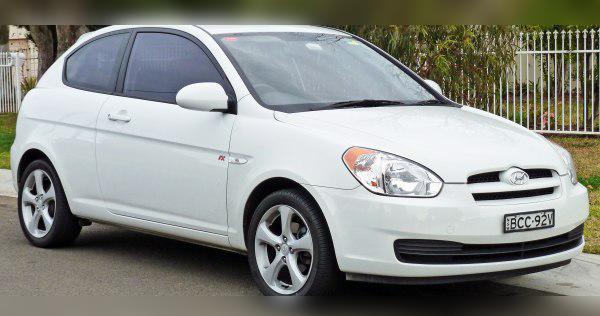
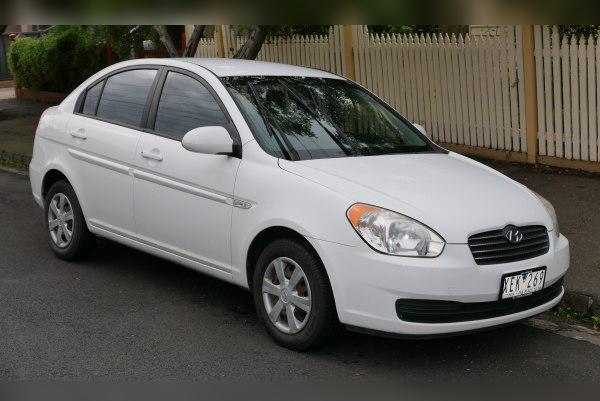
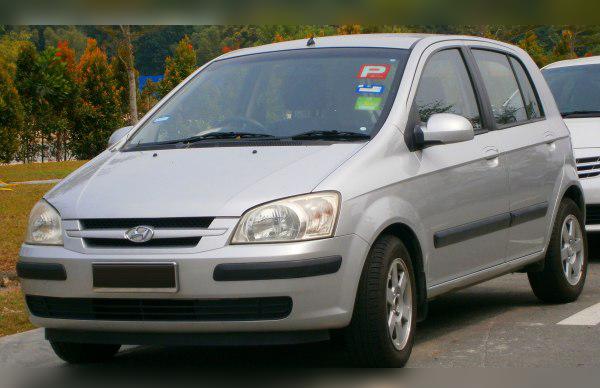
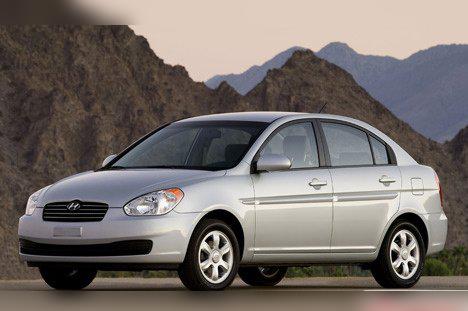
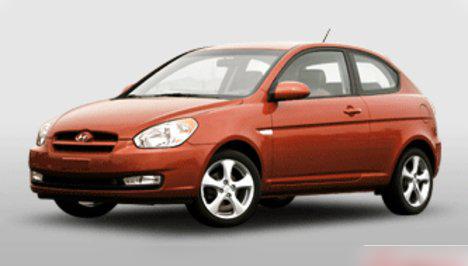
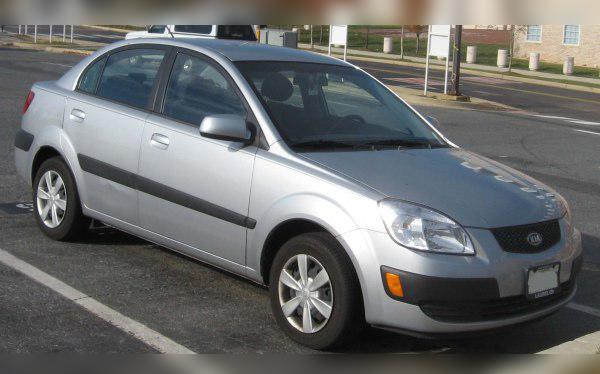
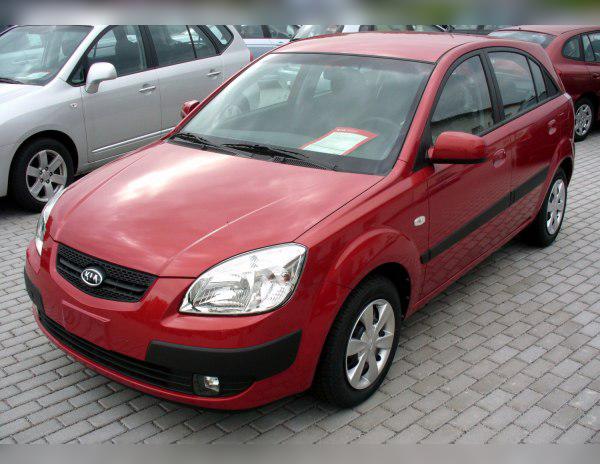
The engine with the code G4EE, better known as part of the Alpha II generation, is one of the pillars on which Hyundai and Kia built their reputation for reliability worldwide. Installed mainly in the first decade of the 2000s in models such as the Hyundai Getz, Accent, Verna and Kia Rio (JB series), this engine is a true workhorse. With a displacement of almost 1.4 liters and 97 horsepower, it was not designed to break speed records, but to get you safely, every day and at minimal cost from point A to point B.
Technical specifications
| Specification | Data |
|---|---|
| Engine code | G4EE (Alpha II) |
| Engine displacement | 1399 cc |
| Power | 71 kW (97 hp) |
| Torque | 125 Nm |
| Injection type | MPI (Multi-Point Injection) – indirect |
| Aspiration | Naturally aspirated |
| Fuel type | Petrol |
Reliability and maintenance
Timing belt and service intervals
Unlike the newer Gamma engines, the Alpha II 1.4 16V uses a timing belt to drive the camshafts. A major service on this engine is recommended every 60,000 km or at least every 5 years. Skipping this interval can lead to the belt snapping and catastrophic engine damage due to valve-to-piston contact. The cost of the major service falls into the very affordable category (depends on the market).
Oil, capacity and consumption
The oil pan holds a modest 3.3 liters of oil (including the filter). The most commonly recommended grade is 5W-30, although for higher-mileage engines in warmer climates many owners switch to 10W-40. As for oil consumption, the G4EE is not known as an “oil burner”. Still, on engines with more than 200,000 km on the clock, it is normal to use up to 0.5 liters between services. If it consumes noticeably more and emits bluish smoke on cold start, the most common culprit is worn valve stem seals, which is a cheap repair compared to a full engine rebuild.
Spark plugs and common failures
As a classic petrol engine, it requires spark plug replacement every 30,000 to 40,000 km (standard copper/nickel plugs are used and they are inexpensive). When it comes to electronics, the engine is robust, but after many years the ignition coils and high-voltage leads can fail. Symptoms include jerking while driving, rough idle and the “Check Engine” light coming on. It can also occasionally suffer from a dirty throttle body and idle air control valve, which can cause fluctuating revs when idling at traffic lights. Cleaning the throttle body solves the problem.
Specific parts and costs
This is where the G4EE absolutely shines and protects your wallet:
- Dual-mass flywheel: DOES NOT EXIST. The engine uses a simple, solid flywheel. Replacing the complete clutch kit (pressure plate, disc, release bearing) is extremely cheap (depends on the market).
- Fuel injection system: Uses classic MPI (indirect) injection. Petrol injectors are long-lasting and rarely cause problems, and unlike modern GDI engines, there is no issue with carbon buildup on the intake valves.
- Turbocharger: The engine is naturally aspirated (no turbo). No worries about worn turbochargers.
- EGR, DPF and AdBlue: As a typical petrol engine from this era, it has neither a DPF filter nor an AdBlue system. It also does not have the complex EGR valve found on diesels, but instead uses a simple EVAP system for fuel vapor recovery, which is very reliable.
Fuel consumption and performance
User experience: City and motorway
This engine was fitted to relatively light cars (Hyundai Getz, Accent), but despite that, drivers often report that it feels a bit “lazy” at low revs. The maximum torque of 125 Nm is only available at higher engine speeds. To accelerate more briskly, you need to rev it above 3,500 rpm.
Fuel consumption: The biggest downside of this engine is its fuel consumption in city driving. In stop-and-go winter traffic, consumption rarely drops below 8.5 l/100 km, and on versions with an automatic gearbox it can go up to 10.5 l/100 km.
Motorway: On open roads the situation is better (around 6.5 l/100 km), but due to the short gear ratios, at 130 km/h the engine spins at a rather high 3,700–3,900 rpm. This results in increased cabin noise, so long motorway journeys are not this engine’s natural habitat.
Additional options and modifications
LPG conversion
Given the somewhat higher fuel consumption in city driving, it is a real relief that the G4EE engine is extremely suitable for sequential LPG installation. Thanks to indirect injection, installation is simple and not very expensive. The engine has hydraulic tappets, so there is no need for manual and costly valve clearance adjustment – the system adjusts itself, which makes it ideal for running on LPG.
ECU remap (Stage 1)
Is it worth remapping it? Absolutely not. Since this is a small-displacement naturally aspirated engine, a so‑called “Stage 1” remap would at best bring an extra 5 to 7 horsepower, which you will not really feel in everyday driving. It is much wiser to invest that money in regular maintenance or a good set of tyres.
Gearbox and drivetrain
This engine was mainly paired with two types of transmission:
- Manual gearbox (5-speed): Very reliable, but over time the synchros on second and third gear can show signs of wear. The symptom is slight resistance or grinding when shifting quickly from first to second. If you hear a whining noise when pressing the clutch pedal, it is a worn release bearing (a cheap fix thanks to the absence of a dual-mass flywheel). Be sure to change the oil in the manual gearbox every 60,000 to 80,000 km to extend the life of the synchros.
- Automatic gearbox (4-speed): This is a classic automatic with a torque converter. It is extremely reliable and durable, but with only 4 gears it is technologically outdated – it hampers performance and increases fuel consumption. Servicing (changing ATF fluid and filter) is absolutely essential at a maximum of 60,000 km. If, when buying, you feel jerks when engaging D (Drive) or R (Reverse), this is a sign of poor maintenance and dirty oil, and potentially a fault in the valve body of the automatic gearbox.
Buying used and conclusion
What to check when buying?
When looking at a used Hyundai or Kia with this engine, focus on the following:
- Cold start: Listen to the engine when it is completely cold. A rattling noise that disappears after a few seconds usually points to hydraulic tappets that are slow to fill with oil. If the rattling remains for longer, it is a sign of neglected tappets due to irregular oil changes.
- Exhaust smoke: Ask someone to rev the engine while you stand behind the car. Blue smoke is a reliable sign of worn valve stem seals or piston rings (although the latter is less common on this engine).
- Condition of the belt: Since it has a timing belt, ask for proof of the belt service. If there is none, you must do a full timing belt service immediately after purchase.
Final verdict
The 1.4 16V (G4EE) Alpha II engine is aimed at buyers whose primary goal is cheap and worry-free motoring. It will not excite driving enthusiasts, it will use a bit more fuel in the city than modern three-cylinder engines, and it will be noisy on the way to the seaside. But that same engine will not surprise you with repairs costing hundreds or thousands of euros. There is no turbo to whistle, no dual-mass flywheel to shudder, and with an LPG system installed, running costs drop to the level of riding a scooter. For beginners, small families and workhorses for everyday local duties – this is one of the most rational choices on the used car market.