Hyundai/Kia G4GC 2.0 (143 hp) engine: Experiences, issues, fuel consumption and used-car buying tips
- This is a robust “old-school” unit with multi-point (MPI) injection, known for its exceptional longevity.
- It has no dual‑mass flywheel, no turbocharger and no expensive exhaust after‑treatment systems, which makes maintenance very affordable.
- It uses a timing belt, so regular major services are mandatory.
- Fuel consumption is noticeably higher, especially in city driving where it easily exceeds 10 l/100 km.
- It is very suitable for LPG conversion, but requires manual valve clearance adjustment.
- Remapping (Stage 1) is not worth it on this naturally aspirated engine.
- Neglecting oil changes leads to CVVT system problems and increased oil consumption.
Contents
- Introduction: Old school from Korea
- Technical specifications
- Reliability and maintenance
- Specific parts and costs
- Fuel consumption and performance
- Additional options and modifications (LPG and remapping)
- Gearbox and drivetrain
- Buying used and conclusion
Introduction: Old school from Korea
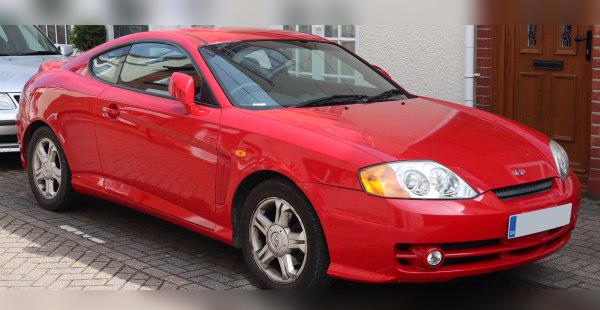
The engine with the code G4GC belongs to the renowned Hyundai/Kia “Beta II” engine family. In the era before turbo petrol engines and direct injection took over, this engine represented the pinnacle of reliable powertrains for compact and sporty models. With a displacement of almost two litres and 143 hp, it was installed in a wide range of vehicles, from the sporty Hyundai Coupe II (GK), through family saloons such as the Elantra III, all the way to popular C‑segment hatchback and estate models: Hyundai i30 I and Kia Cee'd I. Thanks to its forgiving mechanical design, this engine is still highly sought after on the used market by drivers who want to avoid expensive repairs of modern technology.
Technical specifications
| Parameter | Data |
|---|---|
| Engine code | G4GC (Beta II) |
| Displacement | 1975 cc |
| Power | 105 kW (143 hp) |
| Torque | 186 Nm |
| Injection type | MPI (Multi-Point Injection – into the intake manifold) |
| Aspiration | Naturally aspirated |
| Timing system | Timing belt (and a short chain between the camshafts) |
Reliability and maintenance
Timing system, servicing and oil
Unlike newer Asian engines that rely exclusively on a chain, the G4GC uses a timing belt to drive the camshafts. The major service, which includes replacement of the timing belt, tensioner, idler pulleys and water pump, needs to be done every 60,000 to a maximum of 90,000 km (or every 5 years). An interesting mechanical detail is that the belt drives only one camshaft, while power is transferred to the other via a short chain located at the rear of the cylinder head. That small chain is usually replaced only when it starts to make noise (rattling on cold start).
As for lubrication, the sump holds about 4 to 4.2 litres of oil. The recommended grade depends on the climate, but most commonly 5W-30 is used, or 10W-40 for higher‑mileage engines. Minor services should be done strictly every 10,000 to 15,000 km. Due to the sensitive CVVT valve (variable valve timing system), dirty oil can clog the valve’s mesh filter, resulting in rough running and loss of power.
Most common issues and oil consumption
This is generally an engine without serious factory defects, but age and mileage take their toll. Oil consumption between services is possible. The manufacturer tolerates up to 0.5 l/1000 km, but in practice a healthy G4GC should not require more than 1 litre per 10,000 km. If the engine consumes more, the problem usually lies in hardened valve stem seals or, less often, stuck oil control rings on the pistons – a consequence of infrequent oil changes. A symptom of worn valve stem seals is bluish smoke from the exhaust on the first cold start in the morning.
Other specific weak points include:
- Ignition coils and leads: Since this is a petrol engine, hesitation under acceleration most often points to worn coils or high‑tension leads. Spark plugs should be replaced every 40,000 to 60,000 km (standard), while iridium plugs can last up to 90,000 km.
- Valve cover gasket: It often fails due to heat, so oil starts to seep down the engine block and drip onto the exhaust manifold, which you will notice as a burning smell in the cabin. Replacement itself is simple and not expensive (depends on the market).
- Exhaust manifold: On models that have been driven hard, the exhaust manifold can crack due to thermal stress, which changes the engine sound (it sounds like an exhaust leak).
Specific parts and costs
The main advantage of this engine is what it doesn’t have. Unlike modern diesels and increasingly many petrol engines, the G4GC does not have a dual‑mass flywheel, but uses a conventional solid flywheel. This means that replacing the clutch kit (pressure plate, disc, release bearing) is quite affordable and is a standard wear item rather than a financial shock (depends on the market).
The injection system is electronic, multi‑point (MPI). These injectors operate at low pressure, are extremely durable and rarely cause problems. If they do get dirty (poor fuel quality), ultrasonic cleaning is usually more than sufficient. Naturally, as a purely naturally aspirated petrol engine, it does not have a turbocharger, DPF filter or AdBlue system. Depending on the production year and emissions standard, it may have a conventional EGR valve, but on Beta II engines the variable valve timing system (CVVT) often takes over the role of internal exhaust gas recirculation, so the intake clogging and choking typical of diesels simply do not occur here.
Fuel consumption and performance
The only real price of this engine’s reliability is paid at the fuel station. A 2.0‑litre displacement and early‑2000s technology mean that this engine likes to drink. Real‑world city fuel consumption regularly ranges between 10 and 12 l/100 km, especially in heavier vehicles such as the Kia Cee'd SW (estate) or when paired with an automatic gearbox.
As for performance, with 186 Nm of torque the engine is not “lazy”, but its character demands revs. To deliver its 143 hp, you have to push it above 4,000 rpm. In the lighter Hyundai Coupe it provides decent fun, while in the i30 or Elantra it is more focused on smooth, linear acceleration than on outright sporty performance.
On the motorway: Consumption drops to a more reasonable 7.5 to 8.5 l/100 km. However, due to the five‑speed manual gearbox (on most models), at 130 km/h the engine spins at a relatively high 3,500 to 3,800 rpm. This means that cruising can be somewhat noisy, but the engine always has power in reserve for overtaking because it is already in the high‑torque band.
Additional options and modifications (LPG and remapping)
LPG conversion – CAUTION
Given the high petrol consumption and MPI injection, this engine seems like an ideal candidate for a sequential LPG system. And indeed, it runs very well on LPG, but there is one huge catch. The G4GC engine does not have hydraulic tappets, but uses mechanical ones (so‑called “buckets” or shims). LPG combustion generates higher temperatures and the lack of lubrication at the valves leads to faster valve seat wear (valve recession). That is why checking and adjusting valve clearances every 40,000 to 60,000 km is mandatory if you run it on LPG. If this is ignored, the valves will end up “tight”, they will burn, and repairing the cylinder head will be very expensive. Many mechanics also recommend installing a valve lubrication system (so‑called Flashlube).
Remapping (Stage 1)
Software optimisation (Stage 1) on a naturally aspirated petrol engine of this generation is basically throwing money away. With remapping you can gain, at best, 5 to 8 hp, which is absolutely imperceptible in everyday driving. For a serious power increase you would need expensive hardware modifications (performance camshafts, exhaust), which makes no sense for daily use.
Gearbox and drivetrain
Two types of transmissions were paired with the G4GC, depending on the first owner’s preference:
- Manual gearbox (5‑speed): Very reliable, but known for the fact that the third‑gear synchroniser tends to wear out over time, so the lever grinds when shifting quickly. As mentioned, it uses a conventional clutch without a dual‑mass flywheel. It is recommended to change the gearbox oil every 60,000 to 80,000 km to extend the life of the bearings and synchronisers.
- Automatic gearbox (4‑speed): This is a conventional automatic with a torque converter. It is extremely robust and reliable, but rather slow and further hampers performance, while easily increasing city fuel consumption by 1 to 1.5 litres. The most common failures occur solely due to irregular maintenance. The automatic transmission fluid must be changed every 60,000 km. If you feel a harsh jolt when shifting from “P” into “D” or “R”, it is a sign that the gearbox has not been maintained or that the valve body is slowly failing.
Buying used and conclusion
What to check before buying?
- Cold start: Ask the seller not to start the car before you arrive. At the first start, pay attention to metallic rattling on the right‑hand side of the engine (viewed from the front). If it rattles for more than a few seconds, the small camshaft chain is due for replacement, and this may also indicate low oil pressure.
- Exhaust smoke: Have someone rev the warmed‑up engine while you watch the exhaust. Blue smoke means the engine is burning oil (seals or rings).
- CVVT system: Use diagnostics to check the operation of the CVVT valve and whether there are any errors related to camshaft angle.
- Valve clearance (if it has LPG): If you are buying a car with LPG already installed, be sure to ask the owner when the valves were last adjusted. If there is no proof, assume you will have to go straight to a mechanic to have them measured.
Conclusion: Who is this engine for?
The Hyundai/Kia G4GC 2.0 engine is an excellent choice for drivers who want maximum mechanical reliability and do not mind slightly higher fuel consumption. It is great for heavier vehicles in this segment because it offers enough torque, and maintaining the components around the engine (suspension, electronics, clutch) will not drain your wallet, as there are no sophisticated, expensive parts typical of modern turbo engines. It is ideal for those who cover a moderate annual mileage and want a car that “starts and goes” in all conditions, without fear of warning lights on the instrument cluster.