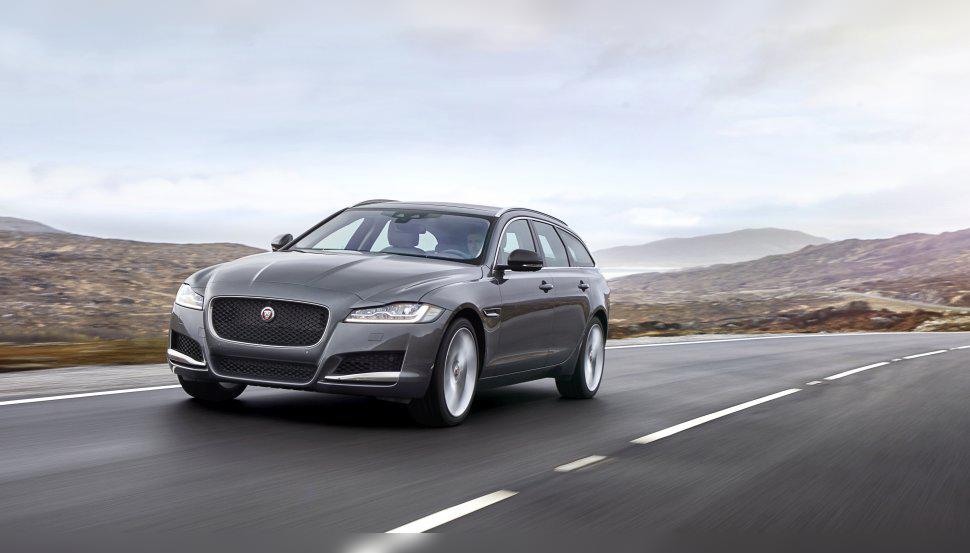
JLR Ingenium 2.0d 204DTH (180 HP) – Experiences, problems, fuel consumption and used car buying tips
Key points (TL;DR)
- Timing chain in an awkward place: The timing system is located at the rear of the engine (next to the gearbox), which drastically increases labor costs when replacing it.
- Risk of oil dilution: Frequent city driving interrupts DPF filter regeneration, causing diesel to end up in the oil sump, thinning the oil and destroying the chain and crankshaft bearings.
- Excellent automatic gearbox: Pairing with the ZF 8-speed automatic is a bullseye, provided the oil is changed on time.
- Fuel consumption: Due to the heavy body (especially on Jaguar F-Pace AWD models), city consumption rarely drops below 8.5 l/100 km.
- Driving dynamics: With 180 HP and 430 Nm, this is the optimal balance for most drivers – it’s not a racer, but it offers safe overtaking and very relaxed motorway cruising.
- Buying used: Requires a detailed check of service history and a cold start to hear whether the chain is rattling.
Contents
- Introduction: A new era of Jaguar diesels
- Technical specifications
- Engine reliability and maintenance
- Specific parts, costs and DPF/AdBlue systems
- Real-world fuel consumption and performance
- Extras, remapping and power reserves
- Transmissions: Manual vs Automatic
- Buying used and final verdict
Introduction: A new era of Jaguar diesels
The engine designated 204DTH belongs to the now well-known Ingenium engine family, which Jaguar Land Rover (JLR) developed as a replacement for older units sourced from Ford and the PSA group. The version we’re discussing here delivers 132 kW (180 HP) and an impressive 430 Nm of torque. It was installed in premium saloons such as the Jaguar XF (and XF Sportbrake), but gained its greatest popularity in the SUV segment, primarily in the Jaguar F-Pace.
As an engine that powers heavy vehicles, often paired with an AWD (All-Wheel Drive) system, the 2.0d Ingenium had to meet high expectations – both in terms of refinement and low-end torque. However, its technical complexity brings a number of specifics that every potential owner must understand before buying such a car.
Technical specifications
| Characteristic | Data |
|---|---|
| Engine designation / code | Ingenium / 204DTH |
| Displacement | 1999 cc |
| Engine power | 132 kW (180 HP) |
| Torque | 430 Nm |
| Fuel type | Diesel (Common Rail) |
| Intake system | Turbocharger with variable geometry (VGT), intercooler |
| Timing system | Chain (Located at the rear of the engine) |
Engine reliability and maintenance
When it comes to maintaining Ingenium diesels, the first and most important topic is the timing system. Yes, this engine has a chain, and it is probably the most notorious component of this unit. The biggest problem is not the chain itself, but its position and an engineering oversight related to lubrication. The chain is located at the rear of the engine, right next to the firewall and gearbox housing. When the time comes for a major service, the layout is such that the engine or gearbox has to be removed. This makes labor for the major service very expensive (depends on the market).
When is the chain replaced and what causes failures?
In theory, the manufacturer states a long service life, but workshop practice is harsh. The major service usually has to be done between 100,000 and 150,000 km, depending on driving style. Symptoms of wear are metallic rattling and “clattering” on cold start. The main cause of early chain stretching or failure is engine oil dilution with fuel (oil dilution). Due to frequent interruptions of DPF regeneration, excess diesel ends up in the sump. The oil loses viscosity, lubrication of the guides and chain becomes inadequate, which results in fatal stretching or even chain breakage.
Oil and regular servicing
The sump of this engine holds an impressive 7.2 liters of oil. The prescribed grade is usually 0W-30 with a specification adapted for JLR (STJLR.03.5007). The factory recommends change intervals of up to 30,000 km, but that is the worst thing you can do to this engine. Because of the aforementioned oil dilution, always do an oil service at 10,000 to a maximum of 15,000 km. Ingenium diesels can have slight oil consumption, but in practice owners more often notice that the oil level rises on the dipstick instead of dropping, precisely because of diesel in the sump. If the level exceeds the maximum, the oil must be changed immediately.
Injectors and fuel injection
The injection system is a modern high-pressure Common Rail. The injectors are very precise, usually piezo-electric. They have proven to be relatively durable, with no major issues up to 200,000 km, provided quality Euro diesel is used. They are sensitive to water in the fuel and poor filtration. The price of new injectors is high (depends on the market), while refurbishment is only possible in highly specialized Bosch and Delphi centers.
Specific parts, costs and DPF/AdBlue systems
Turbocharger and flywheel
This 180 HP version of the engine uses a single turbocharger with variable geometry (VGT). Turbo life is quite decent, often over 200,000 km, provided the engine regularly gets fresh oil. Problems are more common with the turbo actuator than with the turbine wheel and bearings themselves. As for the drivetrain, models with a manual gearbox have a dual-mass flywheel whose replacement together with the clutch is very expensive (depends on the market). On models with an automatic gearbox, the job is done by a torque converter with its corresponding flexplate, so there is no conventional clutch kit there.
DPF, EGR and AdBlue
The exhaust aftertreatment systems are the biggest headache for drivers who use their Jaguar mainly in the city. The engine has both a DPF filter and high- and low-pressure EGR valves. The EGR gets clogged with soot easily, which causes jerking at low revs. The DPF filter requires a working temperature above 600 °C for regeneration, which is impossible to reach in city driving. If the DPF warning light comes on frequently, a motorway run is mandatory.
To meet Euro 6 standards, this engine also uses an AdBlue (SCR) system. The fluid tank must be refilled regularly, with consumption of roughly one liter per 1,000 km. Common failures include AdBlue pump or heater failure inside the tank. Repairing the entire module is far from cheap (depends on the market) and requires proper diagnostics; otherwise the software will block engine start (a countdown of remaining kilometers before lockout).
Real-world fuel consumption and performance
Performance largely depends on the body style the engine is powering. In the XF saloon (RWD), the engine feels very lively and agile. However, in the hefty Jaguar F-Pace AWD, which weighs close to two tons, 180 HP and 430 Nm are more of an optimal minimum than a sporty setup. The car is not “sluggish”, but it doesn’t offer explosive acceleration. Power delivery is linear, with a strong torque surge from around 1,750 rpm.
As for fuel consumption:
- City driving: Due to the weight, drivetrain and frequent stop-and-go, the F-Pace will use between 8.5 and 10.5 l/100 km in town. The XF is somewhat more economical (around 7.5–9.0 l/100 km).
- Country roads: This is where the engine shines; consumption can drop to 5.5–6.5 l/100 km.
- Motorway: At a cruising speed of 130 km/h, combined with the 8-speed automatic, the engine runs at a very relaxed ~1,900 rpm. In such conditions it uses between 6.5 and 7.5 l/100 km, with excellent cabin sound insulation.
Extras, remapping and power reserves
Although the engine delivers 180 HP from the factory, it has a solid mechanical basis for modifications. A properly done Stage 1 (ECU remap) can safely raise it to around 210–220 HP, while torque jumps to about 480–490 Nm. This significantly improves throttle response in the heavier F-Pace and makes overtaking on country roads easier.
It is important to note that before any remapping, the chain must be in perfect condition and the DPF filter free-flowing. Increasing boost pressure with a clogged DPF can very quickly destroy the turbo.
Transmissions: Manual vs Automatic
The 204DTH engine comes with two options: a classic 6-speed manual gearbox and the fantastic ZF 8HP 8-speed automatic. On the used market, manuals are quite rare, especially in the F-Pace, while in the XF they are found only on the very basic trim levels.
Problems and maintenance
The manual gearbox is mechanically reliable, but the clutch kit and dual-mass flywheel suffer, especially with drivers who like to floor it from low revs. The repair is routine, but expensive (depends on the market).
The automatic gearbox (ZF) is one of the best transmissions ever made. It is very quick, smooth and durable. Failures are rare, and the most common issue is harsh shifting from first to second when cold, which is usually resolved by resetting adaptations in the software or changing the oil. Although Jaguar states that the gearbox is “sealed for life” (no maintenance required), that is a marketing myth. The gearbox manufacturer’s own engineers (ZF) strongly recommend changing the oil and filter (pan) every 80,000–100,000 km. If this is done regularly, this gearbox can cover hundreds of thousands of kilometers without failure.
Buying used and final verdict
What to look out for during inspection?
When buying a Jaguar with the 2.0d Ingenium engine (180 HP), make sure you do the following:
- Cold start: Ask the seller not to start the car before you arrive. On first start-up, open the bonnet and listen to the rear of the engine towards the cabin. Any rattling lasting more than a couple of seconds means you’ll soon be facing engine removal and chain replacement.
- Oil dipstick smell: Pull out the dipstick. If the level is above maximum and it strongly smells of diesel, that’s a red flag. The engine has been interrupting regenerations and lubrication has been compromised.
- Diagnostics (mandatory): Connect the car to proper JLR diagnostics (e.g. SDD/Pathfinder) and check DPF soot loading in grams and the number of interrupted regenerations. Ask for a fault code printout for the AdBlue module.
- Service history: Avoid cars where the oil was changed strictly according to factory intervals (every 30,000 km). Look for cars that were serviced every 10–15k km.
Final verdict
Should you buy a JLR vehicle with the Ingenium 204DTH (180 HP) engine? The answer is yes, but only with caution and a maintenance budget. This is not a simple and cheap engine to repair like those in mainstream cars. It is intended for drivers who appreciate a premium feel, the fantastic driving dynamics of Jaguar’s chassis and excellent design, but who also drive mostly on open roads and are willing to pay for quality, preventive maintenance. If you need a car for short city trips to the shops, this diesel will, through DPF and chain issues, generate huge expenses.