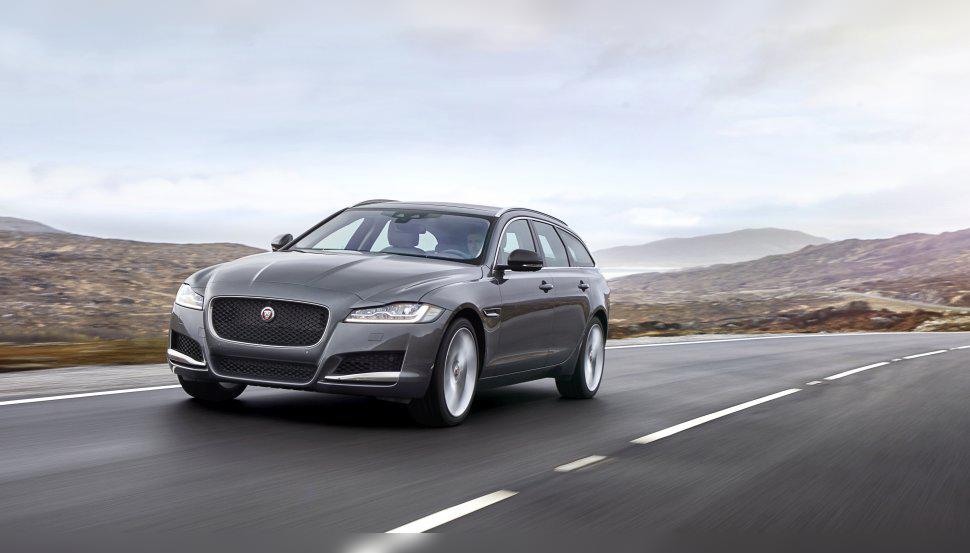
Jaguar / Land Rover 2.0 Ingenium PT204 (250 hp) – Experiences, issues, fuel consumption and used-car buying tips
- Turbocharged petrol engine with direct injection that offers an excellent balance between performance and refinement.
- Uses a timing chain for power transmission, which is significantly more reliable than on the diesel Ingenium versions, but requires regular maintenance.
- Fuel consumption in city driving is high, especially when the engine is installed in heavy SUV models such as the Velar and F-Pace.
- Very sensitive to oil quality; the manufacturer’s recommended service intervals are too long and must be shortened.
- It is paired exclusively with top‑class ZF automatic transmissions (8 or 9 speeds), where regular oil changes are the key to longevity.
- Due to direct injection, LPG (autogas) conversion is uneconomical and technically complicated.
Contents
- Introduction and basic information
- Technical specifications
- Reliability and maintenance
- Specific parts and costs
- Fuel consumption and performance
- Additional options and modifications
- Gearbox and drivetrain
- Buying used and conclusion
Introduction and basic information
When Jaguar and Land Rover (JLR) decided to end their cooperation with Ford and stop using their EcoBoost engines, they developed their own engine family called Ingenium. The 2.0‑liter petrol engine with the internal code PT204 and an output of 184 kW (250 hp) is the backbone of the range in almost all modern JLR vehicles. From agile saloons such as the Jaguar XE and XF, all the way to large luxury SUVs like the Range Rover Velar and Land Rover Discovery Sport, this engine has to meet a very wide range of demands.
As an experienced technical editor, I have to point out that early‑generation Ingenium diesels damaged the brand’s reputation, but the petrol P250 version is a much better design story. Still, it has certain weaknesses typical of modern turbo petrol engines with direct injection.
Technical specifications
| Specification | Data |
|---|---|
| Engine displacement | 1997 cc |
| Engine power | 184 kW (250 hp) at 5500 rpm |
| Torque | 365 Nm at 1300–4500 rpm |
| Engine code | PT204 / AJ200P |
| Fuel type | Petrol (Gasoline) |
| Injection type | Direct injection (GDI) |
| Charging | Twin‑scroll turbocharger + intercooler |
Reliability and maintenance
Timing system and major service
This engine uses a timing chain, not a timing belt. Unlike the Ingenium diesels where the chain was a nightmare, the situation with the petrol engine is much more stable. There is no prescribed interval for a “major service” in the classic sense. However, in practice the chain guides and tensioners can wear out around 150,000 km. The first symptom is a characteristic rattling or metallic noise on cold start, which lasts a few seconds until oil pressure tightens the tensioner. Replacing the chain and related components falls into the category: expensive (Depends on the market).
Most common failures
The PT204 engine suffers from problems typical of all direct‑injection engines – carbon buildup on intake valves. Since the fuel does not wash the valves but is injected directly into the cylinder, deposits from the PCV system (crankcase breather) stick to the intake valves. Symptoms include rough idle, loss of power and hesitation under acceleration. Cleaning the valves (so‑called walnut blasting) is recommended every 80,000 to 100,000 km.
There have also been reported issues with VVT solenoids (variable valve timing control valves), as well as occasional coolant leaks from the thermostat housing and water pump. These parts are made of plastic, which becomes brittle over time due to repeated heating and cooling cycles.
Engine oil and change intervals
The engine takes about 7 liters of oil (the exact amount varies from model to model, check the owner’s manual). The factory usually recommends 0W‑20 viscosity to meet strict emissions standards, but many mechanics in warmer climates switch to 5W‑30 with the appropriate JLR specifications. The factory oil change interval is often set at an unrealistic 20,000 km or more. To protect the chain, turbo and crankshaft, the oil must be changed at a maximum of 10,000 km or once a year. As for oil consumption, due to the very thin 0W‑20 oil, consumption of up to 0.5 liters per 1000 km is technically considered “normal” according to factory documentation, but in practice a healthy engine should not consume more than 1 liter between two minor services (over 10,000 km).
Spark plugs
As a high‑performance turbo petrol engine, a strong, clean spark is crucial. Replacement of iridium spark plugs is recommended every 60,000 kilometers. If this interval is ignored, the ignition coils, which are mounted directly on the plugs, can be damaged.
Specific parts and costs
Fuel injection system
The PT204 uses a direct‑injection system operating at extremely high pressure. The high‑pressure fuel pump (HPFP) works under heavy load and can become noisy over time. The injectors are very precise, but rarely fail if quality fuel is used. If they do fail, a new injector falls into the category: very expensive (Depends on the market).
Turbocharger
This engine uses a modern twin‑scroll turbocharger that allows quick spool‑up from as low as 1300 rpm. Turbo lifespan is closely linked to regular oil changes and driving style. Drivers must know the basic rule: after fast motorway driving, the engine must be left idling for a few minutes to let the turbo cool down. If you switch the engine off while the turbo is hot, the oil in its bearings burns, leading to a failure that is: very expensive (Depends on the market). The lifespan of a carefully maintained turbo exceeds 200,000 km.
DPF, EGR and AdBlue
Since this is a petrol engine, it does not use an AdBlue system and does not have a classic diesel DPF filter. However, models produced after 2018 (to comply with Euro 6d‑Temp standards) are equipped with a GPF/OPF (Gasoline Particulate Filter). It is less problematic than the diesel version, but it muffles the engine sound and can clog if the car is driven exclusively in city traffic. The engine also has an EGR system (exhaust gas recirculation), which contributes to the aforementioned fouling of the intake valves.
Fuel consumption and performance
Consumption and body weight
Real‑world city fuel consumption depends heavily on the body style. In the Jaguar XE, which is a light sports saloon with excellent aerodynamics, consumption is around 10–11 l/100 km and the engine feels very strong. However, when this unit is installed in heavy SUV models such as the Land Rover Discovery Sport, Velar or Jaguar F‑Pace, the laws of physics take their toll. In urban stop‑and‑go traffic, heavy SUVs with AWD (all‑wheel drive) routinely consume 13 to 15 l/100 km.
In the saloons (XE, XF), the engine is anything but sluggish; on the contrary, acceleration is excellent. In heavy SUVs, the engine provides “enough” power for the average driver, but due to the lack of low‑end torque compared to the 3.0 diesels, you have to rev it higher to get the heavy body moving briskly.
On the motorway
Thanks to gearboxes with a large number of ratios, at 130 km/h the engine cruises at very low revs (usually around 2000–2200 rpm, depending on the final drive ratio for the specific model). Cabin noise is extremely low. Motorway fuel consumption for the more aerodynamic saloons is around 7.5–8.5 l/100 km, while tall SUV models use between 9 and 10.5 l/100 km at that speed.
Additional options and modifications
LPG (autogas) conversion
This engine is absolutely not suitable for a cheap LPG conversion. Due to the direct‑injection system, standard sequential LPG systems do not work properly (the injectors would burn out in the cylinder without petrol to cool them). Advanced systems for direct injection of liquid gas are required, and they are very expensive. Converting this engine to LPG is not recommended and falls into the category: very expensive and risky (Depends on the market).
Chiptuning (Stage 1 remap)
The P250 engine has good potential for a mild power increase, as the block and turbo have some headroom. A safe “Stage 1” remap (ECU reprogramming) raises power from 250 hp to about 290 to 300 hp, while torque increases from 365 Nm to around 420 Nm. This significantly improves throttle response in heavy SUV models. However, keep in mind that higher power requires even stricter maintenance and shorter oil change intervals.
Gearbox and drivetrain
Types of gearboxes
P250 models are sold almost exclusively with automatic transmissions. Manual gearboxes are statistically insignificant at this power level within the JLR group. Depending on how the engine is mounted, two different automatic transmissions are used:
- Longitudinally mounted engines (Jaguar XE, XF, F‑Pace, Range Rover Velar): Use the fantastic ZF 8HP (8‑speed). This is one of the best automatic transmissions ever made. It shifts gears imperceptibly and very quickly.
- Transversely mounted engines (Jaguar E‑Pace, Land Rover Discovery Sport): Use the ZF 9HP (9‑speed). This gearbox is good, but it can be a bit hesitant at low speeds and is not as smooth as its eight‑speed brother.
Dual‑mass flywheel, clutch and failures
Since we are talking about conventional automatics (with a hydraulic torque converter, the so‑called “Wandler”), these models do not have a classic dual‑mass flywheel and clutch disc that wear out. The torque converter absorbs shocks and connects the engine to the gearbox. Its failures are rare.
The most common failures on these transmissions (especially the ZF 9HP) arise from ignoring the need for oil changes. If you notice jerks when shifting from P to D or R, the problem is usually in the mechatronics (valve body) due to dirty oil.
Gearbox servicing
Manufacturers often claim that the oil in the gearbox is “lifetime”. That is a marketing trap. Oil degrades. The gearbox manufacturer (ZF) officially recommends changing the oil and the pan with integrated filter every 80,000 to 100,000 kilometers. Gearbox maintenance falls into the category: not expensive (compared to the cost of a failure) and must be done regularly (Depends on the market).
Buying used and conclusion
What to check before buying?
When buying a Jaguar or Land Rover with the 2.0 P250 Ingenium engine, the following points are priorities:
- Cold start: The engine must be completely cold when you come to see the car. Listen carefully during the first 3 seconds of operation. If you hear sharp metallic rattling or scraping, the chain is stretched and an expensive repair is ahead of you.
- Engine oil service history: Stay away from cars where the oil was changed every 30,000 km. Look for vehicles whose owners serviced them every 10,000–15,000 km at most.
- Gearbox behavior: During the test drive, slow down to a stop and then immediately press the accelerator (simulating stop‑and‑go traffic). The gearbox must not bang or jerk.
- Diagnostic scan: It is MANDATORY to connect the car to JLR‑specific diagnostics (SDD or Pathfinder). Look for fault codes related to the VVT system (camshafts), misfires (caused by dirty intake valves) and fuel pressure drops.
Who is this engine for?
The 2.0 Ingenium P250 engine is an excellent choice for drivers who cover lower annual mileage (up to 15,000 km per year), do not want potential issues with modern diesel systems (expensive and sensitive DPF and AdBlue systems that suffer in city driving) and want a refined and quiet ride. It is perfect for the Jaguar XE and XF, where it offers great dynamics, while in heavy SUV models it is recommended only to those who do not mind slightly higher city fuel consumption. If you take care of it with regular high‑quality oil changes and avoid hard driving when cold, it will be a reliable companion.