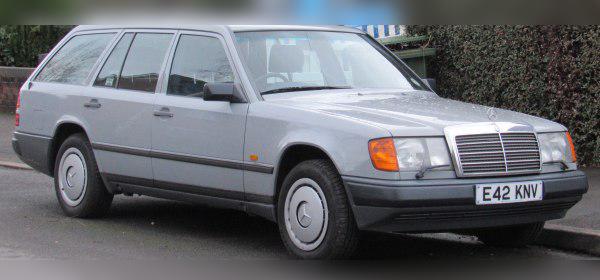
Mercedes-Benz M 103 (3.0L / 180 HP) – Experiences, problems, fuel consumption and buying used
Most important in short (TL;DR):
- Exceptional mechanical durability: The engine block and crankshaft alone can easily exceed half a million kilometers without major issues.
- The injection system is a nightmare today: It is equipped with the Bosch KE-Jetronic system, and it is extremely hard nowadays to find a specialist who knows it well.
- Prone to oil leaks and oil consumption: The head gasket and valve stem seals are standard weak points on this engine due to age.
- High fuel consumption: Do not expect fuel efficiency; in city driving it easily goes over 15 l/100km.
- LPG and this engine do not get along well: Installing a basic LPG system often leads to backfires that destroy the intake.
- Performance: A cruiser made for the highway, with incredibly smooth and refined operation.
Contents
- Introduction and basic information
- Technical specifications
- Reliability and maintenance
- Specific parts and costs
- Fuel consumption and performance
- Additional options, LPG and modifications
- Transmissions and drivetrain
- Buying used and conclusion
Introduction and basic information
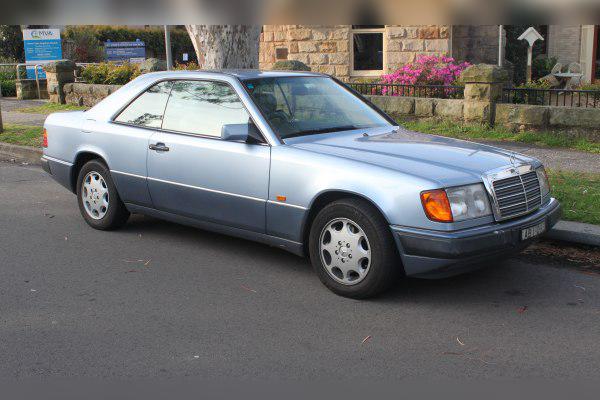
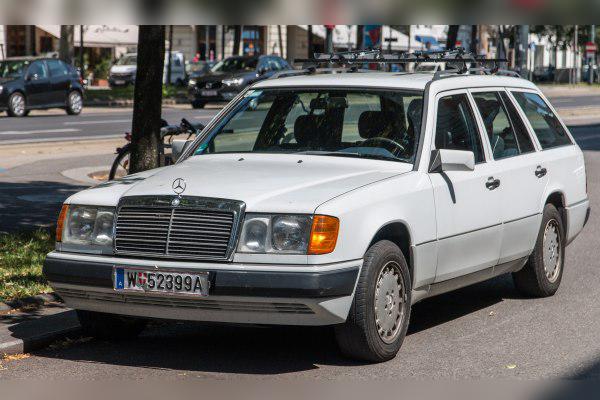
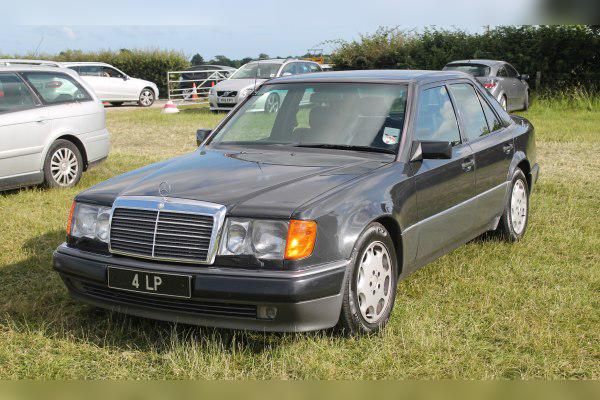
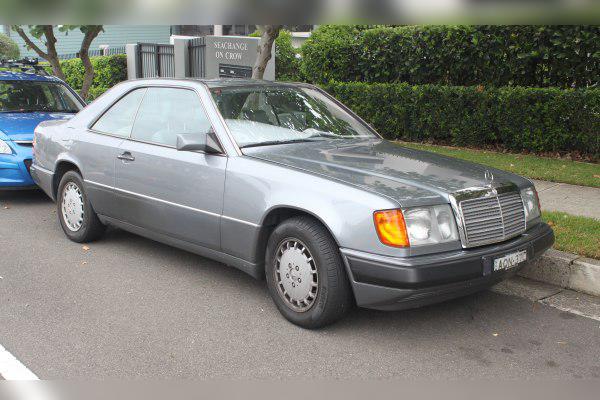
The engine with the code M 103 E 30 (103.983) represents the golden era of Mercedes engineering from the eighties and early nineties. It is an inline six-cylinder petrol engine with a displacement of 3.0 liters, producing 180 HP. It is best known for being installed in the legendary W124 series (sedan, S124 wagon and C124 coupe), with and without 4MATIC all-wheel drive.
This engine used to be a symbol of prestige. Its operation is so well balanced and smooth that people would sometimes place a coin on the valve cover and it would not fall while the engine was running. However, the decades have taken their toll, so owning this engine today requires specific knowledge and a deeper pocket.
Technical specifications
| Specification | Data |
|---|---|
| Displacement | 2962 cc (3.0L) |
| Power | 132 kW (180 HP) |
| Torque | 255 Nm |
| Engine codes | M 103 E 30 / 103.983 |
| Injection type | Bosch KE-Jetronic (mechanical-electronic) |
| Turbo/Naturally aspirated | Naturally aspirated engine |
| Configuration | Inline 6 cylinders (SOHC, 12 valves) |
Reliability and maintenance
Timing chain or timing belt?
This engine uses a timing chain (single-row on earlier units, while the M104 uses a double-row chain). The chain itself is extremely robust, but after 250,000 to 300,000 km the plastic chain guides become brittle and can break. If they break, pieces of plastic fall into the oil pan and can clog the oil pump, which leads to catastrophic engine failure.
Most common failures and symptoms
Although the core mechanics are nearly indestructible, the peripheral components suffer from age:
- Oil leaks at the head gasket: Almost every M103 leaks at the rear right corner of the engine (closer to the cabin). Symptom: Oily engine block and the smell of burnt oil on the exhaust manifold.
- Valve stem seals: The rubber hardens over time. Symptom: Visible bluish smoke from the exhaust when the car idles for a longer period and then you rev it (or during engine braking).
- Ignition system: Distributor cap and rotor. They are sensitive to moisture. Symptom: Engine misfires, hard starting in wet weather, rough idle.
- OVP relay (Over Voltage Protection): The overvoltage relay often fails due to cold solder joints. Symptom: ABS warning light comes on, the car loses power, idle speed fluctuates.
Major service, oil and spark plugs
A classic “major service” does not exist in the sense of replacing a timing belt every 60,000 km. Instead, the chain, tensioner and guides are inspected at 200,000+ km.
The engine takes about 6.0 to 6.5 liters of oil. Due to older tolerances, semi-synthetic or mineral oil with a viscosity of 10W-40 or even 15W-40 is recommended.
Oil consumption: Yes, this engine is factory-allowed to consume oil. Around 0.5 to 1 liter per 1000 km is considered normal, especially if the valve stem seals are old. If it consumes more than that, the cylinder head needs to be overhauled.
Since this is a petrol engine, spark plugs should be replaced every 20,000 to 30,000 km. Standard copper plugs are used, and platinum plugs are often not recommended because the old ignition system works better with copper resistance.
Specific parts (Costs)
Injection system: KE-Jetronic (The biggest drawback today)
The M103 does not use conventional electronic injectors. It has the Bosch KE-Jetronic system (continuous mechanical injection with electronic correction). This is by far the biggest problem with this car today. The mechanical part of the system (fuel distributor, airflow meter plate) wears out.
Failure symptoms: Very hard cold or hot starting, hesitation when you press the throttle, black smoke from the exhaust (overly rich mixture). Overhauling the “K-Jetronic head” is very expensive (depends on the market) and requires a true specialist, of whom there are very few left worldwide.
Turbocharger, DPF, EGR, AdBlue
Good news for fans of simplicity: This engine has none of the above. There is no turbocharger, no DPF filter, no EGR valve (except on some very rare market-specific versions like California), and absolutely no AdBlue. Because of that, emissions-related issues are limited to the condition of the catalytic converter and the lambda sensor.
Fuel consumption and performance
Real-world fuel consumption
This is a heavy car with eighties technology. In city driving, fuel consumption ranges between 14 and 17 l/100km, depending on the condition of the injection system and how heavy your right foot is. On the open road it can go down to 9–10 l/100km, but anything below that is science fiction.
Performance: Is it “sluggish”?
The engine is not aggressive. Its 255 Nm of torque is available relatively high for an old engine, but the way it delivers power is extremely linear. For the heavy W124/S124 body, 180 HP is more than enough for everyday driving, so the car does not feel sluggish, but rather “dignified”. There is no sudden kick of power like with turbo engines; instead, the engine pulls steadily all the way to the redline.
Behavior on the highway
This is its natural habitat. At 130 km/h, depending on the differential ratio and gearbox (4-speed automatic or 5-speed manual), the revs sit at around 3,200 to 3,500 rpm. The engine is then almost inaudible, and cabin insulation is phenomenal.
Additional options, LPG and modifications
LPG installation
Installing LPG on a KE-Jetronic engine is a major risk. Classic “venturi” systems with a mixer (the so-called basic LPG systems) were widely installed. The problem is that this system forms the gas-air mixture directly in the intake manifold. This often leads to backfires, explosions of gas in the intake that physically bend the aluminum airflow meter plate and blow off rubber hoses. When that happens, the car can no longer run properly on either petrol or LPG without repair.
Installing a sequential LPG system is theoretically possible, but it requires expensive modifications and the installation of a completely independent engine management system (so-called EFI conversion), which is very costly (depends on the market).
Chiptuning (Stage 1)
Forget about chiptuning. This is an old naturally aspirated engine with mechanical injection. The ECU (computer) only controls ignition corrections and idle speed, not a fuel map like in modern cars. Attempting to chip it is a waste of money, as the gain is less than 5 HP.
Transmissions and drivetrain (4MATIC)
Types of transmissions
With this engine, the following gearboxes were installed:
- 5-speed manual gearbox (often on W124/C124).
- 4-speed automatic gearbox (the famous 722.3 series of hydraulic automatics).
Transmission failures and maintenance
Automatic gearbox (4-speed): Indestructible if maintained properly. It has no electronics. The most common failure after 300,000 km is loss of reverse gear or jerking when shifting from 2nd to 3rd gear. The cause is worn clutch packs inside the gearbox and springs in the valve body (hydraulic block). Overhauling the gearbox is not cheap, but once it is done, you are set for decades. Oil (ATF Dexron II) and filter must be changed every 60,000 km.
Manual gearbox: Very notchy shift feel, typical for old Mercedes cars. The gear selector linkage (rods under the gearbox) often wears out, which causes a lot of play in the gear lever. Replacing the plastic bushings solves the problem and is very inexpensive.
Clutch and dual-mass flywheel
Most M103 engines come with a solid flywheel (single mass). However, later models (especially wagons under heavy load or models with specific option packages after 1989) may have a dual-mass flywheel. If it has a solid flywheel, the clutch kit is affordable. If a dual-mass flywheel is fitted, replacement is expensive (depends on the market). It is best to check by VIN before buying parts.
4MATIC drivetrain specifics
If you come across a 300 E 4MATIC badge, be extremely cautious. The early Mercedes 4x4 system is incredibly complex and hydraulically controlled. Failures in the transfer case cause oil to leak into the gearbox or vice versa. Parts for this system are now very hard to find and extremely expensive (depends on the market). Unless you are an enthusiast with deep pockets, avoid the old 4MATIC.
Buying used and conclusion
What you must check before buying
- Cold start: Insist that the engine is completely cold when you arrive. It should start “on half a turn of the key” and quickly settle at around 700 rpm. If it cranks for a long time, the KE-Jetronic has a fuel pressure issue.
- Hot start: When the car is warm, switch it off, wait 15 minutes and start it again. If it then needs to crank for a long time, fuel pressure is bleeding off at the “fuel accumulator” or at the injectors.
- Exhaust smoke: Ask the seller to rev the engine while you watch the exhaust. Black smoke indicates poor combustion (injection system problem). Blue smoke indicates oil burning (piston rings or valve stem seals).
- Visual inspection of the block: Check the rear of the engine (near the firewall) to see if oil is running down from the head gasket towards the gearbox.
- Idle in gear: If you are buying an automatic, put it in “D” while holding the brake. The car should not shake and the revs should not drop significantly.
Who is this car for?
The Mercedes M103 3.0 is no longer a car for “cheap transport from point A to point B”. This is an engine for classic-car enthusiasts, people who want an oldtimer (or youngtimer) for weekend drives, cruising and enjoying the sound of an inline-six. Maintenance requires patience and a specialist mechanic. If you find a healthy example with a well-preserved injection system and sorted oil leaks, you will enjoy one of the best-balanced engines ever made.