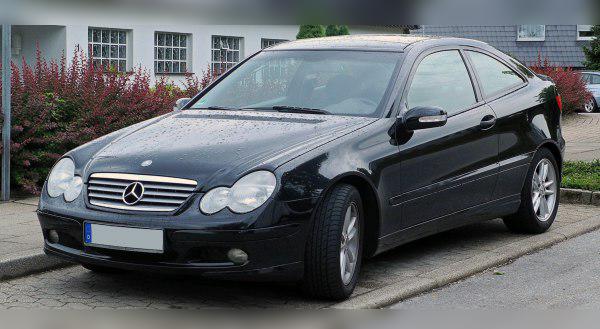
Mercedes 3.2 V6 (M 112.946) – Experiences, problems, fuel consumption and used car buying tips
- Exceptional longevity: One of Mercedes’ most reliable V6 petrol engines, capable of huge mileage with proper maintenance.
- 12-spark-plug system: The engine uses the so‑called “Twin-Spark” system, which means two spark plugs per cylinder – higher service cost.
- Timing chain drive: No timing belt; the chain is extremely durable and rarely needs replacement.
- Excellent on LPG: Thanks to indirect injection (MPI), this engine handles LPG conversion brilliantly without damaging the valves.
- High city fuel consumption: Expect consumption of over 14 liters in urban stop‑and‑go conditions.
- Oil leaks: The most common mechanical issue is leaking valve cover gaskets and oil filter housing seals, which harden and fail over the years.
- Transmissions: Paired with the indestructible 5G-Tronic automatic gearbox, it offers maximum comfort as long as the oil is changed regularly.
Contents
- Introduction: Meet the legendary M 112 V6
- Technical specifications
- Reliability and maintenance
- Specific components and technology
- Fuel consumption and performance
- Extras, LPG and modifications
- Transmissions and drivetrain
- Buying used and conclusion
Introduction: Meet the legendary M 112 V6
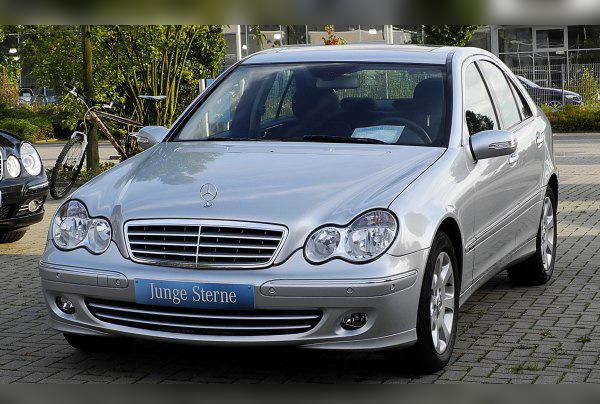
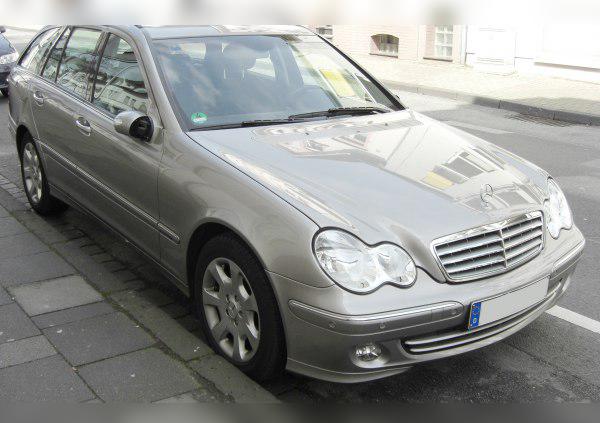
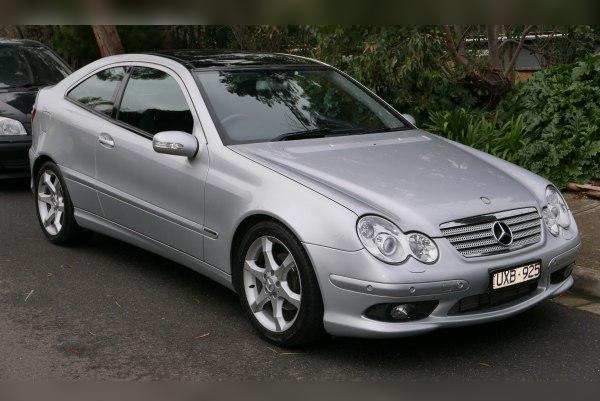
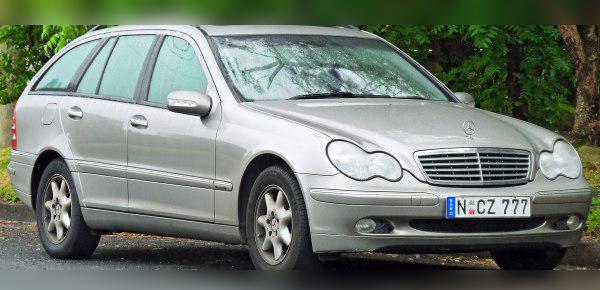
The Mercedes-Benz engine designated M 112.946 belongs to the famous M112 engine family, which in the late nineties and early 2000s formed the backbone of Mercedes’ petrol V6 lineup. The 3.2‑liter version was installed in the C-Class (W203 sedan, S203 estate and CL203 Sport Coupe) both before and after the 2004 facelift.
This is a three-valve-per-cylinder engine with two spark plugs per cylinder, built around an aluminum block. It is known for its exceptional refinement, linear power delivery and “silky” sound. At a time when turbochargers were starting to dominate, this naturally aspirated gem represented the pinnacle of classic, dependable mechanical engineering.
Technical specifications
| Parameter | Data |
|---|---|
| Engine code | M 112.946 |
| Displacement | 3199 cc |
| Power | 160 kW (218 hp) |
| Torque | 308 Nm |
| Injection type | Port fuel injection into intake manifold (MPI) |
| Aspiration | Naturally aspirated |
Reliability and maintenance
Timing system: Chain instead of belt
This engine uses a double-row timing chain. The big advantage is that there is no classic “major service” involving timing belt replacement. The chain is robust and, if the oil is changed regularly, will easily last between 300,000 and 500,000 km. Rattling from the chain on cold start is a sign that the tensioners have weakened or the chain has stretched, and only then should replacement be considered, which is a relatively expensive job (depends on the market).
Most common faults and weak points
Although mechanically extremely robust, the M112 has a few known age-related issues:
- Crankshaft Position Sensor (CPS): This is the most common reason this engine can leave you stranded. Once the engine warms up, the sensor loses signal and the car simply stalls. It will not restart until the engine cools down. Replacement is not expensive (depends on the market), but proper diagnostics is required.
- Oil leaks at gaskets: Valve cover gaskets and oil cooler seals become hard and brittle over time due to heat. The result is oil running down the engine block and exhaust manifolds, causing a strong burnt-oil smell in the cabin.
- Crankshaft pulley (harmonic balancer): The rubber insert in the crankshaft pulley deteriorates over time. If this is not noticed in time (through vibrations or visual inspection where the pulley “wobbles”), the metal part can separate and seriously damage the front timing cover.
- Mass Air Flow sensor (MAF): Causes rough idle, lack of power and increased fuel consumption. Always buy an original or high-quality replacement (Bosch), as cheap sensors do not work properly on this engine.
Engine oil: Capacity, grade and consumption
The lubrication system has a relatively large capacity. The engine takes about 8 liters of oil (the exact amount depends on the shape of the oil pan in the specific chassis; always check with the dipstick, which on some models has to be purchased separately because they only have an electronic level sensor). Fully synthetic oil of grade 5W-40 or 5W-30 with MB 229.3 or MB 229.5 approval is recommended.
As for oil consumption, Mercedes’ tolerance allows up to 0.8 liters per 1,000 km, but in practice a healthy M112 should not consume more than 0.5 to 1 liter per 10,000 km. If it consumes more, the problem is usually not piston rings but valve stem seals or a clogged crankcase ventilation system (PCV), which creates pressure and forces oil out through the gaskets.
Spark plugs and service interval
Since this is a “Twin-Spark” V6 petrol engine, it has 12 spark plugs (two per cylinder). Spark plug replacement is recommended every 90,000 to 100,000 km or every 5 years. This means that a minor service that includes spark plugs is noticeably more expensive than on conventional engines. Symptoms of worn spark plugs or leads are slight hesitation under acceleration and reduced performance.
Specific components and technology
This engine was designed in the old-school way, meaning it is free of many emission-related systems that today cause headaches for owners of newer cars.
- Flywheel: If the engine is paired with a manual gearbox, it uses a dual-mass flywheel. Versions with an automatic transmission do not have a dual-mass flywheel; instead they use a hydraulic torque converter, which is far more durable and is not considered a regular wear item.
- Injection system: It uses MPI (Multi-Point Injection), which means the injectors spray fuel into the intake manifold, before the valves. The injectors operate at low pressure, are extremely durable, rarely fail and can be cleaned with fuel additives without issues. Carbon buildup on intake valves (a major problem on direct-injection engines) does not occur here because the fuel washes the valves.
- Turbo, DPF, AdBlue: As this is an older-generation naturally aspirated petrol engine, it has no turbocharger (nor intercooler), no DPF filter (particulate filters are for diesels only), and absolutely no AdBlue system.
- EGR valve: This engine does have an exhaust gas recirculation system, but unlike on diesels it rarely causes serious issues on petrol engines because the exhaust gases are cleaner and contain no oily soot. Cleaning the EGR passages may only be needed at very high mileage (over 300,000 km).
Fuel consumption and performance
With 218 hp in the W203/S203 chassis (weighing around 1,500 kg), this engine is anything but “lazy”. Acceleration is linear and very strong, with no turbo lag, and the sound above 4,000 rpm is fantastic. However, the weight and large displacement show at the fuel pump.
- City driving: Real-world consumption in stop‑and‑go traffic, especially with the automatic gearbox, will be between 14 and 16 liters per 100 km. In winter, before the engine warms up, this figure can be even higher.
- Highway and mixed driving: On country roads, consumption can drop to a reasonable 8 to 9 liters. Mixed average consumption is usually around 11 to 12 l/100 km.
- Motorway: This is the engine’s natural habitat. At 130 km/h, paired with the 5G-Tronic automatic, the engine spins at a very relaxed ~2,600–2,800 rpm (depending on the differential ratio in the specific body style). The ride is quiet, and there is plenty of power in reserve for overtaking at these speeds. Consumption at 130 km/h is around 9.5 to 10.5 liters.
Extras, LPG and modifications
Is this engine suitable for LPG?
The answer is: It’s perfect. Thanks to the aluminum block, durable valves and simple MPI injection, installing a sequential LPG system is completely safe. It is recommended to fit a higher-quality LPG kit (with a stronger vaporizer given the 218 hp) and fast injectors. With LPG, the running costs of this V6 drop to the level of an average 2.0‑liter diesel.
Remapping (Stage 1 tuning)
On naturally aspirated petrol engines, ECU remapping is generally not worth it. Without adding a supercharger or turbo, changes to ignition and fuel maps can yield at most 10 to 15 hp, which in practice is barely noticeable on a car of this weight. Instead of spending money on tuning, it is better to refresh the ignition system (spark plugs, leads) and clean the intake, which will restore the engine to its factory performance.
Transmissions and drivetrain
The following gearboxes were offered with the M 112.946 engine in the C-Class:
- 6-speed manual gearbox: Rare in combination with the 3.2 engine. It is reliable but suffers from a somewhat notchy shift feel, which is characteristic of Mercedes from that era. Failures are rare, but replacing the clutch kit and dual-mass flywheel on this model can be very expensive (from 700 to 1,200 euros – depends on the market). The oil in the manual gearbox should be changed every 80,000 to 100,000 km.
- 5-speed automatic gearbox (5G-Tronic / 722.6): This is the most common and best choice for this engine. The gearbox is legendary for its durability if maintained properly. It does not have a dual-mass flywheel. The most common issues are:
- Conductor plate: The printed circuit board with speed sensors inside the gearbox often fails, causing the transmission to go into “limp” mode (emergency mode, usually stuck in 2nd gear).
- Gearbox connector (pilot bushing): The seals on the electrical connector through which the wiring enters the gearbox deteriorate, so oil leaks out or wicks up through the wiring all the way to the transmission control module (TCM) under the hood, which can cause a short circuit. This is a small, inexpensive part and should always be replaced at every transmission service.
Transmission service: Oil and filter in the 5G-Tronic automatic must be changed every 60,000 kilometers. Mercedes initially claimed these gearboxes were “sealed for life”, which led to a huge number of failures before they introduced a mandatory change interval.
Buying used and conclusion
What exactly should you check before buying?
- Cold start: The engine should start immediately, without any metallic rattling (chain) and without misfiring or stumbling (vacuum leaks, MAF sensor issues).
- Valve cover inspection: Shine a flashlight around the engine, at the joint between the valve cover and the head. If you see thick deposits of black sludge or fresh oil traces, budget for gasket replacement (not extremely expensive, but labor-intensive).
- Crankshaft pulley: With the engine idling, look at the largest pulley at the very bottom of the engine. If it “wobbles” or runs out of true, it must be replaced urgently before it causes serious damage.
- Automatic gearbox: During the test drive, gear changes must be smooth, without jolts, especially when downshifting from second to first while coming to a stop.
- Diagnostics (mandatory): Connect the car to Mercedes Star Diagnosis to check live engine parameters – long-term fuel trims will tell you whether the engine is drawing unmetered air and what condition the oxygen sensors and catalytic converters are in; this car has four of them!
Who is this engine for?
The Mercedes M112 3.2 V6 is not for someone looking for an economical A‑to‑B appliance. This is an engine for enthusiasts of classic Mercedes engineering – durable, refined, wonderful-sounding and mechanically straightforward, devouring highway miles without stress. If you are prepared to install a quality LPG system and pay for twelve spark plugs and eight liters of top‑grade oil at each minor service, this car will reward you with reliability and driving comfort that few modern four‑cylinder engines can match.