Experiences, issues, fuel consumption and used-car buying guide: Mercedes V8 engine M 273.963 (5.5L / 388 hp)
Key points (TL;DR):
- Huge and robust old-school naturally aspirated V8, without turbochargers and the complex emissions systems of modern diesels.
- Excellent candidate for LPG conversion thanks to its port fuel injection (MPI).
- Main weak points: cracking of the plastic flaps in the intake manifold and, on early series, an issue with the soft material of the timing chain gear (although this specific engine code is mostly found in later model years).
- Fuel consumption is astronomical (especially in the G-Class); city driving rarely drops below 20 l/100 km.
- It is paired exclusively with automatic transmissions (7G-Tronic), where regular oil changes are critical for the longevity of the conductor plate (TCM).
Contents
- Introduction and engine purpose
- Technical specifications
- Reliability, failures and maintenance
- Specific parts and costs
- Fuel consumption, performance and driving feel
- Additional options (LPG and Chiptuning)
- Transmission and power delivery
- Buying used and conclusion
Introduction and engine purpose
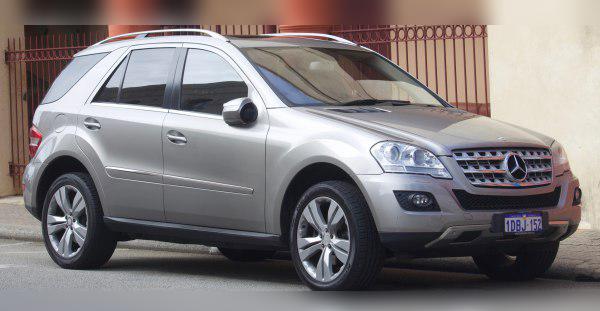
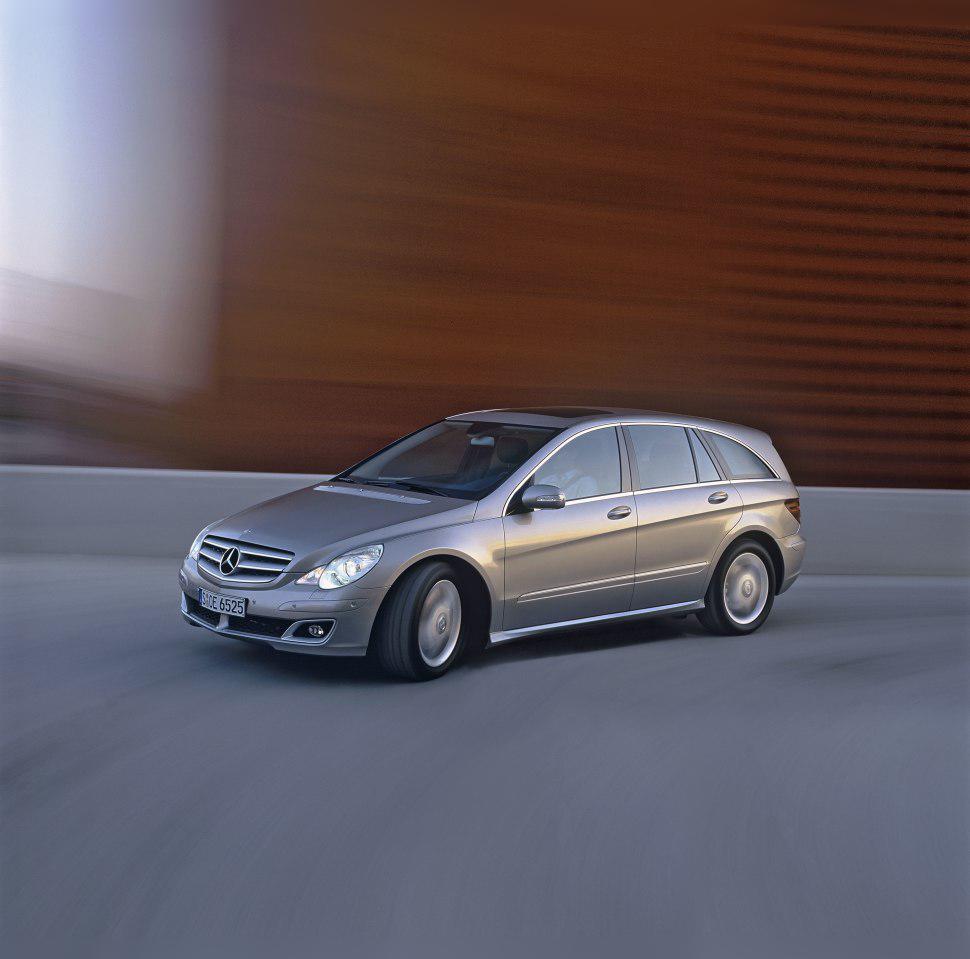
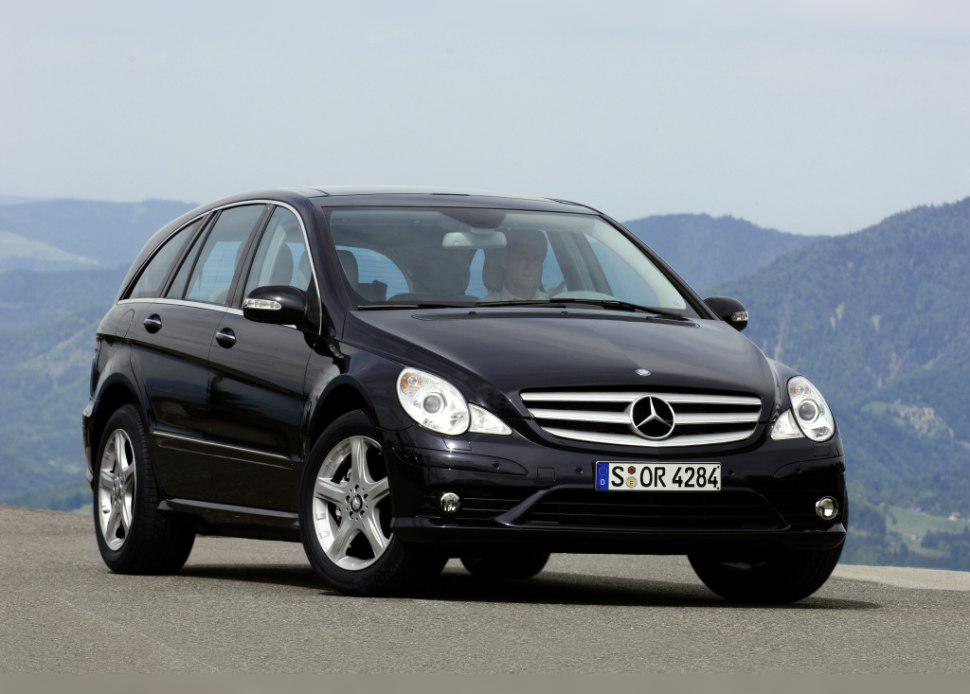
When talking about Mercedes’ M273 engine in its full 5.5‑liter displacement, we’re talking about an era when displacement meant everything. The engine with code M 273.963 represented the peak of the “standard” lineup before stepping into AMG territory. It was installed in the heaviest vehicles from Stuttgart: the G‑Class (W463), the luxury GL (X164), the robust ML (W164) and the niche R‑Class.
This is an engine designed to haul over 2.5‑ton bodies without breaking a sweat. There’s no turbo to fail, no direct injection to build up carbon on the valves – just pure, raw naturally aspirated V8 sound and power. However, owning this kind of “power plant” comes with its own specific maintenance rules.
Technical specifications
| Parameter | Value |
|---|---|
| Displacement | 5461 cc (5.5 L) |
| Power | 285 kW (388 hp) |
| Torque | 530 Nm |
| Engine code | M 273.963 |
| Injection type | Port fuel injection (MPI) |
| Aspiration | Naturally aspirated (No turbo) |
| Fuel type | Petrol |
Reliability, failures and maintenance
Timing chain and the “notorious” gear
The M273 uses a timing chain. Early engines (2006–2008) suffered from a very well‑known issue – the idler gear over which the chain runs was made from material that was too soft, which led to its wear, chain stretch and timing shift (Check Engine light, codes P0016, P0017).
Since the .963 variant is mostly reserved for facelift models from 2008 onwards (especially in the G and ML classes), most of these engines have the updated, reinforced gear, but checking by VIN is mandatory before purchase. A “major service” in the classic sense (with belt replacement every 100k km) does not exist. The chain is designed to last a long time, but after 200,000 km a preventive check of its tension is recommended. If the chain needs replacing, the cost is high (market‑dependent), as it requires serious disassembly of the front of the engine.
Intake manifold failures and oil leaks
The most common and most annoying failure on the M273 engine is the intake manifold. Inside the manifold there are plastic tumble flaps used to optimize airflow at different rpm. The small plastic linkages that actuate them become brittle over time due to heat and oil vapors and eventually crack. Symptoms include rough idle, loss of power and a check engine light. Complete intake manifold replacement is quite expensive (market‑dependent), but mechanics today successfully install aluminum linkages as a permanent solution.
The engine is also prone to oil leaks at the plastic camshaft plugs at the rear of the engine and at the oil cooler gasket. Fixing these leaks is not excessively expensive, but it does require attention so that oil doesn’t drip onto the hot exhaust (you’ll notice a burning smell in the cabin).
Service intervals and fluids
This V8 takes an impressive 8.5 liters of oil. High‑quality synthetic oil with a viscosity of 5W‑40 or 0W‑40 (Mercedes spec 229.5) is recommended. Do the oil service at a maximum of every 15,000 km.
As for oil consumption, the M273 consumes oil by design. Up to 1 liter per 3,000–5,000 km is considered completely normal, especially if the engine is regularly revved higher.
There are 8 spark plugs, and their service life is around 90,000 to 100,000 km. If the car runs on LPG, it’s recommended to replace them every 60,000 km.
Specific parts and costs
The good news is what this engine DOES NOT HAVE. It’s a naturally aspirated petrol engine. Forget about insanely expensive turbocharger failures (there are none), forget about clogged DPF filters and AdBlue pump and heater issues – none of that exists here. There is an EGR valve (exhaust gas recirculation), but on petrol engines it rarely causes serious clogging issues like on diesels and is relatively easy to clean.
The fuel system is the old, reliable MPI (Multipoint Injection). The injectors operate at low pressure, injecting fuel into the intake manifold before the valves (which also helps keep the intake valves clean from carbon). They are very durable, not nearly as sensitive to poor fuel quality as modern high‑pressure piezo injectors, and a used set or refurbishment is not expensive.
The engine does not have a conventional dual‑mass flywheel because it is paired exclusively with an automatic transmission via a torque converter. This means you don’t face the sudden cost of replacing a clutch and flywheel set, which is typical for manual transmissions on powerful engines.
Fuel consumption, performance and driving feel
Let’s clear this up right away – this engine is absolutely not “lazy”, no matter what it’s installed in. With 530 Nm of torque available very early, it rips the heavy 2.5‑ton G‑Class and the spacious GL off the line. Acceleration is linear, without the lag you get from turbo engines, and the V8 sound is deep and full.
Still, you pay a high price for this power at the pump. Real‑world fuel consumption:
- City driving: 18 to 25 l/100 km. In the G‑Class (which has the aerodynamics of a brick) and in heavy stop‑and‑go traffic, expect over 20 liters. In the ML it’s somewhat lower (around 18 liters).
- Country roads: Around 11–13 l/100 km with a light right foot.
- Motorway: At 130 km/h the engine cruises incredibly relaxed. Thanks to the 7‑speed gearbox, revs are low (around 2,200–2,400 rpm). Consumption at this speed is between 13 and 15 l/100 km, depending on the model.
Additional options (LPG and Chiptuning)
LPG conversion
Given the fuel consumption, this is a crucial topic. Thanks to its port (MPI) injection, this engine is an absolutely perfect candidate for a sequential LPG system. Many drivers in Europe choose exactly this engine to drive cheaply on gas while avoiding diesel‑related problems.
However, with 388 hp, the installation has to be top‑notch. It requires powerful vaporizers (often two in parallel) and high‑flow injectors so that the engine doesn’t run “lean” at high rpm, which could burn the valves.
Chiptuning (Stage 1)
Short answer: It’s not worth it. Since there is no turbocharger whose boost can be increased via software, remapping this naturally aspirated engine yields negligible results. With a Stage 1 map you’ll gain at most an extra 15–25 hp, which is completely unnoticeable in such a heavy vehicle. Save your money for regular maintenance.
Transmission and power delivery
This engine comes paired exclusively with Mercedes’ famous 7G‑Tronic (code 722.9) automatic, while later post‑facelift models use the improved 7G‑Tronic Plus gearbox. There are no manual transmissions on offer – and that’s a good thing.
The gearbox is extremely comfortable when healthy, but it has its weak points. The most common failure is the transmission computer/conductor plate (TCM – Conductor plate), which is immersed in the transmission fluid itself. The speed sensors (Y3/8n1, Y3/8n2) on it can fail due to overheating or metal particles in the oil, which puts the gearbox into limp mode or causes harsh shifts between 1st and 2nd gear and vice versa. Rebuilding this plate is now routine work for good electronics specialists and is relatively expensive (market‑dependent).
For the gearbox to last long and shift smoothly, it is absolutely crucial to change the oil and filter every 60,000 km. Always ask the previous owner when this was last done, and if there is no valid proof – that should be your first investment after purchase.
Buying used and conclusion
Buying a used Mercedes with the 5.5 V8 is not an investment in low registration fees and cheap inspections. These are cars you buy with your heart.
What to check before buying?
- Cold start: Ask the seller not to start the car before you arrive. When you crank the cold engine, listen for rattling from the front. If it rattles loudly for the first 2–3 seconds, the chain or chain tensioners are due for replacement.
- Condition of intake flaps: Visually inspect the front of the engine under the plastic cover – check whether the linkages on the intake manifold are broken or loose.
- Engine mounts: The V8 has huge torque. Put the gearbox in “D”, press the brake firmly and give it a bit of throttle (brake torque). If the engine moves up and down excessively and transmits strong vibrations to the body, the mounts are worn (and they’re not cheap).
- Diagnostics: A scan with a proper Star diagnostic tool is mandatory to check the fault history related to the gearbox or cam timing.
Who is this engine for? If you find a car with a healthy intake manifold and timing chain, you’re getting one of the most robust petrol engines of its time. It offers unmatched prestige, a superb sound, immense comfort and strong pulling power. With a good LPG installation, fuel costs become acceptable, and you enjoy old‑school German V8 quality without worrying about turbos, DPFs and EGR soot that plagues modern diesels. Just prepare an adequate budget for regular ongoing services, which must be done without compromise.