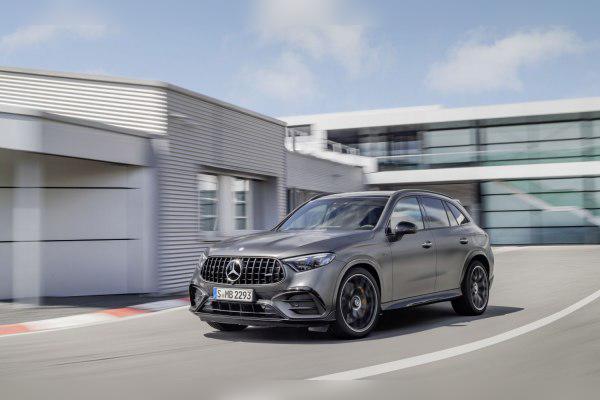
Mercedes-Benz M139 (GLC 63 S E PERFORMANCE) – Experiences, issues, fuel consumption and used car buying guide
- The most powerful production 2.0 four‑cylinder engine in the world (476 hp from the combustion engine alone).
- In combination with the hybrid system it delivers a massive 680 hp and 1020 Nm of torque.
- Uses F1 technology: an electric turbocharger that completely eliminates turbo lag.
- Maintenance is very expensive and requires exclusively authorized or highly specialized workshops.
- The engine is already factory‑tuned to its limits, so chip tuning and modifications are not recommended.
- It does not have a conventional dual‑mass flywheel, but a complex MCT gearbox with a wet clutch.
Contents
- Introduction and basic information
- Technical specifications
- Reliability, maintenance and failures
- Specific parts and costs
- Fuel consumption and performance
- Additional options and modifications
- Transmission and power delivery
- Buying used and conclusion
Introduction and basic information
When Mercedes-AMG decided to replace the V8 engine in the GLC 63 with a four‑cylinder, the automotive world was in shock. However, the engine designated M139 (in this longitudinal variant with a hybrid add‑on) is a true engineering marvel. Installed in the Mercedes-Benz GLC SUV (X254) AMG 63 S E PERFORMANCE, this 2.0‑liter unit produces 476 hp on its own, while in synergy with the electric motor on the rear axle it delivers a total output of an incredible 680 hp. This is not an ordinary engine; this is racing technology adapted for everyday use, which brings fascinating performance but also extremely high maintenance demands.
Technical specifications
| Parameter | Data |
|---|---|
| Engine displacement | 1991 cc |
| Engine power (ICE only) | 350 kW (476 hp) |
| Total power (Hybrid) | 500 kW (680 hp) |
| Torque (ICE / Total) | 545 Nm / 1020 Nm |
| Engine code | M139l (longitudinal) |
| Injection type | Combined (direct and port fuel injection) |
| Charging type | Electrically assisted turbocharger (Electric Exhaust Gas Turbocharger), intercooler |
Reliability, maintenance and failures
Timing chain, major service and intervals
The M139 engine uses a timing chain, not a timing belt. Due to the incredible stresses inside the block, the chain is designed to be robust, but that does not mean it is lifetime. A classic “major service” in the sense of belt replacement does not exist, but an inspection of the timing system is recommended after 120,000 to 150,000 km. Timing work is very expensive (depends on the market) because the engine bay is extremely cramped.
Oil and regular servicing
This is a high‑performance unit with a specific output of an incredible 238 hp per liter of displacement. The engine takes about 6 liters of top‑grade synthetic oil (most often 0W‑40 or 5W‑40 that meets strict AMG specifications). An oil service should be done at a maximum of every 10,000 km, and if you drive more aggressively, even every 7,500 km. Oil consumption is a normal occurrence with this engine due to high operating temperatures and ring tolerances adapted to racing conditions. Topping up 0.5 to 1 liter per 5,000 km should not worry you, but sudden consumption accompanied by blue smoke indicates a problem with the turbo or piston rings.
Spark plugs and most common issues
Since this is a petrol engine with enormous boost pressure, spark plugs are replaced very frequently – the recommendation is every 20,000 to 30,000 km. Ignoring this interval leads to misfires, which can damage the cylinders. The most common issues with this engine and vehicle do not stem from the mechanics of the block itself, but from the complex cooling system (which has several independent circuits for the engine, turbo, battery and electronics) and software faults in the hybrid control system.
Specific parts and costs
Injection system and particulate filters
The engine uses a sophisticated system that combines direct (into the cylinder) and port (into the intake manifold) petrol injection. Injectors operate at very high pressure and are extremely sensitive to fuel quality. It is recommended to use only high‑octane fuel (100 RON). Since this is a petrol engine, it does not have a DPF filter, does not have an EGR valve in the classic diesel sense and does not use AdBlue fluid. However, it is equipped with an OPF (Otto Particulate Filter) – a particulate filter for petrol engines. If the car is driven exclusively in the city, the OPF can clog, which requires regeneration on the open road.
Revolutionary turbocharger
What sets this engine apart is its turbocharger. This is not an ordinary turbo, but a system taken directly from Formula 1. Between the compressor and turbine wheels there is a small electric motor that spins the turbo before the exhaust gases arrive. The lifespan of this component depends on regular cooling and oil quality. If this electric turbocharger fails, replacement costs are extremely high (depends on the market), because it is replaced as a complete and technologically very complex assembly.
Fuel consumption and performance
Real‑world fuel consumption
Since the GLC 63 S E PERFORMANCE is a plug‑in hybrid, fuel consumption varies drastically. If the battery is charged and you drive in the city on electric power, fuel consumption can be 0 l/100 km. However, once the battery is depleted, you are driving an SUV weighing over 2.2 tons powered by a petrol engine at high revs. In such conditions, real‑world city consumption easily exceeds 14–16 l/100 km. In mixed driving with a full battery you can expect around 7–9 l/100 km, but that depends on how disciplined you are with charging.
On‑road performance
The question of whether this engine is “lazy” for such a body is completely pointless. With 680 hp and 1020 Nm at its peak, the 0–100 km/h sprint takes just over 3 seconds. The engine pulls incredibly hard from any rpm thanks to electric assistance. On the motorway, at 130 km/h, thanks to the nine‑speed gearbox, the engine cruises at very relaxed revs (around 2,000 rpm), providing top‑class comfort and quiet running. Fuel consumption on the motorway is around 9–11 l/100 km.
Additional options and modifications
LPG and chip tuning
Is the M139 suitable for LPG conversion? Absolutely not. Installing an LPG system on an engine that has both direct and port injection, an electric turbo and produces almost 240 hp per liter of displacement is technically impossible without catastrophic consequences for the engine. This is a temple of engineering, not a workhorse for saving on fuel.
As for chip tuning (Stage 1), the room for safely increasing power is **minimal**. The engine is pushed to the limit from the factory. Any increase in boost pressure significantly compromises reliability and shortens the lifespan of the turbo and piston rings. In addition, synchronizing modified engine software with the complex hybrid and electric system on the rear axle is a nightmare for tuners.
Transmission and power delivery
AMG SPEEDSHIFT MCT 9G
This model does not come with a manual gearbox. It is equipped exclusively with the nine‑speed AMG SPEEDSHIFT MCT 9G automatic transmission. What is specific about this gearbox is that it does not have a conventional hydrodynamic torque converter, nor a conventional dual‑mass flywheel. Instead, it uses a so‑called wet start‑off clutch with multiple plates. This reduces weight and improves throttle response, but can cause slight jerks when creeping in city traffic – which is a normal characteristic of this gearbox, not necessarily a fault.
Transmission maintenance
Replacing the wet clutch pack due to wear is a very expensive job (depends on the market). To avoid premature failures, the transmission oil must be changed strictly every 50,000 km, and if you frequently use the Launch Control (Race Start) function or drive the car on track, the interval should be halved to 25,000 km.
Buying used and conclusion
Buying a used GLC 63 S with the M139 engine requires enormous caution. Here is what you must check:
- Service history: If the car has not been serviced strictly on time, walk away. Oil is the lifeblood of this engine.
- Diagnostics at an authorized dealer: Due to the complexity of the hybrid system (E PERFORMANCE), generic diagnostic tools will not show the condition of the high‑voltage battery or communication errors between the combustion engine and the electric motor.
- Cooling system condition: Check the fluid level in all reservoirs (for the engine, intercooler and hybrid system). Mixing of fluids indicates serious damage.
- Noise on cold start: The chain must not rattle. If you hear rattling in the first few seconds, the timing system is due for replacement.
Conclusion: The Mercedes-Benz M139 combined with the plug‑in hybrid system is a true marvel of modern technology. It is intended for enthusiasts with deep pockets who want brutal acceleration, the most advanced motorsport‑derived technology and the flexibility of electric driving in the city. It is not intended for those who expect cheap maintenance or simple repairs. If you are looking for long‑term, stress‑free ownership, older V8 models are mechanically simpler, but if you want the pinnacle of current automotive engineering, the M139 hybrid has no real competition on the market.