Mercedes OM 640.941 (A 200 CDI / B 200 CDI) – Experiences, problems, fuel consumption and used car buying tips
- Reliable engine with a timing chain that ensures longevity, but requires regular inspection of the tensioner.
- Power output of 103 kW (140 hp) and 300 Nm provides excellent performance; the engine is not “lazy” at all for the A- and B‑Class body.
- The specific “sandwich” floor construction of these cars means that for many major repairs the engine has to be removed, which makes labor costs very high.
- The Autotronic (CVT) gearbox is the biggest potential weak point – it requires strict servicing every 60,000 km and is prone to expensive failures of the electronics and valve body.
- The EGR valve and DPF filter are weak points if the car is predominantly driven in stop‑and‑go city traffic.
- Injector washer leaks (“black death”) are a common problem that must be dealt with in time.
- This is not an engine with an AdBlue system, which is an advantage for long‑term maintenance.
Contents
- Introduction
- Technical specifications
- Reliability and maintenance
- Specific parts and costs
- Fuel consumption and performance
- Additional options and modifications
- Gearbox
- Buying used and conclusion
Introduction
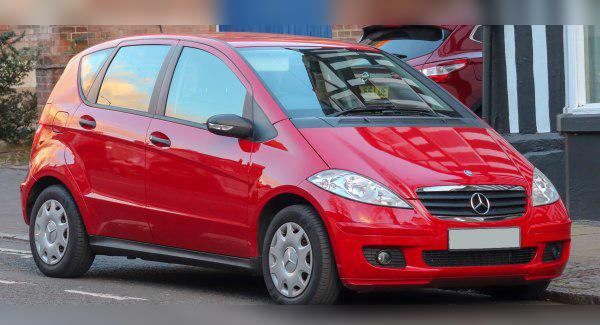
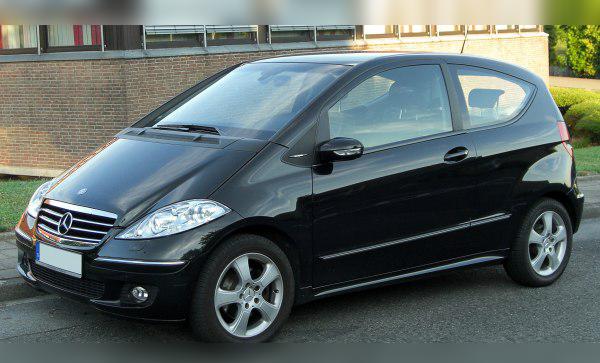
The OM 640.941 engine is a 2.0‑liter diesel unit that was installed in Mercedes‑Benz A‑Class (W169/C169) and B‑Class (W245) models, including the 2008 facelift versions. It was designed specifically for the innovative, but mechanics‑unfriendly, “sandwich” platform. Because of this, the engine is tilted at a very steep angle and designed so that, in the event of a frontal collision, it slides underneath the passenger compartment floor. While brilliant from a safety standpoint, this kind of engineering makes access to many components extremely difficult. The 140 hp version (badged 200 CDI) is the most powerful diesel option in these models and offers a fantastic balance between power and economy.
Technical specifications
| Parameter | Value |
|---|---|
| Engine displacement | 1991 cc |
| Power | 103 kW (140 hp) |
| Torque | 300 Nm |
| Engine code | OM 640.941 |
| Injection type | Common Rail (Direct injection) |
| Aspiration | Turbocharger (VGT), intercooler |
Reliability and maintenance
Does this engine have a timing belt or a chain?
The OM 640.941 uses a timing chain. It is quite robust by itself, but if maintenance is neglected or oil is changed too infrequently, the chain tensioners can weaken. This is recognized by rattling noise on a cold start.
What are the most common failures on this engine?
The most common issue on this engine are copper injector washers that start leaking, allowing compression and exhaust gases to escape past the injector into the engine bay. This creates a tar‑like deposit (colloquially known as “black death”). Symptoms include a strong exhaust smell in the cabin when the ventilation is running at a standstill, as well as a “squeaky” hissing sound while the engine is running. In addition, the glow plugs tend to seize in the cylinder head; they can easily snap during removal, so they should only be removed on a hot engine, using special penetrating sprays. Due to the sandwich floor, if a glow plug breaks, extracting it requires a lot of work and removing the cylinder head, which is very expensive.
At what mileage is the major service due?
Since the engine has a chain, there is no classic “major service” with timing belt replacement. However, it is recommended to replace the auxiliary (serpentine) belt, idler pulleys, tensioner and water pump at around 100,000 to 120,000 km. Chain condition should be checked around 200,000 to 250,000 km. If the chain needs to be replaced, this involves lowering the entire front subframe together with the engine due to lack of space (high labor costs).
How many liters of oil does the engine take and which grade is recommended?
This engine takes between 5.5 and 5.8 liters of oil (it is always best to fill to the middle of the dipstick). Fully synthetic 5W‑30 oil that meets Mercedes specification MB 229.31 or 229.51 is recommended (mandatory Low SAPS oil because of the DPF filter).
Does it consume oil between services?
It depends on engine condition and driving style. A healthy OM 640.941 usually consumes up to 0.5 liters of oil per 10,000 km, which is completely normal. If it loses more than 1 liter between services, seals, piston rings and the turbocharger itself should be checked, as the turbo can let oil into the intake.
How long do the injectors last and how reliable are they?
The direct injection system uses high‑quality Bosch solenoid injectors. They have proven to be very durable and rarely fail before 250,000–300,000 km, provided that quality Euro diesel is used and the fuel filter is changed regularly. If the injectors start to leak (overfuel), the car will be hard to start when hot and will produce black smoke under acceleration.
Specific parts (costs)
Does the engine have a dual‑mass flywheel?
Yes, versions paired with a manual gearbox are equipped with a dual‑mass flywheel (DMF). In addition to the part itself, replacement of the clutch and DMF is expensive (depends on the market) because it again requires complex work and freeing up space around the engine.
What type of injection system does it have?
It is a Common Rail system. Although the injectors are reliable, the rail pressure control valve can sometimes fail, causing the engine to stall while driving or switch into limp‑home mode.
Does the engine have a turbocharger and what is its lifespan?
The engine uses a single variable‑geometry turbocharger (VGT). Its lifespan is long, usually over 200,000 km, if oil services are done regularly and the engine is not pushed hard before reaching operating temperature. Failure manifests itself as increased whistling, loss of power, grayish smoke from the exhaust and increased oil consumption.
Does this model have DPF and EGR?
All models have an EGR valve, which regularly gets dirty, especially on cars used mainly in the city (A‑ and B‑Class are often used that way). A clogged EGR causes engine hesitation and black smoke. The DPF filter (diesel particulate filter) was fitted as standard on most models from 2008 (facelift), while earlier cars had it as an option depending on the market (it is best to check by VIN). The DPF becomes a headache if the car is rarely driven on the open road, where active regeneration at high exhaust temperatures can take place.
Does it have an AdBlue system?
No. The OM 640 belongs to an older generation (mostly Euro 4 and Euro 5 in later years) and does not use AdBlue fluid for exhaust gas treatment, which eliminates potential issues with AdBlue pumps, injectors and heaters.
Fuel consumption and performance
What is the real‑world fuel consumption in city driving?
Although the A‑ and B‑Class look compact, they are quite heavy (an empty B‑Class weighs around 1.4 tons). In stop‑and‑go traffic jams, real‑world consumption is between 7.5 and 8.5 l/100 km. Models with the Autotronic gearbox use up to half a liter more in the city compared to the manual.
Is the engine “lazy”?
Not at all. With 140 hp (103 kW) and 300 Nm of torque available from just 1,600 rpm, this is a very lively engine for these body styles. It pulls very well in mid‑range acceleration and is definitely the best engine choice in the entire lineup for these models if you care about performance with a fully loaded car.
How does it behave on the motorway?
A car with this engine feels perfectly at home on the motorway. Sixth gear on the manual gearbox is quite long, so at 130 km/h the crankshaft is spinning at a very relaxed roughly 2,200–2,400 rpm. Engine noise is minimal, and fuel consumption at that speed drops to around 5.5–6.0 l/100 km.
Additional options and modifications
How far can the engine be tuned (Stage 1)?
The OM 640’s mechanicals handle remapping very well. A standard Stage 1 remap usually raises power from 140 hp to around 170 hp, while torque increases to about 360–380 Nm.
Important warning: Tuning is recommended only for versions with a manual gearbox (provided the dual‑mass flywheel is in good condition). If you have an Autotronic (CVT) gearbox, absolutely avoid any power increase, as this transmission cannot reliably handle even the stock 300 Nm in the long run without accelerated wear!
Gearbox
Which gearboxes were installed?
Reliable 6‑speed manual gearboxes were fitted, as well as the Autotronic – a stepless CVT automatic transmission (code 722.8).
What are the most common failures of the manual and automatic gearboxes?
Manual gearbox: The gearbox itself is excellent. The most common problems are a worn‑out clutch and dual‑mass flywheel. Symptoms of a worn DMF include strong vibrations at idle, a knock when starting/stopping the engine, and a jolt when changing gears.
Autotronic (CVT): This is the weakest point of the A‑ and B‑Class. The most common failures are electronics inside the gearbox (speed sensors on the conductor plate), as well as the valve body. Wear and stretching of the specific chain inside the gearbox also occurs. Symptoms include jerking while driving, engine revs rising without corresponding acceleration (slipping), and the “Transmission Visit Workshop” message on the instrument cluster. Repairing an Autotronic gearbox is very expensive (depends on the market), to the point where it can sometimes exceed the value of the entire vehicle.
At what mileage should the gearbox be serviced?
For the manual gearbox, it is recommended to change the oil every 100,000 km as a preventive measure. For the Autotronic gearbox the rule is strict – the oil and internal filter must be changed every 60,000 km. Any delay drastically shortens the service life of the valve body.
Buying used and conclusion
When buying a used Mercedes A 200 CDI or B 200 CDI with the OM 640.941 engine, make sure to do the following:
- Open the bonnet, remove the plastic engine cover if the seller allows it, and smell around the injectors. If you notice a strong smell of diesel or soot, the injector washers need to be replaced immediately.
- Listen to the engine in the first few seconds after a completely cold start (ideally after the car has been parked outside overnight). If you hear a loud metallic rattle from the right‑hand side, the timing chain is due for replacement.
- If you are buying a model with the Autotronic gearbox, test‑drive the car both when it is completely cold and after the oil has warmed up following 20 minutes of driving. Revs must rise and fall linearly and smoothly, without any sudden jerks. If the gearbox “kicks” when shifting from P to R or D, look for another example.
- Connect a diagnostic tool and check DPF saturation (if fitted) and EGR valve parameters.
Who is this engine for?
The Mercedes OM 640.941 in 200 CDI guise is an engine with excellent potential, very eager and economical on country roads and motorways. It is intended for drivers who want a compact car on the outside but very spacious inside (especially the B‑Class W245), with performance capable of hauling a full boot and four adults. The ideal purchase is a car with a manual gearbox. If you need a car exclusively for short city trips of 2–3 km, this diesel unit will, due to potential issues with injectors and the EGR, combined with high labor costs (engine removal for chain and clutch replacement), drain a lot of money from your pocket. Avoid the Autotronic unless you have solid proof and a service history confirming meticulous maintenance of the automatic transmission.