Mercedes OM 646.962 (C 200 CDI 122 HP): Experiences, problems, fuel consumption and used car buying tips
- Extremely durable engine, one of the last Mercedes “old-school” diesels.
- Power is transmitted via a robust timing chain, not a timing belt.
- The most well-known specific issue is the so-called “black death” – failure of the copper washers under the injectors.
- Some versions are equipped with a DPF filter that can cause problems if the car is driven exclusively in city traffic.
- The 122 HP output provides relaxed driving; it’s no sports car, but the torque guarantees smooth acceleration.
- It responds very well to remapping (chiptuning) because it is mechanically similar to the more powerful versions in the range.
- Maintenance costs are acceptable for this class, and parts availability is excellent (depends on the market).
Contents
- Introduction
- Technical specifications
- Reliability and maintenance
- Specific parts (costs)
- Fuel consumption and performance
- Additional options and modifications
- Gearbox
- Buying used and conclusion
Introduction
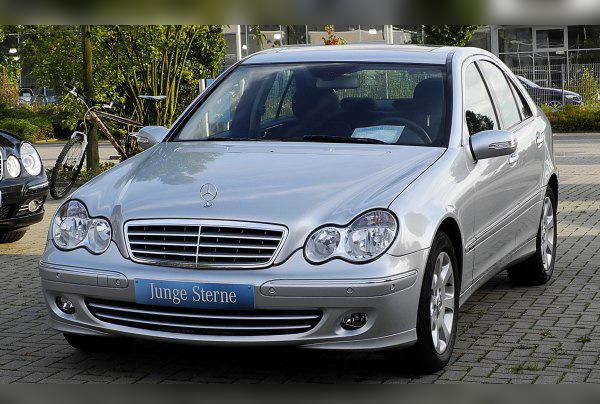
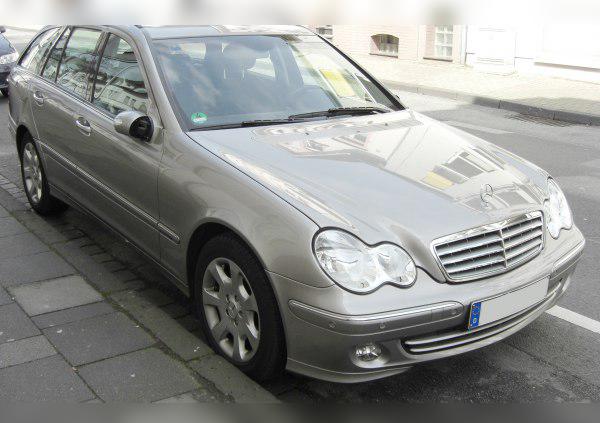
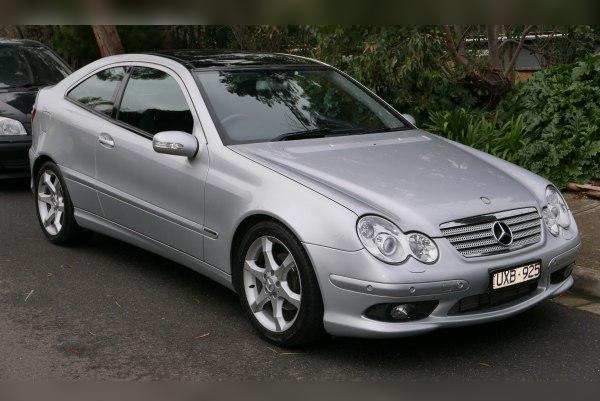
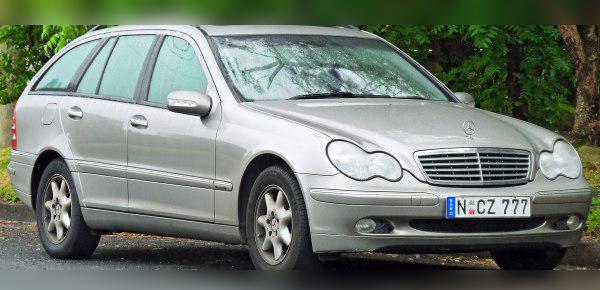
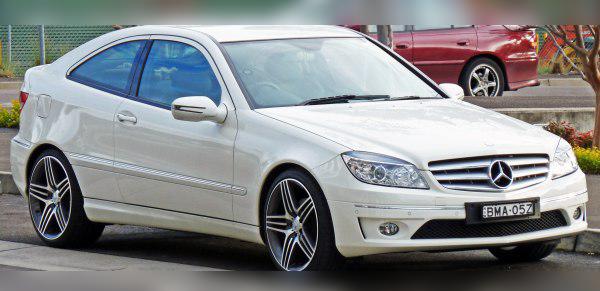
The engine designated as OM 646.962 is the direct successor to the legendary OM 611 series. As a four-cylinder common-rail diesel, this unit formed the backbone of Mercedes’ lineup in the early 2000s. It was installed mainly in the C-Class W203 and S203 (estate), as well as in the Sport Coupe and CLC models. In this configuration, it is tuned to a conservative 122 horsepower. The engineers’ goal was not to break speed records, but to achieve maximum reliability and hundreds of thousands of kilometers without opening the engine block. Today, as a used car, this engine attracts drivers who value durability and want a premium driving feel without astronomical maintenance costs.
Technical specifications
| Parameter | Value |
|---|---|
| Displacement | 2148 cc |
| Power | 90 kW (122 HP) |
| Torque | 270 Nm |
| Engine code | OM 646.962 |
| Injection type | Common Rail Direct Injection (CDI) |
| Charging | Turbocharger, intercooler |
Reliability and maintenance
If you are looking for a diesel that will not leave you stranded because of a snapped belt, you are in the right place. This engine uses a timing chain (a so-called double chain) instead of a timing belt. The chain on the OM 646.962 is old-school and robust, and easily exceeds 300,000 km. Because of this, there is no classic “major service” at a fixed mileage. It is replaced only when a mechanic determines it has stretched, which manifests itself as a characteristic metallic rattling, especially on cold start when the oil has not yet reached operating pressure.
Around 100,000 km, what needs to be replaced and checked is the so-called auxiliary belt system, which includes the serpentine belt, rollers, tensioner and water pump. Replacing this set is mandatory because a snapped auxiliary belt can damage the system and leave you without power steering, cooling and alternator charging.
As for engine oil, the system holds a generous 6.5 liters of oil. Fully synthetic oil in 5W-30 or 5W-40 grade is recommended. It is crucial that the oil meets Mercedes MB 229.31 or 229.51 specifications, especially if the car is equipped with a DPF filter (which depends on the trim level and the market for which the car was originally built). Regarding oil consumption between services, this engine is not known as an “oil burner”. Consumption of 0.5 to 1 liter per 10,000 km is considered completely normal and a sign of optimal ring lubrication. If consumption suddenly increases and you notice bluish smoke from the exhaust, the problem usually lies in the valve stem seals or a worn turbocharger.
The most common and also the best-known fault on this engine is related to the injectors, more precisely to the copper washers that seal the space between the injector and the cylinder head. Over time these washers lose their seal, and exhaust gases and soot start to escape upwards, creating a thick, black, tar-like mass around the injectors. In mechanic slang this problem is known as “black death”. Fortunately, the washers themselves are very cheap, but cleaning and removing seized injectors can be a long and painstaking job.
The common-rail injectors (Bosch system) are otherwise of excellent quality. As long as you do not fill the tank with questionable fuel, the injectors can easily last well over 300,000 km. The first symptoms of bad injectors are rough idle, extended cranking when starting, and black smoke when you press the accelerator.
Specific parts (costs)
If you choose a model with a manual gearbox, keep in mind that it transfers power to the crankshaft via a dual-mass flywheel. As with any modern diesel, the flywheel fails due to frequent driving at very low revs in the wrong gear or due to harsh starts. Symptoms of wear include strong vibrations when starting and switching off the engine, as well as judder when moving off from a standstill. Replacing the clutch kit together with the dual-mass flywheel is an expensive job (depends on the market).
The turbocharger on this engine features a variable geometry system (VGT). It is a single turbocharger. The turbo itself is very well lubricated and cooled, so its service life often matches the life of the engine itself, provided you regularly change the air filter and oil. If a failure occurs, the most common issue is sticking of the variable-geometry vanes due to soot build-up from city driving. Turbocharger overhaul falls into the medium to high cost range (depends on the market).
One of the key questions for today’s drivers concerns the DPF and EGR systems. This engine does not use an AdBlue system, which is great news for anyone who wants less electronics and lower running costs. However, C 200 CDI models produced from 2004 onwards (facelift series) generally come with a factory-fitted DPF filter. If the car has been driven mainly in the city on short trips, the DPF does not get the chance to reach the required 600 °C for passive regeneration. A clogged DPF causes the warning light to come on and puts the car into limp mode (safety mode). The same problem occurs with the EGR valve, which over time accumulates thick layers of carbon. Solving these issues requires either regular “blow-outs” on the motorway or, in the worst case, replacement of the DPF, which is very expensive (depends on the market).
Fuel consumption and performance
The cars in which this engine is installed often weigh more than 1,500 kg (especially T-model estates), so physics has its say. In strictly urban driving conditions, you can expect real-world fuel consumption between 7.5 and 8.5 l/100 km. This is quite acceptable considering the 2.2-liter displacement.
When it comes to performance, we have to be realistic – with its 122 HP this engine is somewhat “lazy” for the weight of the body if you are expecting to be pinned to the seat under acceleration. Its real strength lies in the 270 Nm of torque, available already at low revs. This means that in city and highway driving you will have enough flexibility for safe overtaking without the need for constant gear shifting.
This Mercedes feels right at home on the motorway. Cabin insulation is excellent, and at a cruising speed of 130 km/h in sixth gear the engine spins at a relaxed 2,400 to 2,600 rpm (depending on the type of gearbox). In this driving mode, fuel consumption drops significantly and is around a very respectable 5.5 to 6.0 l/100 km.
Additional options and modifications
Since the OM 646.962 shares an identical block, cylinder head and the vast majority of components with the more powerful C 220 CDI (which delivers 150 HP), this unit is a perfect platform for electronic tuning, the so-called “chip tuning” (Stage 1). The crankshaft, connecting rods and gearbox have a large safety margin. The engine can be safely and routinely raised to around 150 to 160 HP and about 330 Nm of torque. This modification is highly recommended if you often drive the car fully loaded on long trips, but of course only on the condition that the turbocharger, clutch and injectors have been checked beforehand and are in perfect condition.
Gearbox
This engine was paired with the well-known Mercedes 6-speed manual gearbox and the legendary 5-speed automatic gearbox designated 5G-Tronic (internal code 722.6).
The manual gearbox is extremely resistant to mechanical wear. Failures inside the transmission itself are extremely rare, so problems most often come from the dual-mass flywheel or from the linkage and gear selector, which over time develop play, making the gear lever imprecise. It is recommended to check and, if necessary, replace the oil in the manual gearbox at around 100,000 km.
The automatic 5G-Tronic is a story of its own – it is considered one of the strongest automatics ever made. However, it has one well-known flaw: oil leakage at the connector of the valve body. Oil can drip down the wiring and even reach the transmission control unit by capillary action, causing chaos in the electronics. Symptoms of a problematic gearbox are jerks when shifting from first to second gear, a rev counter that “hunts” while driving, and the gearbox refusing to upshift.
It is very important to point out one misconception that still circulates in many workshops: the oil in an automatic gearbox MUST be changed. The filter, oil and transmission pan gasket must be replaced every 60,000 km. Regular maintenance ensures hundreds of thousands of kilometers of smooth and soft shifting.
Buying used and conclusion
When you go to see a used Mercedes with the OM 646.962 engine, insist that the car be completely cold. Listen carefully during the first five seconds after cranking. If you hear rattling and scraping from the front of the engine until the oil pressure warning light goes out, the chain is stretched and you are facing a major expense. Be sure to remove the upper plastic engine cover. If you notice tar-like deposits and a strong smell of diesel mixed with exhaust gases, the car is suffering from “black death” around the injectors.
Stick your head under the rear bumper during the test drive. Blue smoke under throttle indicates a problem with the turbocharger or piston rings, while black smoke usually means a clogged EGR, bad injectors or a cracked intercooler hose. If the check engine light is on, do not fall for the story that “the fault just needs to be cleared”. Reading the codes with the original or an advanced universal diagnostic tool will show you the exact injector corrections and the DPF clogging level.
Who is this engine for?
Mercedes’ 2.2 CDI with 122 HP is a true workhorse. It is a car for those who cover significant daily mileage on open roads, who want the reliability and luxury of the C-Class (especially the W203/S203 series), and for drivers who by nature are not overly aggressive with the accelerator pedal. With proper maintenance and regular replacement of consumables such as filters and oil, this unit will not disappoint you even when the odometer has long since passed the half‑million‑kilometer mark.