Mercedes OM 651.930 (136 HP) – Experiences, problems, fuel consumption and buying used
In short (TL;DR)
- Exceptional durability: The engine is known for covering huge mileages, as it is a “detuned” version of a stronger block.
- Timing system: Uses a chain mounted at the rear of the engine (towards the gearbox), which makes replacement complicated and expensive.
- DPF and EGR sensitivity: Not ideal for exclusively city driving on short distances due to frequent clogging of emission control systems.
- Fuel consumption: Very economical, especially on the highway where it cruises with minimal fuel consumption.
- 7G-DCT gearbox: Requires strict maintenance and oil changes every 60,000 km to avoid mechatronics failures.
- Hidden potential: An excellent candidate for a Stage 1 remap, as it shares mechanics with the more powerful (170 HP) versions.
Contents
- Introduction: About the OM 651.930 engine
- Technical specifications
- Reliability and maintenance
- Specific parts and costs
- Fuel consumption and performance
- Additional options and modifications
- Gearbox and drivetrain
- Buying used and conclusion
Introduction: About the OM 651.930 engine
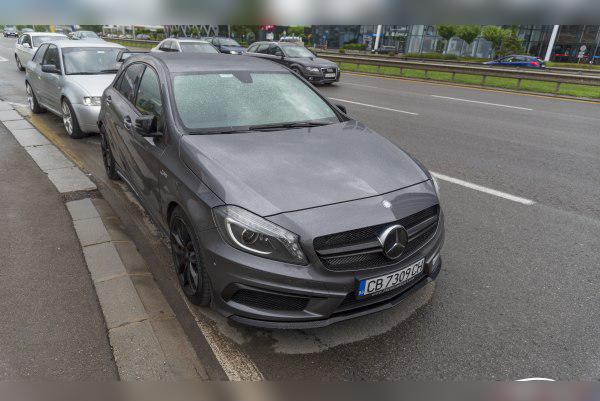
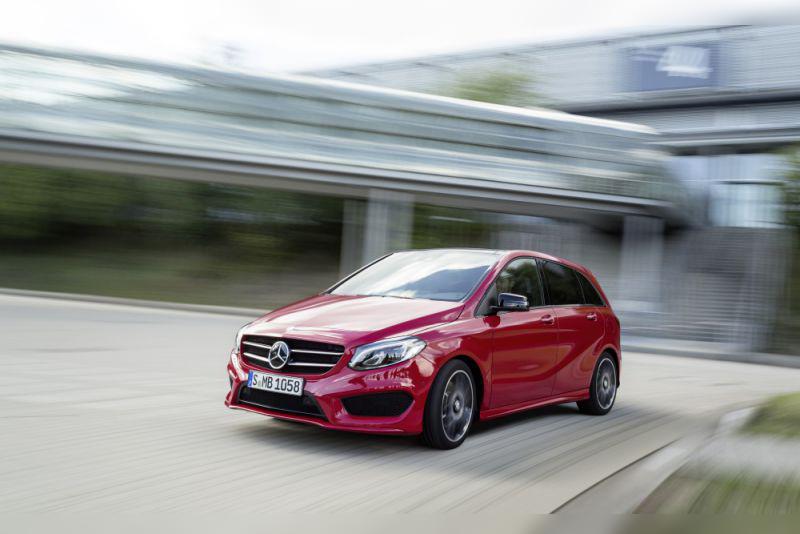
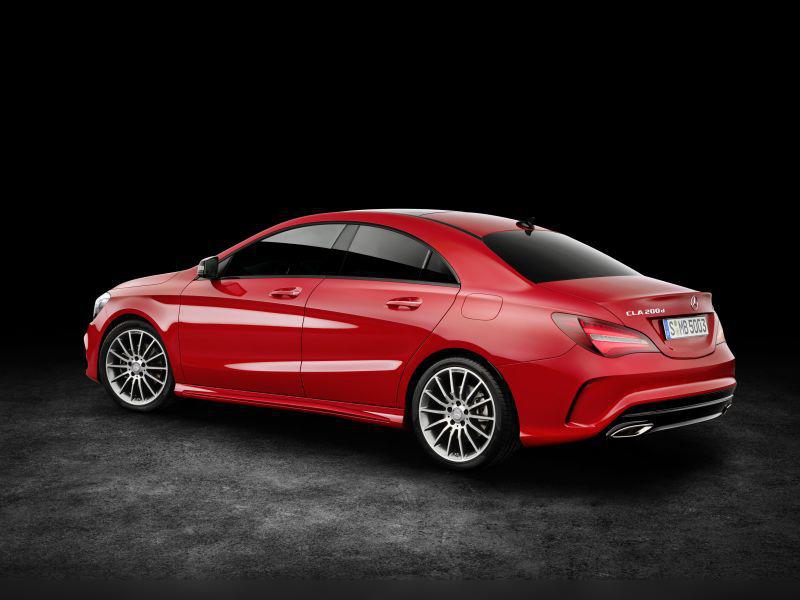
Mercedes-Benz OM 651 is probably one of the most widespread diesel engines in the modern history of this manufacturer. The specific variant OM 651.930 with 100 kW (136 HP) carries the commercial designation 200 CDI or 200d (depending on the production year). It was installed transversely in Mercedes’ range of compact front-wheel-drive and 4MATIC models, including the A-Class (W176), B-Class (W246), CLA (C117/X117) and GLA (X156).
This engine is essentially a workhorse. Considering that it extracts “only” 136 horsepower from a hefty 2.1-liter displacement, the components are subjected to significantly less thermal and mechanical stress compared to the more powerful versions of the same block, which guarantees impressive longevity.
Technical specifications
| Parameter | Specification |
|---|---|
| Displacement | 2143 cc |
| Power | 100 kW (136 HP) |
| Torque | 300 Nm |
| Engine code | OM 651.930 |
| Injection type | Common Rail Direct Injection |
| Charging system | Turbocharger (VGT), intercooler |
Reliability and maintenance
Timing drive: Chain and packaging issues
This engine uses a timing chain instead of a timing belt. However, Mercedes applied an engineering solution here that gives mechanics headaches – the chain is located at the rear of the engine, right next to the firewall and the bell housing of the gearbox. A classic “major service” in the sense of regular belt replacement does not exist, but a thorough inspection of the chain and tensioner is recommended at around 200,000 to 250,000 km. Due to the transverse installation in the A, B, CLA and GLA models, the engine bay is extremely cramped. If the chain starts to stretch (the first symptom is a metallic rattle at the first cold start in the morning), replacement is very expensive because it often requires engine removal or serious disassembly of the front subframe and front end of the vehicle (depends on the market).
Oil, filters and regular servicing
The oil sump of this engine holds between 6.5 and 7 liters of engine oil (depending on whether the vehicle has 4MATIC and the exact shape of the sump). Only synthetic oil of grade 5W-30 or 5W-40 that meets Mercedes standards MB 229.51 or MB 229.52 (due to the DPF) is recommended. Oil consumption between services is generally negligible on healthy engines; topping up about 0.5 to 1 liter per 10,000 km is considered completely normal. A more significant oil loss usually indicates worn piston rings or a leak at the turbocharger.
Injectors and Common Rail system
As a diesel, it uses a high-pressure Common Rail system. While the earliest versions of the OM 651 engine (before 2012) had notorious issues with Delphi piezo injectors, the variant installed in these newer compact models has proven to be far more reliable. The injectors can easily last over 250,000 km, provided that quality fuel is used and the fuel filter is changed regularly. Symptoms of worn injectors include rough idle, increased black smoke under acceleration and difficult engine starting.
Specific parts and costs
Turbocharger and injection
The engine has a single turbocharger with variable geometry vanes (VGT). Given the relatively low specific output (136 HP from 2.1 liters), the turbo is not heavily stressed and rarely fails before 300,000 km. To maximize the turbo’s lifespan, it is important not to switch off the engine immediately after aggressive highway driving, but to let the crankshaft run at idle for a minute or two so the oil in the turbo can cool down.
DPF filter and EGR valve
Like every modern diesel, the OM 651.930 is equipped with an EGR valve and a DPF (diesel particulate filter). These systems are its Achilles’ heel if the car is used exclusively for stop-and-go city driving. Over time, the EGR gets clogged with soot, which results in a “check engine” light and power loss (limp mode). Cleaning the EGR is a routine operation, but the DPF can cause more expensive problems if regeneration warnings are ignored. That’s why it’s important to take the car out on an open road at least once every two weeks.
AdBlue system (SCR)
Depending on the production year and emission standard (mainly Euro 6 models after the facelift), these cars are equipped with an AdBlue system. This system is prone to failures. The most common issues are with the NOx sensors or the heater in the AdBlue tank. Repair or replacement of these components is expensive (depends on the market), so drivers often report error messages on the display that count down the remaining kilometers until the engine will no longer start until the problem is resolved.
Fuel consumption and performance
Is this engine “lazy”?
The engine delivers 136 HP and, more importantly, a hefty 300 Nm of torque already at low revs. In lighter bodies such as the A-Class (W176), the car is quite agile. However, in heavier models such as the B-Class or GLA with 4MATIC all-wheel drive, performance is “adequate” but not sporty. Overtaking requires a bit more planning than with the more powerful 220d (170 HP) version, but for everyday family driving it is more than sufficient.
Fuel consumption
This is one of the strongest sides of this engine. In city driving conditions, fuel consumption ranges between 6.5 and 8.0 l/100 km, depending on vehicle weight and driving style. On the highway, the situation changes drastically in favor of your wallet. At 130 km/h in seventh gear (with the DCT gearbox), the engine cruises at very low revs (below 2200 rpm), and consumption drops to around 5.0 to 5.8 l/100 km. It is excellent for long journeys.
Additional options and modifications
Remapping (Stage 1)
The 136 HP OM 651.930 is probably the ideal engine for remapping (chip tuning). Why? Because the turbo, engine block and injection components are almost identical to those in the 220d version, which produces 170 HP from the factory. A reliable Stage 1 software tune can safely raise power from 136 HP to about 170 to 180 HP, and torque from 300 Nm to an impressive 400 Nm. This change completely transforms the car, solving the “sluggishness” when overtaking, without compromising engine reliability (provided the tuning is done by professionals and the gearbox is adapted to the new torque).
Gearbox and drivetrain
Types of gearboxes
This engine is most commonly paired with a 6-speed manual gearbox or the more modern 7G-DCT automatic (seven-speed dual-clutch transmission).
Dual-mass flywheel and clutch
Yes, this engine has a dual-mass flywheel. On versions with a manual gearbox, the flywheel and clutch kit typically last between 150,000 and 200,000 km, depending on whether the vehicle was driven mostly in the city or on the open road. Replacing the complete kit (clutch + flywheel) is a very expensive item (depends on the market).
7G-DCT gearbox failures and maintenance
The 7G-DCT automatic is fantastic when it’s in good condition – it shifts gears smoothly and quickly. However, it requires meticulous maintenance. Oil and filter changes in the DCT gearbox must be done every 60,000 km (maximum) or every 4–5 years. If this is ignored, metal shavings accumulate in the mechatronics. The first symptoms of automatic gearbox issues are jerks when shifting from first to second gear when cold, or hesitation when engaging reverse (R). Repairing the mechatronics or replacing the clutches in the DCT gearbox is extremely costly (depends on the market).
Buying used and conclusion
What to check before buying?
- Cold start sound test: Ask the seller not to start the car before you arrive. Open the hood, put your ear close to the firewall (towards the cabin) and have someone start the engine. If you hear a sharp metallic rattle that lasts 2–3 seconds and then disappears, the chain is due for replacement.
- Gearbox check while driving: With the DCT, try driving at very low speeds (in a parking lot). The gearbox should “creep” smoothly. Any jerking, knocking or fluctuating revs under light acceleration indicate worn clutches in the gearbox or faulty mechatronics.
- DPF diagnostics: Be sure to connect a diagnostic tool to check the DPF saturation level and how many kilometers have passed since the last regeneration. A “clean” DPF value achieved by software trickery often hides a physically destroyed filter.
- AdBlue traces: If the model has AdBlue, check whether the system is showing any errors on the instrument cluster and look for invoices for NOx sensor replacement (they are often already replaced).
Who is this engine for?
The Mercedes OM 651.930 (136 HP) is an excellent choice for drivers who cover a lot of kilometers, especially on main roads and highways. Its mechanicals are incomparably more durable than many small-displacement competitors. It is not an ideal car for a 2 km commute through traffic jams – such use will choke the DPF and EGR and harm the gearbox. If you find a car with a properly documented gearbox service history and a healthy timing chain, you will get a reliable, luxurious cruiser with very low fuel consumption that also hides huge potential for “chip tuning”.