Mercedes OM 654 (150 HP) engine: Experiences, problems, fuel consumption and used-car buying tips
In short (TL;DR)
- The timing chain is located at the rear of the engine (towards the gearbox), which drastically increases the cost and complexity of the so‑called major service.
- Aluminium block and lower weight make this engine significantly quieter and more refined compared to its old predecessor (OM 651).
- Emissions systems are the biggest weak point: the AdBlue system, NOx sensors and EGR valve often cause headaches if the car is driven mostly in the city.
- Fuel consumption is extremely low in compact models (A‑Class, GLA), but in heavy vehicles like the Sprinter you should expect higher figures.
- Gearboxes: 8G‑DCT (in smaller cars) requires strict servicing every 60,000 km, while the 9G‑TRONIC in the Sprinter is a true workhorse.
- Remapping (Stage 1) delivers excellent results because this engine is factory “detuned” to 150 HP, while the hardware can handle much more.
Contents
- Introduction: Successor to a legend and a step into the modern era
- Technical specifications
- Reliability and Maintenance: Chain, servicing and oil
- Specific Components and Emissions: Injectors, DPF and AdBlue
- Fuel Consumption and Performance: From A‑Class to Sprinter
- Additional Options and Modifications: Remapping
- Gearbox: From dual‑clutch to torque‑converter automatics
- Buying used and Conclusion
Introduction: Successor to a legend and a step into the modern era
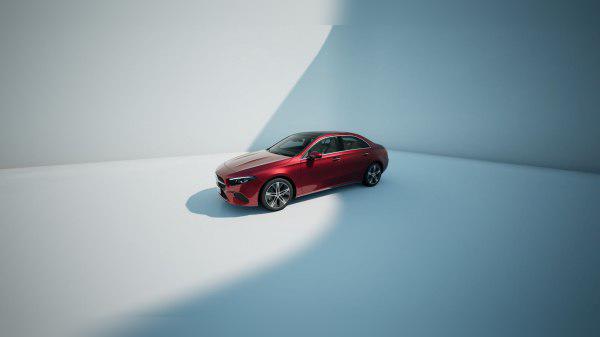
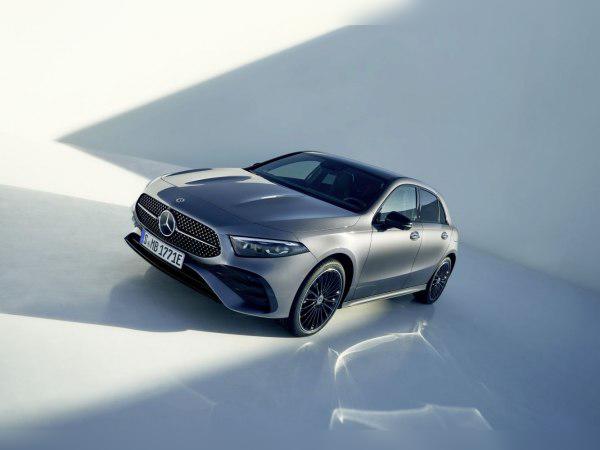
When Mercedes‑Benz introduced the OM 654, it was a generational leap. It served as a direct replacement for the legendary, but noisy and heavy OM 651. The version with 150 HP (110 kW) and 340 Nm of torque, often badged as "200d" in passenger cars or "215/315/415 CDI" in commercial vehicles (Sprinter), represents a kind of golden middle ground for the average European driver. It was installed in a wide range of vehicles, from the agile A‑Class and spacious GLB, all the way to work vans. As a highly optimised diesel with state‑of‑the‑art injection and exhaust after‑treatment systems, it offers fantastic efficiency, but at the cost of complex maintenance.
Technical specifications
| Parameter | Data |
|---|---|
| Engine code | OM 654 (150 HP version) |
| Engine displacement | 1950 cc (2.0L) |
| Power | 110 kW (150 HP) |
| Torque | 340 Nm |
| Fuel type and injection | Diesel, common‑rail direct injection |
| Charging | Turbocharger (VGT – variable geometry), intercooler |
| Valve timing drive | Chain (rear of engine) |
Reliability and Maintenance: Chain, servicing and oil
The rear‑mounted chain issue
Starting with the most important question: this engine uses a timing chain, not a timing belt. However, the engineers placed it at the rear of the engine, towards the firewall and gearbox. What does this mean in practice? When the time comes for the so‑called major service (replacement of the chain, tensioner and guides), the engine or gearbox usually has to be removed from the vehicle. Because of the huge number of labour hours, this job is very expensive (depends on market).
The manufacturer does not specify an exact mileage interval for chain replacement, but in practice, symptoms of stretching (rattling on cold start) can appear between 180,000 km and 250,000 km. Regular inspection of chain tension at every major service is mandatory.
Oil and regular servicing
Minor service (oil and filters) is done every prescribed 15,000 km up to a maximum of 20,000 km, or once a year. The engine takes about 6 to 6.5 litres of oil (the amount may vary slightly depending on the shape of the sump on a specific model). Fully synthetic oil of grade 0W‑20 or 5W‑30 that meets the strict MB 229.52 standard is strongly recommended (or the newer MB 229.71 for versions with ultra‑low‑viscosity oil to reduce CO2 emissions). This specification is vital for preserving the DPF filter.
The engine itself does not consume excessive oil between services. A loss of up to 0.5 litres over 15,000 km is considered perfectly normal. The bigger danger with modern diesels is not oil consumption, but rising oil level due to diesel dilution if you frequently interrupt DPF regeneration in city driving.
Injectors and the most common block issues
As for the piezoelectric injectors, they are of excellent quality and rarely cause problems before 250,000 km, provided you use good‑quality fuel. If a failure does occur, symptoms include rough idle, black smoke under full throttle and increased fuel consumption. Injector replacement is expensive (depends on market) and they often need to be replaced as a set or sent for serious calibration. The bare engine (block and crankshaft) is extremely durable thanks to the Nanoslide cylinder coating, which drastically reduces friction.
Specific Components and Emissions: Injectors, DPF and AdBlue
Turbo and injection system
This 150 HP version uses a single variable‑geometry turbocharger (VGT). Turbo lifespan largely depends on oil quality and driving style (whether you let the turbo cool down after hard motorway driving before switching off the engine). On average, it easily exceeds 250,000 km before needing an overhaul. Turbo overhauls today are not expensive (depends on market) unless there is physical damage to the housing.
Emissions: The Achilles’ heel of the modern diesel
The OM 654 is packed with emissions equipment to meet Euro 6d standards. It has an EGR valve, DPF filter and a complex SCR catalyst (AdBlue system). This is exactly where the biggest and most common problems arise:
- AdBlue system: Yes, this engine uses AdBlue fluid. The most common failures include failure of the AdBlue pump in the tank, heater burnout, and crystallisation in the lines. When the system fails, a warning appears on the dashboard telling you, for example, that you have 800 km left before the car refuses to start. Repairing the entire module is very expensive (depends on market).
- NOx sensors: Prone to failure, especially due to poor‑quality fuel or soot build‑up. The symptom is an illuminated "Check Engine" light, and replacement is expensive (depends on market).
- EGR and DPF: If you drive mainly in the city on trips shorter than 10 km, the EGR will quickly clog with soot and the DPF will not be able to regenerate properly. The result is a clogged filter that chokes the engine, puts it into limp mode and eventually requires machine cleaning or replacement.
Fuel Consumption and Performance: From A‑Class to Sprinter
Since this engine is fitted to drastically different vehicles, performance varies significantly.
In compact vehicles (A‑Class W177/V177, GLA H247)
In these lighter bodies, 150 HP and 340 Nm make the car quite quick and not at all “lazy”. Throttle response is excellent. Real‑world fuel consumption in stop‑and‑go city driving is around 6.5 to 7.5 l/100 km. On country roads it can drop below 5 litres. On the motorway at 130 km/h, the gearbox keeps revs below 2,000 rpm (thanks to 8 gears), cruising is quiet and consumption is around 5.5 l/100 km.
In SUVs and commercial vehicles (GLB X247 and Sprinter W907/W910)
The GLB is heavier and aerodynamically worse, so the engine feels subjectively more sluggish on climbs if the car is loaded, and city consumption rises to over 8 l/100 km (especially with 4MATIC all‑wheel drive).
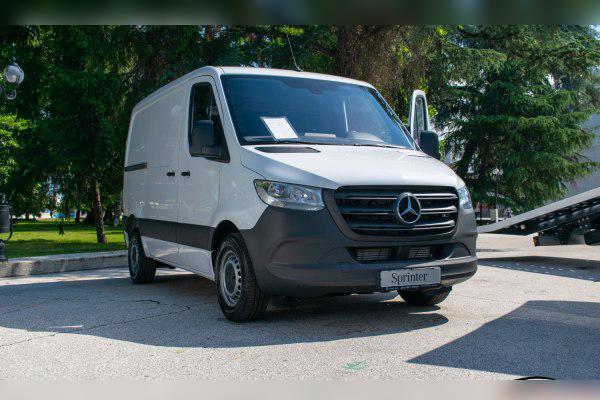
When it comes to the Sprinter, here the 150 HP version (badged 215/315/415 CDI) is a true workhorse. It is designed for towing and payload, not speed. It will feel lazy when overtaking on country roads if the cargo area is full, but the 340 Nm of torque will pull the load. In the Sprinter, city and loaded consumption rarely drops below 9 to 11 l/100 km. At 130 km/h on the motorway in a van, the engine works under higher load due to air resistance, so consumption rises noticeably.
Additional Options and Modifications: Remapping
This is a diesel engine only, so LPG (autogas) installation is neither possible nor worthwhile.
As for remapping (chip tuning), the 150 HP OM 654 is an ideal candidate for Stage 1. The factory offers the same block (badged 220d) with about 190–194 HP. With a simple software change (no mechanical modifications), this engine can be safely raised to around 190 to 200 HP and about 400 to 420 Nm of torque. The gearboxes (both 8G‑DCT and 9G‑TRONIC) have enough headroom to handle this torque, provided you don’t constantly abuse them with full‑throttle launches on a cold drivetrain. The car becomes dramatically sharper, especially for overtaking with the GLB or Sprinter.
Gearbox: From dual‑clutch to automatics
Depending on the vehicle platform, completely different transmission systems are paired with this engine:
8G‑DCT (A‑Class, GLA, GLB)
This is an eight‑speed automatic dual‑clutch gearbox. It offers lightning‑fast shifts and low fuel consumption. However, regular servicing is absolutely mandatory every 60,000 km. If the oil and filter are not changed, the mechatronics unit can fail, causing jerks when shifting from 1st to 2nd gear and eventually total failure. Mechatronics repair is very expensive (depends on market). Due to the transverse engine layout and DCT system, these vehicles use a dual‑mass flywheel specific to automatics, whose function is to smooth out diesel vibrations. Signs of wear are metallic noises when starting or switching off the engine.
9G‑TRONIC (Sprinter W907 RWD and similar rear‑wheel‑drive models)
This is a traditional automatic gearbox with a torque converter. It is much “softer”, less jerky in the city and generally more robust for towing loads. Oil changes are recommended at intervals of 90,000 km to 120,000 km. The most common issues are oil leaks from the plastic transmission pan and harsher downshifts due to degraded oil.
Manual gearboxes (mainly commercial range – Sprinter)
Passenger cars with this engine and a manual gearbox are rare, but in Sprinters they are standard. The 6‑speed manual is very reliable. However, it uses a conventional clutch system and a dual‑mass flywheel. Driving under load, especially in hilly areas, wears out the clutch disc relatively quickly. The cost of replacing the entire set (flywheel, clutch disc, pressure plate and release bearing) for a Sprinter is high (depends on market), and the first symptoms are clutch slip under hard acceleration and strong vibrations in the clutch pedal and gear lever.
Buying used and Conclusion
What to check before buying?
- Cold start: Ask the seller not to start the car before you arrive. When you crank a cold engine, listen carefully for the first 3–5 seconds. Any metallic rattling from the rear of the engine means the chain has slackened.
- Exhaust and DPF: Floor the accelerator with the engine at operating temperature. There should be no thick black smoke. If the inside of the exhaust tips is completely black with soot, the DPF filter is probably punctured, removed or faulty.
- AdBlue system history: Be sure to connect the vehicle to a dedicated diagnostic tool (Xentry or similar professional equipment). Check the fault history – frequent errors related to NOx sensors or AdBlue pressure are a warning sign of upcoming expensive repairs.
- Suspension: Especially on heavier vehicles with this engine (GLB, Sprinter), check control arm bushes and ball joints, as the higher torque and weight of the diesel block wear out the front suspension faster.
Final verdict
The Mercedes OM 654 with 150 HP is a prime example of modern engineering – refined, strong where it needs to be and extremely economical on the open road. If you need a car for long journeys, motorways and out‑of‑town driving (or a work van on longer routes), it is an excellent choice, and a Stage 1 remap turns it into a real sprinter.
However, if you plan to use this engine (whether in the A‑Class or another model) exclusively for short commutes from one set of traffic lights to the next, be prepared for frustration. Modern diesel systems (DPF, AdBlue, EGR) simply do not tolerate constant city torture and cold starts. In that case, the high costs of maintaining and repairing the emissions systems will very quickly eat up all the money you saved on cheaper fuel.