Mercedes OM 654.820 (C 220d, E 220d): Experiences, Problems, Fuel Consumption and Used Car Buying Tips
- Great performance: With EQ Boost (Mild Hybrid), 200 hp and 440 Nm, the engine offers excellent acceleration with no turbo lag.
- Chain-driven timing: The timing chain is located at the rear (next to the gearbox), which makes replacement more difficult and more expensive.
- Gearbox: Comes exclusively with the excellent 9G-TRONIC automatic transmission.
- Emissions as a weak point: The AdBlue system, NOx sensors and EGR valve are the weakest points of this engine.
- Fuel consumption: Extremely economical for its class, especially on open roads.
- Maintenance: Requires specific low-viscosity oils and strict adherence to service intervals. Not cheap to maintain.
Contents
- Introduction: What does the OM 654.820 offer?
- Technical specifications
- Reliability, Maintenance and Failures
- Specific Components and Emissions Systems
- Fuel Consumption and Performance
- Additional Options, Tuning and Gearbox
- Buying Used and Conclusion
Introduction: What does the OM 654.820 offer?
The OM 654.820 engine represents the technological pinnacle of Mercedes-Benz’s diesel lineup in the two‑liter segment. It is a modernized version (often referred to as OM 654 M) where displacement has been slightly increased from 1950 cc to 1993 cc, and a 48‑volt EQ Boost (Mild Hybrid) system has been integrated. This integrated starter-generator (ISG) is located between the engine and the gearbox, adding extra power and torque when setting off, while at the same time ironing out turbo lag and making the Start-Stop system almost imperceptible.
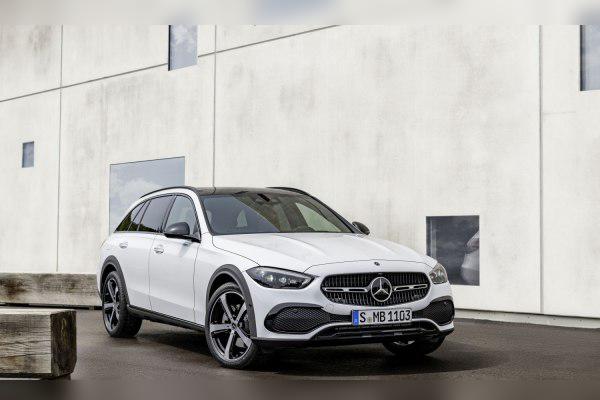
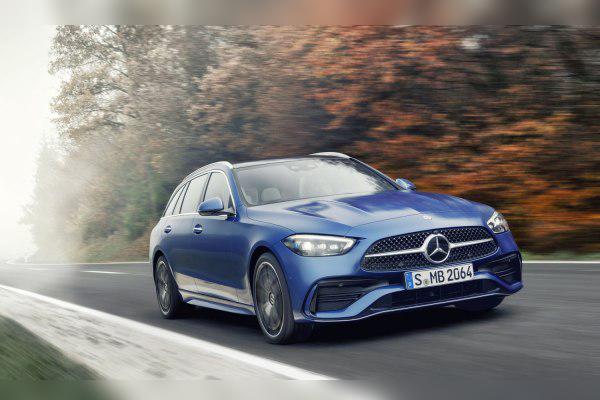
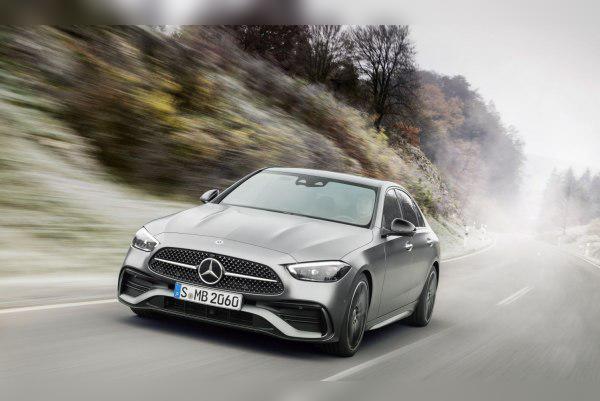
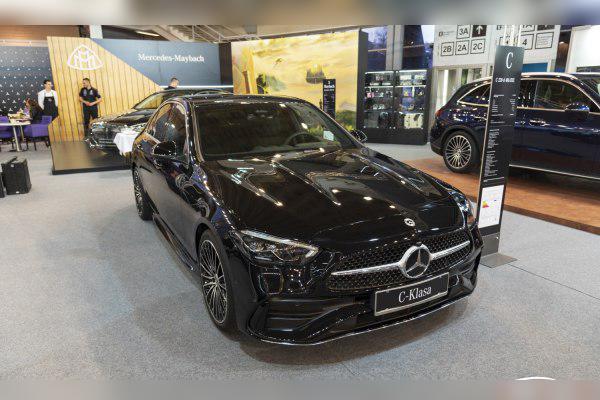
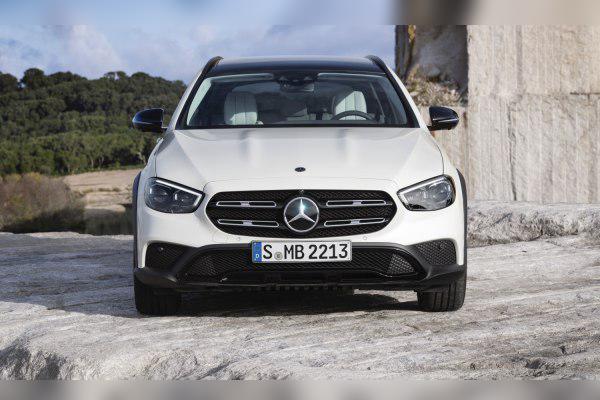
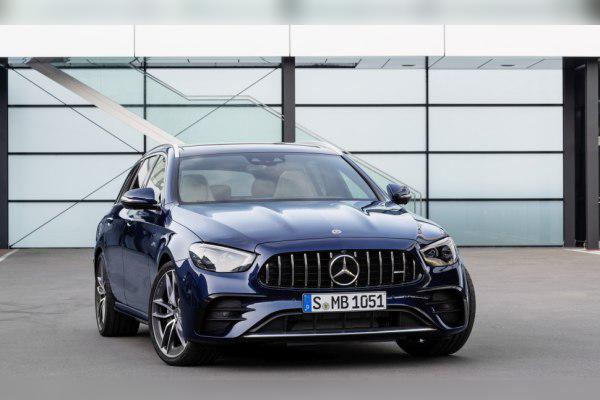
It is installed in the brand’s flagships, primarily in the C-Class (W206/S206) and facelifted E-Class (W213/S213), both in standard and 4MATIC All-Terrain versions. Although it offers a fantastic balance of power and efficiency, its complexity requires the owner to have a certain level of technical understanding and a deeper pocket for maintenance.
Technical specifications
| Parameter | Specification |
|---|---|
| Engine displacement | 1993 cc |
| Power | 147 kW (200 hp) + EQ Boost assistance |
| Torque | 440 Nm |
| Engine code | OM 654.820 (OM 654 M) |
| Injection type | Common Rail (high-pressure direct injection) |
| Charging system | Variable-geometry turbocharger (VGT) + intercooler |
| Hybrid type | Mild Hybrid (MHEV) 48V (EQ Boost) |
Reliability, Maintenance and Failures
Timing drive and Major service
One of the most common questions concerns the timing drive: the OM 654.820 uses a chain. The key thing every buyer must know is that the timing assembly is positioned at the rear of the engine, right next to the gearbox. Because of this, the classic “major service” (as with engines that use a timing belt) is not performed at a fixed mileage; instead, the chain is replaced when it starts to make noise (most often a rattling sound on cold start). In practice, the chain is quite durable, but when the time for replacement comes (usually between 200,000 and 250,000 km), the repair is very expensive (depends on the market), as it requires removing the engine or serious removal of the gearbox and related components.
Oil and regular servicing
This engine takes about 6.5 liters of engine oil. Due to strict Euro emission standards, Mercedes insists on ultra low-viscosity oils, most commonly 0W-20 (MB 229.71 spec) or possibly 5W-30 (MB 229.52) depending on climate recommendations from the authorized service center. Because of the thin oil and high operating temperatures, it is completely normal for the engine to consume a certain amount of oil between changes. The manufacturer tolerates up to 0.5 l per 1000 km, but in reality, a healthy OM 654.820 will use around 0.5 to 1 liter per 10,000 km, which is considered completely normal.
Most common failures
The mechanical side itself (block, crankshaft, pistons) is extremely robust. However, problems appear on the peripherals. The most common failures include exhaust gas temperature sensors, NOx sensors, as well as coolant leaks from the water pump. In addition, valve rocker arms can be sensitive if oil change intervals are stretched too far. It is recommended to change the oil at a maximum of 15,000 km, and not at 25,000+ km as allowed by the factory long-life interval.
Specific Components and Emissions Systems
Injection system and injectors
This model uses a sophisticated Bosch Common Rail system with piezoelectric injectors operating at pressures up to 2700 bar. The injectors are exceptionally quiet and precise. With quality fuel, their service life easily exceeds 200,000 to 250,000 km. However, they are extremely sensitive to water and metal particles in the fuel, and overhauling piezo injectors is complicated; usually the entire injector is replaced, which is expensive (depends on the market).
Turbocharger
The engine has a single variable-geometry turbocharger (VGT), which is water-cooled. Thanks to the integrated cooling and excellent design, the turbo is long-lasting. The EQ Boost system helps it a lot, as the electric motor takes over the load at low revs, saving the turbo from thermal shock during hard acceleration from a standstill.
DPF, EGR and AdBlue system
Emissions systems are the Achilles’ heel of modern diesels, and the OM 654.820 is no exception. The engine has a complex DPF filter and an EGR system that is very efficient, but extremely prone to clogging if the car is driven mostly in city traffic jams (stop-and-go driving). Interrupted regenerations lead to engine oil being diluted with diesel fuel.
The model definitely has an AdBlue (SCR) system. This is what causes by far the most headaches. Common issues include failure of the heater in the AdBlue tank, failure of the dosing pump and failure of the NOx sensors. Repairs to these components are very expensive (depends on the market). Proper maintenance means only filling with fresh, high-quality AdBlue fluid, as crystallization of old fluid can destroy the entire system.
Fuel Consumption and Performance
Is 200 hp “lazy” for heavy cars such as the C-Class All-Terrain or E-Class T-model (estate)? Absolutely not. With 440 Nm of torque and an additional punch of instant torque from the 48V EQ Boost electric motor, throttle response is immediate. The car pulls linearly and strongly across the entire rev range.
As for fuel consumption, the figures are impressive:
- City driving: Real-world consumption ranges between 6.5 and 8.0 l/100 km. This is where EQ Boost shines, as it completely shuts the engine off before stopping at traffic lights and assists when setting off.
- Open road / Country roads: Consumption can drop below 5.0 l/100 km.
- Motorway (130 km/h): Thanks to the nine-speed gearbox, at 130 km/h the engine is “idling” at just 1,400 to 1,600 rpm (depending on the final drive ratio, e.g. on 4MATIC versions). At these speeds, consumption is around 5.5–6.5 l/100 km. Sound insulation is such that the engine is barely audible inside.
Additional Options, Tuning and Gearbox
Chip tuning (Stage 1)
The mechanical side of the OM 654 engine is overengineered, so it handles software optimization very well. A safe Stage 1 on the OM 654.820 can reliably raise power to around 230 to 245 hp, and torque to about 500–520 Nm. However, you need to be careful with tuning because of the 48V hybrid system and the DPF filter. Tuning is recommended only at reputable specialists who know how to optimize the gearbox and engine software together, so as not to exceed the durability limits of the 9G-TRONIC transmission.
Gearbox and dual-mass flywheel
This engine is not offered with a manual gearbox. The only option is the fantastic in-house developed 9G-TRONIC (nine-speed, conventional automatic with a torque converter). Whether it’s rear-wheel drive or 4MATIC, the gearbox shifts gears silk-smoothly.
Does the automatic have a dual-mass flywheel? Yes. On this model, the ISG (electric motor) is located between the engine and the gearbox, and integrated into the torque converter system is a so-called centrifugal pendulum damper (equivalent to a dual-mass flywheel). Its role is to smooth out diesel vibrations at ultra-low revs. Failures of this system are rare, but if the converter is damaged due to irregular maintenance, the cost is very high (depends on the market).
The most common 9G-TRONIC issues are related to jerking when shifting from second to third gear, which is usually caused by dirty oil in the valve body (mechatronics) or by software issues. This is why changing the gearbox oil every 60,000 to 80,000 km is mandatory. A dynamic oil change (machine flush) is recommended in order to replace all the oil from the converter and cooler.
Buying Used and Conclusion
What to look out for when buying?
When buying a used Mercedes with the OM 654.820 engine, a visual inspection is not enough. You MUST do the following:
- Cold start: The engine must be completely cold. Listen carefully to the rear of the engine (towards the cabin/gearbox). If you hear a metallic rattling sound that lasts 2–3 seconds after starting, the chain needs to be replaced. Do this before buying or negotiate a serious price reduction.
- Diagnostics (Xentry/Star): A basic OBD scan is not enough. The original diagnostic tool must check DPF saturation, the AdBlue pump activation history and the condition of the NOx sensors.
- Condition of the EGR and coolant: Check the coolant level. Loss of coolant may indicate a cracked EGR cooler or a leak from the water pump.
- Gearbox test drive: During gentle acceleration and deceleration (kickdown as well), the gearbox must not exhibit any jolts or delays.
Conclusion: Is this the right engine for you?
The Mercedes OM 654.820 Mild Hybrid is a masterpiece of modern diesel engineering. Who is it for? Drivers who cover high annual mileage (over 20,000 km), mostly on open roads and motorways. In that use case, this engine will reward you with huge mileage potential, unrealistically low fuel consumption and superb comfort.
On the other hand, if you need a car solely for 5 km trips through city traffic, stay away from this engine (as well as from any modern diesel). In that driving pattern, the DPF, EGR and AdBlue systems will constantly give you headaches and drain your wallet. If you provide it with regular maintenance, quality oil and longer journeys, the OM 654.820 will run flawlessly and show you why the star on the bonnet is there for a reason.