Mitsubishi 3A92 1.2 MIVEC engine: Experiences, problems, fuel consumption and used-car buying tips
Key points (TL;DR)
- Reliable and simple: Three-cylinder naturally aspirated engine without a turbo, built for longevity and low running costs.
- Timing chain: No traditional timing belt, which significantly reduces maintenance costs.
- Cheap parts: No dual-mass flywheel, no expensive high-pressure injectors and no complex emission systems like a DPF.
- Fuel consumption: Extremely economical in city driving, but struggles and consumes more on the highway.
- Gearbox as a weak point: Versions with a CVT gearbox require strictly regular oil changes; neglect leads to costly failures.
- Performance: With 78 hp (57 kW), the engine is ideal for city driving and light bodies, but not for overtaking on open roads.
Contents
- Introduction: Get to know the Mitsubishi 3A92 engine
- Technical specifications
- Reliability and maintenance
- Specific parts and costs
- Fuel consumption and performance
- Additional options and modifications
- Transmissions: Manual vs CVT
- Buying used and conclusion
Introduction: Get to know the Mitsubishi 3A92 engine
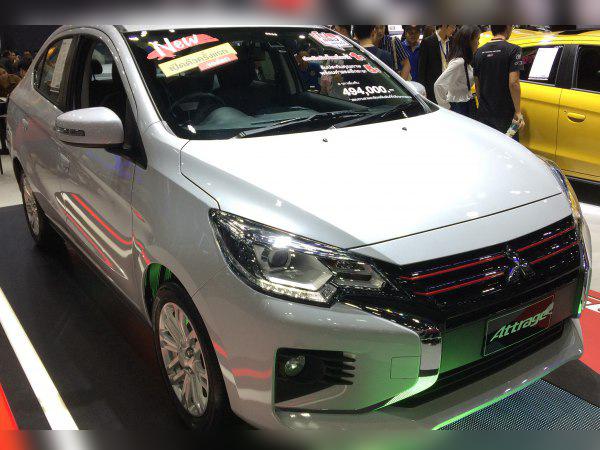
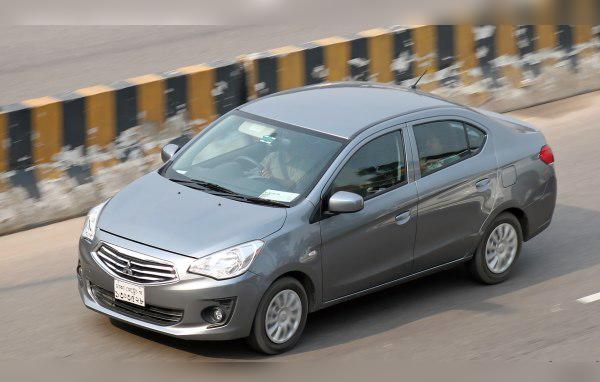
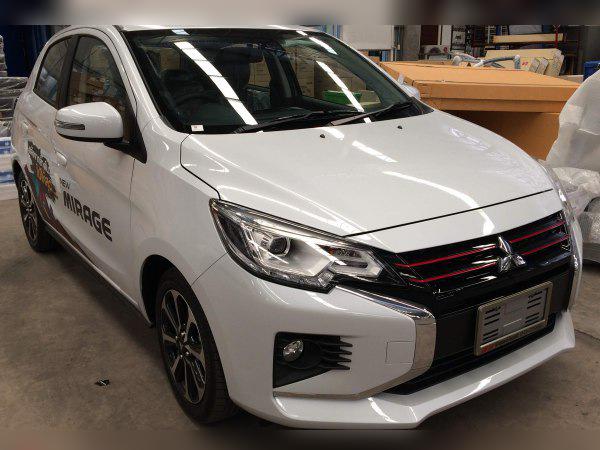
When we think about modern engineering, we often picture complex systems, turbochargers and hybrids. However, with the 3A92 1.2 MIVEC engine, the Japanese manufacturer went back to basics. This three-cylinder petrol engine was developed with one clear goal: maximum reliability with minimal maintenance costs. It is primarily installed in light city cars such as the Mitsubishi Mirage (hatchback) and Mitsubishi Attrage / Mirage G4 (sedan), both before and after the 2017 and 2019 facelifts. Its design is tailored to drivers who want cheap transportation and a car that doesn’t require frequent visits to the mechanic.
Technical specifications
| Specification | Data |
|---|---|
| Displacement | 1193 cc |
| Power | 57 kW (78 hp) |
| Torque | 100 Nm |
| Engine code | 3A92 |
| Injection type | MPI (Multipoint indirect injection) |
| Turbo/Naturally aspirated | Naturally aspirated engine |
Reliability and maintenance
Does this engine have a timing belt or a chain?
This is one of the best pieces of news for future owners: the Mitsubishi 3A92 has a timing chain instead of a rubber timing belt. The chain is designed to last as long as the engine itself, provided that quality oil is changed regularly. There is no classic fear of the belt snapping due to material aging. However, if oil changes are neglected, the chain tensioners can weaken, which manifests as rattling from the engine during a cold start.
What are the most common faults and at what mileage is servicing done?
As a classic naturally aspirated petrol engine, this unit doesn’t suffer from typical “childhood diseases”. Failures are mostly related to wear-and-tear parts. Since it has three cylinders, the engine naturally runs a bit rougher and has more vibration at idle. Because of that, the engine mounts tend to wear out earlier than on four-cylinder engines, which the driver notices as strong shaking of the steering wheel and interior plastics when the car is stationary.
As for the so-called major service, there is no traditional interval because the engine uses a chain. Still, at around 100,000 to 120,000 km it is recommended to visually inspect the timing system, and to replace the serpentine belt (auxiliary belt), rollers, tensioner and water pump. It’s not uncommon for the auxiliary belt to start squealing on cold morning starts, which is a clear sign it needs replacing. These parts are not expensive (depends on the market).
Oil and spark plugs
The oil sump capacity is very small – this engine holds only about 3.0 liters of oil. The manufacturer recommends 0W-20 (especially because of the MIVEC variable valve timing system and lower fuel consumption), although in warmer climates 5W-30 synthetic is also allowed. I recommend changing the oil every 10,000 to 15,000 km, never later. As for oil consumption, a healthy engine hardly uses any oil between services. A loss of up to 0.3 liters per 10,000 km is considered completely normal. If you notice bluish smoke from the exhaust, it’s a sign that the valve stem seals have hardened or, in a worse scenario, that the piston rings are stuck due to irregular maintenance.
Since this is a petrol engine, spark plugs play a key role in smooth running. Mitsubishi installs iridium spark plugs from the factory. The recommended replacement interval is between 60,000 and 80,000 km. If you feel hesitation under acceleration or uneven running (misfire), first check the spark plugs and ignition coils.
Specific parts (Costs)
Flywheel, injection and emissions
Another huge advantage of this engine: it does not have a dual-mass flywheel. It uses a conventional solid flywheel, which means that replacing the clutch kit (on manual gearboxes) is very affordable and falls into the “not expensive” category (depends on the market).
The injection system is MPI (Multipoint), which means that fuel is injected into the intake manifold, not directly into the cylinder. Petrol injectors are robust, rarely fail and are not as sensitive to poorer fuel quality as GDI engines. There is no high-pressure fuel pump. Also, the engine is naturally aspirated, which means it has no turbocharger or intercooler – that’s a few more expensive parts you don’t have to worry about.
Since this is a petrol engine, this model does not have a DPF filter or AdBlue system, which makes it ideal for short city trips where diesels quickly clog their particulate filters. It has a conventional catalytic converter and an EGR valve. Over time, the EGR valve can accumulate carbon deposits (especially in stop-and-go city driving), which causes rough idle or weaker throttle response, but it is easy to clean.
Fuel consumption and performance
Is 78 hp enough?
On paper, 57 kW (78 hp) and 100 Nm of torque sound very modest. However, the key lies in the weight – models like the Attrage and Mirage weigh only around 850 to 900 kg. Because of this, in city driving this engine is not “lazy” at all. It pulls away from a standstill briskly and easily keeps up with city traffic.
Real-world fuel consumption and highway driving
Fuel consumption is its biggest trump card. In real city conditions, the engine uses between 5.5 and 6.5 l/100 km. On secondary roads at 80 km/h, that figure can drop below 4.5 liters.
However, the highway reveals all its weaknesses. At a cruising speed of 130 km/h, the engine in the manual version is spinning close to 4,000 rpm. At that point it becomes very noisy in the cabin, lacks breath (elasticity) for quick overtakes, and fuel consumption jumps to over 7 l/100 km. It is sensitive to climbs and driving under full load (four passengers and air conditioning on), so it is often necessary to shift down.
Additional options and modifications
LPG installation
Thanks to its indirect MPI injection, the 3A92 is extremely suitable for LPG conversion. Installation is standard and very affordable (not expensive, depends on the market). The only note is that the cylinder head does not have hydraulic tappets. Although the MIVEC system helps, when running on LPG it is recommended to check the valve clearance every 60,000 km to prevent burning of the exhaust valves due to the higher combustion temperatures of gas.
Remapping (Stage 1)
Is it worth “chipping” a small naturally aspirated engine? The short answer is – no. A Stage 1 ECU remap on this engine can deliver barely 4 to 6 hp and an almost imperceptible increase in torque. The gain in real driving is practically invisible, and the money is better spent on regular maintenance or quality tires.
Transmissions: Manual vs CVT
The engine is paired with a five-speed manual gearbox or a Jatco CVT (Continuously Variable Transmission) automatic (often the CVT7 version with auxiliary gears).
Manual gearbox
The manual gearbox is very reliable. Drivers occasionally report slight notchiness when engaging first gear or reverse when the gearbox oil is cold, but this is more a characteristic of the unit than a serious fault. The manufacturer recommends changing the gearbox oil at around 60,000 km. As mentioned, the solid flywheel and simple clutch kit make maintaining this system extremely cheap.
Automatic CVT gearbox – Caution!
The CVT is fantastic in the city because there are no jolts during gear changes, and it keeps revs in the optimal range, reducing fuel consumption. However, maintenance is critical. The most common failures include slipping of the metal belt, whining noises from the gearbox housing or jerking when setting off. In 90% of cases, the cause of these problems is neglecting oil change intervals.
If you choose a CVT, changing the CVTF fluid and the gearbox filter must be done every 40,000 to 50,000 km. If this is ignored, metal shavings form in the gearbox and destroy the valve body and the steel belt itself. Repairing a damaged CVT is very expensive (depends on the market), often more expensive than the actual value of a used vehicle. When buying, any jerking when setting off or strange noises from the gearbox are a sign to turn around and walk away immediately.
Buying used and conclusion
What to check before buying?
When inspecting a used car with the 1.2 MIVEC engine, be sure to pay attention to the following:
- Cold start: Ask the seller not to start the car before you arrive. When you start it, listen carefully. Metallic rattling in the first few seconds may indicate a stretched chain or a weak hydraulic chain tensioner.
- Vibrations: Check whether the car vibrates excessively at idle. If the steering wheel and instrument panel shake, a new engine mount is probably needed (most often the lower mount).
- Test drive (for CVT): Accelerate gently and hard. Acceleration must be completely linear, like on a scooter. Jerks indicate that the gearbox is close to failure.
- Oil leaks: Although the engine is usually dry, check the valve cover area. Due to vibrations, the valve cover gasket can slightly start to leak over time.
- Diagnostics: Check the operation of the EGR valve and the condition of the lambda sensors using an OBD scanner.
Conclusion
Who is the Mitsubishi with the 3A92 engine for? This vehicle is intended for drivers who see a car purely as a means of transport from point A to point B. If you are looking for a reliable first car, a city delivery vehicle or simply want a car whose maintenance won’t give you headaches (no dual-mass flywheel, no turbo, no timing belt), this engine is a fantastic choice.
On the other hand, if you cover a lot of highway miles, enjoy more dynamic driving or are bothered by poor sound insulation and a lack of power when overtaking with the air conditioning on, I recommend that you skip this engine and look for something more powerful and more relaxed with four cylinders.