Nissan GA16DE (90 HP) petrol engine – Experiences, problems, fuel consumption and buying used
- Extremely durable: A true piece of “old-school” 90s engineering, known for being able to cover huge mileages without opening the engine block.
- Timing chain: No timing belt, but a reliable chain that significantly reduces maintenance costs.
- Excellent for LPG: Handles alternative fuels very well, without issues with valve burning.
- Cheap to maintain: The absence of a turbocharger, dual-mass flywheel and complex emission systems makes it extremely affordable for the average driver.
- Increased fuel consumption: In city driving, especially in heavier models, it can consume more than modern engines.
- Minor electronic faults: The most common issues are a dirty MAF sensor or oil leaks on the distributor O-ring.
Contents
- Introduction: About the engine and models
- Technical specifications
- Reliability and maintenance
- Specific parts (costs)
- Fuel consumption and performance
- Additional options and modifications
- Gearbox and drivetrain
- Buying used and conclusion
Introduction: About the engine and models
When we talk about the reliability of Japanese cars from the 1990s, Nissan’s engine designated GA16DE always ends up at the very top of the list. This unit was produced for many years and was a mainstay for compact and mid-size cars around the world. With a displacement of 1.6 liters and multipoint injection, it offered an excellent compromise at the time between power, smooth operation and durability.
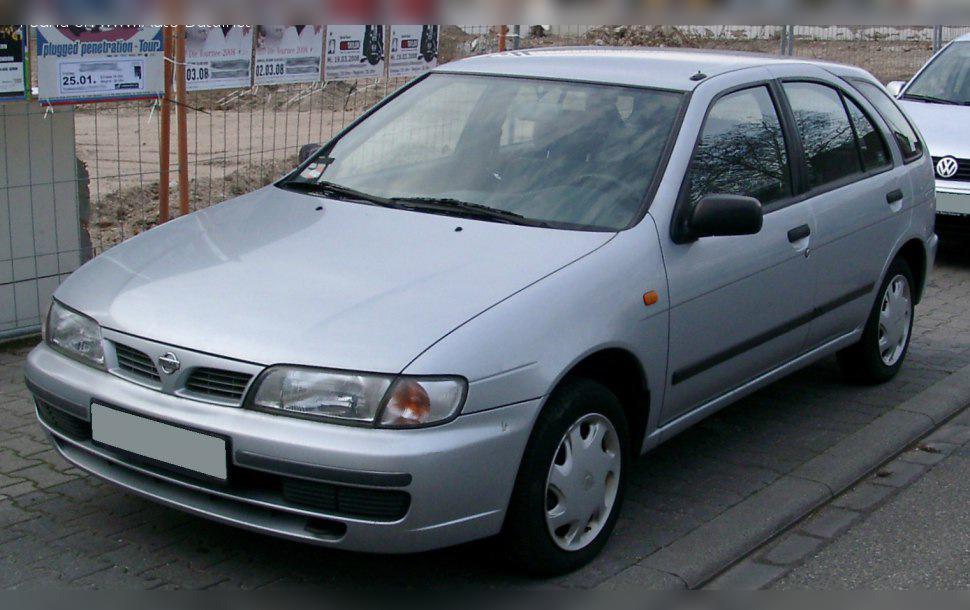
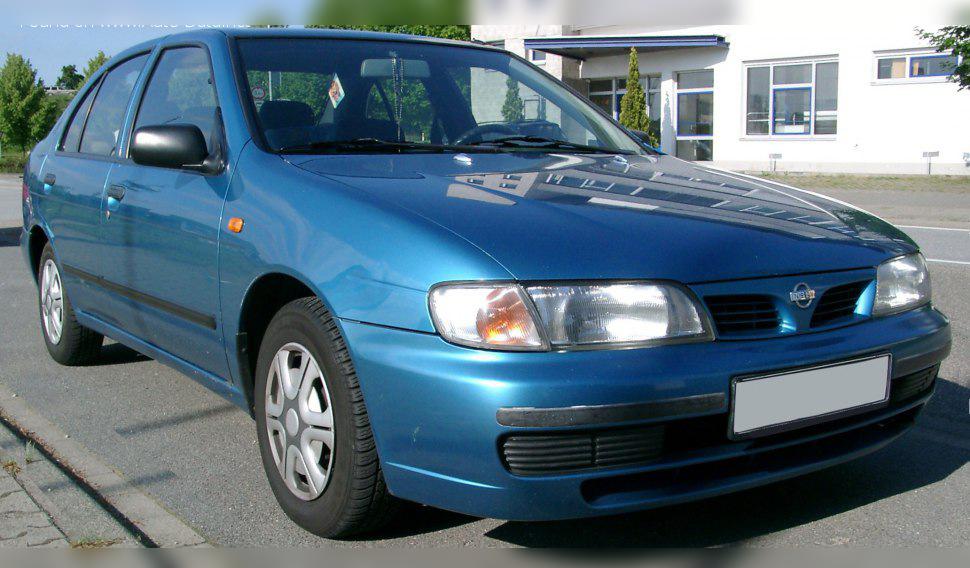
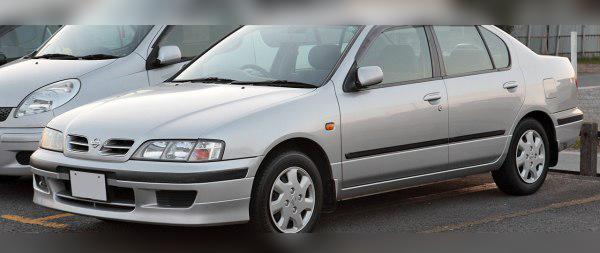
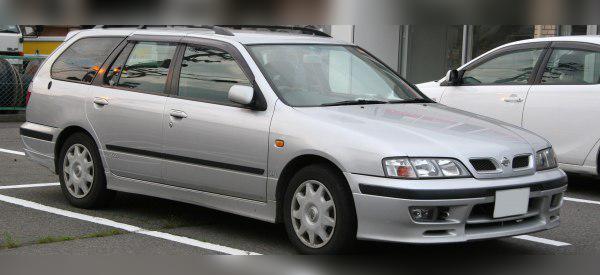
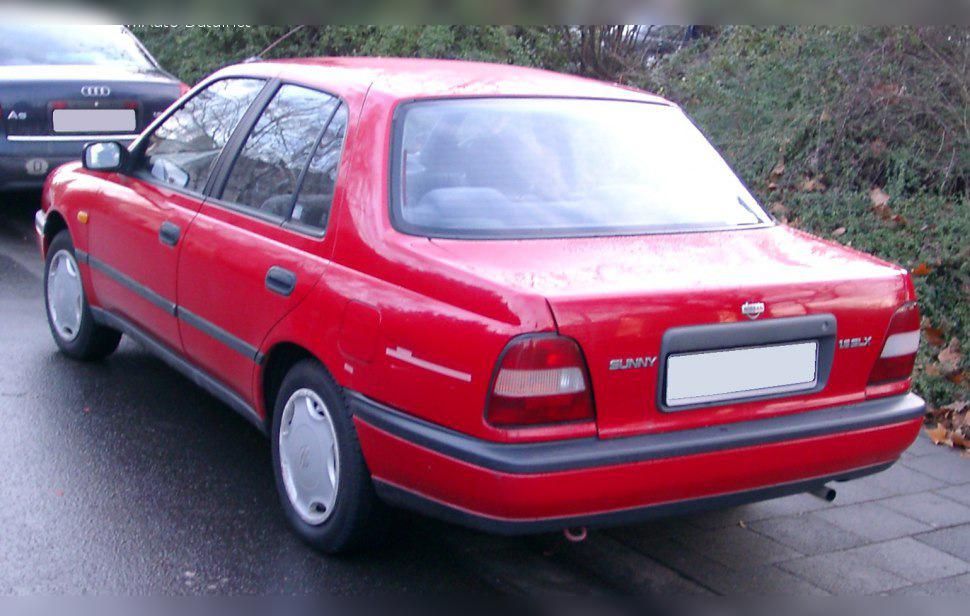
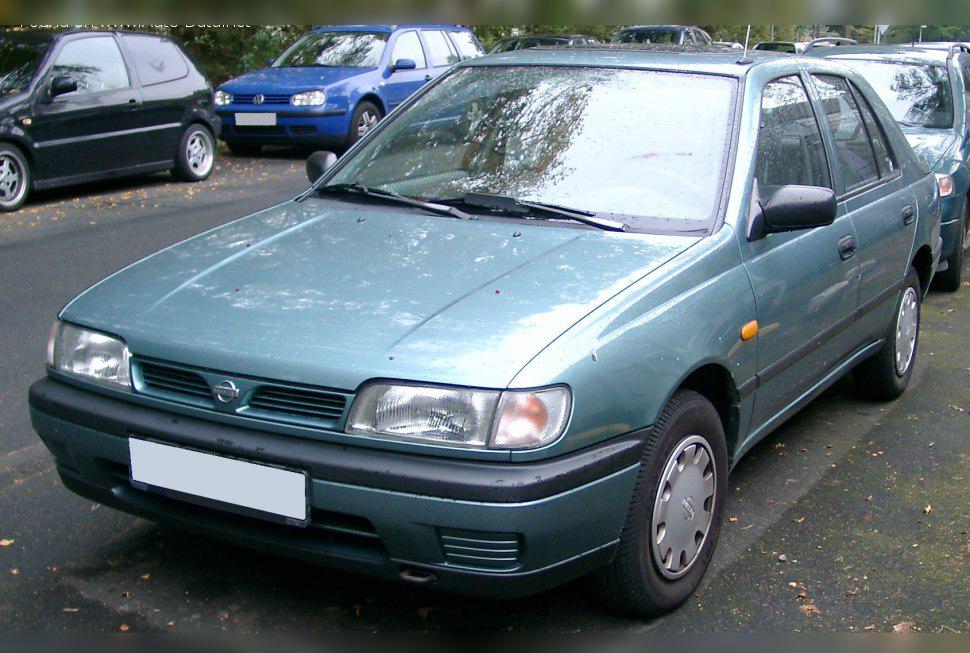
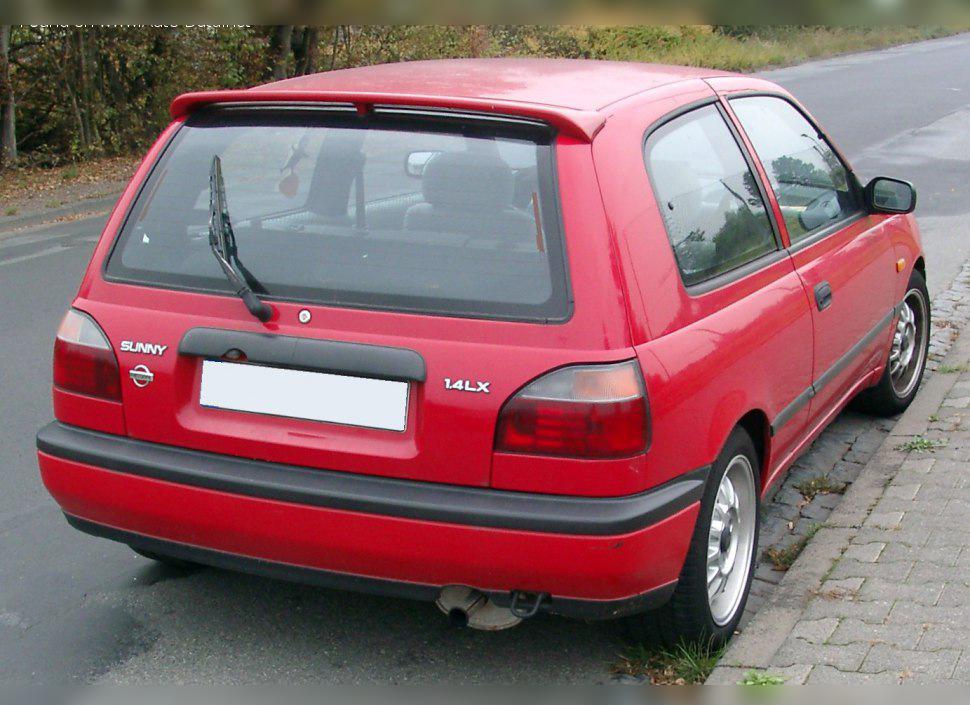
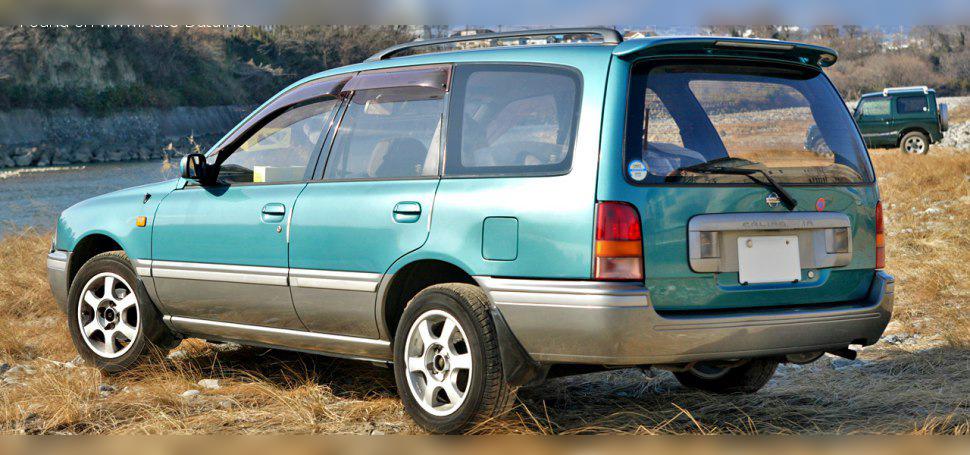
It was installed in iconic models such as the lightweight Nissan Sunny III (N14), the reliable Almera I (N15), as well as the larger family sedan Primera (P11). The 66 kW (90 HP) version we’re discussing here was extremely popular because it offered longevity without excessive complexity. This is an engine that, with basic maintenance, outlived many of the chassis it was installed in.
Technical specifications
| Specification | Data |
|---|---|
| Engine code | GA16DE |
| Displacement | 1597 cc |
| Power | 66 kW (90 HP) |
| Torque | 136 Nm |
| Number of cylinders / valves | 4 cylinders / 16 valves |
| Camshaft drive | Chain |
| Injection type | Multipoint (EFI) |
| Induction | Naturally aspirated |
| Fuel | Petrol |
Reliability and maintenance
Timing: Chain instead of belt
One of the biggest advantages of the GA16DE engine is the fact that it uses a timing chain to drive the camshafts. In practice, this means that the classic “major service” (replacement of timing belt, tensioner and water pump every 60,000 km) does not exist. The chain system on this engine is designed to last as long as the engine itself. However, at mileages above 250,000 km, the hydraulic chain tensioner can start to weaken, which manifests as rattling at cold start. If the chain starts to rattle continuously, it is recommended to replace the set (chain, tensioner, guides), which is a moderate cost compared to modern engines.
Most common faults and symptoms
Although the mechanical side is virtually indestructible, time takes its toll on the engine’s peripheral components. The most common problem on this engine is oil leaking from the distributor. The O-ring hardens over time due to high temperatures, and oil starts to run down the engine block. Replacing the O-ring itself is a very cheap repair, but if oil makes its way inside the distributor, it can damage the optical sensor (Crank Angle Sensor), which causes the engine to stall while driving or prevents it from starting.
Another common issue is contamination of the IACV valve (Idle Air Control Valve) and a dirty throttle body. The driver will notice this through fluctuating idle speed, the revs “dropping” when the clutch is pressed before a traffic light, or occasional stalling at idle. Cleaning these components with a dedicated spray solves the problem in 90% of cases.
Minor service and oil consumption
The oil sump capacity is modest; the engine takes only about 3.2 liters of oil. The factory recommendation for most markets is semi-synthetic oil of grade 10W-40, and a minor service should be done at a maximum of every 10,000 km (or once a year). As for oil consumption, a healthy GA16DE does not consume oil between services. However, on engines with very high mileage, valve stem seals and piston rings wear out. For an engine this old, up to 0.5 liters per 1,000 km is considered a tolerable consumption. If you notice bluish smoke at the first start in the morning, it means the valve stem seals are worn.
Since this is a classic petrol engine, spark plug replacement is essential. The factory recommends standard NGK copper spark plugs (such as BKR5E-11), which are very affordable and should be replaced every 30,000 to 40,000 kilometers.
Specific parts (costs)
The GA16DE is a blessing for the household budget because it simply does not have the expensive components that usually give owners of newer cars headaches. This engine has no turbocharger and no expensive intake pressure sensors. It also has no DPF filter or AdBlue system, as it is a petrol engine.
The fuel injection system is electronic multipoint (EFI - Electronic Fuel Injection). The petrol injectors on this engine are incredibly durable and failures are extremely rare. Due to age and fuel quality, the spray pattern can sometimes deteriorate, which is felt as slightly weaker pull or a marginally higher fuel consumption, but ultrasonic cleaning at a workshop restores them to factory condition at minimal cost. An EGR valve (depending on production year and emission standard of the target market) may be present, but it rarely causes serious clogging issues like those seen on diesel engines, and cleaning it is trivial.
Fuel consumption and performance
Real-world city fuel consumption is something that may surprise modern drivers, considering the power output of “only” 90 HP. In lighter models such as the Nissan Sunny, city consumption is around 8 to 8.5 l/100 km. However, if the engine is installed in the heavier body of the Nissan Primera P11, you can expect up to 9.5–10 l/100 km in stop-and-go conditions.
Perceived agility depends directly on the model the engine is fitted to. In the lightweight Sunny (N14), the engine feels very lively and happily revs high, so it is by no means “lazy”. In the Almera (N15), performance is decent and satisfactory for the average driver, while in the Primera (P11) estate, under full load and on inclines, the modest 136 Nm of torque is definitely noticeable, so it requires more frequent downshifts to accelerate smoothly.
On the motorway, this engine is durable but can be noisy due to the “short” gear ratios in the gearbox. At a cruising speed of 130 km/h in fifth gear, the crankshaft will be spinning at around 3,600 to 3,800 rpm. Fuel consumption on the open road drops to an acceptable 6 to 7 liters per 100 kilometers.
Additional options and modifications
Is it safe to install LPG?
The answer is absolutely: Yes. The Nissan GA16DE is legendary as one of the best engines for conversion to liquefied petroleum gas (LPG). The cylinder head and valve seats are made of very high-quality materials, so there is no valve seat recession or valve burning (unlike some later QG engines). Installing a sequential LPG system is straightforward, and with a properly tuned map the engine runs with no noticeable difference in performance compared to petrol. Installing LPG is financially very worthwhile, as it halves running costs.
“Chipping” a naturally aspirated engine
For tuning enthusiasts, the answer is short and clear: a Stage 1 remap on this engine is purely a waste of money. Since this is a small-displacement naturally aspirated engine without a turbo, changing the fuel and ignition maps can yield at best 3 to 5 horsepower, which you will not feel in real-world driving. Any mechanical upgrades (better intake, exhaust manifold, freer-flowing exhaust) require high costs that are not proportional to the gains.
Gearbox and drivetrain
The GA16DE came paired with robust 5-speed manual gearboxes, as well as classic old-school 4-speed automatic gearboxes with a torque converter.
Manual gearbox
The manual gearbox is generally reliable, but a known weakness on earlier series (especially the Sunny N14 and early Almera models) is the issue of popping out of fifth gear while driving (the so-called “5th gear pop-out”). This happens due to wear of the fifth-gear synchro or the shift fork inside the gearbox, so the gear lever returns to neutral by itself when you press or release the throttle. This problem is usually solved by overhauling the gearbox or sourcing a good used unit, which is generally a very cheap solution (depending on the market).
There is no dual-mass flywheel here. A classic solid flywheel is used, so clutch replacement costs (pressure plate, disc, release bearing) are very low and affordable for the average driver (depending on the market). It is recommended to change the oil in the manual gearbox (75W-90 GL-4 specification) every 60,000 to 80,000 km, which many owners neglect.
Automatic gearbox
The 4-speed automatic is very sluggish and increases fuel consumption in the city, but on the other hand it is extremely long-lasting. It does not have the sensitive electronics of modern DSG or CVT transmissions. If there are no jerks when shifting from ‘P’ to ‘D’ and it changes gears smoothly, it will most likely serve you faithfully for many more years. Its main requirement is regular replacement of the transmission fluid (ATF Dexron III specification) and filter every 60,000 kilometers.
Buying used and conclusion
When buying a car equipped with the GA16DE engine, your primary focus should not be on the engine itself, but on the bodywork and chassis. All models (Sunny, Almera N15, Primera P11) suffer badly from corrosion (arches, sills, strut towers). As for the engine itself, be sure to check the following:
- Start the car “from cold” and listen for timing chain rattle. If the noise is mild and disappears after a few seconds once oil pressure builds up – everything is fine. If it continues to rattle when warm, a chain replacement is on the horizon.
- Check idle quality. It should be absolutely steady (around 800–850 rpm). Rough idle points to an ignition issue (leads, spark plugs, distributor cap) or a dirty idle air control valve.
- Look around the distributor on the right side of the cylinder head. If the engine block is oily, the seal/O-ring will need to be replaced.
- Listen to the gearbox while driving on the motorway – check whether the gear lever pops out of fifth gear by itself when you lift off the throttle.
Conclusion: Who is this engine for? It is an ideal choice for drivers on a limited budget who want a reliable, cheap workhorse that works great on LPG. It does not offer impressive performance or modern emission standards, but it does offer peace of mind that modern engines with a bunch of sensors, turbochargers and dual-mass flywheels simply cannot provide. If you find a car whose chassis is not rotten and which has a GA16DE under the bonnet, you’ve found a loyal companion that will not leave you stranded.