Experiences, Issues, and Maintenance: Nissan 4.0 V6 VQ40DE – Used-Buyer's Guide
- Powerful and flexible: Extremely reliable V6 engine, offering massive torque from low revs.
- Timing chain: Uses a chain drive, but early versions had issues with guides and tensioners.
- Fuel consumption: High. Expect serious consumption in city driving, which makes it an ideal candidate for LPG conversion.
- Risk for automatic transmissions (SMOD): Mixing of coolant and transmission fluid due to a factory defect in the radiator is the most expensive problem.
- Lack of modern headaches: No turbocharger, no DPF, and no sensitive high-pressure injectors, which makes long-term maintenance cheaper.
Contents
- Introduction: A workhorse in an SUV suit
- Technical specifications
- Reliability and maintenance
- Specific components and most common failures
- Fuel consumption and performance
- Extras: LPG and remapping
- Transmission: Manual, automatic, and the SMOD issue
- Buying used and conclusion
Introduction: A workhorse in an SUV suit
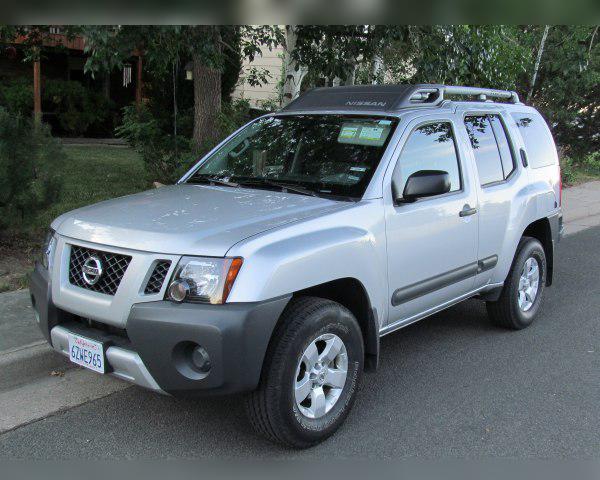
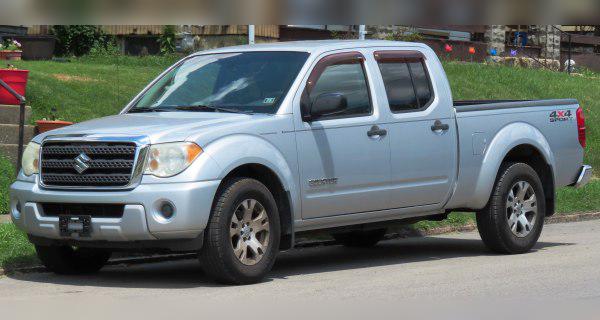
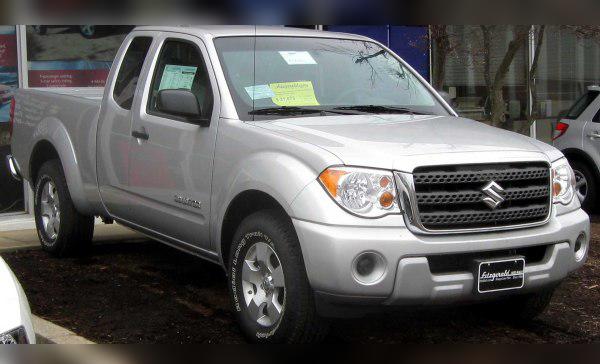
The VQ40DE is Nissan’s naturally aspirated 4.0‑liter V6 engine, designed primarily for heavier vehicles such as pickups and proper off-roaders. As part of the famous VQ engine family (which also includes the VQ35 from the Nissan 350Z), this block was modified with a longer stroke to deliver that raw, truck-like torque needed for towing trailers and serious off-road use. It was installed in models such as the Nissan Frontier (Navara D40), Xterra, and Suzuki Equator. Because of its displacement and design, this is an old-school engine – it drinks fuel, but in return it demands minimal attention to small issues, provided you deal with a few specific factory weak points.
Technical specifications
| Parameter | Data |
|---|---|
| Displacement | 3954 cc |
| Power | 195 kW (261 hp) |
| Torque | 381 Nm |
| Engine code | VQ40DE |
| Injection type | Multi-point (indirect injection) |
| Induction type | Naturally aspirated (no turbocharger) |
Reliability and maintenance
Timing belt or chain?
This engine uses a timing chain to drive the camshafts. In theory, the chain should last as long as the engine itself, but in practice that’s not always the case with the VQ40DE. The most common issue owners encounter, especially on pre-facelift models, is premature wear of the primary and secondary chain guides. Due to poor material quality, the guides wear out quickly, which results in a characteristic whining or whistling noise (similar to a supercharger or power steering pump) that follows engine revs. If this is ignored, the chain can jump. Replacing the complete chain kit is quite expensive (depends on the market) because it requires many labor hours and removal of the front of the engine.
Service intervals and oil
There is no standard “major service” in the sense of a timing belt replacement, but an inspection of the timing system (chain) is mandatory at around 150,000 to 200,000 km. Regular minor services are critical. The sump holds about 5.1 liters of engine oil, and the manufacturer usually recommends 5W-30 (synthetic).
As for oil consumption, a healthy VQ40DE should not use more than 0.2 to 0.3 liters per 1000 km. If you notice that the engine is seriously “drinking” oil, this may indicate stuck piston rings or, even worse, a problem with the catalytic converters (more on that later). Regarding the spark plugs, since this is a petrol engine, it is recommended to use quality iridium plugs, which should be replaced every 90,000 to 100,000 km. Access to the plugs is not overly complicated given the longitudinally mounted engine.
Specific components and most common failures
Catalytic converters – the engine’s silent killers
The biggest threat to the VQ40DE engine block comes from the exhaust system. The front catalytic converters are prone to breaking up due to overheating or poor combustion. Because of the specific design of the exhaust manifold and valve overlap, ceramic dust from a destroyed catalytic converter can be sucked back into the cylinders. This ceramic material acts like sandpaper on the cylinder walls, irreversibly destroying the rings and leading to drastic oil consumption and loss of compression. Replacing the entire engine then becomes the only cost-effective solution.
Injection system, DPF, EGR, and turbo
Fortunately, this engine is “old school”. It uses multi-point indirect injection. The injectors operate at low pressure, are not sensitive to lower-quality fuel, and rarely cause headaches. Naturally, since it’s a pure petrol engine, it has no DPF filter and no AdBlue system, which often cause trouble for modern diesel owners. It also has no turbocharger and no dual-mass flywheel (on versions with automatic transmission), which drastically reduces the cost of potential failures.
Fuel consumption and performance
How much does it use in the city and on the highway?
This is the point that puts many buyers off. A heavy chassis and 4.0 liters of displacement mean that in stop‑and‑go city driving, real-world consumption rarely drops below 16 to 18 l/100 km. If you push it hard in the city or drive under load, consumption easily exceeds 20 liters. On the highway the situation is somewhat better. Thanks to the high torque, the engine is relaxed, so at a cruising speed of 130 km/h, consumption drops to around 11 to 13 l/100 km. At 130 km/h the engine spins at a very pleasant, calm 2300 to 2500 rpm (depending on gearbox and differential ratios).
Is it sluggish?
With 261 hp and, more importantly, 381 Nm of torque, the VQ40DE is absolutely not sluggish. Pickup bodies are torture for smaller engines, but this V6 moves them with ease. Power delivery is very linear. The vehicle has excellent throttle response and handles overtaking on country roads easily, even when the bed is loaded.
Extras: LPG and remapping
LPG conversion
Given the fuel consumption, many owners opt for an LPG system. The answer is clear: this engine handles LPG brilliantly, provided that a quality sequential system is installed (with a suitable vaporizer that can feed more than 250 hp). Since it uses indirect injection, installation is not overly expensive (depends on the market). However, it is essential to install a so‑called “valve saver” system because valve seats on Japanese engines are somewhat softer and can suffer during prolonged high‑rpm LPG driving.
Remapping (Stage 1)
Since this is a naturally aspirated engine, classic Stage 1 remapping is completely not worth it. The expected power gain is negligible – barely 10 to 15 hp, which you will not feel at all in a vehicle weighing over two tons. The money is better spent on regular maintenance or quality off-road tires.
Transmission: Manual, automatic, and the SMOD issue
Manual and automatic transmissions
This model was offered with a 6‑speed manual gearbox or, much more commonly, with a 5‑speed automatic transmission (RE5R05A).
“SMOD” – the most expensive automatic failure
If you are buying a version with an automatic transmission, you must check the condition of the coolant. These models are notorious for a problem known as SMOD (Strawberry Milkshake of Death). The problem occurs in the engine radiator, inside which there is also a small cooler for the automatic transmission fluid. The partition between them cracks, coolant enters the transmission, mixes with the ATF (creating a thick pink fluid), and completely destroys the clutches and valves inside the automatic. Repair is very expensive (depends on the market). Prevention? Many owners perform a bypass and install a separate external cooler for the transmission. The transmission fluid must be changed every 60,000 km.
What about the manual gearbox?
The manual gearbox is very robust, but unlike the automatic, which uses a conventional torque converter, versions with the manual have a dual-mass flywheel. Replacing the clutch kit and dual-mass flywheel on this kind of “workhorse” V6 is an expensive job (depends on the market). Pay attention to knocks when setting off or jerks when changing gears, which indicate a worn flywheel.
Buying used and conclusion
When looking at a used vehicle with this engine, diagnostics and a test drive are half the job. What exactly should you check?
- Listen to the engine at idle: Open the hood and listen to the front of the engine. Any high-pitched “whine” that follows the revs is a sign that the timing chain and guides need replacement.
- Visual inspection of fluids: Open the radiator cap (when the engine is cold) and check the color of the coolant. If you see a thick pink emulsion, walk away from that vehicle.
- Scan with diagnostics: Be sure to check the operation of the oxygen sensors and the condition of the catalytic converters. If it shows “Catalyst System Efficiency” errors (P0420/P0430), the cats may already be in the process of breaking up.
Who is this engine for?
The VQ40DE is an engine for a specific audience. It is not meant for city traffic jams and hunting for parking spaces. It is intended for people who need reliable power for towing heavy trailers, working in the forest, going hunting, or tackling serious off-road terrain, while wanting to avoid the complications that come with modern diesels (EGR, DPF, 2000‑bar injectors). With regular oil changes, a timing check at around 200,000 km, and preventive radiator work on automatics, this V6 can easily cover more than half a million kilometers.