Opel 2.0 DI 16V (X20DTL, Y20DTL) engine: Experiences, problems, fuel consumption and used car buying guide
In short, the most important (TL;DR):
- Timing system: The engine uses a timing chain, which eliminates the need for the classic “major service” and reduces costs.
- Biggest weakness: The infamous Bosch VP44 high‑pressure pump whose electronics (PSG5) and mechanical parts often fail.
- Maintenance advantages: This engine does not have a dual‑mass flywheel and does not have a DPF filter, which saves the owner serious money in the long run.
- Starting: Frequent issues with hard cold starts in the morning due to worn Teflon injector seals and porous leak‑off hoses.
- Performance: Extremely durable, but quite “lazy” and noisy; it is not intended for dynamic driving.
- Turbo myth: Although it is often incorrectly described as a naturally aspirated engine, it does have a turbocharger with low boost pressure, but no intercooler.
Contents:
- Introduction and engine specifics
- Technical specifications
- Reliability and maintenance
- Specific parts (costs)
- Fuel consumption and performance
- Additional options and modifications
- Gearbox and clutch
- Buying used and conclusion
Introduction and engine specifics
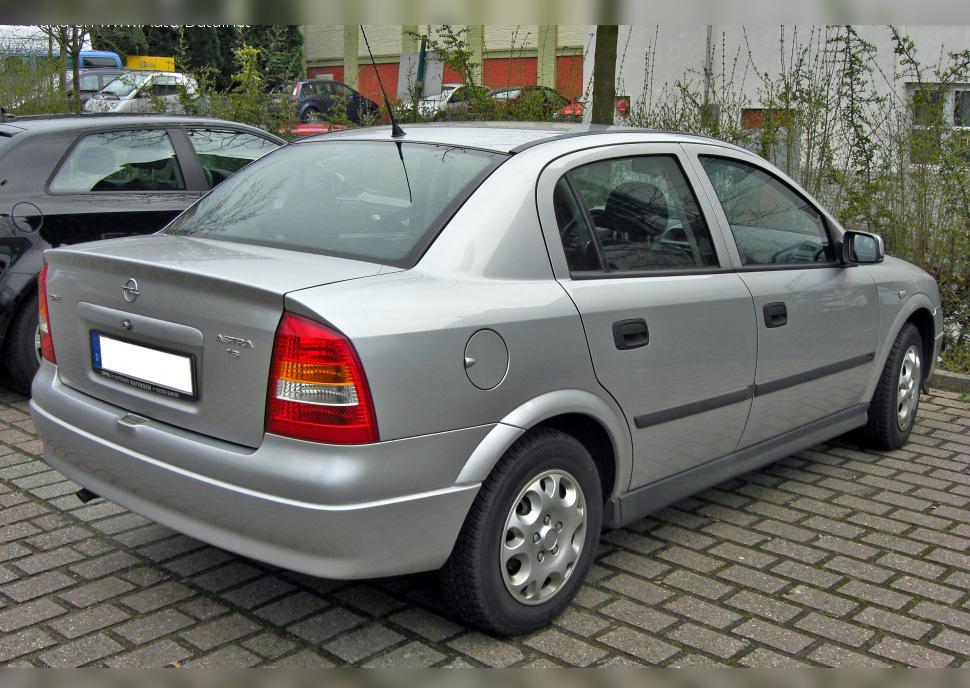
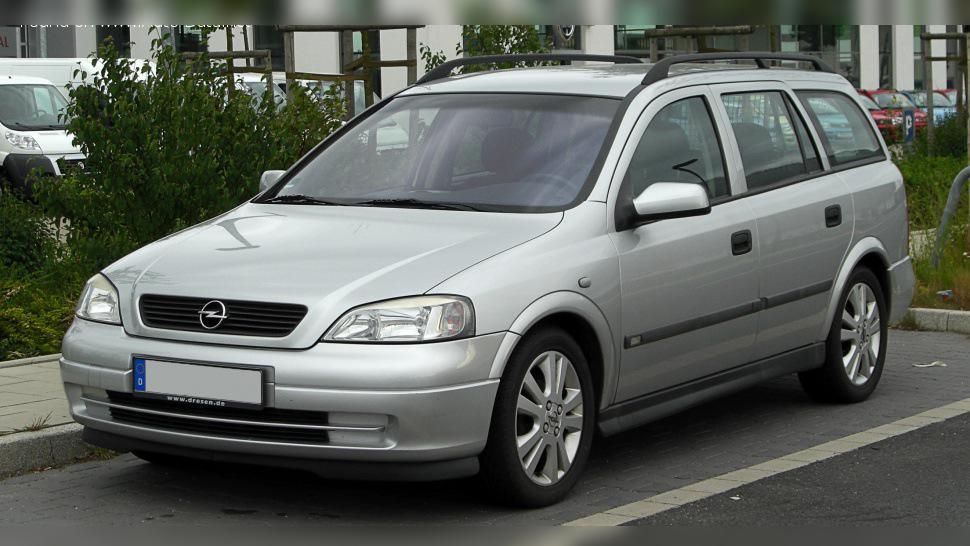
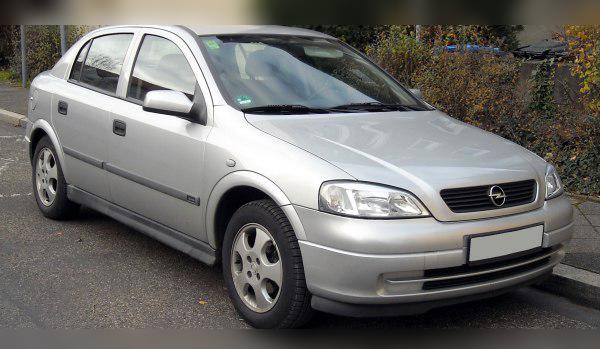
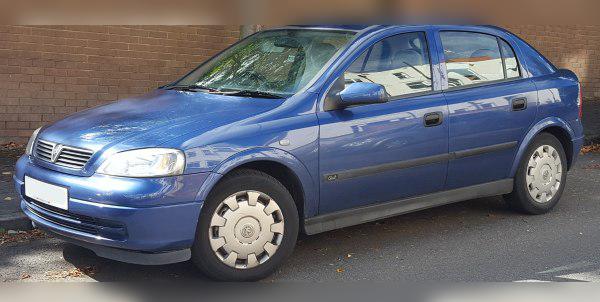
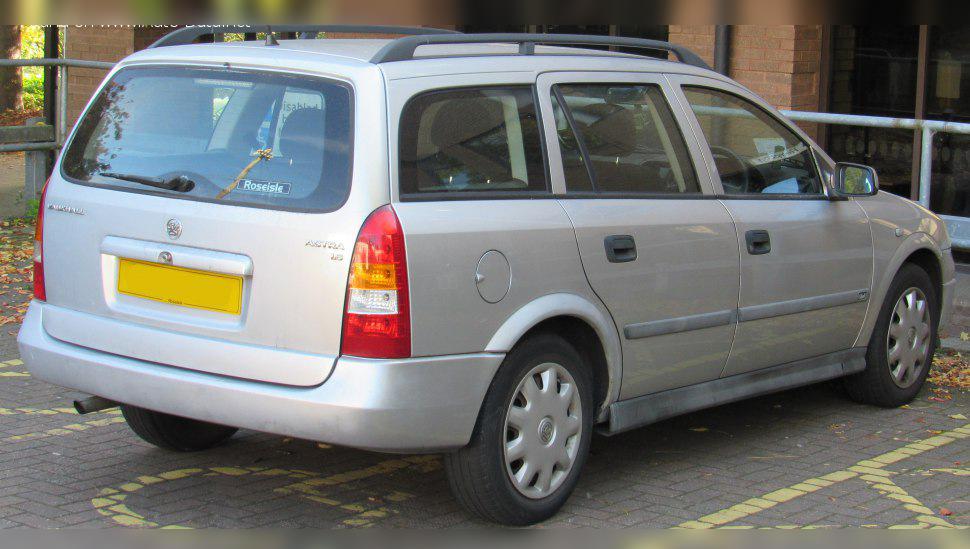
The engines designated as X20DTL (earlier Euro 2 standard) and Y20DTL (later revisions) represent the basic diesel powertrain in Opel models from the late nineties and early 2000s. They are most commonly found in the Opel Astra G (hatchback, estate, sedan), as well as in equivalent Vauxhall models.
One of the biggest misconceptions about this engine is the belief that it is naturally aspirated because it carries the DI (Direct Injection) badge instead of DTI. As an experienced technical editor I have to debunk that: this engine DOES have a turbocharger. The difference between the DI (82 hp) and the more powerful DTI (101 hp) versions is that the weaker DI does not have an intercooler and the turbo operates at lower boost pressure. Because of that, it is extremely thermally unstressed and is a true “workhorse”.
Technical specifications
| Specification | Data |
|---|---|
| Displacement | 1995 cc |
| Engine power | 60 kW (82 hp) |
| Torque | 185 Nm (at 1500 - 2750 rpm) |
| Engine codes | X20DTL, Y20DTL |
| Injection type | Direct injection (Bosch VP44 rotary pump) |
| Aspiration (charging) | Low‑pressure turbocharger (NO intercooler) |
| Number of valves | 16 (SOHC) |
Reliability and maintenance
Does this engine have a timing belt or a chain?
The crankshaft and camshaft are connected by a timing chain (more precisely, a system of two chains). This is great news for owners because the chain on this engine rarely causes problems and easily lasts over 300,000 km to 400,000 km before it needs to be replaced due to stretching (which manifests as rattling on cold start).
At what mileage is the major service done?
Since it has a chain, the classic “major service” is not done at the usual 60,000 km intervals. Maintenance comes down to checking and replacing the auxiliary belt, rollers, tensioner and the water pump every 80,000 to 100,000 km. Because of this, regular maintenance costs are very affordable.
Oil quantity and grade
This engine takes exactly 5.5 litres of oil. Considering the age and tolerances of the engine, the best recommendation is semi‑synthetic oil of grade 10W‑40 (or 5W‑40 if the engine is in excellent condition and the car is used in colder regions). A minor service (oil and all filters, especially the fuel filter!) should be done every 10,000 to a maximum of 15,000 km.
Oil consumption
This Opel 2.0 DI is not known as a heavy oil consumer. Consumption of 0.2 to 0.5 litres per 10,000 km is considered completely normal and is usually the result of aging valve stem seals or slight oil vapour leakage through the turbo. If it consumes more than 1 litre per 10,000 km, it is time to inspect the piston rings or the turbo.
Injector lifespan and quality
Since this is a diesel, it should be noted that it does not use sensitive common‑rail injectors, but classic two‑stage mechanical injectors. They are extremely durable and rarely fail before 300,000 km. If atomisation becomes poor, refurbishing the injector nozzles is not expensive (depends on the market). The problem with injectors on this engine is not the nozzles themselves, but the Teflon seals (injector stem seals) under the camshaft which deteriorate and allow engine oil to enter the fuel system, or allow the fuel to “drain back” overnight, resulting in long and painful cranking in the morning.
Most common failures
Apart from the mentioned cold‑start issue (leak‑off hoses and injector seals), the most common problems involve the vacuum system. The engine has many vacuum hoses that become porous over time. When vacuum leaks, the engine loses control over the turbo and the EGR valve, the infamous “Check Engine” light comes on and the car goes into limp mode, where it completely loses power.
Specific parts (costs)
Injection system (the engine’s Achilles heel)
By far the most expensive and most common problem on this engine is the Bosch VP44 rotary high‑pressure pump. It fails for two reasons: burning of the transistor in the pump electronics (PSG5 module) or mechanical wear of the timing advance piston. Overhauling this pump is expensive (depends on the market) and it must be done by a reputable Bosch specialist. Symptoms of failure are sudden engine shut‑off while driving and inability to restart.
Does the engine have a dual‑mass flywheel?
One of the best pieces of news for buyers: the 2.0 DI 82 hp version DOES NOT have a dual‑mass flywheel. It is equipped with a classic solid flywheel. This means you can forget about the expensive replacements typical of modern diesels. More powerful versions (2.0 DTI with 101 hp) mostly do have it, but this 82 hp version is free from that expense.
Turbocharger and EGR valve
As mentioned in the introduction, the turbo is present, but since it runs at low boost pressure, its service life is practically unlimited and it lasts as long as the engine itself. It does not have variable geometry, so there are no sticking vanes either. The EGR valve is mechanical‑pneumatic. Over time it clogs up with soot from the exhaust, which results in black smoke from the tailpipe and jerking under light acceleration. It is easy to remove and clean (not expensive).
DPF filter and AdBlue
Since the engine comes from the Euro 2 and Euro 3 era, it does not have a DPF (diesel particulate filter) nor an AdBlue system. This makes it ideal for city driving because you will not have issues with clogged DPFs and regenerations.
Fuel consumption and performance
Real‑world fuel consumption
Despite its relatively modest power output, this is not the most economical diesel due to the heavy Astra G body and older‑generation injection technology. In city stop‑and‑go driving, consumption ranges from 7.5 to 8.5 l/100 km. On open roads (single carriageway) it drops to a reasonable 5.0 to 5.5 l/100 km.
Driving dynamics and “laziness”
With only 82 hp (60 kW) and 185 Nm of torque delivered in a fairly linear manner, this engine is distinctly “lazy”. The weight of the Astra (especially the estate version) is a serious load for this power. Acceleration feels sluggish, and overtaking requires good judgement and a run‑up. The car is reliable, but completely devoid of any sporty character.
Behaviour on the motorway
On the motorway, at 130 km/h, the engine spins at a relatively high ~3000 to 3200 rpm in fifth gear (depending on the final drive). Due to the lack of a sixth gear and poorer sound insulation, it is very noisy in the cabin at these speeds. Its optimal cruising speed, where it is pleasant to drive, is around 110 km/h.
Additional options and modifications
Chipping (Stage 1 remap)
With a software tune (Stage 1), an additional 15 to 20 hp can be extracted from this engine (up to a round 100 hp). Acceleration becomes noticeably smoother. However, as an experienced mechanic I do not recommend extreme remapping for one simple reason: the VP44 pump. Increasing demand and pressure puts additional strain on the already sensitive pump electronics and significantly shortens its lifespan.
Gearbox and clutch
Types of gearboxes
This engine was paired with 5‑speed manual gearboxes (most commonly from the F23 series) and 4‑speed Aisin automatic gearboxes.
Most common gearbox issues and maintenance
Manual gearbox: The gearbox itself is robust, but the known weak point is the shift linkage. Over time the plastic bushings develop play, so the gear lever becomes “wobbly” and engaging first and second gear becomes difficult. The solution is to replace the bushing set (very cheap). It is advisable to change the oil in the manual gearbox every 60,000 to 80,000 km (it uses specific red Opel gearbox oil).
Automatic gearbox: The old 4‑speed automatic shifts slowly, but with regular maintenance it lasts a long time. The most common failures are caused by overheating and neglecting oil changes, which leads to jerking when shifting (especially from 2nd to 3rd gear). The oil in the automatic gearbox must be changed every 60,000 km.
As mentioned, since it does not have a dual‑mass flywheel, the cost of replacing the complete clutch kit (pressure plate, disc, release bearing) for the manual gearbox is affordable and falls under regular, but not excessively painful expenses (depends on the market).
Buying used and conclusion
What to check before buying?
- First, completely cold start: Ask the seller not to start the car before you arrive. If the car cranks for more than 2–3 seconds while emitting a cloud of whitish‑blue smoke that smells of unburnt diesel, the injector seals and leak‑off hoses are at fault.
- Chain rattling: Listen to the engine on cold start and during revving. If you hear a sharp metallic rattle from the right‑hand side of the engine, the chain has stretched and needs to be replaced.
- Test drive and “Check Engine”: Drive the car at full throttle uphill in 3rd and 4th gear. If it suddenly loses power (yellow warning light comes on), the problem is in the vacuum system, EGR, or sensors, which requires detailed diagnostics.
- Condition of the Bosch pump: If the seller points out that the pump has been overhauled, ask for an invoice from the Bosch specialist. “Tinkering” with the pump in a backyard workshop does not last long.
Final verdict
Opel’s 2.0 DI 16V (X20DTL/Y20DTL) is a raw, noisy and lazy engine, but an incredibly tough mechanical unit. Its greatest asset is the low cost of ownership thanks to the absence of a dual‑mass flywheel, DPF filter and classic timing‑belt major service. It is ideal for drivers with a calmer driving style who need a workhorse car and appreciate the simplicity of old‑school diesels. If you manage to find an example with a properly overhauled Bosch VP44 pump, you get a very dependable vehicle for a modest budget.