Porsche M97.01 3.8 (355 hp) engine: Experiences, issues, fuel consumption and used-buying guide
Key points in short (TL;DR)
- Performance and character: A truly naturally aspirated boxer engine with a fantastic sound and instant throttle response. It never feels “lazy” in any driving mode.
- Cylinder walls (Bore scoring): The biggest enemy of this engine. Cylinder damage is common and leads to enormous oil consumption and catastrophic failure. A borescope inspection before purchase is mandatory!
- IMS bearing: The M97 version has an improved, larger IMS bearing compared to the older M96, so failures are much rarer, but repair requires disassembling the entire engine block.
- Maintenance: Requires deep pockets. All vital parts, from the clutch to spark plugs and coils, fall into the category: very expensive (Depends on the market).
- Transmissions: The manual gearbox is heaven for enthusiasts, while Tiptronic S is reliable but a generation slower as an automatic.
- Fuel consumption: Expect around 17–19 liters in the city, while on the highway it can drop to about 10 liters per 100 km.
Contents
- Introduction: An icon from Zuffenhausen
- Technical specifications
- Reliability and maintenance
- Specific components (Costs)
- Fuel consumption and performance
- Additional options and modifications
- Transmission and drivetrain
- Buying used and conclusion
Introduction: An icon from Zuffenhausen
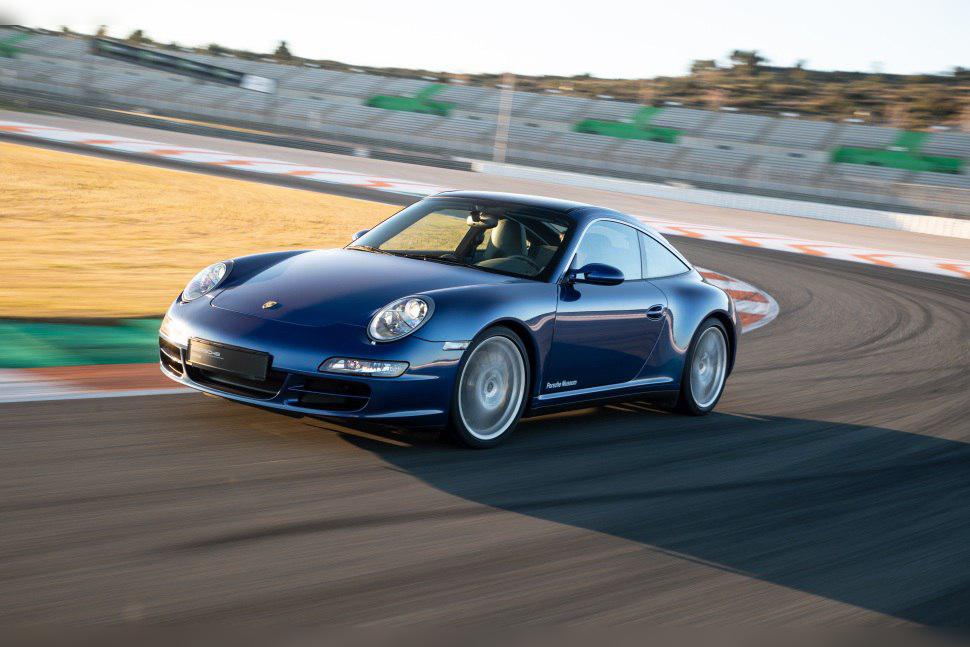
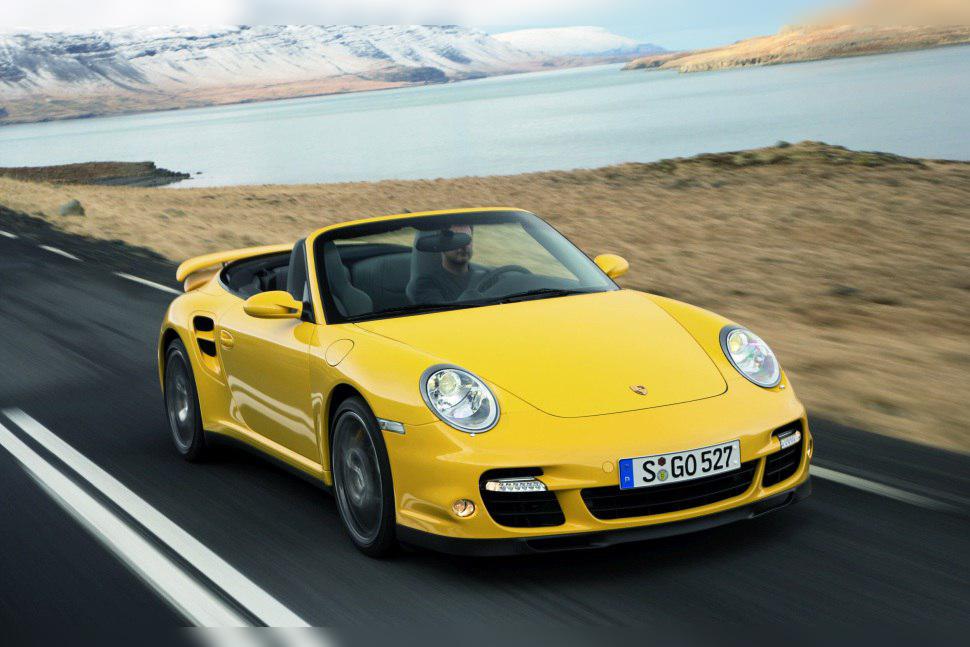
The M97.01 engine is the heart of the first generation Porsche 911 type 997 (the so‑called 997.1), and it was primarily installed in the Carrera S, Carrera 4S and Targa 4S models. It is a thoroughbred naturally aspirated boxer (flat‑six) engine with a displacement of 3.8 liters. This powerplant is a direct evolution of the older M96 engine from the 996 series, but with increased displacement and improved design of certain components.
For driving enthusiasts, this is probably one of the last truly raw naturally aspirated engines before the switch to direct injection (in the 997.2 generation) and the later move into the turbo era. The sound above 5,000 rpm is legendary, but owning this engineering gem also comes with some very specific risks that every mechanic and enthusiast must be aware of.
Technical specifications
| Parameter | Data |
|---|---|
| Engine code | M97.01 |
| Displacement | 3824 cc (3.8L) |
| Power | 261 kW (355 hp) |
| Torque | 400 Nm |
| Injection type | Multipoint (Indirect injection) |
| Configuration and aspiration | Flat‑6 / Naturally aspirated |
| Timing drive | Chain |
Reliability and maintenance
Does this engine have a timing belt or a chain?
The M97.01 uses a chain for its timing drive. The chain system is quite robust and actual chain breakage is rare. However, as mileage increases, the plastic chain guides and hydraulic tensioners can fail, which causes a characteristic rattling noise on cold start.
What are the most common failures on this engine?
This is the most important part for any potential buyer. The engine suffers from several very serious issues:
- Cylinder wall damage (Bore scoring): This is by far the biggest problem of the 3.8‑liter engine. The engine block has a “Lokasil” coating on the cylinders. Due to poor ring design, overheating or poor lubrication, this coating can peel off and cause deep scoring of the walls (most often on cylinder number 6). Symptoms: a specific “ticking” that resembles noisy hydraulic lifters, drastically increased oil consumption and thick, oily soot on the left exhaust tip. Repair means a complete rebuild and re‑sleeving of the engine, which is extremely expensive (Depends on the market).
- IMS bearing (Intermediate Shaft Bearing): Unlike the infamous M96 engine, the M97 has a larger and reinforced IMS bearing. The failure rate is much lower (below 5%), but the catch is that due to its size this bearing cannot be removed without completely splitting the engine cases. If this bearing fails, metal shavings destroy the crankshaft and the entire engine.
- Crankshaft rear main seal leak (RMS - Rear Main Seal): A very common occurrence. Oil dripping at the junction between engine and gearbox is a clear sign. The part itself is not very expensive, but labor is, because the gearbox has to come out.
- Ignition coil cracking: The boxer layout means the coils and spark plugs are close to the exhaust manifolds, so they are exposed to very high temperatures. Coils often crack and cause misfire.
At what mileage is the “major service” done?
Since the engine uses a chain, a “major service” in the traditional sense does not exist. However, at intervals of 80,000 to 100,000 km it is recommended to replace the water pump, thermostat, accessory (serpentine) belt, all idlers and tensioners. Preventive replacement of the water pump is critical because the impeller can disintegrate and block coolant flow, which directly leads to overheating and the aforementioned cylinder damage.
How many liters of oil does this engine take and which grade is recommended?
The lubrication system is complex and takes between 8.0 and 8.5 liters of oil (depending on how thoroughly the sump is drained and whether the filter is changed). The factory recommends 0W‑40, although many experienced mechanics and Porsche specialists switch to 5W‑40 or even 5W‑50 (Motul, Mobil 1) in climates with hotter summers or if the car is driven on track, for better viscosity at high temperatures.
Does it consume oil and what is normal?
Yes, boxer engines by nature consume somewhat more oil, but you need to be cautious. Porsche tolerates up to 1L per 1,000 km, but in practice that is a red flag. A healthy M97.01 will use about 0.3 to 0.5 liters per 2,000–3,000 km. If the engine starts consuming more than a liter per 1,500 km, this is almost a sure sign that the cylinder walls are damaged (bore scoring) or that the Air Oil Separator (AOS) is faulty. A failed AOS can draw a huge amount of oil into the intake and cause hydrolock!
At what mileage are the spark plugs replaced?
Spark plugs are replaced every 60,000 km or every 4 years (whichever comes first). Due to age and heat exposure, coils are very often replaced in the same cycle. Removing them requires working from underneath the car and is often complicated by seized bolts.
Specific components (Costs)
Does the engine have a dual‑mass flywheel?
Yes, if paired with a manual gearbox, the M97.01 has a dual‑mass flywheel (DMF). Its function is to absorb the vibrations of the powerful 400 Nm engine. Replacing the flywheel and clutch kit on a Porsche is an undertaking that price‑wise ranks as: very expensive (Depends on the market).
What kind of injection system does it have?
This is an indirect (Multipoint – MPI) injection system into the intake manifold. The injectors are extremely reliable and rarely cause problems. There are no issues with carbon buildup on the intake valves as on later DFI engines (from the 997.2 facelift onwards).
Turbo, DPF, EGR, AdBlue?
This is a pure naturally aspirated petrol engine, which means it has no turbocharger, no DPF filter and no AdBlue system. Exhaust gas recirculation (EGR) is achieved through variable valve timing overlap (VarioCam Plus system), so there is no external EGR valve that would get dirty and stick. This is a big plus for reliability and running costs compared to modern turbo‑diesel and turbo‑petrol engines.
Fuel consumption and performance
What is the real‑world fuel consumption in city driving?
You can forget the magical brochure figures. With 3.8 liters of displacement in stop‑and‑go conditions, consumption ranges between 16 and 19 l/100 km. With the Tiptronic S automatic in heavy traffic it can even reach 20 liters. This is definitely not a car for everyday city congestion.
Is this engine “lazy”?
On the contrary! The 997 body is quite light by today’s standards (around 1,450 to 1,550 kg, depending on Targa/Cabrio/4x4 equipment). With its 355 horsepower, throttle response is instantaneous, almost telepathic. The car pulls strongly already from 2,500 rpm (thanks to the VarioCam system and variable intake manifold), but the real howl and wild power delivery come from 5,000 rpm all the way to the redline above 7,000 rpm.
Behavior on the highway:
This is a top‑class Grand Tourer. At 130 km/h in 6th gear with the manual gearbox, the engine cruises at about 3,000 rpm. Fuel consumption on the open road drops significantly and can be a perfectly reasonable 9 to 11 l/100 km, if you are gentle with the throttle.
Additional options and modifications
LPG conversion:
This is a question that every Porsche mechanic dismisses out of hand. It is absolutely not recommended. Besides being a desecration of the car’s character, an LPG conversion significantly raises combustion chamber temperatures. Considering that the M97 engine is already extremely sensitive to high temperatures that cause cylinder scoring, LPG is a direct ticket to engine failure. On top of that, you lose valuable front trunk space and alter the car’s delicate weight distribution.
ECU remap (Stage 1):
Naturally aspirated engines respond very reluctantly to software changes. A Stage 1 remap yields at most 15 to 20 hp and a minimal increase in torque. The most noticeable improvement is a sharper throttle response, but without serious hardware modifications (freer‑flowing exhaust manifolds, sports catalytic converters, better intake, so‑called “plenum”), it is not worth investing money in software alone.
Transmission and drivetrain
The engine was paired with two transmission options.
Manual gearbox (6‑speed):
Driving enthusiasts love this option. The gearbox is precise, with the mechanical resistance you expect in a sports car. Most common issues: Wear of the 1st and 2nd gear synchros, which can make the gearbox “catch” when shifting cold. The clutch is generally heavy, and if it becomes excessively heavy, the clutch kit is likely due for replacement. The gearbox requires an oil change every 80,000 km. Replacing the dual‑mass flywheel and clutch kit is: very expensive (Depends on the market).
Automatic gearbox (Tiptronic S – 5‑speed):
PDK (dual‑clutch gearbox) only arrived with the facelift, so this engine comes with Tiptronic S. It is a traditional torque‑converter automatic (based on the indestructible Mercedes 722.6 gearbox, with Porsche software). Most common issues: It is noticeably slower by design than modern automatics and robs the engine of some sharpness. The most common failures are of the valve body or the conductor plate inside the gearbox. Servicing (oil and filter change) is strictly recommended every 60,000 to 80,000 km to keep shifts smooth. The service cost is: not expensive compared to potential failures.
Buying used and conclusion
What exactly should be checked before buying?
Buying a 997 Carrera S “blind” is financial suicide. The following steps are mandatory:
- Cylinder borescope inspection (PPI): You do not buy a 3.8 engine without this! The mechanic must insert a camera through the spark plug hole (or via the sump) and carefully inspect the cylinder walls for scoring.
- Exhaust tip analysis: Stand behind the car. If the left exhaust tip is much sootier (black and oily) than the right one, this indicates scored cylinders on one side of the block (bank 2).
- Cold start (Noise): When starting a completely cold engine, listen for metallic chain rattle or rhythmic ticking that does not disappear after 10 seconds. Ticking from the lower part of the engine (piston slap) is a sign that a rebuild is coming.
- Visual inspection of the underside: Is the bottom of the engine oily at the junction with the gearbox (RMS seal)?
- Diagnostics (“Over‑rev” report): Porsche diagnostics can read exactly how many times the engine has gone into the red rev range. High‑range events (Range 4, 5 and 6) suggest that the car has been aggressively downshifted and there may be damage to the valves.
Who is this engine for?
The Porsche 3.8 M97.01 is a masterpiece of sound and response, created for drivers who value analog driving, communicative steering and pushing right to the limits of grip on winding roads. However, this is not a car for someone on a tight budget. Even regular maintenance requires a specialist workshop and premium parts. If you are planning to buy one, you should set aside a serious preventive fund and absolutely verify the vehicle’s history. If you find a flawlessly maintained example that has survived the cylinder wall issues (or already has reinforced sleeves – a so‑called “sleeved engine”), you will get a car whose value is now slowly starting to rise on the classic‑car market.