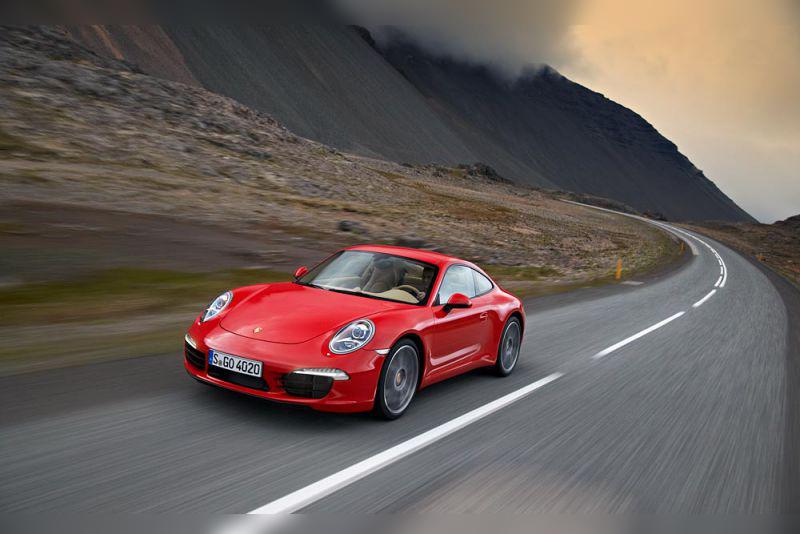
Porsche 3.8 MA1.01 (430 hp) – Experiences, issues, fuel consumption and used-buying tips
- Naturally aspirated gem: One of the last and most highly regarded naturally aspirated engines in the 911 Carrera before the widespread switch to turbo technology.
- Exceptional power: Delivers an impressive 316 kW (430 hp) with fantastic throttle response and a glorious soundtrack at high revs.
- Reliable timing: The engine uses a timing chain which has proven to be extremely durable, provided the oil is changed at the prescribed intervals.
- Expensive maintenance: Top-tier performance requires top-tier maintenance. Genuine parts and labor are very expensive (depends on the market).
- Transmissions: Available with the superb 7-speed PDK automatic or the purist-oriented 7-speed manual gearbox. PDK requires regular oil service every 60,000 km.
- LPG and modifications: LPG installation is absolutely out of the question. The potential for cheap “chip tuning” is minimal because the engine has no turbocharger.
Contents
- Introduction: The golden era of Porsche naturally aspirated engines
- Technical specifications
- Reliability and maintenance
- Specific parts and costs
- Fuel consumption and performance
- Additional options and modifications
- Transmission and drivetrain
- Buying used and conclusion
Introduction: The golden era of Porsche naturally aspirated engines
The engine with the code MA1.01 in its 430 hp iteration is an engineering masterpiece from Zuffenhausen. This power unit is actually an upgraded version of the standard 3.8 engine from the Carrera S (which had 400 hp), enhanced with the original Porsche Powerkit. It was factory-fitted to the 991.1 (pre-facelift) generation, specifically in the Carrera GTS, Carrera 4 GTS, as well as in Cabriolet and Targa variants.
The importance of this engine in the automotive world is huge. This is the last naturally aspirated 3.8-liter engine that went into a standard (non-GT) 911. Immediately after this model, Porsche switched to 3.0 twin-turbo engines (991.2), which makes this flat-six jewel incredibly sought after among true driving purists who appreciate linear power delivery and the scream at 7,500 rpm.
Technical specifications
| Parameter | Specification |
|---|---|
| Engine code | MA1.01 (with Carrera S Powerkit) |
| Displacement | 3800 cc (3.8 liters) |
| Power | 316 kW (430 hp) at 7,500 rpm |
| Torque | 440 Nm at 5,750 rpm |
| Architecture | 6-cylinder flat engine (H6) |
| Injection type | Direct fuel injection (DFI - Direct Fuel Injection) |
| Aspiration | Naturally aspirated |
Reliability and maintenance
In terms of reliability, this 3.8 flat-six is among the very best in the automotive industry, but it demands uncompromising adherence to service procedures.
Chain or belt and major service?
The engine timing is driven by a chain, which is designed to last as long as the engine itself. There is no classic “major service” in the way it applies to engines with a timing belt. However, it is recommended to replace the auxiliary belt, tensioner and idler pulleys every 90,000 km or 6 years. The chain does not snap, but if regular oil changes are neglected, the hydraulic chain tensioners can weaken, resulting in rattling at cold start.
Oil capacity and consumption
The MA1.01 engine takes about 7.5 to 8 liters of oil, depending on whether the oil is fully drained and how long the car sits on the lift. Due to extremely tight tolerances and high operating temperatures (regularly exceeding 100 °C and going up to 115 °C under aggressive driving), it is recommended to use top-quality synthetic oils with viscosity 0W-40 or 5W-40 (e.g. Mobil 1 with Porsche A40 approval).
As for oil consumption, every Porsche flat-six consumes oil – that is a technical characteristic. Consumption of around 0.5 up to even 1 liter per 2,000 km is considered normal, depending on driving style. Track driving and constantly keeping the revs in the red zone significantly increases oil consumption, so checking the level (which is done exclusively electronically via the trip computer) is an essential routine before any more spirited driving.
Spark plugs and most common failures
Since this is a thoroughbred naturally aspirated engine, the high compression requires perfect ignition. Spark plugs must be replaced every 60,000 km or at the latest every 4 years. This is not the place to save money, because faulty spark plugs can damage the expensive ignition coils. Cracked coils are in fact one of the more common failures, due to the enormous heat generated near the exhaust manifolds.
Another potential issue is carbon buildup on the intake valves due to direct fuel injection (DFI). Since the fuel does not wash over the valves, at higher mileages (over 100,000 km) a slightly rough idle may appear, which is resolved by “walnut blasting” valve cleaning. Also, make sure to clean the coolant and A/C radiators located in the front bumper, because accumulated leaves and dirt cause corrosion, coolant leaks and potential engine overheating.
Specific parts and costs
Maintaining a car like this requires deep pockets, and many specific parts are purpose-built only for this model.
Dual-mass flywheel and injection system
Regardless of whether it has a manual or PDK gearbox, the model with this engine is equipped with a dual-mass flywheel (DMF). In PDK models, it serves solely to dampen vibrations before the power reaches the mechatronics unit and clutch pack. The injection system operates at very high pressure. The injectors are generally robust, but sensitive to poor-quality fuel. Replacing them is not cheap, so using premium fuel (at least 98 or 100 octane) is not a luxury but a technical necessity.
Turbo, DPF and AdBlue
This engine is completely free of these components. It has no turbocharger (which is one of the reasons its collector value is rising), so you don’t have to worry about turbo overhauls, intercoolers and vane failures. As a powerful petrol engine produced before the introduction of stricter WLTP standards, it has no DPF filter (nor the newer OPF – Gasoline Particulate Filter), no AdBlue system and no conventional EGR valve that would clog up like on diesels. The intake relies on resonance flaps in the intake manifold (VarioRam) which change the intake tract length and optimize torque.
Fuel consumption and performance
Expecting frugality from a 3.8-liter flat-six with 430 horsepower is unrealistic, but this engine can be surprisingly versatile.
The engine is in no way “lazy”. With 440 Nm available at 5,750 rpm, it prefers to be driven at higher revs to extract the maximum, but the 991 body is relatively light (around 1,450 to 1,550 kg depending on all-wheel drive and body type). Acceleration is brutal, and the model with PDK and Sport Chrono package reaches 100 km/h in about 4 seconds.
Real-world city fuel consumption: Expect figures between 14 and 18 l/100 km. Stop-and-go traffic is not this car’s natural environment. However, thanks to phenomenal engineering, on the highway the situation changes dramatically. At a constant 130 km/h in seventh gear (with the PDK gearbox), the engine “cruises” at just above 2,000 rpm. Fuel consumption then drops drastically to a very reasonable 8 to 9 l/100 km.
Additional options and modifications
Forget about cheap mods.
LPG (autogas) installation
The answer is short and clear: No. Technically, installing an LPG system on a direct-injection H6 engine in the rear of a 911, where there is barely enough room to change the spark plugs, is practically an impossible task. On top of that, fitting LPG to a Porsche Carrera GTS would completely defeat the purpose of this car, dramatically lower its value and most likely damage the crankshaft, cylinder heads and valves due to higher combustion temperatures and mixture issues.
Chip tuning (Stage 1)
On naturally aspirated engines, including the MA1.01, standard “chip tuning” brings negligible gains. By changing ignition and injection timing maps you can maybe extract 15 to 20 hp. The much bigger benefit of a Stage 1 map on this car is removing any potential noise limiters (opening the exhaust flaps earlier) and sharpening throttle response. Those who want more power usually buy the turbo models.
Transmission and drivetrain
This model offered a choice between a purist 7-speed manual gearbox and the superb 7-speed PDK (dual-clutch automatic).
The manual gearbox (rare in GTS models) is extremely robust, but in city driving it demands a strong left leg. The biggest issue with manual cars is a worn clutch kit due to aggressive launches. Replacing the clutch together with the dual-mass flywheel is an expensive job (depends on the market).
PDK (Porsche Doppelkupplung) is probably the best automatic transmission in the world. However, the gearbox mechatronics and position sensors are known as a potential “weak point” at high mileage. If a sensor inside the gearbox fails, the entire unit often has to be opened or replaced, which is very expensive (depends on the market). To prevent this, gearbox oil changes must be done strictly every 60,000 km or 6 years. It is important to know that there are two separate fluids inside the gearbox (oil for the clutch hydraulics and oil for the gearsets), and the transmission pan, which has an integrated filter, must also be replaced.
Buying used and conclusion
If you are in the position of a buyer, here is what you absolutely must pay attention to before handing over the money:
- DME report (over-rev report): This is the most important item. Original Porsche diagnostics (PIWIS) can read how many times the engine has been pushed into the rev limiter and critical rpm ranges. Ranges 1 and 2 are normal (hitting the limiter), but entries in Ranges 4, 5 and 6 (most often due to an incorrect downshift on manual cars) indicate possible microscopic damage to the crankshaft and valves, and such examples should be avoided.
- Radiators in the bumper: Check whether they have been cleaned and whether they are rotten from accumulated dirt and moisture.
- Noise at startup: Any metallic rattling or smoke from the exhaust lasting longer than the first few seconds after a cold start are alarming signs.
- Suspension: Check the condition of the dampers, especially if the car has PASM (Porsche Active Suspension Management). Leaking dampers are an expensive repair.
Conclusion: The MA1.01 engine with 430 hp in the Porsche 911 991.1 GTS is not for people looking for a cheap daily driver, but for true enthusiasts. It is aimed at drivers who know what they want: linear power delivery with no turbo lag, a hysterical sound close to 8,000 rpm and stable value on the used market. With regular maintenance and strict adherence to service intervals, it is one of the most reliable and emotionally rewarding engines the automotive industry has ever offered.