Porsche Engine MA1.04 3.4 (350 hp) – Experiences, Problems, Fuel Consumption and Used-Buying Tips
Key points in short (TL;DR)
- No IMS bearing issue: Unlike older generations, the MA1.04 is a completely redesigned and extremely reliable mechanical unit.
- Last naturally aspirated “base” engine: No turbochargers, which significantly reduces complexity and maintenance costs.
- Direct Fuel Injection (DFI): Because of this system, carbon buildup occurs on the intake valves, which requires periodic cleaning.
- Chain-driven timing: The engine uses a timing chain that is long-lasting and usually does not require replacement before 200,000 km, unless rattling appears.
- Mandatory cylinder inspection (Borescope): Before purchase, always inspect the cylinder walls with a camera due to possible, although rare, damage (bore scoring).
- PDK gearbox is excellent but expensive to repair: Timely maintenance is crucial; a mechatronics failure is very expensive (Depends on market).
Contents
- Introduction: The star of the 991.1 generation
- Technical specifications
- Reliability and Maintenance
- Specific Components and Systems
- Fuel Consumption and Performance
- Additional Options and Modifications
- Transmissions and Drivetrain Maintenance
- Buying Used and Conclusion
Introduction: The star of the 991.1 generation
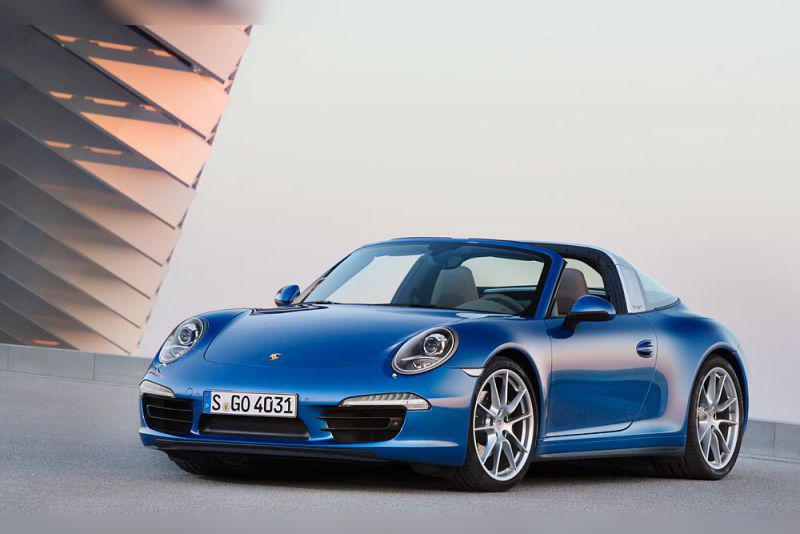
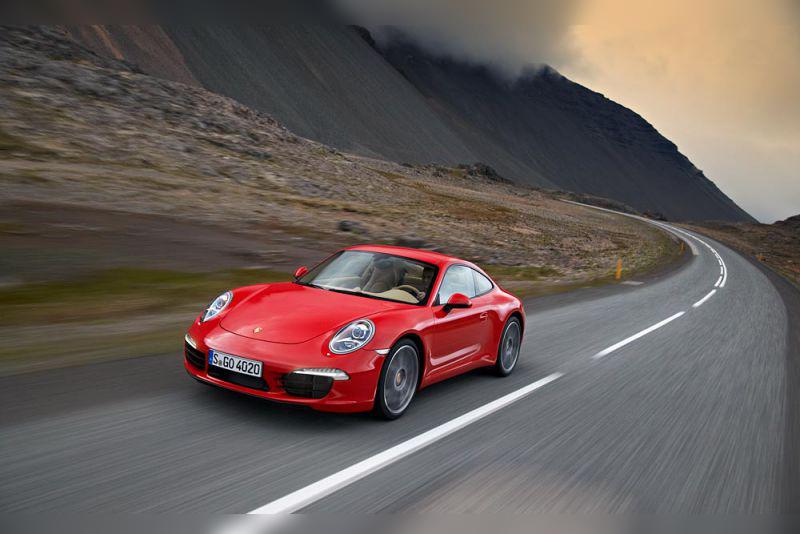
The engine designated as MA1.04 is the heart of the base models of the Porsche 911 991.1 series (Carrera, Carrera 4, Targa and Cabriolet versions). This is a historically very important powerplant, as it represents the last generation of naturally aspirated boxer engines installed in base Carrera models, before the industry (and Porsche itself with the 991.2 generation) moved to smaller turbo engines. With a displacement of 3.4 liters and a flat-six configuration, this engine offers that classic, raw sound and linear power delivery that purists adore.
Technical specifications
| Parameter | Specification |
|---|---|
| Displacement | 3436 cc (3.4 L) |
| Configuration | Flat-6 (Boxer, 6 cylinders) |
| Power | 257 kW (350 hp) at 7400 rpm |
| Torque | 390 Nm at 5600 rpm |
| Engine code | MA1.04 |
| Injection type | Direct Fuel Injection (DFI) |
| Aspiration | Naturally aspirated engine |
Reliability and Maintenance
Timing system: Chain instead of belt
Unlike many mass-market engines, the Porsche MA1.04 has no timing belt. The camshafts are driven by a timing chain. This system is designed to last as long as the engine itself. Chain stretch is very rare and issues are minimal. There is no prescribed replacement interval, but it is recommended to inspect the condition of the tensioners and guides at around 200,000 km. Rattling on cold start that lasts longer than a few seconds is the first symptom that the chain or its tensioner has weakened.
Most common failures and “major service”
A classic “major service” in the sense of a timing belt replacement does not exist here. Instead, every 6 years or around 90,000 km, the so-called serpentine belt (PK belt) is replaced; it drives the water pump, alternator and A/C compressor. The water pump is known to start leaking or develop play in the shaft between 80,000 and 120,000 km, so its preventive replacement together with the serpentine belt is highly recommended.
As a direct-injection gasoline engine (DFI), the MA1.04 suffers from carbon buildup on the intake valves. Symptoms include rough idle (stumbling), loss of power at high revs and slightly increased fuel consumption. The solution is mechanical valve cleaning (so-called “walnut blasting”) every 80,000 to 100,000 km. Also, the ignition coils tend to crack from the enormous heat that the boxer engine generates near the exhaust manifolds, which results in misfire errors.
Oil and spark plugs
Due to its specific design, this engine requires about 7.5 to 8 liters of oil at each change. The factory recommends fully synthetic oil of 0W-40 or 5W-40 grade (Porsche A40 specification). The service interval prescribed by the manufacturer is 30,000 km or 2 years, but any serious mechanic will tell you to halve that and change the oil at a maximum of 10,000 to 15,000 km or once a year.
As for oil consumption, it is completely normal for boxer engines to use a certain amount between services. The factory tolerance is high (up to 0.8 liters per 1000 km in extreme track-driving conditions), but in practice a healthy engine in mixed driving consumes about 0.3 to 0.5 liters per 5000 km. If it consumes significantly more, this may indicate a problem with the piston rings or the Air Oil Separator (AOS), which, when it fails, causes thick white smoke from the exhaust. Repairing the AOS is expensive (Depends on market) due to difficult access.
As a high-revving petrol engine, spark plugs are a critical point. The manufacturer specifies replacement every 4 years or at 60,000 km. Ignoring this interval can lead to spark plug overheating and fatal damage to the piston or cylinder.
Specific Components and Systems
This is a pure naturally aspirated petrol engine, which means it is free of many systems that give headaches to owners of modern vehicles. The MA1.04 has no turbocharger, no EGR valve that constantly clogs, no DPF filter and no AdBlue system. All this makes it incredibly suitable for long-term ownership, as it omits assemblies that are otherwise the most common cause of extremely expensive repairs.
Regarding fuel injection, the system operates at extremely high pressure. The injectors are generally high quality, but due to poor fuel or long periods of the car sitting, they can seize or start to leak (drip fuel onto the piston). A symptom of a leaking injector is the smell of raw gasoline in the oil, difficult hot starts and, in the long term, washing oil off the cylinder wall, which leads to failure (bore scoring). The price of new DFI injectors is very high (Depends on market).
Fuel Consumption and Performance
Real-world fuel consumption strongly depends on driving style and chosen body style (Targa and Cabrio models, as well as all-wheel-drive versions – Carrera 4 – are heavier and therefore consume more). In city driving (stop-and-go), consumption ranges between 13.5 and 16 l/100 km. On the other hand, this engine is surprisingly efficient on the open road.
On the motorway, at a cruising speed of 130 km/h, consumption drops to 8.5 to 10 l/100 km. If the car is equipped with the seven-speed PDK gearbox, at 130 km/h in seventh gear the engine cruises at a very relaxed 2200 to 2400 rpm, which provides acoustic comfort and low consumption.
Is the engine “lazy”? By today’s sports-car standards, where turbo engines with massive low-end torque dominate, the MA1.04 can feel tame at low revs. Its maximum 390 Nm is reached only at a high 5600 rpm. This means that the car must be driven at high revs to show its full potential. No, it is absolutely not lazy – with 350 hp it reaches 100 km/h in under 5 seconds, but it demands a driver who enjoys hearing the engine scream up to 7400 rpm. For a body weighing around 1450 to 1550 kg, there is more than enough power.
Additional Options and Modifications
LPG conversion
Installing an LPG system on the MA1.04 engine is absolutely undesirable and not recommended under any circumstances. Due to the direct-injection system, gas injectors do not cool the petrol injectors, which are located directly in the combustion chamber. In addition, squeezing an LPG system into the extremely tight engine bay of a Porsche 911 disrupts the engine’s thermal dynamics and, ultimately, completely kills the value and purpose of such a car.
Chiptuning (Stage 1)
Since this is a naturally aspirated engine (no turbo), “chiptuning” or a Stage 1 remap does not make much sense. With software optimization you can gain at most about 15 to 20 hp and perhaps a slightly better throttle response. The money invested (which is not small at Porsche tuning shops) simply does not justify such a small gain. If you want better performance, a better investment is a quality aftermarket exhaust system, which will reduce backpressure and provide a fantastic sound.
Transmissions and Drivetrain Maintenance
Two types of gearboxes were installed with this engine: a 7-speed manual (the first of its kind in the world, actually based on the PDK gearbox housing) and the fantastic 7-speed PDK (Porsche Doppelkupplungsgetriebe – dual-clutch automatic transmission).
Manual gearbox
The manual gearbox is mechanically extremely robust. Versions with a manual gearbox have a dual-mass flywheel whose function is to dampen the vibrations of the powerful boxer engine. Failures of the gearbox itself are rare, but over time there is a need to replace the clutch kit and dual-mass flywheel (usually between 80,000 and 120,000 km, depending on whether the car has been driven on track). Complete replacement of the clutch and dual-mass flywheel is very expensive (Depends on market).
PDK (automatic) gearbox
The PDK is probably the best automatic gearbox in the industry, but it comes with its own risks. The gearset itself is virtually indestructible; however, problems can occur with the mechatronics unit and sensors inside the gearbox. Symptoms of failure are harsh shifts between gears, a “Gearbox fault” message on the instrument cluster, or the inability to engage reverse. Porsche officially does not repair these sensors but offers replacement of the entire gearbox, which is extremely costly. Fortunately, there are now independent specialists who can solve this by repairing the module, but it is still very expensive (Depends on market).
A critical factor with the PDK gearbox is regular oil service. The PDK uses two separate oil systems (one for the clutches, the other for the gears). Porsche specifies service at 90,000 km for the clutch side and 180,000 km for the gears. In practice, this has proven too long; any good technician will recommend refreshing all the oil in the PDK every 60,000 km.
Buying Used and Conclusion
What exactly to check before buying?
When buying a 911 with the 3.4 engine, be sure to pay attention to the following details:
- Sound on cold start: A brief rattle (up to 2 seconds) from the hydraulic lifters is normal, as is a small puff of smoke at startup. However, if you hear a dull knock from the bottom end of the engine that speeds up with throttle input, walk away from the purchase – this is a sign of crankshaft or cylinder damage.
- Borescope inspection (cylinder inspection with a camera): This is absolutely mandatory! Through the spark plug holes, the mechanic must insert a camera and inspect the cylinder walls (especially cylinder number 6, which is furthest from the cooling). If there are deep scratches (bore scoring), the engine is due for a full rebuild. Although the 3.4 is significantly more resistant to this than the larger 3.8 engine, the inspection is essential.
- PIWIS diagnostics and “over-rev” report: Only with original Porsche diagnostics. You must request the DME report to see the so-called “over-revs”. This is a log that records how many times the engine has exceeded the maximum allowed rpm (for example, when a wrong downshift is selected with the manual gearbox). If the car has entries in ranges 4, 5 and 6, it means the engine has been subjected to serious mechanical stress and the risk of valve failure is high.
- Condition of the cooling system: Check the radiators located in the front bumper. They collect leaves and road debris; if not cleaned regularly, they rot and start leaking.
Who is this engine for?
The MA1.04 engine (3.4 with 350 hp) from the 991.1 series is ideal for enthusiasts looking for an entry ticket into the Porsche world with an authentic naturally aspirated experience. It is an engine for people who love driving on open mountain roads, who enjoy revving to the redline and value mechanical reliability without complex turbo systems. It is not for those who expect to be slammed into the seat at half throttle – that is reserved for later Carrera models from the 991.2 generation with turbochargers. With proper and meticulous maintenance, this model is already gaining the status of a modern classic whose price on the used market is dropping less and less.