Engine 9HY DV6TED4 1.6 HDi 16V (109 HP): Experiences, problems, fuel consumption and buying used
Most important in short (TL;DR):
- Extremely low fuel consumption, even in city driving conditions.
- The engine offers an excellent balance between power and weight in models such as the Citroen C4 and Xsara Picasso.
- Biggest weak point: Clogging of the oil pump strainer, which leads to fatal turbocharger damage. Regular oil changes are an absolute must.
- Problematic copper washers: Injector seals often fail, creating tar (the so‑called “black death”) around the injectors, which further contaminates the oil.
- Versions equipped with a FAP (DPF) filter use a special Eolys additive that requires refilling and maintenance.
- Robotized EGS gearboxes require getting used to and are more expensive to maintain than classic manuals.
- The engine is an excellent choice if you know its maintenance history, but it can be a “bottomless pit” if the previous owner skimped on minor services.
Contents
- Introduction and basic information
- Technical specifications
- Reliability and maintenance
- Specific parts and potential costs
- Fuel consumption and performance
- Additional options and modifications
- Gearbox and drivetrain
- Buying used and conclusion
Introduction and basic information
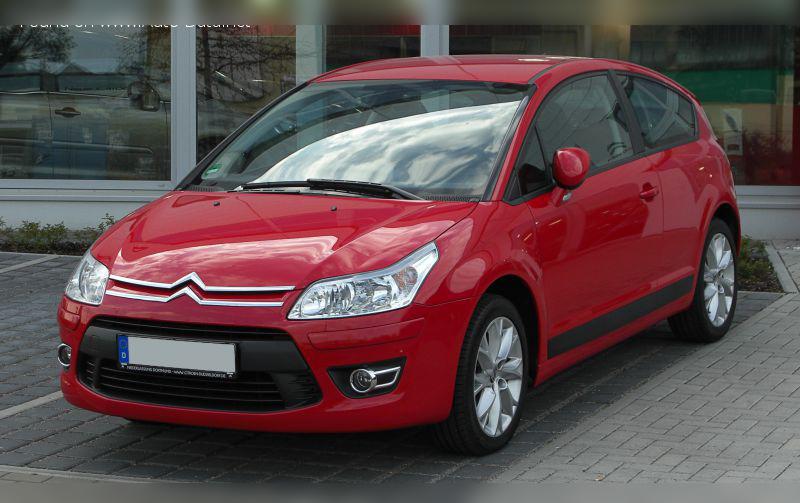
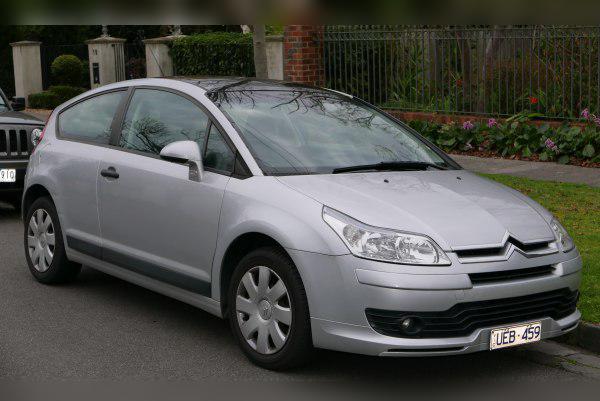
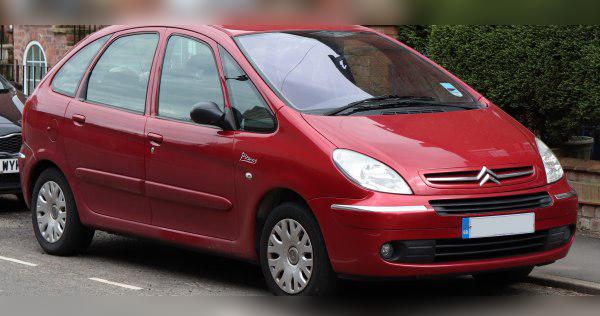
The engine with the code 9HY (DV6TED4) with 16 valves is one of the most widespread and most important power units from the cooperation between the PSA group and Ford. With a displacement of 1560 cc and an output of 80 kW (109 HP), this engine powered a huge number of vehicles on European roads in the mid‑2000s. We most often find it under the bonnet of the first‑generation Citroen C4 (Phase I and Phase II), as well as in the popular family minivan Citroen Xsara Picasso.
It was designed to provide quiet operation, exceptional efficiency and satisfactory performance while meeting the emission standards of the time. However, the engineering solutions in the lubrication system made it an engine that does not forgive owner neglect. As an experienced mechanic, I can tell you this is an engine that will either delight you with cheap running costs, or drive you to despair with repair bills – it all depends on how it has been maintained.
Technical specifications
| Characteristic | Value |
|---|---|
| Engine name and code | 1.6 HDi 16V / 9HY (DV6TED4 family) |
| Displacement | 1560 cc |
| Engine power | 80 kW (109 HP) |
| Torque | 245 Nm |
| Fuel and injection type | Diesel / Common Rail (Direct injection) |
| Charging system | Turbocharger (Variable geometry), Intercooler |
| Timing system | Timing belt (for the crankshaft and one camshaft) + Chain (between the camshafts) |
Reliability and maintenance
When it comes to the timing system, this engine uses a combined approach. The main power transfer from the crankshaft is via a timing belt, but since the engine has two camshafts (16 valves), they are interconnected by a small drive chain and tensioner located inside the cylinder head itself. The timing belt is reliable, but over time the chain can develop play and start rattling, so it is recommended to replace it together with the timing belt kit.
The major service was, according to factory specifications, scheduled at an optimistic 240,000 km or 10 years. In practice, this is a recipe for disaster. Mechanics and technical editors agree that the major service interval should be halved and done at 120,000 to a maximum of 150,000 km (or every 6 to 7 years). The cost of the major service is not high, but a snapped belt leads to major engine damage (broken rockers and valves).
The most sensitive maintenance point is the engine oil. This unit takes about 3.75 liters of oil (including the filter). A synthetic oil of grade 5W‑30 is recommended, and for models with a FAP filter you must use an oil with Low‑SAPS specification (e.g. Total Quartz INEO ECS) to avoid clogging the soot filter. In general, the engine does not consume much oil between services if it is healthy; consumption of up to 0.5 liters per 10,000 km is considered normal and does not require worrying top‑ups. However, it is crucial to do the minor service at no more than 10,000 to a maximum of 15,000 km, and not at 20,000+ as prescribed by the manufacturer.
Injectors and injection system: The injectors themselves are relatively durable and can easily exceed 250,000 km without overhaul. The real problem with this engine is the copper injector washers, which burn out and lose their seal over time. The symptom is a hissing sound under the bonnet, chuffing and a sharp exhaust smell in the cabin when idling at traffic lights. If this is not resolved immediately, exhaust gases escape past the injector and create a thick black tar (the so‑called “black death”). That tar finds its way into the oil, contaminates it, and then that dirty oil clogs the strainer in the oil pan.
Specific parts and potential costs
To begin with, yes, the 109 HP version is equipped with a dual‑mass flywheel (unlike the weaker 90 HP version, which mostly does not have one). The flywheel’s lifespan depends on driving style, but it generally lasts between 150,000 and 200,000 km. Symptoms of wear are juddering when moving off, vibrations at idle and a dull thud when switching the engine off. Replacing the complete clutch kit and dual‑mass flywheel falls into the category: expensive to very expensive (depends on the market), and represents a significant expense when buying a used car.
Turbocharger and lubrication problem
This engine uses a variable‑geometry turbocharger, which allows it to pull very well from low revs. Its service life would be excellent if it weren’t for one fatal engineering flaw. In the banjo bolt (pipe) that supplies oil to the turbo there is a tiny strainer (mesh). Due to infrequent oil changes or problems with the injector washers, sludge forms that clogs this strainer. The turbo is left without lubrication and disintegrates. The repair requires not only a turbo overhaul, but also removing the oil pan, flushing the entire engine internally, removing the notorious strainer and replacing the feed pipes. Simply overhauling the turbo without cleaning the oil pan guarantees another failure in less than 1,000 km.
Emissions: EGR, DPF and AdBlue
The exhaust gas recirculation system (EGR valve) is prone to soot build‑up, especially if the car is driven mostly in the city. Symptoms of a clogged EGR are jerking, loss of power and black smoke under acceleration.
Many C4 and Xsara Picasso models with FAP or DPF markings are equipped with a particulate filter. It is important to know that the PSA group uses, on this engine, a FAP system with Eolys additive. This additive is stored in a separate tank and is automatically dosed into the fuel at every refuelling to facilitate soot burn‑off in the filter. When the Eolys fluid runs out, the ECU reports a fault and the filter quickly clogs. Refilling the Eolys fluid and performing a software reset is done every 80,000 to 120,000 km and represents an additional cost (expensive, depends on the market).
Important note: The 9HY engine from this mid‑2000s generation does not have an AdBlue (SCR) system for reducing NOx gases, so at least you will not have problems with that complication.
Fuel consumption and performance
This is one of the engine’s brightest points. Real‑world consumption in pure city driving is around 6.0 to 7.0 l/100 km, depending on how heavy your right foot is and how bad the traffic is. On open roads, consumption drops drastically and with smooth driving it can go below 4.5 l/100 km.
The engine is by no means “lazy”. In the Citroen C4 I (whether hatchback or coupe), the 109 HP output and generous 245 Nm of torque available already below 2000 rpm provide excellent flexibility. Overtaking is done with ease, and even in the heavier Xsara Picasso, the unit copes effortlessly with a fully loaded cabin and luggage.
On the motorway, however, the lack of a sixth gear on manual gearboxes is noticeable. At a cruising speed of 130 km/h, the engine spins at about 2,800 to 3,000 rpm (in fifth gear). Because of this, cabin noise becomes more pronounced and fuel consumption rises to about 5.5 to 6.0 l/100 km.
Additional options and modifications
This engine has good potential for so‑called “chipping” (Stage 1 software remap). Thanks to high‑quality injection and the variable‑geometry turbo, power can safely be raised from 109 HP to around 130 to 135 HP, while torque goes beyond 300 Nm. After the remap, the engine pulls noticeably better across the entire rev range.
Still, be warned: an aggressive remap drastically shortens the lifespan of the clutch and dual‑mass flywheel, which are already under significant load. If you decide to chip it, do so only if you know that the turbo, DPF and flywheel are in perfect condition.
Gearbox and drivetrain
Two types of gearboxes were fitted to this engine: a classic 5‑speed manual gearbox and a robotized gearbox known as the EGS (Electronic Gearbox System) 6‑speed.
The manual gearboxes are reliable and rarely suffer mechanical damage to the gears themselves, but they are known for their not‑so‑precise feel and long gear lever throws – a classic PSA weak point from that period. The most common failure is the selector cable giving up.
The EGS gearbox is a story of its own. It is not a true automatic (with a torque converter), but a conventional manual gearbox where electronics and electro‑hydraulic actuators operate the clutch and change gears. Driving with EGS takes some getting used to because it can “jerk” quite noticeably when changing gears, especially in the first three ratios. Failures of the gearbox actuator, position sensor or control unit are relatively common and repairs are very expensive (depends on the market). In addition, the EGS also uses a clutch with a dual‑mass flywheel, and replacement is more complicated because it requires computer calibration after installation.
Gearbox maintenance: Although the manufacturer often states that the gearbox oil is “lifetime”, experienced technicians disagree. The oil in the manual gearbox should be changed every time you replace the clutch kit, or proactively at around 60,000 to 80,000 km. The same interval applies to the base oil in the EGS gearbox itself, while the electro‑hydraulic robot uses a special fluid that should be checked periodically.
Buying used and conclusion
Buying a used car with the 1.6 HDi (9HY) engine requires a cool head and a thorough inspection. Here is what you absolutely must check:
- Exhaust smell in the cabin: Start the car cold and turn on the ventilation. If you smell diesel or exhaust fumes, immediately lift the decorative engine cover. Look around the base of the injectors – if you see a black tar‑like mass, it is a sign that the copper washers are leaking.
- Turbo sound: Blip the throttle at idle and listen as the revs drop. If the turbo whistles loudly like a police siren, prepare money for an overhaul and oil pan cleaning.
- Dual‑mass flywheel: At idle, slowly press the clutch pedal halfway. If you feel knocking under your foot or hear metallic rattling, the flywheel needs replacing.
- FAP (DPF) system: It is essential to check via diagnostics how many grams of soot are left in the filter and whether there is Eolys fluid. If it is clogged, the repair is not cheap.
Conclusion: Who is this engine for? It is intended for drivers who cover serious mileage, value efficiency and want the family comfort offered by models such as the C4 and Xsara Picasso. The engine rewards you with excellent fuel consumption and flexibility. However, this is not an engine for irresponsible owners. If you plan to skip services or use cheap oil, steer well clear of the 1.6 HDi. If you find an example with a clear service history where the owner changed the oil on time, you will be more than satisfied with how it performs.