AHZ DW10CD 2.0 HDi 128 HP Engine: Experiences, Problems, Fuel Consumption and Used-Buying Tips
Key points in short (TL;DR)
- Engine basics: A very reliable 2.0 PSA unit from the DW10C generation (Euro 5), known for its longevity.
- No AdBlue system: A major advantage of this engine is the absence of the problematic SCR (AdBlue) system; it uses the proven FAP system with Eolys additive.
- Fuel consumption and purpose: Because it is installed in heavier commercial vehicles (vans), city fuel consumption is around 8.5–10 l/100 km, while on the open road it offers decent efficiency.
- Timing belt: The engine uses a timing belt that must be replaced at a maximum of 120,000 km to prevent serious engine damage.
- Weak points: City driving quickly clogs the EGR valve and DPF (FAP) filter. The dual-mass flywheel is under higher stress due to the vehicle’s weight.
- Chiptuning: Thanks to its robust design, it safely handles a Stage 1 remap to around 160 HP, which significantly eases driving under load.
Contents
- Introduction: About the engine and its application
- Technical specifications
- Reliability and maintenance
- Specific parts and costs
- Fuel consumption and performance
- Additional options and modifications
- Gearbox and clutch
- Buying used and conclusion
Introduction: About the engine and its application
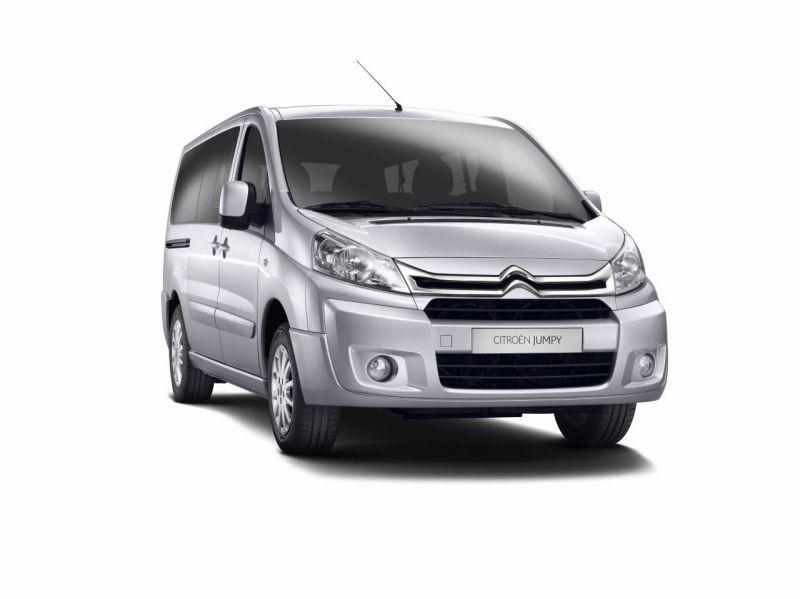
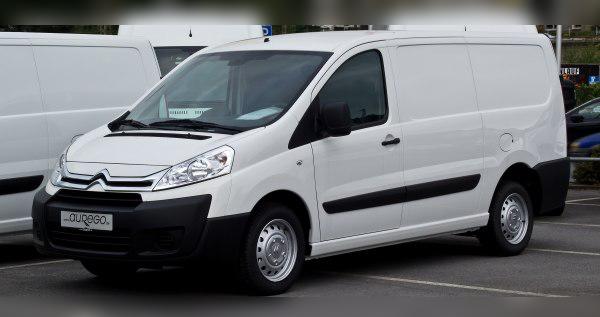
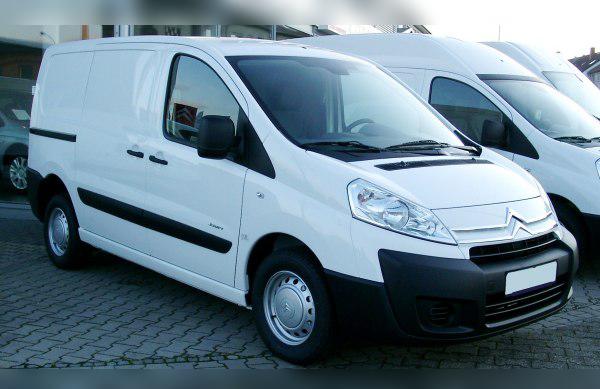
When we talk about workhorses and family haulers such as the Citroën Jumpy, Peugeot Expert and Fiat Scudo, the AHZ (code from the DW10CD series) 2.0 HDi with 128 HP engine is the “golden middle ground”. It’s not the weakest, but it’s not overly stressed either. It is an evolution of the famous 2.0 PSA diesel adapted to Euro 5 standards. As an experienced technical editor, I can say this is one of those engines you buy when you need a reliable mule. Its 320 Nm of torque is available low down, which is crucial for moving a heavy body full of passengers or tools.
Technical specifications
| Engine designation / code | AHZ (DW10CD) |
| Engine displacement | 1997 cc |
| Engine power | 94 kW (128 HP) |
| Torque | 320 Nm |
| Fuel type / Injection | Diesel / Common-rail direct injection |
| Induction | Turbocharger (VGT), intercooler |
| Valve timing drive | Timing belt |
| Emission standard | Euro 5 (with DPF/FAP filter) |
Reliability and maintenance
Timing belt or chain?
This engine uses a timing belt to drive the camshaft. The PSA group specifies optimistic replacement intervals from the factory (often up to 180,000 km or even 240,000 km in ideal conditions), but based on real-world experience I can confidently say that the major service should be done at 100,000 to 120,000 km or every 5 to 6 years. A snapped belt leads to valves hitting the pistons, broken rocker arms and severe cylinder head damage, which is extremely expensive to repair.
Most common failures
The DW10CD is mechanically very robust, but its peripherals can cause headaches. The most common issues include:
- EGR valve: It gets clogged with soot due to stop-and-go city driving. Symptoms are jerking at low revs, black smoke (if the DPF is not in perfect condition) and entering limp mode (safety mode with reduced power).
- DPF pressure sensor: It often fails before the filter itself. It triggers a warning light on the dashboard and prevents regeneration.
- Oil leaks at crankshaft seals: On high-mileage vehicles, oil seepage can occur which, if ignored, can contaminate the clutch disc.
Engine oil and oil consumption
The AHZ 2.0 HDi engine takes about 5.0 to 5.25 litres of oil. It is mandatory to use 5W-30 oil with C2 specification (e.g. Total Quartz Ineo ECS) because of the FAP (DPF) filter. Using unsuitable oil will rapidly clog the DPF. As for consumption, this engine is not known for “drinking” oil. Normal consumption is considered to be up to 0.5 litres per 10,000 km. If it uses more than a litre between services, the problem is usually a worn turbocharger or valve stem seals.
Injector longevity
The injectors on this engine are extremely reliable. They are usually part of a Delphi or Siemens/VDO system (depending on the exact sub-type; for AHZ it is most often Delphi). With good-quality fuel and regular fuel filter changes, they can easily last between 250,000 and 300,000 km. When they start to fail, symptoms include difficult cold starts, rough idle (ticking), increased fuel consumption and white smoke on cold start.
Specific parts and costs
Dual-mass flywheel
Yes, this engine has a dual-mass flywheel (DMF). Since the 128 HP AHZ is mostly installed in vans and minibuses (L1H1, L2H2 etc.), the flywheel is subjected to much higher forces than in a passenger car, especially if the vehicle is constantly loaded. Its service life is usually around 150,000 to 200,000 km. Signs of wear are vibrations at idle, a metallic “rattling” noise when switching off the engine and knocks when releasing the clutch. The cost of replacement (clutch kit + dual-mass flywheel + release bearing) can be described as expensive to very expensive (depending on the market).
Turbocharger
It has a single turbocharger with variable geometry vanes (VGT). Its lifespan is long, often exceeding 250,000 km, but only if the oil is changed on time (every 10,000 to 15,000 km at most). The VGT mechanism can seize due to soot build-up caused by predominantly city driving at low revs. The driver will notice this as a sudden loss of power (turbo “cutting out”) during hard acceleration.
DPF (FAP) and EGR system
The engine is equipped with both a DPF (known as FAP in PSA terminology) and EGR. The EGR is a classic weak point, as mentioned. The FAP filter uses a special additive (Eolys) that is automatically dosed into the fuel tank at every refuelling to lower the soot combustion temperature. The additive tank usually needs refilling every 100,000 to 120,000 km. If the additive runs out, the FAP will become irreversibly clogged in a very short time. The cost of refilling Eolys fluid and software calibration falls into the medium cost range (depending on the market).
Does it have AdBlue and does it cause problems?
This is one of the best pieces of news for buyers: No, this engine (Euro 5 DW10CD) does not have an AdBlue (SCR) system! Unlike newer BlueHDi engines (Euro 6), where failures of the pump, AdBlue injector and the tank itself are astronomically expensive, here you don’t have those worries. The system relies solely on the aforementioned Eolys additive, which is far more stable and cheaper to maintain.
Fuel consumption and performance
City fuel consumption
Don’t expect miracles; physics can’t be cheated. A van with this engine in stop-and-go city driving uses between 8.5 and 10 l/100 km. If the vehicle is constantly loaded or the air conditioning is working at full capacity, the figure easily exceeds 10 litres.
Performance and “sluggishness”
The engine delivers 128 HP and 320 Nm. An empty Citroën Jumpy with this engine drives quite briskly. However, if you’re buying the long and high version (L2H2) and loading it with 1 ton of tools or 8 passengers, the engine won’t be “dead”, but it will require more frequent gear changes and will run out of breath on steeper climbs. It’s not built for racing, but for everyday work the 320 Nm of torque “pulls” more than adequately.
Behaviour on the motorway
Thanks to the six-speed gearbox, on the motorway at 130 km/h the engine cruises at a very comfortable around 2,400 to 2,600 rpm (depending on the specific vehicle’s final drive). In this mode, fuel consumption drops to a reasonable 7 to 8 l/100 km, and cabin noise remains at an acceptable level for a commercial vehicle.
Additional options and modifications
Chiptuning potential (Stage 1)
This is an ideal engine for a software power increase (Stage 1). Since the same engine block in other models was factory-rated at 150 HP and 163 HP, the safety margin is huge. With a safe remap, power is easily raised to 160 to 170 HP, and torque to an impressive 380 to 400 Nm. This dramatically eases overtaking on main roads when the van is loaded, and often even leads to a slight drop in fuel consumption under normal driving. The key is not to abuse the extra power from a standstill (hard acceleration in 1st and 2nd gear), as this will quickly destroy the dual-mass flywheel.
Gearbox and clutch
Types of gearboxes
This engine is most commonly paired with a six-speed manual gearbox (ML6C series). Much more rarely it can be found in combination with a six-speed Aisin AM6 automatic gearbox (a conventional automatic with a torque converter).
Gearbox failures and maintenance
Manual gearbox: It is very durable. The most common problems come from the gear selector mechanism (cables), which can become stiff, or from worn synchros in third gear on very high mileages. It is recommended to change the oil in the manual gearbox (75W-80) every 60,000 to 80,000 km to keep shifting smooth.
Automatic gearbox (Aisin): Aisin gearboxes are a global benchmark for reliability, BUT under one condition – regular oil changes. If the oil is not changed every 60,000 km, contamination damages the valve body. Symptoms of valve body failure are harsh jolts when shifting from P to R or D, as well as “shuddering” when shifting from 2nd to 3rd gear once the gearbox is warmed up to around 90 °C.
Buying used and conclusion
What to check before buying?
When looking at a used Jumpy or Expert with the AHZ engine, focus on the following:
- Cold start: The engine should start “on half a turn” without a cloud of white smoke. Rough running in the first few seconds points to bad glow plugs or worn injectors.
- Dual-mass flywheel: Press and release the clutch several times while the engine is idling. Any change in sound or knocking noise is a sign that an expensive repair is coming.
- Eolys fluid level and DPF: Be sure to connect the vehicle to PSA diagnostics (Lexia / Diagbox). Check the FAP filter saturation percentage and how many kilometres have passed since the last successful regeneration.
- Front suspension condition: Since these are utility and work vehicles, the front suspension endures a lot of stress from the heavy engine. Check ball joints, tie rods and bushings.
Final verdict: Who is it for?
The 2.0 HDi 128 HP (AHZ) engine is a true workhorse. It is intended for people who need a spacious family transporter (Multispace versions) or a reliable delivery vehicle that won’t leave them stranded. Its biggest advantage is the absence of an AdBlue system, which makes it significantly more reliable and cheaper to maintain than newer Euro 6 generations. If you provide it with regular servicing, quality oil at a maximum of every 15,000 km and occasional motorway runs to let the DPF “breathe”, this unit will serve you for hundreds of thousands of kilometres without major issues.