Engine 1.5 BlueHDi DV5RC (130 HP): Experiences, problems, fuel consumption and used car buying tips
- Excellent torque: With 300 Nm, the engine offers great flexibility, even in heavier and aerodynamically unoptimized vehicles such as the Citroën Berlingo.
- Critical flaw – camshaft chain: Versions with a 7 mm chain are prone to stretching and breaking, which leads to catastrophic engine failure.
- Notorious AdBlue system: Pumps and tanks of the exhaust aftertreatment system often fail and require expensive repairs.
- Fuel consumption: Extremely economical on country roads and in the city, but on the motorway at 130 km/h it consumes more due to the tall body (Berlingo).
- Gearbox recommendation: The EAT8 automatic gearbox (Aisin) is a much more comfortable and robust option than the manual, provided that the oil is changed regularly.
Contents
- Introduction: About the DV5RC engine
- Technical specifications
- Reliability and maintenance
- Specific parts and costs
- Fuel consumption and performance
- Additional options and modifications
- Gearbox and drivetrain
- Buying used and conclusion
Introduction: About the DV5RC engine
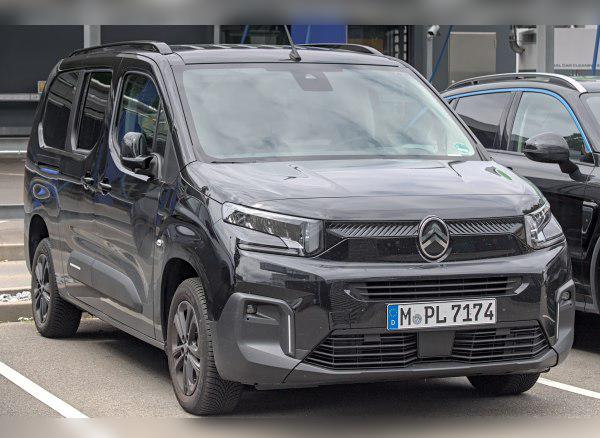
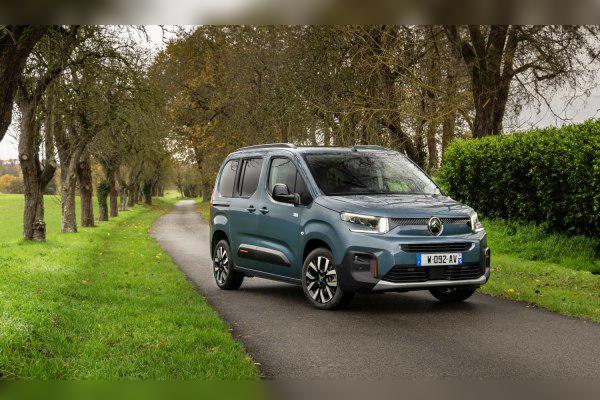
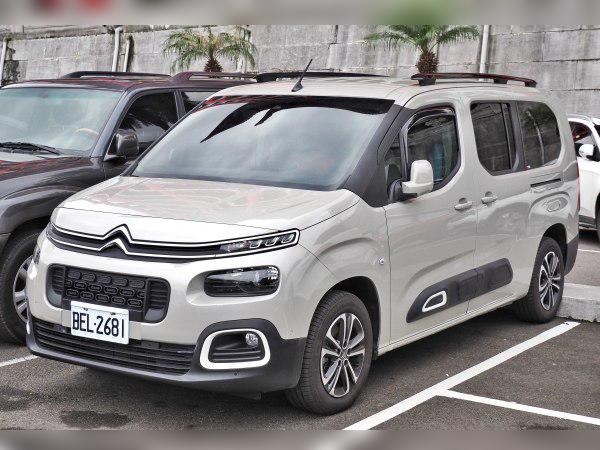
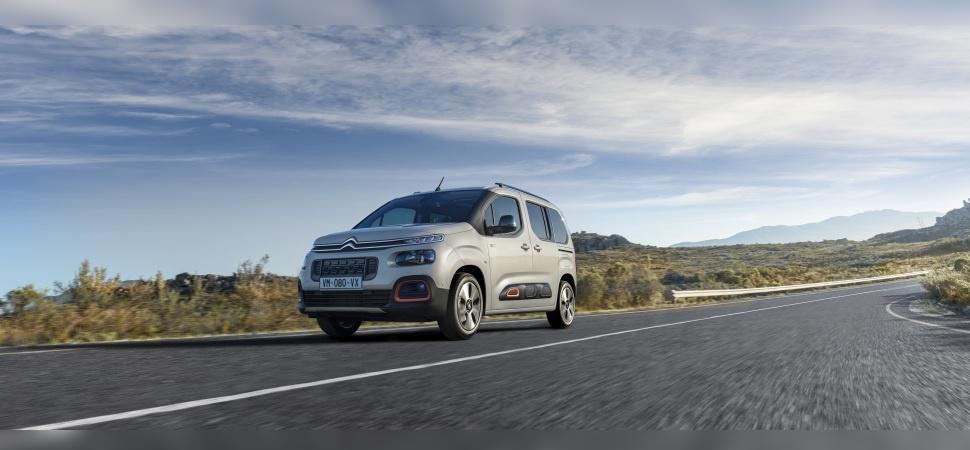
The engine with the code DV5RC (commercial name 1.5 BlueHDi) is the former PSA Group’s (now Stellantis) answer to increasingly strict emission standards (Euro 6.2 and newer). Developed as the successor to the renowned but outdated 1.6 BlueHDi engine, this unit brings more compact dimensions, a more sophisticated injection system and improved performance. It is installed in a wide range of vehicles and is particularly popular in multi-purpose vehicles (MPVs) such as the Citroën Berlingo III (in M and XL versions, with 5 or 7 seats), where its 96 kW (130 HP) and 300 Nm of torque really come into their own.
Technical specifications
| Parameter | Specification |
|---|---|
| Engine name and code | 1.5 BlueHDi (DV5RC) |
| Displacement | 1499 cc |
| Power | 96 kW (130 HP) |
| Torque | 300 Nm |
| Fuel type | Diesel (Common Rail) |
| Induction | Turbocharger with variable geometry, intercooler |
| Emission standard | Euro 6d / Euro 6.2 |
Reliability and maintenance
Does this engine have a timing belt or a chain?
This engine uses a combined system, which is also its biggest design peculiarity. The main drive from the crankshaft to one camshaft is via a conventional timing belt, while the camshafts themselves are linked by a chain. That small chain is the best-known Achilles’ heel of the earlier versions of this engine.
What are the most common failures on this engine?
As mentioned, the biggest problem with this engine is stretching and breaking of the 7 mm camshaft chain. When the chain breaks, the valves hit the pistons and the engine suffers severe damage. Symptoms of a stretched chain include metallic rattling on cold start (similar to the sound of a sewing machine). Due to the scale of this problem, Stellantis later (end of 2020 and beginning of 2023 depending on the model) modified the engine by switching to a thicker 8 mm chain. If you are buying an older model, the first thing to do is check via the VIN which chain version is installed, and preventive replacement of the timing system (with the modified housing) is often necessary.
At what mileage should the major service be done?
Although the manufacturer specifies optimistic intervals of over 160,000 km for the timing belt, practice and experienced mechanics suggest that the major service should be done every 100,000 to a maximum of 120,000 km or every 5 years. If your engine has the problematic 7 mm chain, it is recommended to convert to the reinforced system during the major service, which is quite expensive (depends on the market).
How many liters of oil does this engine take and which grade is recommended?
The engine takes approximately 3.95 to 4.0 liters of oil (including the filter). Due to extremely tight tolerances and sensitive emission systems, a fully synthetic oil of grade 0W-20 (exclusively PSA B71 2010 spec) is used, and for certain operating conditions and older series 0W-30 (PSA B71 2312) is also allowed. It is very important not to use thicker oil because of flow through the fine camshaft chain and the sensitivity of the hydraulic lifters.
Does it consume oil between services and what amount is considered normal?
Oil consumption on a healthy engine is minimal. It is considered normal for the engine to consume up to 0.15–0.2 liters per 1,000 km if it is often driven under full load on the motorway. If the engine consumes more than that, the most common causes are worn oil control rings, a problem with the PCV (crankcase ventilation system) or oil leakage at the turbocharger bearings.
How long do the injectors last and how reliable are they?
The Common Rail injectors (mostly Bosch or Delphi, depending on the series) have proven to be very reliable. With regular fuel filter changes and good-quality diesel, their service life is generally over 200,000 to 250,000 km. Symptoms of worn injectors are rough idling, increased black smoke (although the DPF masks it until it clogs) and harder starting in winter.
Specific parts and costs
Does the engine have a dual-mass flywheel?
Yes, the engine has a dual-mass flywheel when paired with a manual gearbox. Its purpose is to dampen the strong vibrations of the diesel engine and protect the gearbox. Replacing the clutch kit together with the dual-mass flywheel falls into the category of expensive repairs (depends on the market).
What kind of injection system does it have and are the injectors problematic?
The system operates at extremely high pressures (up to 2000 bar). The injectors are generally not problematic, but the high-pressure pump can fail if it runs "dry" due to irregular fuel filter changes. Failures in the injection system are not common, but when they do occur, repairs are expensive (depends on the market).
Does the engine have a turbocharger and what is its service life?
The engine is equipped with a single turbocharger with variable geometry (VGT). Its service life depends entirely on regular oil changes. In practice, the turbos easily reach 200,000 km. The first symptom of failure is "whistling" under load or loss of power (safe mode) if the variable geometry mechanism sticks due to soot build-up from frequent city driving.
Does this model have a DPF filter or an EGR valve that often clogs?
This model is equipped with both an EGR valve and a DPF (FAP) filter. The EGR valve gets dirty quite quickly if the car is used exclusively in city conditions on short trips, which leads to engine choking and the Check Engine light coming on. The DPF filter is reliable thanks to the Eolys additive, which helps regeneration at lower temperatures. Its typical lifespan is around 180,000–220,000 km before it needs machine cleaning.
Does this engine have AdBlue, does it cause problems and how is it maintained?
Yes, the engine has an SCR catalyst and uses AdBlue fluid. Along with the chain, this is the biggest source of frustration for owners. The PSA Group has a chronic problem with the design of the AdBlue tank and pump. Due to heating and cooling, AdBlue crystallizes, clogs the injector or destroys the electronics on the pump in the tank. The symptom is the "UREA" light coming on and a warning on the instrument cluster that the car will not be able to start in 1,000 km. The solution is often replacement of the complete tank with pump, which is extremely expensive (depends on the market). Prevention involves using special additives that are added to AdBlue to prevent crystallization.
Fuel consumption and performance
What is the real fuel consumption in city driving?
Due to its design, in large and heavy vehicles such as the Berlingo III (which weighs over 1.5 tons empty), real city fuel consumption is between 6.5 and 7.5 liters per 100 km. On open country roads, the engine shines with consumption of only 5.0–5.5 l/100 km.
Is this engine “lazy” for the weight of the body?
No, it is not lazy. The "130 HP" figure may sound unconvincing for a large family van, but the magic lies in the 300 Nm of torque available from just 1,750 rpm. This provides very good acceleration from a standstill and easily copes with the weight even when there are 5 or 7 passengers with luggage on board. The lack of power reserve is noticeable only during more aggressive overtaking above 100 km/h.
How does the engine behave on the motorway and at what revs does it cruise at 130 km/h?
On the motorway, the Berlingo’s aerodynamics (brick-like shape) take their toll, so fuel consumption at 130 km/h easily rises to around 7.0–7.5 l/100 km. Noise is well suppressed. Cruising revs depend on the type of gearbox: with the 6-speed manual at 130 km/h the engine turns about 2,500 rpm, while the excellent EAT8 automatic keeps the engine in eighth gear at a much more relaxed 2,100–2,200 rpm, which reduces cabin noise and slightly lowers consumption.
Additional options and modifications
How far can this engine be safely “chipped” (Stage 1)?
Modern diesels respond well to map optimization, but given the sensitive "chain-belt" design and delicate powertrain, radical modifications are not recommended. A safe Stage 1 remap raises power to about 155–160 HP and torque to a maximum of 350–360 Nm. The driver will most clearly notice a sharper throttle response at low revs. However, keep in mind that higher torque puts additional stress on the DPF and dual-mass flywheel.
Gearbox and drivetrain
Which manual and automatic gearboxes are fitted with this engine?
Depending on the trim level and year of manufacture, the engine is paired with a 6-speed manual and the excellent 8-speed EAT8 automatic gearbox developed by Japan’s Aisin.
What are the most common failures of the manual and the automatic gearbox?
Manual gearbox: It traditionally suffers from a vague, "rubbery" shift feel, which is characteristic of many PSA vehicles. In addition to dual-mass flywheel replacement, over time the third-gear synchros can fail or the seals can start leaking, causing oil loss.
EAT8 automatic: It is considered one of the most reliable conventional automatic gearboxes on the market (torque converter). Failures are extremely rare, and jerks and shudders are usually resolved simply by regular oil changes or software updates at an authorized service center.
Does the manual version have a dual-mass flywheel and how much does clutch replacement cost?
Yes, as explained above in the parts section, the manual transmission comes paired with a dual-mass flywheel that typically lasts around 150,000 to 200,000 km before strong vibrations at idle and thumps when switching off appear. Replacing the complete set (clutch disc, pressure plate, release bearing and flywheel) is quite expensive (depends on the market).
At what mileage should the gearbox be serviced and the oil changed?
For the manual gearbox, oil level checks and topping up are done during inspections, and it is advisable to refresh the oil every 100,000 km. For the EAT8 automatic, there is a myth in authorized PSA service centers that the oil is lifetime ("sealed for life"). However, the gearbox manufacturer (Aisin) requires that the oil be changed by machine flushing every 60,000 to 80,000 km. Skipping this will inevitably lead to costly problems with the valve body (hydraulic block) in the gearbox.
Buying used and conclusion
What exactly should be checked before buying?
- Cold engine start: Leave the car parked overnight. When starting it in the morning, carefully listen to the right side of the engine. If you hear metallic scraping or rattling for one to two seconds after starting, there is a high chance that the small camshaft chain is damaged. Refuse the purchase or demand a price reduction to cover the chain modification.
- VIN check: It is MANDATORY to check at an authorized service center via the VIN whether that model has the 7 mm or the reinforced 8 mm chain.
- AdBlue system test: Use diagnostics to check the UREA pump pressure. Check the fault history – if the "P20E8" fault (Urea pressure too low) was recently cleared, be cautious.
- DPF clogging: Via OBD diagnostics, the mechanic should read the parameter "Ash mass in FAP filter" to see how much service life it has left.
Who is this engine intended for?
The 1.5 BlueHDi (DV5RC, 130 HP) engine is primarily a workhorse and an ideal choice for families who need an extremely spacious car for travelling (e.g. Citroën Berlingo III). It works fantastically with the EAT8 automatic gearbox, providing maximum comfort and low fuel consumption for a vehicle of this class.
Should you buy it? Yes, but under the strict condition that you have found a newer model with the factory-reinforced 8 mm chain (or that it has already been replaced under warranty), and that you have the funds to cover potential problems with the AdBlue tank. If you drive exclusively in city traffic (short trips), avoid this diesel – modern petrol engines are a far better option for you, because the DPF and EGR on the 1.5 BlueHDi will very quickly start causing problems.