Engine 1.2 PureTech 130 HP (HNS EB2ADTS): Experiences, problems, fuel consumption and used car buying tips
Key points (TL;DR)
- Timing belt in oil: The biggest weakness of this engine. The belt disintegrates, contaminates the oil and clogs the oil pump strainer, which leads to catastrophic failures.
- Excellent performance: With 130 HP and 230 Nm, the engine is very flexible and pulls nicely even in larger models such as the Peugeot 5008.
- Intake valve coking: Due to direct injection, carbon builds up, so decarbonization is occasionally necessary.
- Shortened service intervals: Forget the factory 100,000 km for the major service – it must be done at a maximum of 60,000 km.
- Oil consumption: At higher mileage it tends to consume oil due to ring wear, and it requires exclusively premium oil of a specific grade.
- EAT8 gearbox highly recommended: The automatic gearbox is a Japanese Aisin unit, very reliable with regular oil changes.
Contents
- Introduction: Get to know the 1.2 PureTech
- Technical specifications
- Reliability and maintenance
- Specific parts and costs
- Fuel consumption and performance
- Additional options and modifications
- Gearbox: Manual vs automatic
- Buying used and conclusion
Introduction: Get to know the 1.2 PureTech (130 HP)
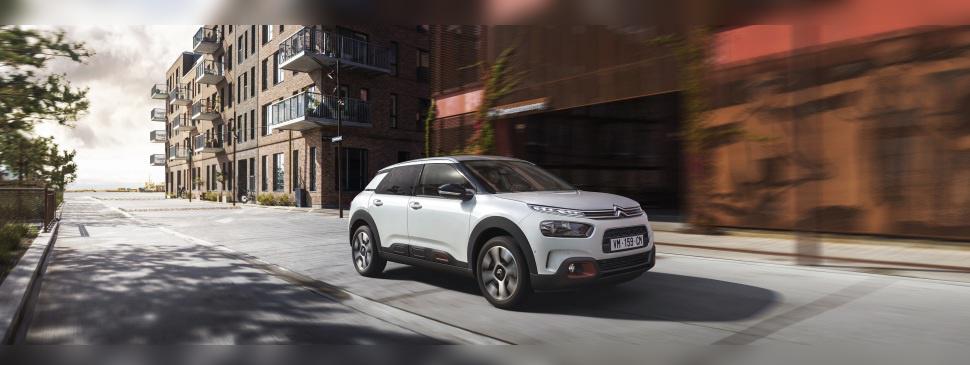
The 1.2 PureTech engine with the code HNS EB2ADTS is Stellantis’ (former PSA Group) main three‑cylinder contender in the petrol range. Developed to replace the older 1.6 naturally aspirated and turbo (THP) engines, this unit has flooded the market over the last decade. You’ll find it in everything – from small city runabouts like the Peugeot 208 and DS 3, through compact Citroën C4 and Peugeot 308, all the way to serious family cruisers such as the Peugeot 5008 and DS 7 Crossback. Its design looks impressive on paper: turbocharger, direct injection and plenty of torque at low revs. However, in real life this engine requires an extremely meticulous and well‑informed driver if it is not to turn into a money pit.
Technical specifications
| Engine displacement | 1199 cc |
| Engine power | 96 kW (130 HP) |
| Torque | 230 Nm |
| Engine code | HNS EB2ADTS |
| Injection type | Direct injection |
| Charging system | Turbocharger with intercooler |
| Number of cylinders | 3 in line |
Reliability and maintenance
Timing belt: The engine’s most notorious issue
Let’s immediately clear up what most buyers are worried about: this engine has a timing belt that “runs” in engine oil (the so‑called wet‑belt system). The engineering idea was to reduce friction, noise and fuel consumption. In practice, however, this is the source of the most serious failures on EB2 engines. Fuel, especially during short city trips, inevitably gets into the oil and changes its chemical composition. This mixture attacks the rubber of the timing belt, which starts to crumble and delaminate. Tiny pieces of rubber and fabric fall into the oil pan and clog the oil pump strainer. Symptoms? The red oil pressure warning light comes on in the instrument cluster. If the driver ignores this, within a few kilometres the turbocharger is destroyed (due to oil starvation), followed by seizure of the entire engine at the crankshaft.
Most common failures and major service
Apart from the belt issue, the second most common problem is coking (carbon build‑up) on the intake valves, which is typical of all direct‑injection engines. Fuel no longer “washes” the valves from above, so oil vapours bake onto them. The driver notices this as rough idling (idle speed fluctuates), loss of power and jerking while driving. Periodic physical cleaning of the valves (walnut shell blasting) is required.
Because of the aforementioned belt problem, the factory interval for the major service of over 100,000 km has been reduced. Every experienced mechanic will recommend that the major service be done no later than 60,000 km or every 4 years. The replacement cost is not excessive, but the consequences of delaying it certainly are.
Oil, oil consumption and spark plugs
The lubrication system is extremely sensitive. The engine holds about 3.5 litres of oil. You are allowed to use only premium synthetic oils of grade 0W‑20 or 0W‑30 (depending on the exact production year and specific standard, usually PSA B71 2010 or B71 2312). Do not experiment with cheaper oils under any circumstances!
The engine consumes oil between services, especially once it passes 100,000 km. Wear of the piston rings and valve stem seals leads to consumption that is considered acceptable up to 0.3 litres per 1000 km. If you are topping up more than half a litre per thousand kilometres, the engine is due for serious internal work.
As this is a turbo petrol engine, the spark plugs play a key role in its proper operation. Although some manuals specify longer intervals, quality iridium spark plugs on this engine should be replaced every 30,000 to 40,000 km. They wear out surprisingly quickly, and the first symptom of worn plugs is noticeable jerking under acceleration at low revs (misfire).
Specific parts and costs
Dual‑mass flywheel and clutch
If you choose the 130 HP version with a manual gearbox, then yes, this engine has a dual‑mass flywheel. Three‑cylinder engines naturally produce more vibration, so the dual‑mass flywheel is there to protect the gearbox and provide comfort. The cost of the full kit (flywheel, clutch disc, pressure plate, release bearing) is relatively high (depends on the market), so when buying, listen for dull knocking when switching the engine off or vibrations on the clutch pedal halfway through its travel.
Injection system, injectors and turbo
The injection system operates at very high pressures. The injectors themselves have not proven to be a nightmare and rarely fail, but they are extremely sensitive to impurities and water in the fuel. If you fill up with questionable fuel, the injectors are the first to suffer, with symptoms such as difficult starting and black smoke from the exhaust.
The engine has a single turbocharger with excellent performance. The turbo’s service life is quite solid; it will easily cover 150,000 to 200,000 km without issues. However, if the oil pump strainer loses flow even partially due to belt debris, the turbo bearings are the first to run dry and disintegrate, accompanied by a characteristic siren‑like wail similar to an ambulance.
Eco systems: No DPF, but there is a GPF
Since this is a petrol engine, it does not have a DPF filter, AdBlue system, nor the typical problematic diesel EGR valve. Still, due to strict Euro 6d emission standards, newer model years are equipped with a GPF (OPF) – gasoline particulate filter. Unlike diesels, petrol exhaust gas temperatures are much higher, so the GPF regenerates itself more easily during normal driving. There are no typical clogging issues unless the engine is burning large amounts of oil.
Fuel consumption and performance
What is the real fuel consumption?
Real‑world city fuel consumption varies depending on the body style this engine is pulling. In a light Peugeot 208 or DS 3, in urban traffic you can expect around 7 to 7.5 l/100 km. However, when you put it in a large Peugeot 5008 or Citroën C4 X with an automatic gearbox, that figure in winter city driving easily rises to 8.5 to 9.5 l/100 km. This is completely normal for a small turbo engine struggling with more than 1.4 tonnes of mass.
Is the 1.2 PureTech “lazy”?
Absolutely not. It delivers 230 Nm of torque available as low as 1,750 rpm. On the road it feels like a much larger engine. It easily pulls C‑segment bodies (Peugeot 308, C4). However, in a heavy model such as the Peugeot 5008, although it will cruise without any problem, you will notice the lack of displacement on climbs at speeds above 100 km/h, especially if the car is fully loaded with passengers and luggage. In those situations you have to keep it at higher revs.
On the motorway
On the motorway the engine behaves in a refined manner. At a speed of 130 km/h in 8th gear (when paired with the EAT8 automatic), the engine spins at a comfortable 2500 to 2600 rpm. Sound insulation is generally excellent, the three‑cylinder sound is almost inaudible, and fuel consumption at this speed is around 6.5 l/100 km.
Additional options and modifications
Should you install LPG?
Short answer: Not recommended. The engine has direct injection, which means the petrol injectors spray directly into the combustion chamber. If the engine were to run solely on a classic sequential LPG system, the injectors would melt because they are cooled by the petrol flowing through them. It is possible to install specialized systems that dose both petrol and LPG, or systems with liquid LPG injection, but this investment is very expensive (depends on the market) and in the long run not cost‑effective considering the engine’s fuel consumption.
Remapping (Stage 1)
With a Stage 1 remap, this 130 HP engine can safely be taken to about 150 to 155 HP and around 270 Nm of torque. In practice, that difference is very noticeable. However, keep in mind that increasing turbo pressure raises combustion temperatures, which can lead to faster deterioration of the already sensitive spark plugs and further stress the engine’s existing weak point – the oil and the belt. If you remap it, service intervals must be shortened even further.
Gearbox: Manual vs automatic
Manual and automatic gearboxes available
This engine is factory‑paired with two types of transmissions: a conventional 6‑speed manual and the renowned EAT8 – Japanese 8‑speed automatic gearbox made by Aisin (on older models up to 2018 you could also find the older 6‑speed EAT6).
Gearbox failures and maintenance
The manual gearbox is reliable, but it can become notchy when shifting down if the gearbox oil is not replaced. At higher mileage, the internal shaft bearings tend to fail. Replace the oil in the manual gearbox at a maximum of 80,000 km.
The EAT8 automatic is a real gem in these cars. It is a conventional torque‑converter automatic (not a sensitive dual‑clutch gearbox). It very rarely fails and does not have expensive clutch replacements like DSG. However, PSA claims that the oil in it “does not need changing” (lifetime). This is the biggest trap! For the gearbox to operate smoothly and without jerks, it is essential to change the oil in the automatic gearbox using the flushing method at 60,000 to 80,000 km. If you feel a jolt when shifting from D to R, the valve body (hydraulic control unit) has already started to suffer from dirty oil.
Buying used and conclusion
What must you check before buying?
Buying a used car with the HNS EB2ADTS engine requires a cool head and a good mechanic. Be sure to check the following:
- Oil filler cap: Open it and shine a light inside. On many models you can see the timing belt through the opening. If it looks cracked, frayed or has swollen edges – walk away or immediately factor in the cost of a major service and cleaning the oil pan.
- Diagnostics: Look for fault codes related to the oil pressure sensor (Oil pressure fault) and any misfires (poor combustion due to coking and spark plugs).
- Sound at idle: With the bonnet open and the engine warmed up, listen for any strange knocking in the lower part of the engine or rattling that could indicate a worn camshaft.
- Service history: You should not even consider this engine without a service book clearly showing that the oil was changed strictly every 10,000–15,000 km.
Conclusion: Who is it for?
The 1.2 PureTech 130 HP engine offers a perfect balance between power, low fuel consumption and pleasant driving. It is not noisy, it pulls very well and with the EAT8 gearbox it makes a fantastic combination. However, it is absolutely not intended for drivers who neglect maintenance and open the bonnet only when the washer fluid runs out.
If you find an example with genuine mileage, where the major service was done on time (with the timing belt replaced by the newer, reinforced type) and where only the correct 0W‑20 / 0W‑30 oil has been used, you will get an excellent and lively car. If you take on a “neglected” example, you risk extremely expensive repairs.