Renault 2.2 dCi G9T (150 hp) – Experiences, problems, fuel consumption and used car buying guide
Key points (TL;DR)
- Reputation: The G9T is one of the most notorious engines of its generation due to serious mechanical flaws.
- Most expensive failures: Spun crankshaft rod bearings and turbocharger failure.
- Timing drive: Specific combination of gears and timing belt.
- EGR valve: Prone to rapid clogging and sticking, which chokes the engine and causes smoke.
- Fuel consumption: In heavy bodies (Espace, Vel Satis) city consumption easily exceeds 10 l/100 km.
- Buying recommendation: Buy only examples with impeccable, documented service history where oil and filters were changed at a maximum of every 10,000 to 15,000 km.
Contents
- Introduction: Star of saloons and MPVs with a dark secret
- Technical specifications
- Reliability and maintenance: Timing belt and rod bearings
- Specific parts and costs: Turbo, injectors and EGR hell
- Fuel consumption and performance: Fighting the kilos
- Additional options and modifications: Is remapping a smart idea?
- Gearbox: Manual and automatic challenges
- Buying used and Conclusion: How to avoid a money pit?
Introduction: Star of saloons and MPVs with a dark secret
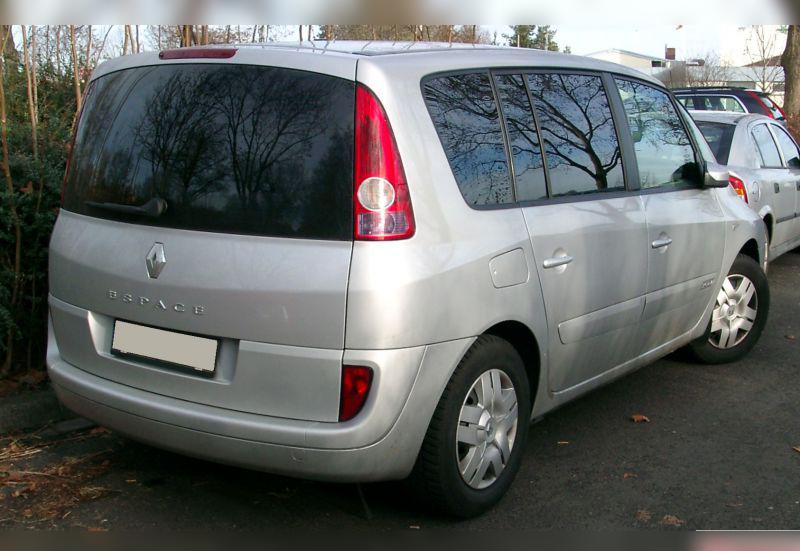
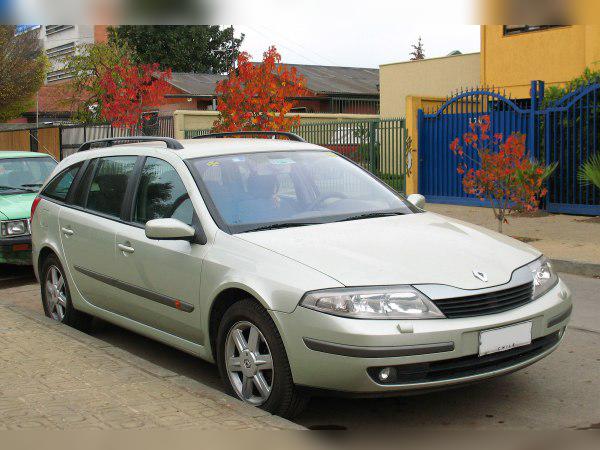
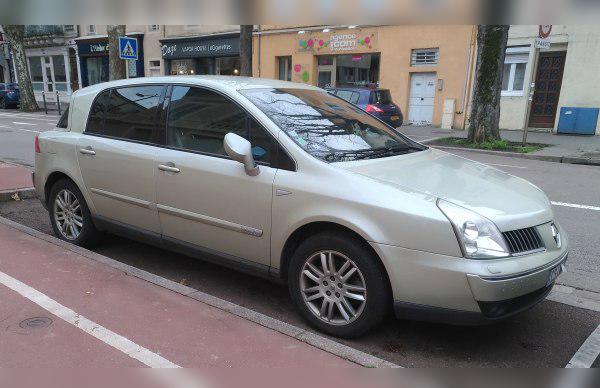
In the early 2000s, the G9T 2.2 dCi engine with 110 kW (150 hp) was conceived as the flagship diesel in Renault’s range. It was installed in heavy and luxurious models such as the Renault Espace IV, Grand Espace IV, the futuristic Avantime, the extravagant Vel Satis, as well as in the extremely popular second-generation Laguna (saloon and Grandtour estate). For its time, this unit offered excellent torque and smooth operation, but shortly after the warranty period expired it revealed its true, rather fragile nature. Many drivers and mechanics remember it as an engine that demands top-notch maintenance and does not forgive neglect, which is why buying a used car with this engine today is a real challenge.
Technical specifications
| Engine displacement | 2188 cc |
| Power | 110 kW (150 hp) |
| Torque | 320 Nm |
| Engine code | G9T (several sub-versions depending on model) |
| Injection type | Common rail direct injection (Bosch) |
| Charging system | Turbocharger with variable geometry (VGT) and intercooler |
Reliability and maintenance: Timing belt and rod bearings
The timing drive on the G9T engine is unusual. This is an engine that has a timing belt, but it does not drive the crankshaft directly in the classic way. The drive is combined – the lower section from the crankshaft to the high-pressure pump and water pump is via a set of gears (gears inside the block), while the upper section that connects the camshafts uses a conventional timing belt. Because of this complexity, the major service is more expensive and requires special tools to lock and time the engine precisely. The official interval for the major service was initially overly optimistic, but experienced mechanics recommend carrying out the full timing service at a maximum of 60,000 to 80,000 km or every 5 years.
The most serious flaw of this engine is premature wear and spinning of the crankshaft rod bearings. The manufacturer specified a ridiculous 30,000 km oil change interval, which directly led to oil degradation and engine destruction. For this engine to survive at all, you need to use quality synthetic oil (mostly 5W-40 or 10W-40, depending on production year and climate) in a quantity of about 6.3 to 6.5 litres, with strict changes every 10,000 km. Oil consumption is a normal occurrence on older examples; up to 0.5 litres per 1000 km can be tolerated if it leaks at seals or evaporates through the breather system, but anything above that points to problems with piston rings or the turbo.
As for the injectors, they are made by Bosch. Compared to the rest of the engine, they have proven to be relatively solid and often last over 200,000 km without major overhauls, provided quality diesel is used. However, their weakness is sealing. The copper washers (sealing washers) under the injectors eventually fail, after which compression and exhaust gases start escaping into the engine bay, creating a hard black deposit (the so-called "black death"). Symptoms include the smell of exhaust fumes in the cabin and a characteristic whistling or ticking noise while running.
Specific parts and costs: Turbo, injectors and EGR hell
The G9T of course has a dual-mass flywheel in versions with a manual gearbox. Its lifespan depends heavily on vehicle weight and driving style, but in the heavy Espace it rarely survives beyond 150,000 km. Symptoms of a worn flywheel are juddering when setting off, vibrations at idle and a dull metallic thud when switching the engine off. Replacing the complete clutch kit with flywheel is considered very expensive (depends on the market).
This unit uses a single turbocharger with variable geometry (VGT). Unfortunately, the turbo’s service life is often compromised by clogging of the oil feed pipe. If the turbo is deprived of proper lubrication, the shaft gets damaged. It was not uncommon for the turbo’s oil seals to fail and the engine to start sucking in and burning its own engine oil, entering an uncontrolled runaway process, which leads to total engine destruction. Symptoms of a dying turbo are loud whistling and loss of power.
The EGR valve is an absolute nightmare on the G9T engine. It is positioned in a spot that is extremely prone to soot build-up. It quickly clogs and gets stuck in the open position. Symptoms are a massive cloud of black smoke under acceleration and a drastic loss of power. As for the DPF filter (FAP), the first series of 2.2 dCi engines did not have one. It started being fitted only in later production years (after 2004/2005), depending on the market, and its clogging is often caused by poor EGR operation. The engine does not have an AdBlue system, as it was designed before SCR technology became mandatory for light commercial and passenger vehicles.
Fuel consumption and performance: Fighting the kilos
With its 150 hp and 320 Nm, the engine sounds quite powerful on paper. However, in practice, performance and fuel consumption depend heavily on the body it is installed in. In the Laguna II, this engine is fairly lively and allows easy overtaking. In the Grand Espace IV (which weighs close to 2 tonnes empty) or the massive Vel Satis, however, the engine struggles with the weight. You can feel a certain sluggishness at low revs until the turbo reaches working pressure.
Fuel consumption is not something that often delights owners. In stop‑and‑go city driving, especially in larger models and versions with an automatic gearbox, consumption hardly drops below 9.5 to 11 l/100 km. The Laguna II does somewhat better, at around 8 to 9 l/100 km in town. On the open road the situation is far better. On the motorway the engine behaves extremely smoothly; at a cruising speed of 130 km/h it runs at a very relaxed 2300 to 2500 rpm (in sixth gear), and consumption drops to around 6.5 to 7.5 l/100 km. The G9T is a true motorway mile‑eater, but city driving suffocates it.
Additional options and modifications: Is remapping a smart idea?
This engine is diesel only (LPG is not applicable). When it comes to so‑called "chipping" (Stage 1 ECU remap), there is certainly potential. Common rail injection and a decent turbo allow power to be raised to around 180 hp and torque to about 380–400 Nm.
However, from the perspective of an experienced mechanic, this is a very bad idea. Given that the engine’s fundamental weaknesses are cracking plastic intake manifolds, poor lubrication of the crankshaft rod bearings and a fragile turbo, any additional thermal and mechanical stress drastically shortens its service life. If you own a 2.2 dCi, it is much wiser to invest your money in quality oil and EGR cleaning than in increasing power.
Gearbox: Manual and automatic challenges
The engine was paired with two main transmission options. The manual gearbox is most often the well‑known PK6 six‑speed. Unfortunately, this gearbox also did not earn a reputation for reliability. Its biggest problem is bearing failure inside the gearbox due to inadequate quantity and quality of oil. The symptom is a characteristic whining or howling from the gearbox while driving in higher gears. It is recommended to change the oil in the manual gearbox preventively every 60,000 km to remove metal shavings.
The automatic gearbox is made by Aisin (model SU1, 5 speeds). It is a conventional automatic with a torque converter. The SU1 gearbox does not have a classic dual‑mass flywheel that is replaced together with the clutch, which makes the automatic version more resistant to torque shocks and cheaper to maintain in that specific respect. However, the valve body in the gearbox can fail due to dirty oil, with symptoms such as harsh thumps when shifting "from first to second" or a delay when engaging "Drive". Servicing this automatic (ATF oil and filter change) must be done strictly every 60,000 to a maximum of 80,000 km. A complete automatic gearbox overhaul is extremely expensive (depends on the market).
Buying used and Conclusion: How to avoid a money pit?
When buying a used car equipped with the 2.2 dCi G9T engine, checks must be rigorous. Your checklist at the mechanic should look like this:
- Listen to the engine on a cold start: Any deeper knocking from the lower part of the engine signals damaged crankshaft bearings. An engine that sounds like this is due for a complete rebuild.
- Inspect around the injectors: Remove the plastic engine cover and check whether there is hardened tar‑like residue around the injectors.
- Listen to the turbo: Siren‑like whistling means the turbo is at the end of its life.
- Smoke colour: Blue smoke at cold start suggests oil consumption and worn piston rings or a failing turbo. Thick black smoke under throttle means the EGR is blocked or there is a leak in the intercooler hoses.
- Suspension and electronics: Vehicles in which the G9T was installed (especially the Laguna and Espace) suffer from issues with a delicate front suspension due to the heavy engine up front, and Renaults from that era are notorious for minor faults with card readers and tyre pressure sensors.
Who is this engine for? The G9T is an engine intended exclusively for people who are absolute perfectionists about maintenance and who mostly drive on the open road. For the average city driver looking for a "start and go" used car, this engine is simply too big a risk. Repair costs (crankshaft, turbo, EGR) can very quickly exceed the purchase price of the car itself on the used market. If you need a Laguna or Espace from those generations, a much safer, albeit weaker option would be to look for the more proven 1.9 dCi engines in their better iterations, or some naturally aspirated petrol unit.