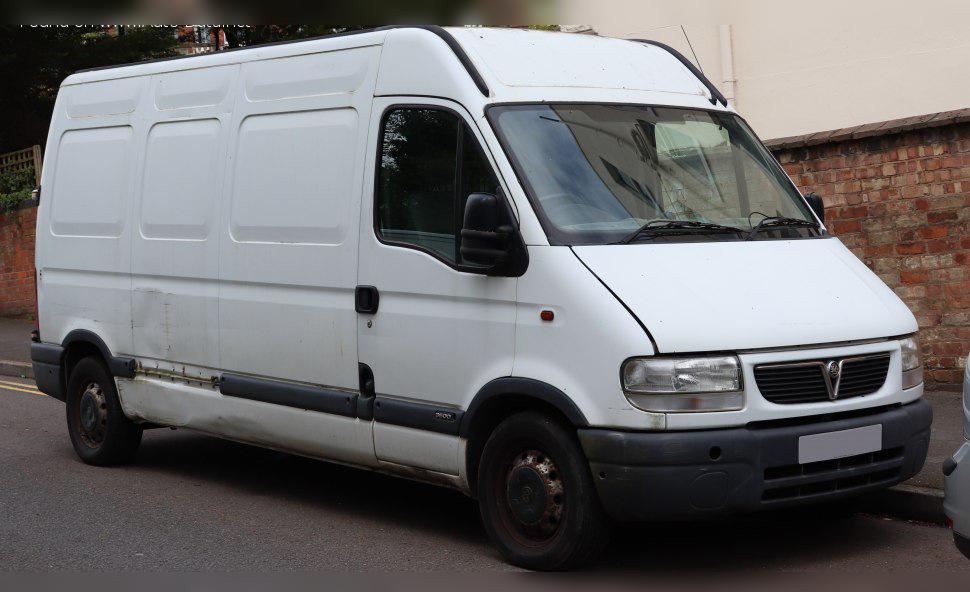
Experiences, Issues, Fuel Consumption and Buying Used: 2.5 CDTI (G9U 650 / 750 / 754) 100 HP
- This is a workhorse designed for towing, but it requires strict maintenance, especially around the timing system.
- Injectors are the biggest nightmare for mechanics on this engine because, due to the body design, water drips onto the engine, causing the injectors to seize in the cylinder head.
- The 100 HP output is quite adequate for the shorter (SWB) versions, but the engine feels noticeably "sluggish" in long (LWB) chassis under full load.
- The engine uses a timing belt in combination with gears, not a classic chain.
- Robotized automatic gearboxes (Tecshift) are very problematic and more prone to failure than manuals.
- The EGR valve regularly causes issues if the van is driven exclusively in stop‑and‑go city conditions.
Contents
- Introduction: What kind of engine is this?
- Technical Specifications
- Reliability and Maintenance
- Specific Parts and Costs
- Fuel Consumption and Performance
- Additional Options and Modifications
- Gearbox and Drivetrain
- Buying Used and Conclusion
Introduction: What kind of engine is this?
Although it carries the CDTI badge under the bonnet of Vauxhall (and Opel) models, the engine with the code G9U is in fact originally Renault’s 2.5 dCi unit. It was widely installed in light commercial vehicles starting from the first decade of the 2000s, including facelift versions of the Vauxhall Movano (from 2003), as well as its twins, the Renault Master and Nissan Interstar. The 100 HP (74 kW) and 260 Nm torque version is the basic, workhorse variant. It’s not a racer, but a mule designed for local distribution and tradespeople. Its construction is quite robust, but it features several engineering solutions that can cost today’s used‑vehicle owners serious money.
Technical Specifications
| Parameter | Value |
|---|---|
| Displacement | 2463 cc |
| Power | 74 kW (100 HP) |
| Torque | 260 Nm |
| Engine codes | G9U 650, G9U 750, G9U 754 |
| Injection type | Common Rail (Direct Injection) |
| Induction | Turbocharger + Intercooler |
Reliability and Maintenance
Timing belt or chain?
This engine uses a very specific hybrid system. The basis of the timing drive is a timing belt, but power from the crankshaft to the high‑pressure pump and water pump is transferred via a set of gears (cascade gears). The timing belt drives the camshafts. A snapped timing belt leads to total engine failure (bent valves, damaged cams and pistons).
Most common failures
The main weaknesses of this engine are closely related to its age and how it has been used. The most common issue is seized injectors. Due to poor design of the plastic scuttle panel under the windscreen, rainwater leaks directly onto the engine cover and runs into the injector wells. Over time, rust forms and literally welds the injector to the cylinder head. There are also frequent problems with oil leaks from the crankshaft seals, as well as issues with the EGR valve, which gets stuck due to soot build‑up in city driving.
Service intervals and oil
The major service (replacement of timing belt, tensioner, idlers and water pump) is specified by the manufacturer at 120,000 km or every 5 years. The recommendation is to shorten this interval to 100,000 km for peace of mind. This engine takes about 8 litres of oil. The recommended grade is 5W‑40 (or 5W‑30 if the model has a retrofitted DPF, although the early 100 HP versions do not). Some oil consumption between services is normal; up to 0.5 litres per 10,000 km is considered acceptable. If the engine uses more than 1 litre per 10,000 km, it’s time to check the turbocharger or piston rings (compression).
Injector lifespan
The Bosch Common Rail system is basically reliable. Injectors typically last between 200,000 and 250,000 km before they start to leak back or atomize fuel poorly. Symptoms of bad injectors include rough idle (uneven sound), black smoke when you press the accelerator, and hard hot starting. Because of the aforementioned rust and injector removal problem, repairs can be very expensive (depends on the market), as they often require special hydraulic pullers and, quite often, removal of the entire cylinder head.
Specific Parts and Costs
Dual‑mass flywheel and clutch
Yes, the 2.5 CDTI in this configuration is equipped with a dual‑mass flywheel. Its job is to dampen the massive vibrations of the heavy diesel. Symptoms of a worn flywheel are strong vibrations at idle, metallic knocks (clattering) when starting and especially when switching the engine off, as well as juddering when pulling away. Replacing the clutch kit together with the dual‑mass flywheel is expensive (depends on the market).
Turbocharger
The engine has a single turbocharger with either fixed or variable geometry (depending on the exact year and Euro emission standard). Turbo lifespan depends entirely on regular oil changes. If the oil is changed every 10,000–15,000 km, the turbo can last well over 250,000 km. If the driver switches off a hot engine immediately after hard driving (without letting it cool at idle), the turbo bearings will fail quickly. Symptoms of failure are a pronounced whistling noise, blue exhaust smoke (burning oil) and a sudden loss of power.
EGR, DPF and AdBlue
These 2003 versions (up to roughly 2006 in 100 HP form) usually met Euro 3 standards, which means they have an EGR valve but no DPF filter (particulate filter), nor do they have an AdBlue system. This is a huge advantage for a used vehicle. The EGR valve, however, is a regular customer at the workshop. Soot builds up, the valve gets stuck open, the engine loses power, produces black smoke and goes into limp mode (emergency running mode). Cleaning the EGR is not expensive, but replacement is advisable if the electronics inside it are damaged.
Fuel Consumption and Performance
Real‑world fuel consumption and city driving
Considering this is a heavy commercial van with the aerodynamics of a brick, fuel consumption is noticeable. In city conditions with frequent stops, consumption is around 10 to 12 l/100 km. On open roads this drops to 8 to 9 litres.
Is the engine “sluggish”?
The performance of this engine depends heavily on the body style. If you’re buying a short version (SWB – Short Wheelbase), 100 HP and 260 Nm will be quite sufficient for brisk city driving and deliveries. However, if this engine is installed in a long LWB high‑payload version (3500 kg) and you load it to the maximum, the vehicle becomes distinctly “sluggish”. Overtaking requires serious planning, and on steeper climbs you’ll often have to shift down.
Motorway driving
This van is not a motorway champion. The gearbox ratios are designed for hauling loads, not for high speeds. At 130 km/h, the engine usually spins at a high 2800–3000 rpm. The cabin becomes quite noisy and fuel consumption rises exponentially. Its “sweet spot” (cruising speed) on the motorway is around 100–110 km/h.
Additional Options and Modifications
Remapping (Stage 1)
Since the engine shares its mechanicals with the more powerful 120 HP versions (which have a different map and turbo), this block is very suitable for optimization. A safe Stage 1 remap can raise power from 100 HP to a safe 130 HP, and torque from 260 Nm to a solid 320 Nm. This is highly recommended for drivers of heavier, long (LWB) models, as the engine breathes better, carries the load more easily, and fuel consumption may slightly decrease. The condition, of course, is that the turbo, injectors and dual‑mass flywheel are in perfect condition before remapping.
Gearbox and Drivetrain
Types of gearboxes and issues
This engine was paired with a manual gearbox (most often 5‑ or 6‑speed, known as the PK5 / PK6 series) and an automatic (actually robotized) gearbox marketed as Tecshift.
Manual gearbox: Generally robust, but if previous owners did not change the gearbox oil, the synchros (most often second and third gear) wear out, as do the bearings, which start to whine while driving.
Automatic gearbox (Tecshift): This is NOT a classic automatic with a torque converter, but a conventional manual gearbox with an electro‑hydraulic “robot” (actuator) attached, which operates the clutch and shifts gears for you. Avoid it if possible. Hydraulic pumps and actuators are extremely prone to failure. Symptoms include harsh jerks when shifting, getting stuck in gear, or the gearbox completely refusing to engage a gear. Repairing the robot’s hydraulic block is very expensive (depends on the market).
Gearbox servicing
For the manual gearbox, oil must be changed every 60,000 to 80,000 km. The cost of this service is not high and it greatly extends the life of the bearings and synchros. On Tecshift gearboxes, in addition to the oil in the gearset itself, there is also a reservoir for a special fluid used by the hydraulic robot, whose level and pressure must be regularly checked via diagnostics.
Buying Used and Conclusion
What to check before buying?
- Cold start: Ask the seller not to start the van before you arrive. At the first start, watch the exhaust smoke and listen to the engine. Any knocking that disappears once the engine warms up points to worn injectors.
- Visual inspection of the cylinder head: Remove the plastic engine cover (if fitted) and look around the injectors. If you see rust, dried water marks or soot deposits (the so‑called “black death” when the injector washer leaks), walk away from that vehicle, because removing those injectors can cost more than the engine itself.
- Clutch test: Switch the engine off without pressing the clutch pedal. If you hear a loud metallic knock from underneath, the dual‑mass flywheel is near the end of its life.
- Service history: Since a snapped timing belt is fatal, demand proof that the major service has been done. If there is no proof, factor that cost in from day one of ownership.
Final verdict
The Vauxhall Movano / Renault Master with the 2.5 CDTI (G9U) 100 HP engine is a durable workhorse, provided it has been driven and maintained by someone who understands commercial vehicles. It is primarily intended for tradespeople and delivery drivers operating locally or regionally with lighter loads and in smaller (SWB) bodies. Its biggest advantage on the used market is the absence of a DPF filter and AdBlue system (in pre‑Euro 4 versions). However, if you need a van for heavy loads and long motorway journeys, the 100 HP output will quickly become frustrating, and the robotized Tecshift gearbox can drain your wallet. Choose a manual gearbox only, check the condition of the injectors and change the oil regularly – and this engine will serve you faithfully.