Renault 1.6 16V K4M (113 HP) – Experiences, problems, fuel consumption and used car buying guide
- Strong and durable engine block: One of the most reliable naturally aspirated petrol engines in its class.
- Low maintenance costs: Parts are widely available and repairs are not expensive (Depends on the market).
- Electrical issues: Ignition coils and the crankshaft position sensor are the most common causes of misfiring or hard starting.
- Variable cam pulley: A characteristic failure that causes a “diesel-like” sound on cold start.
- Excellent for LPG: Handles alternative fuel very well, which makes it an economical choice.
- High revs on the motorway: The short-ratio five-speed gearbox increases fuel consumption and noise at speeds above 110 km/h.
- No expensive components: No dual-mass flywheel, sensitive injectors, turbocharger, DPF filter or AdBlue.
Contents
- Introduction: Old-school naturally aspirated engines
- Technical specifications
- Reliability and maintenance
- Specific parts and costs
- Fuel consumption and performance
- Additional options and modifications
- Gearbox and power delivery
- Buying used and conclusion
Introduction: Old-school naturally aspirated engines
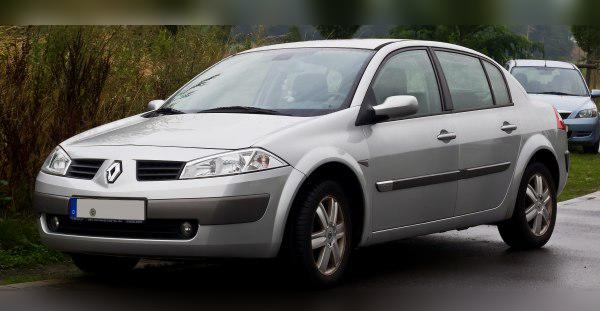
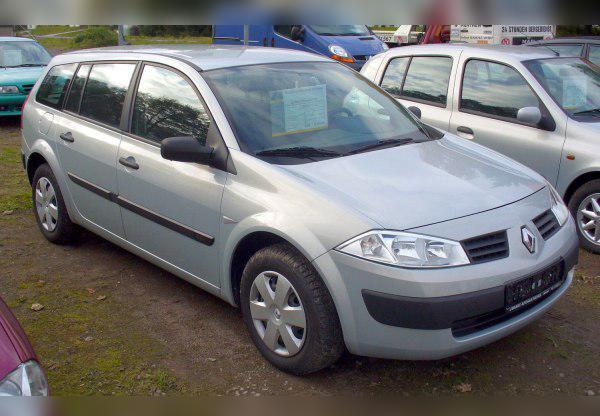
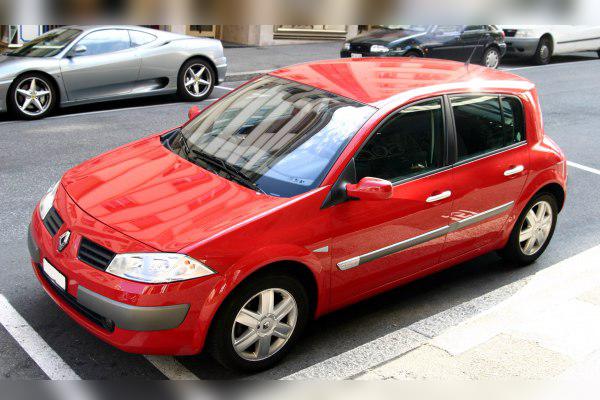
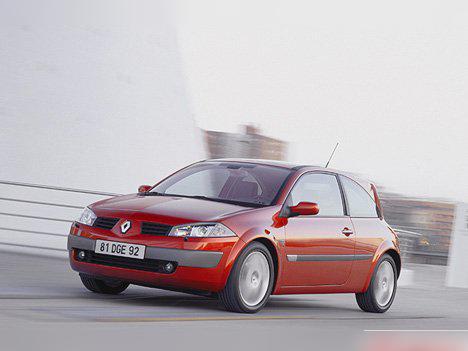
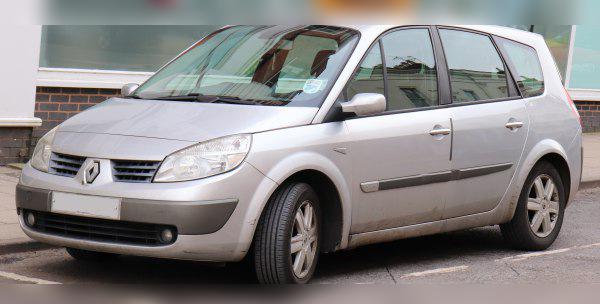
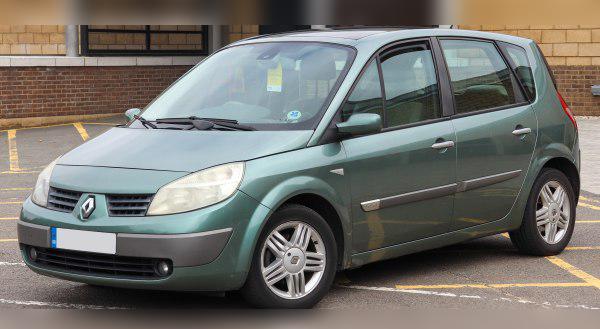
The K4M engine with a displacement of 1.6 litres and 113 HP (16 valves) represents the very essence of the French car industry from the early 2000s. This unit has proven to be a real workhorse and has found its place in a huge number of models – from the compact Renault Megane II (in all body styles: hatchback, sedan, estate, and even coupe-cabriolet), to family carriers such as the Scenic II and Grand Scenic II. Although it was not designed to break speed records, its simplicity and mechanical robustness still make it highly sought after on the used car market across Europe, especially among drivers who want to avoid the headaches of modern diesels.
Technical specifications
| Engine code | K4M (various suffixes depending on the model, e.g. 760, 761) |
| Displacement | 1598 cc |
| Power | 83 kW (113 HP) |
| Torque | 152 Nm at 4200 rpm |
| Injection type | MPI (Multipoint indirect injection) |
| Induction type | Naturally aspirated |
Reliability and maintenance
When it comes to the timing system, the K4M uses a timing belt, not a chain. Because of that, the major service is absolutely mandatory and should be done every 60,000 km up to a maximum of 80,000 km or every 5 years, whichever comes first. During the major service, it is essential to replace the timing kit, tensioners, idler pulleys and water pump, because a failing belt or a seized water pump will cause contact between valves and pistons, which means catastrophic engine damage. The cost of the major service is not high compared to more modern engines (Depends on the market).
As for engine oil, this engine takes about 4.8 litres of oil. The recommended grade is 5W-40, ideally with the appropriate Renault specifications (RN0700). In practice, the K4M rarely has an issue with excessive oil consumption if it has been properly maintained. Consumption of 0.2 to 0.5 litres per 10,000 km is completely normal. If you notice higher consumption (e.g. over 1 litre per 1000 km), the cause is usually not the piston rings, but worn valve stem seals, which is a mid-range repair cost (Depends on the market).
Most common failures
Although the mechanical side is excellent, the accompanying electronics can fail. The ignition coils are the absolute weak point of this engine. There are four of them (one per cylinder). When a coil fails, the engine starts running on three cylinders, loses power, shakes at idle and turns on the “Check Engine” light. The old Sagem coils were problematic, so it is recommended to fit higher-quality ones (Beru or Denso). Spark plugs should be replaced regularly, ideally every 30,000 to 40,000 km. Spark plugs for this engine are very cheap (Depends on the market).
Another common issue is the variable camshaft pulley (VVT). Its job is to adjust valve timing for better power delivery. The symptom of failure is a loud metallic noise (as if you were driving an old diesel) right at cold start, and sometimes the engine may even stall immediately after starting. It is best to replace this pulley preventively during the major service if it shows signs of wear. Also, dirt on the throttle body can cause fluctuating idle speed, but this is solved with a simple cleaning.
Specific parts and costs
The biggest advantage of this engine is what it does not have. Unlike the contemporary dCi diesels from the same manufacturer, the K4M petrol engine does not have a dual-mass flywheel. It is equipped with a classic, solid flywheel, which means that replacing the clutch kit (pressure plate, disc, release bearing) is affordable and not an expensive job (Depends on the market).
The fuel system is a classic MPI (indirect injection). The petrol injectors are extremely robust and rarely cause problems, unless the car is driven for a long time on reserve or with dirty fuel in the tank. Even then, ultrasonic cleaning usually solves the issue.
Also, this is a naturally aspirated engine, which means there is no turbocharger that could fail and drain your wallet. Being an older petrol engine, it does not have a DPF filter or a complex EGR valve that clogs up with soot, and there is no AdBlue system or related pumps that can fail. Emissions are handled by a standard catalytic converter and lambda sensors, which usually last over 150,000 km before they start throwing errors due to poor fuel mixture.
Fuel consumption and performance
In terms of efficiency, the K4M is not a champion. In lighter bodies (e.g. a standard Megane II hatchback), real-world city consumption is between 8.5 and 10 litres per 100 km. However, if this engine is fitted in the heavy Grand Scenic II body, especially under load or paired with an automatic gearbox, city consumption easily exceeds 11 l/100 km.
Is the engine “lazy”? For everyday city driving it is more than adequate. Still, due to the relatively modest torque of 152 Nm, in heavier models (Grandtour estate or Scenic) the engine has to be revved high to provide decent acceleration, which affects noise and fuel consumption during overtaking.
On the motorway: This is its weak spot. Due to the short ratios in the five-speed gearbox, at a cruising speed of 130 km/h the engine spins at a fairly high 3,800 to 4,000 rpm. This results in increased cabin noise and motorway fuel consumption that rarely drops below 7.5 to 8 l/100 km.
Additional options and modifications
Given the fuel consumption, many drivers wonder whether to install LPG. The answer is: Yes, absolutely! The K4M engine is one of the best candidates for LPG conversion. Thanks to hydraulic tappets, there is no need for manual valve clearance adjustment, and the valves do not burn easily on gas. A well-tuned sequential LPG system makes driving this engine extremely cheap, and the power loss is negligible.
When it comes to so-called “chipping” (Stage 1 remap), the short answer is – don’t do it. Since this is a naturally aspirated engine without a turbo, changing the ECU maps can give at most 5 to 8 HP, which you absolutely will not feel in real driving. Investing money in remapping this engine is completely pointless; it is far better to put that money into regular maintenance.
Gearbox and power delivery
This engine is most commonly paired with a five-speed manual gearbox (type JH3). It is very reliable, but has one well-known flaw – oil leakage at the gear selector shaft seal. If you notice oil residue at the bottom of the gearbox, this is usually the problem. It is recommended to change the oil in the manual gearbox every 60,000 km, even though the manufacturer claims it is “lifetime fill”; workshop experience has shown otherwise.
Automatic gearbox (DP0 / AL4): It was available as an optional four-speed automatic. This is an older-generation gearbox and requires caution. The most common problems include failure of the solenoids in the valve body, which results in harsh shifts from first to second gear when cold, or the gearbox going into “Safe mode” (stuck in third gear). Proper maintenance of the automatic is crucial; the oil must be changed strictly every 40,000 to 60,000 km. Repairing the valve body is expensive (Depends on the market).
Buying used and conclusion
Before you buy a car with this engine, make sure you do the following:
- Cold start: Ask for the engine to be completely cold when you come to see the car. Listen to it during the first three seconds after starting. If it rattles like an old diesel, the variable cam pulley is due for replacement.
- Visual inspection: Check the valve cover (top of the engine), as this engine tends to seep oil at the gaskets and around the coil openings. Oil in the spark plug well will quickly destroy the coil.
- Idle behaviour: The engine should idle completely smoothly at around 750 rpm. If it shakes or the rev counter needle constantly fluctuates, you are probably looking at a coil replacement, throttle body cleaning or replacement of the O-ring seals on the intake manifold (air leaks).
Conclusion: Should you buy it?
If you are looking for a car for sporty driving or frequent high-speed autobahn cruising, skip the K4M. But if you need a reliable, mechanically simple, cheap-to-maintain and predictable car for everyday A-to-B transport, the 1.6 16V K4M is one of the best and safest options on the used car market. Paired with a quality LPG system and in a Megane body, it is a fantastic budget choice and an oasis of common sense in a world of modern engines full of ecological complications.