Mercedes-Benz M 282.914 Engine (163 HP): Experiences, Problems, Fuel Consumption and Used Car Buying Tips
Key points in short (TL;DR):
- Developed in cooperation between Mercedes-Benz and the Renault-Nissan alliance (based on the 1.3 TCe/DIG-T), but with specific Mercedes tuning and components.
- Uses a timing chain, which reduces the need for frequent major services.
- Equipped with a cylinder deactivation system under low load to reduce fuel consumption.
- Instead of a DPF, it has a gasoline particulate filter (OPF/GPF) which can cause issues exclusively in city driving.
- Dual-clutch automatic transmissions (DCT) require strict oil changes every 60,000 km.
- The engine offers an excellent balance of performance and low fuel consumption; it is not “lazy” at all, even in heavier body styles.
Contents:
- Introduction to the M 282.914 Engine
- Technical Specifications
- Reliability and Maintenance
- Specific Parts and Costs
- Fuel Consumption and Performance
- Additional Options and Modifications
- Transmissions and Maintenance
- Buying Used and Conclusion
Introduction to the M 282.914 Engine
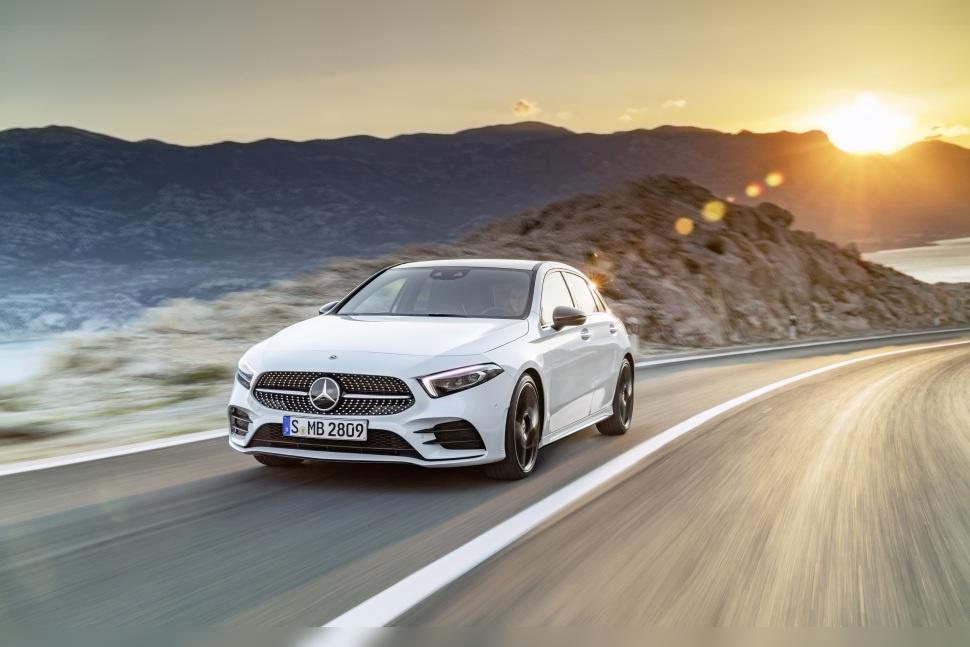
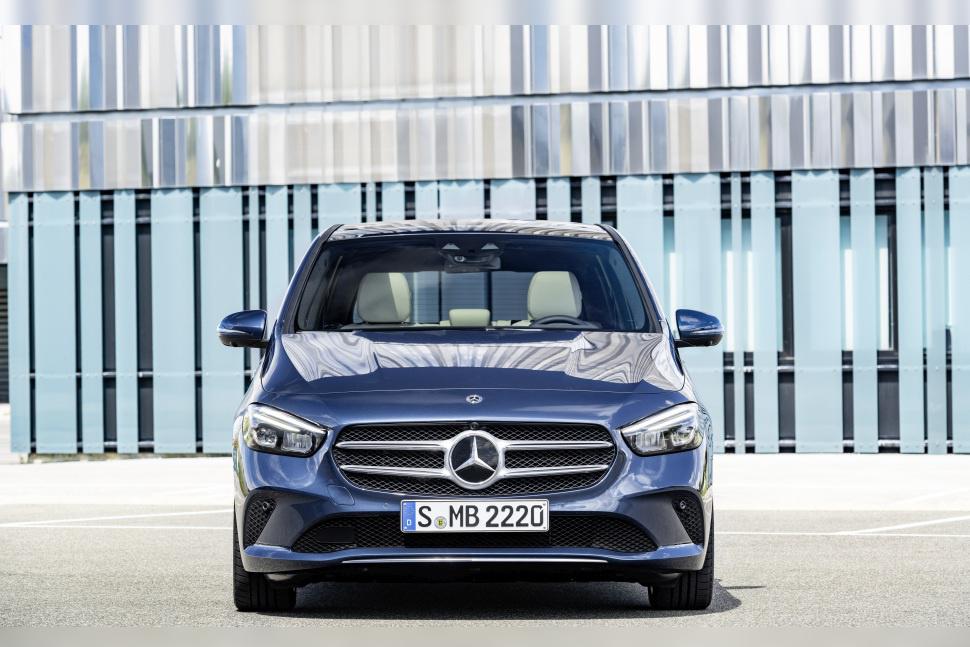
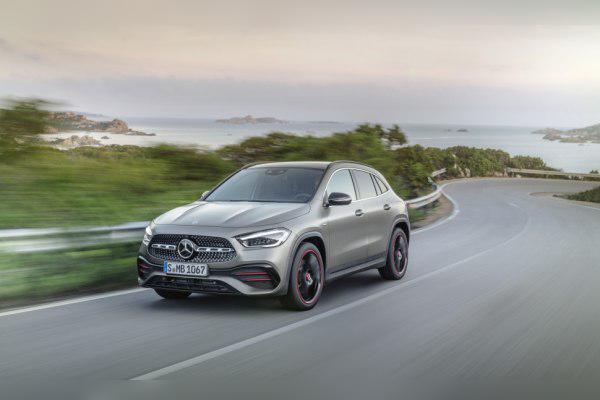
When Mercedes-Benz introduced the new generation of compact vehicles (A-Class, B-Class, CLA and GLA), a completely new aluminum power unit with the code M 282 appeared under the hood. Although many drivers are somewhat skeptical about this engine because it was developed in cooperation with the Renault-Nissan group (where it carries the designations H5Ht / 1.3 TCe), it is important to know that Mercedes implemented its own software, injection system, alternator, starter, as well as a specific function for deactivating the second and third cylinders at low revs. In its 119 kW (163 HP) version, this turbo petrol engine represents the “sweet spot” for most drivers, offering agility with reasonable running costs.
Technical Specifications
| Parameter | Value |
|---|---|
| Engine displacement | 1332 cc |
| Engine power | 119 kW (163 HP) |
| Torque | 250 Nm (at 1620 - 4000 rpm) |
| Engine code | M 282.914 |
| Injection type | Direct injection (GDI) |
| Charging method | Turbocharger with electronic wastegate, intercooler |
| Camshaft drive | Chain |
Reliability and Maintenance
Timing system: Chain or belt?
The M 282 engine uses a timing chain. Unlike some earlier generations of small turbo petrol engines from other manufacturers, the chain here has proven to be quite durable. There is no classic “major service” in the sense of a scheduled timing belt replacement. The chain is replaced as needed – usually only after 150,000 to 200,000 km, i.e. when diagnostics report a camshaft phase deviation or when a characteristic metallic rattling is heard during a cold start.
Most common failures
So far, this engine has demonstrated high reliability, but it is not without flaws. The most common issues are:
1. Carbon buildup on intake valves: Since the engine has direct injection, the fuel does not wash the intake valves. At higher mileage, valve cleaning is required (e.g. walnut blasting), because the engine may start to lose power or “stumble” at idle.
2. OPF filter problems: Cars driven exclusively on short city trips fail to reach operating temperature and properly clean the gasoline particulate filter.
3. Thermostat and coolant temperature sensor failures: They occasionally fail, leading to longer warm-up times and incorrect coolant operating temperature, which should be around 90 °C.
Engine oil and regular servicing
The engine holds about 5.1 liters of oil. The manufacturer requires the use of high-quality low-viscosity synthetic oil, most commonly 0W-20 (MB 229.71 specification) to meet emission standards, although many mechanics recommend 5W-30 (MB 229.51 / MB 229.52) for older, higher-mileage examples. Even though the factory states service intervals of 20,000 to 30,000 km, the clear recommendation is to change the oil every 10,000 - 15,000 km. Due to the high turbo temperature, the oil degrades quickly. As for oil consumption, under normal operating conditions between services this engine consumes a negligible amount (up to 0.5 liters). If it consumes more, the problem usually lies in a clogged PCV valve (crankcase ventilation) or, in a worse scenario, a worn turbocharger.
Spark plugs
In this petrol engine, spark plugs are under heavy load due to high compression and turbocharging. Replacement is recommended every 60,000 km. Ignoring this interval leads to ignition coil damage, and the price of original coils is high (varies by market).
Specific Parts and Costs
Fuel injection system
The engine features direct gasoline injection. Injectors are reliable, but very sensitive to poor fuel quality and contamination. If the car starts to misfire or has trouble starting, the injectors are the first suspects. If they need to be replaced, the job is very expensive (varies by market).
Turbocharger
A small single turbocharger is fitted, which spools up very quickly and responds promptly to throttle input. Its service life is closely tied to oil quality. If the engine is properly maintained and after spirited driving is left to idle for about 30 seconds to allow the turbo to cool down, it can easily exceed 200,000 km. Turbo overhauls are routine today, but the electronic actuator (wastegate) can cause problems and its replacement is expensive (varies by market).
Emissions (DPF, EGR, AdBlue)
Since this is a petrol engine, it does not have a DPF and does not use AdBlue. However, due to strict Euro 6d-TEMP (and newer) standards, it is equipped with an OPF (or GPF – Gasoline Particulate Filter) and an EGR valve. Over time, the OPF can become clogged with soot, with symptoms such as loss of power and an illuminated “Check Engine” light. Although it regenerates more easily than a diesel DPF, it still requires occasional highway driving at higher revs.
Fuel Consumption and Performance
Real-world fuel consumption
Despite its small displacement, the M 282.914 is extremely efficient. In city driving with heavy traffic, consumption ranges between 7.5 and 9.0 l/100 km. On country roads and highways, fuel consumption drops significantly thanks to the vehicle’s aerodynamics (especially in the A-Class V177 and CLA C118) and the cylinder deactivation system, making it possible to achieve around 5.0 to 5.5 l/100 km.
Performance and driving feel
With 163 HP and 250 Nm of torque available from just 1620 rpm, the engine is definitely not sluggish. Whether it is in the A-Class, B-Class or the slightly heavier GLA, acceleration is smooth and convincing. The 0–100 km/h sprint in the A 200 is about 8 seconds, which is an excellent result. On the motorway, at 130 km/h, the seven- or eight-speed automatic keeps the engine at a very comfortable 2200 - 2500 rpm (depending on model and transmission). Sound insulation is good, so engine noise is not particularly noticeable inside the cabin.
Additional Options and Modifications
LPG conversion
Installing an LPG system on the M 282.914 engine is not recommended. The direct injection system requires complex and very expensive LPG systems with liquid-phase injection in order to protect the gasoline injectors (which must be constantly cooled). Given the engine’s inherent fuel efficiency on petrol, the cost-effectiveness of an LPG conversion is usually poor and represents an unnecessary risk for the ECU and cylinder head.
Chiptuning (Stage 1)
This engine responds very well to remapping (Stage 1). Power can be safely increased to 185 to 190 HP, and torque to around 290 Nm. However, caution is advised; the main issue with increasing power is not so much the engine itself, but the automatic transmission (especially the 7G-DCT), which has a specified torque limit. An overly aggressive map can lead to rapid clutch pack wear in the gearbox.
Transmissions and Maintenance
Available transmissions
On the market, the engine was offered with a 6-speed manual gearbox (rare, mostly base models) and dual-clutch automatic transmissions. In pre-facelift models and front-wheel-drive versions, the 7G-DCT (seven-speed, manufactured by Getrag) is mostly used, while 4MATIC versions and some newer series are equipped with the improved 8G-DCT transmission (eight-speed, developed in-house by Mercedes).
Transmission failures and maintenance
Manual gearboxes do not have chronic issues, but they are equipped with a dual-mass flywheel to reduce turbo engine vibrations. Replacing the clutch kit and dual-mass flywheel on a manual gearbox is expensive (varies by market).
With DCT automatic transmissions, drivers occasionally complain about jerking when moving off from a standstill or when shifting from first to second gear. This can often be resolved by a software update at an authorized service center. However, if the jerks remain, it is a symptom of a worn dual-clutch set or mechatronics unit. Replacing the clutch set on a DCT transmission is very expensive (varies by market).
The key to long automatic transmission life lies in regular maintenance. Oil and filter changes in a DCT gearbox must be carried out strictly every 60,000 km. Ignoring this interval drastically shortens the life of the mechatronics unit due to metal particle buildup.
Buying Used and Conclusion
What to check when buying used?
If you are buying a used Mercedes with the 1.3 M282 engine (A 200, B 200, CLA 200, GLA 200), pay attention to the following:
1. First engine start (cold start): The engine must be completely cold. Listen carefully during the first 3 to 5 seconds to see if you can hear a sharp metallic rattle from the right side of the engine. If you do, the chain is stretched and a costly timing service is ahead of you.
2. DCT transmission test: Drive the car slowly in stop-and-go traffic. Pay attention to any harsh jerks or delays when you press the accelerator from a standstill. The gearbox should shift smoothly and almost imperceptibly.
3. Diagnostics (mandatory): Connect the vehicle to dedicated Mercedes diagnostics (Xentry). Check turbocharger boost pressure and OPF filter status (degree of clogging).
Conclusion: Is this the right engine for you?
Mercedes’ 1.3-liter M 282.914 engine with 163 HP breaks the stereotypes about small power units. It is ideal for buyers who want the luxury of a three-pointed star, excellent equipment, convincing in-gear acceleration and refined engine operation, without paying the high registration fees and fuel costs associated with larger 2.0 engines. It copes very well with both city and long-distance driving. It is recommended to look for models with a clear service history, because regular engine oil changes and automatic transmission oil changes ensure long service life without major financial shocks.