M9T 2.3 dCi Engine (180 HP): Owner Experiences, Problems, Fuel Consumption and Used-Buying Tips
Key points in short (TL;DR)
- Timing chain drive: The engine uses a timing chain which is generally reliable, but on vans under heavy load it should be inspected after 200,000 km.
- Twin-turbo system: Two turbochargers provide an excellent 400 Nm of torque at low revs, but they also double overhaul costs.
- AdBlue and DPF systems: The most common Achilles’ heel of this engine. Urban driving conditions quickly clog the DPF, and the AdBlue pump often fails due to fluid crystallization.
- Great performance: With 180 HP, this engine easily pulls even the largest chassis (L3H3) fully loaded.
- Expensive clutch replacement: It has a massive dual-mass flywheel whose replacement is a very costly maintenance item.
- Sensitivity to oil: Although the manufacturer specifies long intervals, the oil must be changed at a maximum of 15,000 km if you want the turbos and chain to survive.
Contents
- Introduction: A workhorse for heavy-duty tasks
- Technical specifications
- Reliability and maintenance
- Specific parts and costs
- Fuel consumption and performance
- Additional options and modifications
- Gearbox and drivetrain
- Buying used and conclusion
Introduction: A workhorse for heavy-duty tasks
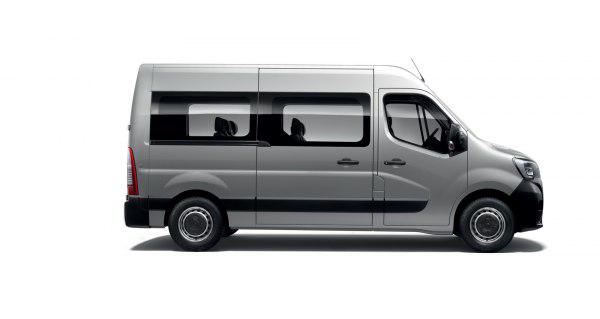
The M9T engine, also known as the 2.3 Energy dCi, is the backbone of the light commercial vehicle range of the French group. In its most powerful iteration with 180 HP and 400 Nm, this engine is designed to carry serious loads and cruise on motorways. It is installed in the Renault Master III (Phase III, from 2019), in almost all body variants, from the smallest panel vans (L1H1) to extended versions (L3H3) and 9‑seater Combi passenger models.
This is not an engine for light city driving; it is a powerplant for professionals. However, due to its advanced exhaust after-treatment systems and complex turbocharging setup, it requires conscientious maintenance and an understanding of its weaknesses so it doesn’t leave you stranded.
Technical specifications
| Feature | Data |
|---|---|
| Displacement | 2298 cc |
| Power | 132 kW (180 HP) |
| Torque | 400 Nm |
| Engine code | M9T |
| Injection type | Common Rail (Direct Injection) |
| Turbo/Naturally aspirated | Twin-turbo with intercooler |
Reliability and maintenance
Timing drive and major service
This engine uses a timing chain, not a timing belt. For commercial vehicle drivers this is great news, as it reduces the frequency of workshop visits. However, the chain is not eternal. Under the heavy loads typical for vans, the chain gradually stretches over time. There is no fixed prescribed interval for chain replacement (no “major service” in the classic sense), but in practice it is recommended to replace it between 200,000 km and 250,000 km. In addition to the chain, the auxiliary (serpentine/PK) belt, tensioners and water pump should be replaced at around 100,000 km. Symptoms of a stretched chain include metallic rattling at cold start (until the tensioner gets oil pressure) and rough engine running.
Oil: Capacity, grade and consumption
The oil sump holds a rather impressive around 8 litres of engine oil. Due to the presence of a DPF filter, it is mandatory to use oil that meets the RN0720 or RN17 specification (usually 5W‑30 “Low SAPS”). Factory‑specified change intervals of 30,000 km or even 40,000 km are disastrous for this engine. If you want to preserve the turbos and the chain, change the oil strictly every 10,000 km to 15,000 km.
Does it consume oil? A healthy M9T engine with a twin‑turbo system may consume a small amount of oil between changes – up to 0.5 litres per 10,000 km is considered completely normal due to evaporation and lubrication of turbo shafts under high pressures. If consumption exceeds 1 litre per 10,000 km, it’s time to check the turbos or the piston oil control rings.
Injectors and Common Rail system
The M9T uses sophisticated piezo injectors. Their service life is usually between 200,000 and 250,000 km, provided quality fuel is used. Early symptoms of worn injectors include hard cold starts, rough idle (engine shaking), black smoke under sudden acceleration and increased fuel consumption. Repair or replacement of injectors falls into the “expensive” category (price depends on the market).
Specific parts and costs
Dual-mass flywheel
Yes, this engine is equipped with a dual-mass flywheel. With 400 Nm of torque and the heavy body of a van, the flywheel is under enormous stress, especially when pulling away under load or towing a trailer. Its lifespan depends heavily on the driver, but it usually fails around 150,000 to 200,000 km. The price of a clutch kit with a dual‑mass flywheel is very high (depends on the market).
Twin-turbo system
This model uses two turbochargers (twin‑turbo technology) in a sequential layout. The smaller turbo provides response at low revs (eliminating “turbo lag”), while the larger turbo takes over at higher revs, giving the engine its 180 HP. Although it delivers an almost perfect torque curve, it also means double the chance of failure. With regular oil changes, the turbos can last over 250,000 km, but when overhaul time comes, the cost is very high (depends on the market). Whistling when you press the accelerator and bluish smoke from the exhaust (burning oil) are sure signs that the turbos are failing.
DPF, EGR and AdBlue system
Emissions equipment is at the same time this engine’s biggest downside.
- EGR valve: Often clogs with soot, especially if the van is driven mostly in the city at low revs. Symptoms include jerking and loss of power.
- DPF filter: Does not tolerate frequent short trips. If regeneration cycles are repeatedly interrupted, the DPF will clog and fuel will start to wash down into the sump, diluting the oil (very dangerous for the crankshaft and bearings).
- AdBlue: The 2019+ Renault Master with 180 HP is always equipped with an SCR catalyst and AdBlue system. This is the most common source of problems. The pump in the AdBlue tank or the injector itself often fail due to urea crystallization. Replacing the tank with the integrated pump is extremely expensive. Tip: always fill with fresh AdBlue, don’t run the tank on reserve and in winter watch out for temperatures below −11 °C when the fluid freezes.
Fuel consumption and performance
Real-world fuel consumption
Although brochures promise low consumption, real‑world figures tell a different story. In city driving, under stop‑and‑go conditions, heavy versions (such as L3H3 or extended Combi) use between 9.5 and 11.5 l/100 km. On the motorway, the van’s aerodynamics take their toll. At 130 km/h, consumption will easily exceed 10 l/100 km. On regional roads at 80–90 km/h, consumption drops to an excellent 7 to 8 l/100 km.
Performance and cruising
This engine is definitely not “lazy”. With 180 HP and an impressive 400 Nm, the twin‑turbo system allows easy overtaking even when the van is loaded to its maximum permitted payload. At 130 km/h in sixth gear on the motorway, the engine cruises at around 2,300 to 2,600 rpm (the exact rpm depends on the chosen final drive ratio, which varies according to the original buyer’s order). At these revs the engine is relatively quiet for a commercial vehicle.
Additional options and modifications
Chiptuning (Stage 1 remap)
The M9T in its 180 HP version is already quite “stretched” from the factory, extracting the maximum from its 2.3‑litre displacement. Still, a safe Stage 1 remap can raise power to around 205–210 HP and torque to a massive 460 Nm. Drivers report a slight drop in fuel consumption and even better pull. Warning: While the engine itself can handle this power, the main weak points become the gearbox, dual-mass flywheel and driveshaft. The increased torque dramatically shortens their lifespan. This modification is recommended only if you also change your driving style – aggressive full‑throttle starts with heavy loads after remapping will quickly destroy the clutch.
Gearbox
Types of gearboxes and failures
Two basic options are fitted with this engine: a conventional 6‑speed manual gearbox and an automatic (more precisely: a robotised manual or a conventional automatic, depending on the specific market configuration and exact model year).
- Manual gearbox (6‑speed): The most reliable option, but still subject to wear under heavy loads. The most common issues include worn synchros in 2nd and 3rd gear (grinding when shifting) and bearing whine if the oil level in the gearbox is not checked.
- Automatic gearbox: Offers great comfort in the city, but brings more expensive repairs. If it is the robotised version, the hydraulic actuator (the “robot” that shifts instead of the driver) often fails by losing pressure, resulting in harsh jerks or complete failure to engage gears. Repairs are costly (depends on the market).
Gearbox servicing
The oil in the manual gearbox must be changed every 60,000 to 80,000 km. The cost is minimal compared to a gearbox overhaul. If the vehicle has an automatic gearbox, regular oil changes with flushing are absolutely mandatory at a maximum of 60,000 km. Ignoring this interval quickly leads to failure of the valves inside the gearbox.
Buying used and conclusion
What to check when buying?
When buying a used Renault Master with this engine, don’t rely solely on the visual impression of the bodywork. Be sure to check the following:
- Cold start: Ask the seller not to start the van before you arrive. Listen carefully to the first seconds of engine operation – if you hear metallic scraping or rattling, the chain is due for replacement.
- Clutch condition: Press the clutch pedal halfway; if you feel strong vibrations under your foot or hear knocking when switching the engine off, the dual-mass flywheel is at the end of its life.
- Test drive and smoke: Try sudden acceleration. If the van lacks power at low revs, the smaller turbo is problematic. Visible smoke from the exhaust indicates bad injectors or oil leaking into the intake from the turbos.
- Diagnostics are mandatory: The M9T requires a thorough diagnostic scan before purchase. The mechanic must read DPF pressure, regeneration frequency and check for faults related to the AdBlue system and pressure in the Common Rail.
- Suspension condition: Since this van can carry a huge load, inspect the springs, shock absorbers and ball joints on the front suspension, which wear quickly on poor roads.
Who is this engine for?
The M9T 2.3 dCi 180 HP engine is an excellent choice for professionals whose job is transporting heavy loads over medium and long distances. Its twin‑turbo system offers driving dynamics comparable to passenger cars, and you will never be short of power.
On the other hand, if you need a van exclusively for local courier deliveries within a 20‑kilometre radius with hundreds of stop‑and‑go situations per day, avoid this version. City conditions will very quickly destroy the DPF filter, cause problems with the EGR valve and AdBlue system, and expose you to astronomical repair costs.