Mercedes OM 607.951 (1.5 dCi 90 HP) – Experiences, problems, fuel consumption and used car buying guide
- Low fuel consumption: Extremely economical engine, uses around 5.5 to 6.5 l/100 km in city driving.
- Origin: The base of this engine is the famous Renault 1.5 dCi (K9K), but Mercedes reworked the engine mounts, electronics and gearboxes.
- Performance: With 90 HP the engine is quite sluggish in heavier bodies such as the B-Class; it is ideal for calm, relaxed drivers.
- Maintenance: It has a timing belt, not a chain. Maintenance is not excessively expensive, but it does require regularity.
- Dual-mass flywheel: Present on both manual and automatic (DCT) gearboxes, and replacement is expensive.
- Reliability: With regular oil changes, it can cover very high mileage. The most common issues come from the DPF and EGR due to city driving.
- Recommendation: An excellent choice for taxi drivers, fleet vehicles and drivers who cover a lot of local mileage, but weak for frequent overtaking on open roads.
Contents
- Introduction and basic information
- Technical specifications
- Reliability and maintenance
- Specific parts and costs
- Fuel consumption and performance
- Additional options and modifications
- Gearbox and drivetrain
- Buying used and conclusion
Introduction and basic information
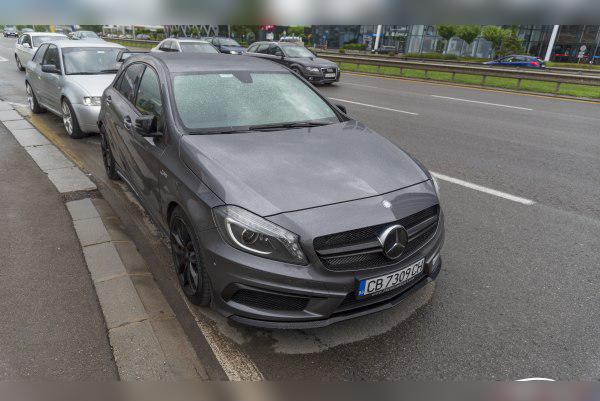
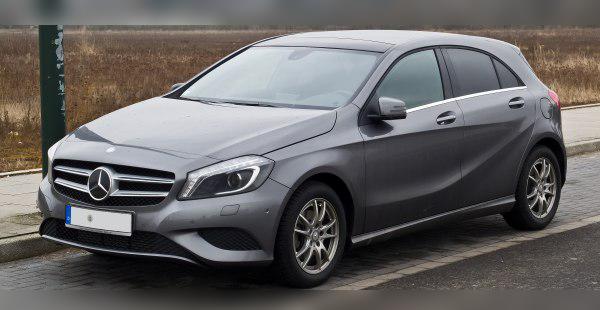
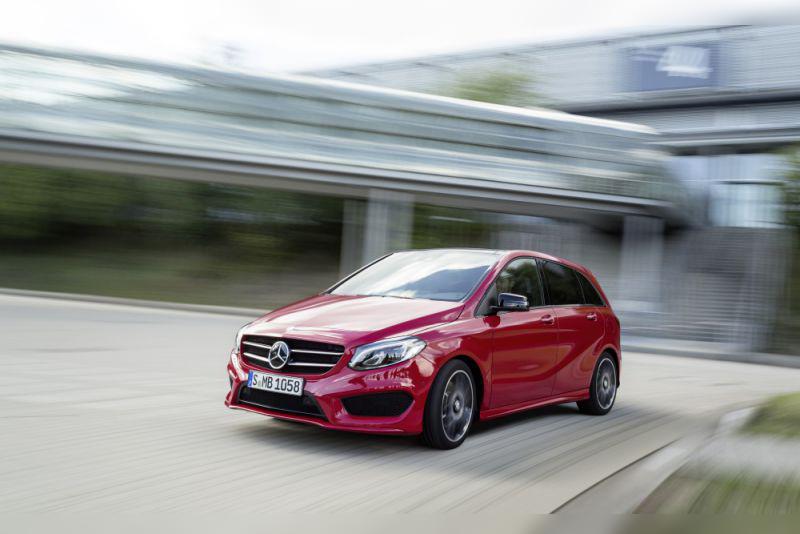
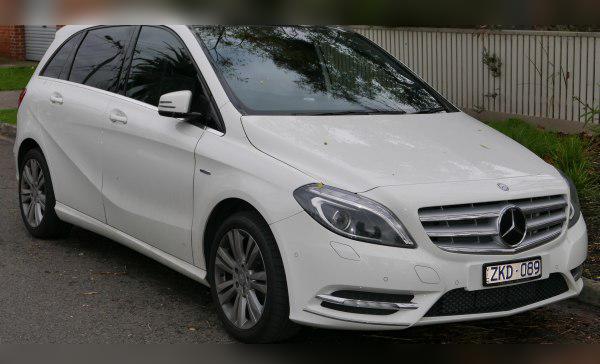
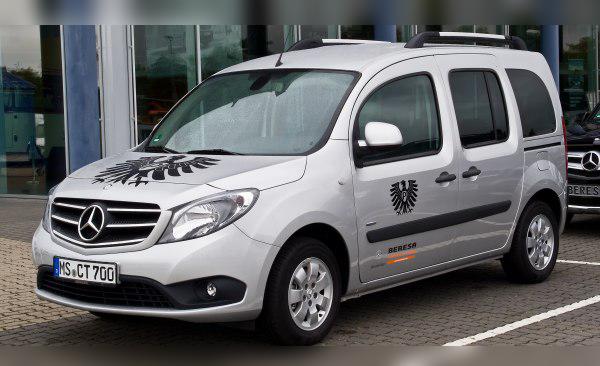
The engine designated as OM 607.951 is Mercedes’ interpretation of one of the most widespread diesel engines in Europe – Renault’s 1.5 dCi (K9K). It was installed in models such as the A-Class (W176), B-Class (W246) and the light commercial vehicle Citan (W415). Many drivers were initially skeptical about a “French heart” in a German car, but in practice it turned out that Mercedes made a smart move. Engineers from Stuttgart revised the engine map (ECU), installed their own starter motor, alternator, specific engine mounts and paired it with their own gearboxes. The result is an extremely refined and quiet operation compared to the original Renault engine, while retaining the fantastically low fuel consumption.
Technical specifications
| Characteristic | Data |
|---|---|
| Engine displacement | 1461 cc |
| Power | 66 kW (90 HP) |
| Torque | 200 Nm |
| Engine code | OM 607.951 |
| Fuel type | Diesel (Common Rail) |
| Induction | Turbocharger, intercooler |
Reliability and maintenance
Timing belt or chain?
Unlike larger Mercedes engines which traditionally use a chain, the OM 607 uses a timing belt. This is not a drawback, it just requires a different maintenance approach. The system is simple and reliable, it rarely snaps if replaced on time, and replacement is a routine job for a mechanic.
Major service and regular maintenance
Although factory recommendations sometimes suggest major service intervals of up to 200,000 km, any experienced mechanic will tell you that this is overly optimistic. The major service (replacement of timing belt, tensioner, idler pulleys and water pump) should be done at around 100,000 to 120,000 km or every 5 to 6 years. This prevents catastrophic engine failure.
Oil: capacity, grade and consumption
This engine takes around 4.5 liters of oil. It is mandatory to use fully synthetic oil of grade 5W-30 that meets Mercedes specification MB 229.51 (Low SAPS oil, mandatory because of the DPF filter). As for oil consumption, these engines are quite tight. Consumption of 0.2 to 0.5 liters per 10,000 km is considered completely normal and is usually the result of evaporation through the breather or minimal leakage at the turbo. If the engine consumes more than one liter of oil between services, the condition of the piston rings or turbocharger should be checked.
Injectors and Common Rail system
The injection system is sensitive to poor fuel quality. The injectors (most often Continental/Siemens on this generation) typically last between 200,000 and 250,000 km. When they start to fail, the driver will notice rough idling (shuddering), increased black smoke when accelerating, harder starting in winter conditions (below 0 °C) and pronounced “knocking” (metallic sound) under load. It is recommended to replace the fuel filter at every minor service in order to extend injector life.
Specific parts and costs
Dual-mass flywheel
Yes, this engine has a dual-mass flywheel, regardless of whether it is paired with a manual or automatic gearbox. Its task is to absorb diesel engine vibrations, which contributes to the comfort Mercedes is known for. When the flywheel is worn out, you will feel vibrations in the cabin at idle, thumps and metallic noise when switching the engine off, as well as jerking when moving off. Replacing the clutch kit with the dual-mass flywheel is expensive (depends on the market), so when buying, be sure to test how the car moves off from a standstill.
Turbocharger
The engine has a single turbocharger. Structurally it is durable and rarely fails on its own. Its lifespan directly depends on engine oil quality and change intervals. If you regularly do minor services every 10,000–15,000 km, the turbo can last well over 300,000 km. Turbo whine under throttle and a sudden loss of power (entering “limp mode”) are clear signs of wear.
DPF and EGR valve
These are the weakest points of this engine if it is driven exclusively in the city. The EGR valve quickly gets clogged with soot and sticks, which leads to jerking and the “Check Engine” light coming on. The DPF filter often clogs because in stop-and-go traffic it cannot reach the high temperature needed for regeneration. The solution is occasional driving on open roads at higher revs (above 2500 rpm) for 20–30 minutes.
AdBlue system
The presence of the AdBlue (SCR) system varies and cannot be determined 100% without the engine code and VIN. Early 90 HP versions (e.g. up to 2015/2016) usually do not have it, while models with newer Euro 6 standards towards the end of this generation’s production may be equipped with it. Where present, the AdBlue system can be troublesome – most often due to failure of the tank pump and fluid heater. Repairing these components is very expensive (depends on the market).
Fuel consumption and performance
City driving and efficiency
This is where the OM 607 really shines. Real-world consumption in pure city driving ranges between 5.5 and 6.5 l/100 km, depending on how heavy your right foot is and on traffic congestion. This makes it one of the most economical engines in its class.
Is the engine “sluggish”?
In short: Yes, the engine is noticeably sluggish. The A-Class (W176) body weighs around 1.4 tons, and the B-Class is even heavier and less aerodynamic. Power of 90 HP (66 kW) and 200 Nm of torque is sufficient for flat terrain and undemanding city driving, but when overtaking uphill or with a fully loaded car, you will feel a serious lack of power reserve. You have to plan overtakes in advance and frequently use the gearbox.
Behavior on the motorway
On the motorway, the 90 HP OM 607 is stable, but it is no sprinter. At a cruising speed of 130 km/h, the engine runs at about 2500 to 2600 rpm (depending on whether it is a manual or DCT gearbox). The cabin is well sound-insulated, but at these speeds you can feel that the engine is slowly running out of breath. Fuel consumption on the motorway rises to around 5.5–6 l/100 km due to air resistance.
Additional options and modifications
Chiptuning (Stage 1 remap)
This engine is an absolutely perfect candidate for a Stage 1 chiptune. Since the engine block and key components also withstand the factory 109/110 HP versions (in the 180d model), increasing the power is safe. With a quality software remap, power can easily be raised from 90 HP to 115 HP, while torque increases from 200 Nm to around 260 Nm. This change radically transforms the character of the car – it becomes much more agile, overtaking is significantly safer, and if driven normally, fuel consumption can even drop slightly.
Gearbox and drivetrain
Types of gearboxes and common failures
The engine is paired with two types of gearboxes:
- 6-speed manual: Very precise and reliable. The most common issue is not the gearbox itself, but wear of the dual-mass flywheel and clutch disc at higher mileage.
- 7G-DCT (7-speed dual-clutch automatic): Offers excellent comfort in city driving. However, it is prone to jerks when shifting down to lower gears (most often from third to second). Failures are usually related to the mechatronics unit and clutch pack if the car is predominantly used in stop-and-go conditions.
Gearbox servicing
For the manual gearbox, it is recommended to change the oil every 100,000 km as a preventive measure. For the 7G-DCT automatic gearbox, regular servicing is absolutely critical! The oil and filter in the DCT gearbox must be changed every 60,000 km or at least every 5 years. Ignoring this rule directly leads to clutch pack overheating and mechatronics failure, and such repairs are very expensive (depends on the market).
Buying used and conclusion
What to check before buying?
When looking at a used Mercedes with this engine, be sure to check the following:
- Cold start: The engine should start “on half a turn”. Any bluish or thick black smoke from the exhaust on a cold start indicates a problem with the injectors or turbo.
- Flywheel test: On a manual gearbox, press and release the clutch at idle at about half travel. If you hear rattling, the flywheel needs replacing. On automatics, shift from P to D and R; there should be no harsh thumps.
- Exhaust and DPF: Wipe the inside of the exhaust pipe with your finger. If the pipe is completely black and greasy with soot, the DPF filter is punctured, removed or completely destroyed. With a healthy DPF, the pipe should be relatively clean and grey.
- Diagnostics: Always connect an original (or high-quality dedicated) diagnostic tool and check injector correction values, as well as the DPF saturation level (ash mass / soot mass).
Conclusion: Who is this engine for?
The Mercedes OM 607.951 with 90 HP is not built for racing. This is an engine designed for maximum savings at the pump and long-term use in civilized driving conditions. It is ideal for buyers who prioritize the design of the A or B-Class, use the car mainly for commuting, local driving, or as a fleet vehicle for taxi service. If you often travel long distances with a full load of luggage, it is recommended to look for a more powerful version (180d) or to do a Stage 1 power remap after purchase.