R9M 452 Engine (1.6 Ecojet 145 HP): Real-world experience, issues, fuel consumption and used-buying tips
Key points in short (TL;DR)
- Great performance for a small displacement: Thanks to Twin-Turbo technology, the engine delivers an excellent 340 Nm already at low revs.
- Chain-driven timing: There is no classic timing belt, but the chain requires attention and regular oil changes to prevent stretching.
- Sensitive to city driving: The DPF filter and EGR valve are prone to clogging if the van is driven exclusively in the city.
- Complexity raises costs: Two turbochargers and the presence of an AdBlue system on newer versions mean potentially more expensive repairs.
- Gearbox requires maintenance: 6-speed manual gearboxes are sensitive to bearing wear; changing the gearbox oil is a must.
- Biggest enemy: Factory-recommended oil change intervals of 30,000 km. For longevity, cut that interval in half.
Contents
- Introduction: About the engine and models
- Technical specifications
- Reliability and maintenance
- Specific components and costs
- Fuel consumption and performance
- Additional options and modifications
- Gearbox and drivetrain
- Buying used and conclusion
Introduction: About the engine and models
When you open the hood of a Fiat Talento van with the 1.6 Ecojet badge, you are actually looking at a product of the Renault-Nissan alliance. The engine designated R9M 452 is the well-known 1.6 dCi, but in its most potent, Twin-Turbo version. Due to the downsizing trend, engineers had to extract the performance of a two-liter engine from a block of only 1.6 liters, which they achieved by installing two turbochargers and a massive intercooler.
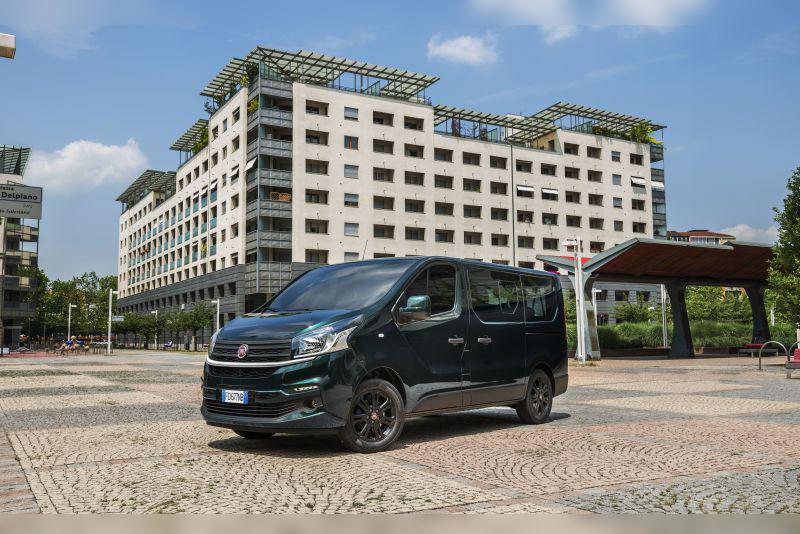
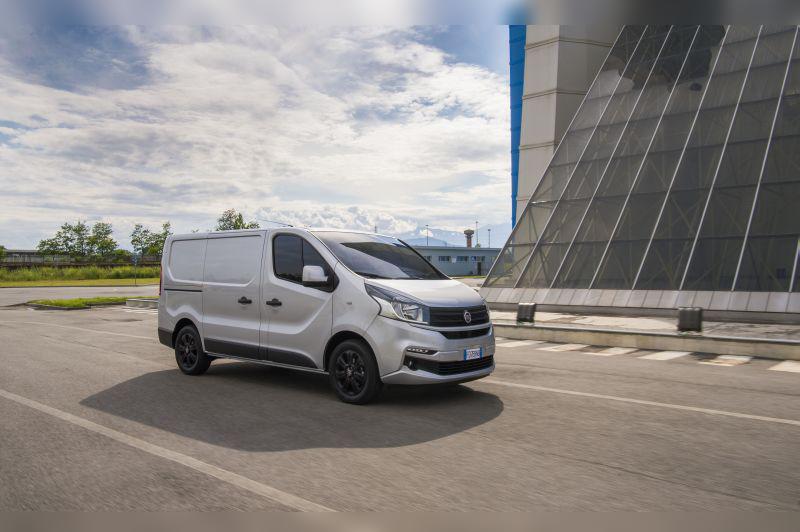
This power unit is installed in a wide range of Fiat Talento models (as well as its twins such as the Renault Trafic and Opel Vivaro), from cargo Furgon (Van) versions of different lengths and heights (L1H1, L2H2), to passenger Combi and Crew Cab variants. It is aimed at drivers who need high payload and strong performance on open roads, while keeping fuel consumption low.
Technical specifications
| Specification | Data |
|---|---|
| Displacement | 1598 cc |
| Power | 107 kW (145 HP) |
| Torque | 340 Nm at 1500 rpm |
| Engine code | R9M 452 (Renault Energy dCi / Fiat Ecojet) |
| Injection type | Common Rail (Direct injection) |
| Charging system | Twin-Turbo (Two turbochargers) + Intercooler |
| Fuel type | Diesel |
Reliability and maintenance
Timing system: Chain or belt?
This engine uses a timing chain instead of a belt. In theory, the chain should last as long as the engine itself, but practice shows otherwise. Due to chain stretching and guide wear, especially if the engine is abused when cold or if the oil is not changed regularly, the chain can become noisy. A “major service” in the classic sense (belt replacement at a fixed mileage) does not exist, but preventive replacement of the chain kit is recommended between 200,000 and 250,000 km. In addition to the chain, at around 100,000 km it is mandatory to replace the auxiliary (serpentine) belt, idlers and tensioner, as well as the water pump.
Oil and regular servicing
Although the displacement is small, this engine takes a fairly large amount of oil – about 7.4 liters. This was done to ensure adequate cooling of the two turbochargers. Only fully synthetic 5W-30 oil that meets the RN0720 standard (or newer, depending on whether the engine has AdBlue) is recommended. The manufacturer suggests an interval of up to 30,000 km or two years, but from an experienced mechanic’s point of view, that is a recipe for disaster. Oil must be changed every 10,000 to a maximum of 15,000 km. Oil consumption is considered normal up to 0.3–0.5 liters per 1,000 km, but healthy engines usually do not consume noticeable amounts between changes.
Injection system and injectors
Since this is a diesel engine, the injectors operate under high pressure. Advanced piezo-electric injectors are used; they are quite durable and rarely fail before 250,000 km. However, they are extremely sensitive to poor fuel quality and contamination. Symptoms of faulty injectors include rough idling (uneven crankshaft rotation), increased black smoke under acceleration and harder starting. Rebuilding or replacing injectors is expensive (varies by market).
Specific components and costs
Dual mass flywheel
Yes, the engine has a dual mass flywheel (DMF). Its task is to dampen the massive vibrations produced by the diesel engine, especially under load. Symptoms of wear include a metallic knocking sound when switching the engine off, judder when taking off and vibrations in the clutch pedal. Given that these vans are often overloaded, the flywheel tends to fail earlier than in passenger cars (often between 150,000 and 200,000 km). The cost of replacing the complete kit (flywheel, clutch, release bearing) is very high (varies by market).
Twin-Turbo system
The most complex part of this engine is the two turbochargers. The small turbo works at low revs to avoid “turbo lag”, while the larger one kicks in at higher revs. Physical failure of the turbochargers themselves is not that common if lubrication is good, but the vacuum hoses, actuators and solenoid valves that control the transition between the turbos often fail. The symptom is a sudden loss of power and the engine going into limp mode (safety mode). Replacing the entire Twin-Turbo assembly is extremely expensive (varies by market).
DPF, EGR and AdBlue
The EGR valve and DPF (Diesel Particulate Filter) come as standard. If you use the Talento as a city delivery vehicle (stop-and-go driving), the DPF will clog quickly because the conditions for reaching the temperature (around 600 °C) required for passive regeneration are not met. The EGR valve also fills up with soot deposits and can get stuck in the open position, choking the engine.
Newer Euro 6 versions of this engine are equipped with an AdBlue system (SCR catalyst). Unfortunately, this system is quite problematic. Failures of NOx sensors and the pump integrated into the AdBlue tank are common. When the system registers a fault, the electronics start counting down the remaining kilometers after which you will no longer be able to start the engine until the fault is rectified. Repairing the AdBlue tank with the pump is very expensive (varies by market).
Fuel consumption and performance
Real-world fuel consumption
Considering the weight and the “boxy” aerodynamics, fuel consumption is more than acceptable. In city driving, you can expect consumption between 7.5 and 9.0 l/100 km, depending on whether the vehicle is empty or loaded to its maximum payload.
Performance: Is the engine sluggish?
Thanks to the Twin-Turbo system, this engine is definitely not sluggish. The torque of 340 Nm is available already at 1,500 rpm. This means that the van pulls strongly and confidently from very low revs, without the need to rev it high, which significantly eases driving under load or when towing a trailer.
Behavior on the motorway
The engine performs very well on the motorway. The 6-speed gearbox is geared so that at a speed of 130 km/h in sixth gear the crankshaft spins at about 2,400 to 2,600 rpm. At these speeds, due to aerodynamic drag, fuel consumption rises and is around 8.0 to 8.5 l/100 km. The engine cruises calmly and has more than enough power in reserve for safe overtaking.
Additional options and modifications
Remapping (Stage 1)
This engine block is extremely robust. A standard Stage 1 remap can safely raise power from 145 HP to roughly 170 to 175 HP, while torque climbs close to 400 Nm. Drivers who have done this report that the van drives much more relaxed under load. However, before remapping you must check the condition of the clutch, dual mass flywheel and DPF filter, because the higher torque puts additional stress on the entire suspension and drivetrain.
Gearbox and drivetrain
Gearbox failures and maintenance
This engine is predominantly paired with a 6-speed manual gearbox. The problem with these gearboxes (often derivatives of the well-known PF6 gearbox) is the sensitivity of the shaft bearings. The symptom is a characteristic whining or humming in third, fifth and sixth gear. If this noise is ignored, the gearbox can completely fail.
The main cause is poor lubrication or a drop in oil level. Although the manufacturer rarely emphasizes this, gearbox oil should be changed every 60,000 km. The quantity and type of oil (most often 75W-80) must be absolutely correct (varies/cannot be stated 100% without the gearbox code and VIN for exact specification; consult an authorized service center).
Automatic gearboxes in combination with this specific engine and Talento generation are very rare, and in the few related models a robotized dual-clutch gearbox (EDC) was used, which is known for expensive clutch pack replacements.
Buying used and conclusion
What to check when buying?
If you are buying a used Fiat Talento 1.6 Ecojet (145 HP), your first focus must be the cold start. Ask the seller not to start the van before you arrive. When starting, listen carefully around the timing chain area – if you hear rattling in the first few seconds, the chain and tensioner need to be replaced. Then, listen to the gearbox while driving and pay attention to vibrations when taking off (flywheel).
Visually inspect the exhaust pipe; due to the presence of a DPF, the inside of the exhaust must be completely clean, with a grey-metallic color, not black and sooty. Be sure to connect the vehicle to professional diagnostics to check DPF saturation, injector correction values and the AdBlue system fault history.
Final verdict
The R9M 452 engine in its 145 HP version is a masterpiece of compact diesel engineering that offers impressive figures and excellent performance on open roads. It is intended for tradespeople, companies with regular intercity routes and people who transport goods over longer distances.
However, it is not for everyone. If you need a vehicle only for courier deliveries in dense city centers (stop-and-go), the complexity of the Twin-Turbo system and the sensitivity of the DPF and AdBlue components will blow a serious hole in your budget. If you are buying used, find an example with a clear service history where the oil was changed frequently, not according to the stretched factory intervals.