Engine D22DTR (2.2 e-XDi 202 HP) – Experiences, problems, fuel consumption and used-buying tips
Key points (TL;DR)
- Powerful and tough: With 202 HP and 441 Nm of torque, it’s designed for heavy off-road use and towing.
- Timing chain: Uses a chain instead of a timing belt, which reduces the need for frequent major services, but requires regular oil changes.
- Emissions as a weak point: DPF, EGR and AdBlue systems are the most common sources of headaches, especially if the vehicle is driven exclusively in city conditions.
- Sensitive injectors: The Common Rail system requires high-quality diesel fuel and regular filter changes.
- Transmissions: Automatic transmissions are a better choice than manuals, as they protect the engine and eliminate the issue of an expensive dual-mass flywheel.
- Fuel consumption: Due to the heavy chassis, it can be quite “thirsty” in the city, while on the open road it’s very reasonable.
Contents
- Introduction: A workhorse in modern clothing
- Technical specifications
- Reliability and maintenance
- Specific parts and costs
- Fuel consumption and performance
- Additional options and modifications
- Transmission and drivetrain
- Buying used and conclusion
Introduction: A workhorse in modern clothing
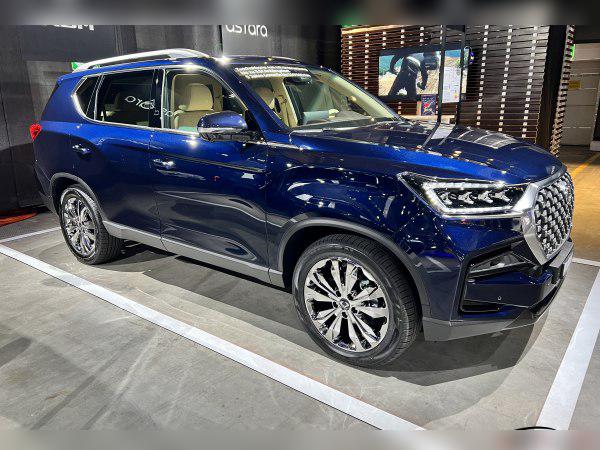
The engine designated as D22DTR (commercially known as 2.2 e-XDi) represents the peak of diesel technology in vehicles of the SsangYong brand, which now operates under the name KGM. This engine iteration delivers 202 HP (149 kW) and is mainly installed in heavy body-on-frame SUVs and pickups such as the Rexton, Musso and Musso Grand (models from 2020/2021 onwards). The engine was developed to meet strict Euro 6d standards while retaining the robustness needed for towing and serious off-road work.
Technical specifications
| Specification | Data |
|---|---|
| Displacement | 2157 cc |
| Engine power | 149 kW (202 HP) |
| Torque | 441 Nm |
| Engine code | D22DTR |
| Injection type | Common Rail direct injection |
| Charging | Turbocharger (VGT) + intercooler |
Reliability and maintenance
Timing belt or chain?
This engine uses a timing chain. This is good news for buyers, as a chain is significantly more durable than a timing belt and is designed to last as long as the engine itself. However, that doesn’t mean it’s indestructible. Poor maintenance can lead to chain stretch and failure of the hydraulic tensioners.
Most common failures
Apart from the emissions systems, which will be discussed later, mechanical failures include oil leaks on the crankshaft seal (most often due to overly long oil change intervals or poor oil quality) and issues with fuel pressure sensors. If the engine cranks for a long time before starting, the cause is often a pressure drop in the Common Rail system.
Major service and maintenance
Since the engine has a chain, a classic “major service” at a prescribed mileage does not exist in the traditional sense. It is recommended to replace the auxiliary belt set (serpentine belt, rollers, tensioner and water pump) preventively at 100,000 to 120,000 km. The condition of the chain should be checked via diagnostics and by listening to the engine after 200,000 km.
Oil: Quantity, grade and consumption
The engine takes about 6.0 to 6.5 liters of oil (with filter replacement). Fully synthetic 5W-30 oil that meets the ACEA C3 specification is mandatory due to the presence of a DPF filter.
As for oil consumption, a healthy D22DTR engine should not consume more than 0.5 liters per 10,000 km. If consumption is higher, this often indicates a problem with the oil control rings or a leak in the turbocharger.
Injector lifespan
The injectors are very precise and sensitive to poor fuel quality. Under ideal conditions they can last around 200,000 to 250,000 km. When they start to fail, the driver will notice rough idling, a harsh knocking sound under load, and frequent DPF regenerations (due to excessive soot). Refurbishment is usually possible, but it is an expensive procedure (depends on the market).
Specific parts and costs
Dual-mass flywheel
Yes, if the vehicle is equipped with a manual transmission, it has a dual-mass flywheel. Replacing it together with the clutch kit is very expensive (depends on the market). Automatic transmissions use a torque converter and do not have a dual-mass flywheel, which is a major plus for long-term reliability and maintenance costs.
Turbocharger
The engine has a single VGT (Variable Geometry Turbocharger). Its service life is excellent provided the driver does not shut it down “hot” – after a long highway drive, the engine should be left idling for about a minute so that the oil can cool the turbo shaft. The expected lifespan of the turbo is over 250,000 km before an overhaul is needed.
Emissions systems: DPF, EGR and AdBlue
This is the most fragile part of the engine. It has an EGR valve, a DPF filter and an SCR system (AdBlue).
- The EGR valve often clogs due to poor fuel and short city trips. Symptoms are loss of power and entering limp mode.
- The DPF filter requires occasional driving on the open road (at least 2500 rpm for about 20–30 minutes) to perform passive regeneration.
- The AdBlue system on these models (especially Rexton) is known to cause issues with the fluid level sensor, NOx sensors or the pump. Repairing the SCR system is expensive, and ignoring a fault can lead to the ECU electronically blocking engine start.
Fuel consumption and performance
Real-world fuel consumption
KGM Musso and Rexton models are huge and heavy vehicles (often weighing over 2 tons empty) with serious 4WD systems and a proper ladder frame. Therefore, in pure city driving you should expect 10 to 12.5 l/100 km. On open A-roads this drops to a more acceptable 7 to 8 l/100 km.
Is the engine “lazy”?
No. Although the body is very heavy, the torque of 441 Nm is available from low revs (from 1600 to 2600 rpm). The vehicle is not made for drag racing or traffic light sprints, but it pulls very convincingly, even with a trailer hitched behind.
Highway driving
On the highway it feels very confident. Combined with the modern 8-speed automatic transmission, at 130 km/h the engine cruises at a very relaxed 2000 to 2200 rpm. Highway fuel consumption is around 8.5 to 9.5 l/100 km due to the poor aerodynamics typical of such SUVs.
Additional options and modifications
Chip tuning (Stage 1)
This engine has a solid power reserve. A reliable Stage 1 remap can safely increase power from 202 HP to about 230–240 HP, and torque to an impressive 500+ Nm. However, modifications should only be done by reputable tuners, because a poorly executed remap drastically raises exhaust gas temperatures, which can destroy the turbo and quickly ruin the DPF filter. If the car has a manual gearbox, aggressive torque increases are not recommended due to the dual-mass flywheel.
Transmission and drivetrain
Types of transmissions
The D22DTR is paired with two basic types of transmissions:
- 6-speed manual gearbox (often on base Musso models).
- 8-speed automatic gearbox (shift-by-wire technology, found in newer Rexton and higher Musso trim levels). Older versions of this engine before the facelift had a 7-speed Mercedes or 6-speed Aisin automatic, but the 202 HP version mostly comes with the modern 8-speed unit.
Transmission failures and maintenance
Manual gearbox: The gearbox itself is robust, but the biggest downside is the aforementioned dual-mass flywheel. The vehicle’s weight takes its toll, so the clutch kit rarely lasts more than 150,000 km if the vehicle is used for towing.
Automatic gearbox: A far more reliable option. Failures occur only if oil changes are ignored. Symptoms of a neglected gearbox are jerks when shifting from “D” to “R” and harsh downshifts on inclines.
Transmission service interval
For the automatic transmission, changing the oil and filter is absolutely mandatory every 60,000 km. Do not believe the myths about “lifetime oil”. For the manual gearbox, the oil should be changed every 80,000 to 100,000 km.
Buying used and conclusion
What to check before buying?
- Cold start: Listen to the engine immediately after starting. A metallic rattling sound lasting longer than 2 seconds indicates a stretched chain and tensioner issues.
- AdBlue and DPF: There must be no “Check” lights or AdBlue warnings on the instrument cluster. Be sure to connect a professional diagnostic tool to check the remaining ash content in the DPF filter.
- Suspension and drivetrain: KGM vehicles have a selectable 4WD system with a low-range transfer case. Test all modes (2H, 4H, 4L) on a gravel road. Engagement should be smooth.
- Oil traces: Inspect the underside of the engine (crankshaft seal) and around the turbo housing for any signs of fresh oil.
Conclusion: Who is this engine for?
The D22DTR 202 HP engine is not for people looking for a city SUV to climb curbs in front of cafés. This is a serious workhorse placed under the bonnet of vehicles with a true truck-like ladder frame. If you plan to tow boats, horse trailers, carry heavy loads or drive through deep mud and snow, this engine (ideally paired with an automatic transmission) will provide years of reliability. On the other hand, if you buy it for short stop‑and‑go city trips, the DPF and AdBlue systems will quickly become your worst nightmare.