Subaru EJ20 (150 HP) Naturally Aspirated Boxer: Ownership Impressions, Issues, Fuel Consumption and Used-Buying Tips
- A distinctive boxer engine that offers a low center of gravity and excellent balance, but requires mechanics with specific know-how.
- The engine is driven by a timing belt, and the major service is labor-intensive due to the lack of space under the hood.
- The biggest weakness of this engine is the head gasket failure, a well-known issue of the EJ series.
- Fuel consumption is higher than the class average, mainly because of the permanent symmetrical all-wheel drive (AWD).
- Spark plug replacement is complicated and expensive due to the horizontal cylinder layout.
- The engine is reliable if regularly maintained, but it feels quite “lazy” in heavier bodies (such as the Legacy).
- LPG (autogas) conversion is possible, but valve clearance adjustment brings huge costs.
Contents
- Introduction: Boxer tradition and purpose
- Technical specifications
- Reliability, maintenance and failures
- Specific components and fuel injection
- Fuel consumption, performance and driving feel
- LPG and remapping
- Transmissions, drivetrain and dual-mass flywheel
- Buying used and final verdict
Introduction: Boxer tradition and purpose
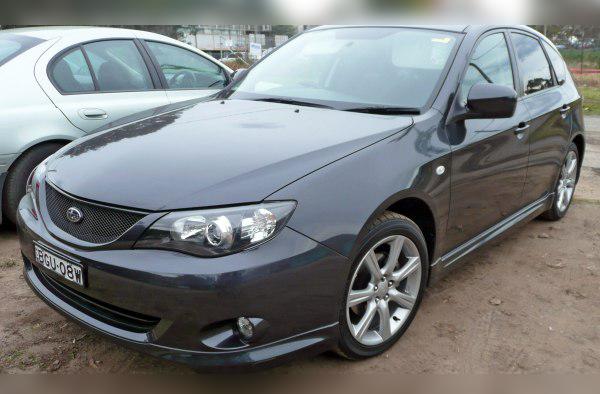
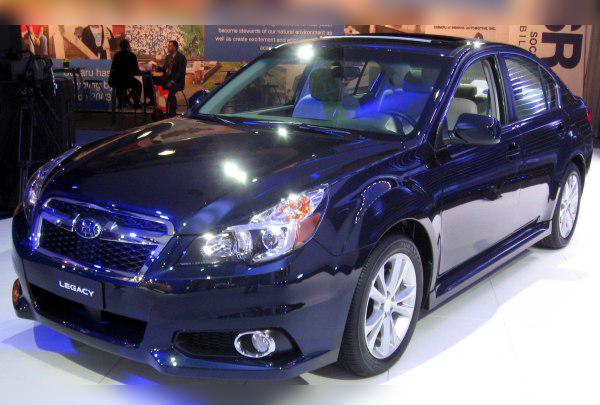
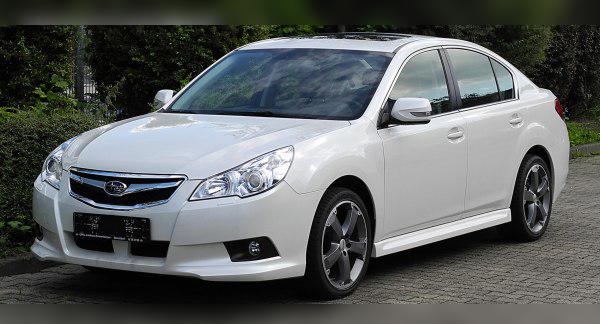
The Subaru EJ20 in its Naturally Aspirated version with 110 kW (150 HP) is a true old-school example of Japanese engineering. This petrol engine is designed as a “boxer” (cylinders are mounted horizontally, opposite each other). Such a design allows for an extremely low center of gravity, which directly translates into outstanding cornering stability. It was fitted to icons such as the Subaru Impreza III, as well as to larger models like the Subaru Legacy V.
While brand enthusiasts love its characteristic sound and smooth operation, the average driver must be aware that the boxer architecture brings specific maintenance challenges. Combined with the famous Subaru Symmetrical AWD system, this engine offers incredible traction in snow and rain, but with certain compromises in terms of fuel consumption and agility.
Technical specifications
| Specification | Data |
|---|---|
| Displacement | 1994 cc |
| Power output | 110 kW (150 HP) at 6400 rpm |
| Torque | 172 Nm at 3200 rpm |
| Architecture | Boxer (H4 - 4 cylinders), DOHC |
| Aspiration | Naturally aspirated (No turbo) |
| Injection system | Multi-point indirect injection (MPI) |
| Fuel type | Petrol |
Reliability, maintenance and failures
Does this engine have a timing belt or a chain?
The EJ20 engine uses a timing belt. This is extremely important because the engine is of the so-called “interference” type – if the belt snaps, the valves will definitely hit the pistons, resulting in complete engine failure. The major service is more expensive than on typical inline engines because the belt runs over four camshafts (on DOHC versions) and requires high-quality tensioners and idler pulleys.
At what mileage is the major service done?
The recommended interval for the major service (replacement of the timing belt, idlers, tensioners and water pump) is usually at 100,000 to 105,000 km or every 7 years (whichever comes first). For safety, it’s recommended to shorten this to 90,000 km, especially if the car is driven mostly in the city.
What are the most common issues with this engine?
Although mechanically robust, the EJ20 has several very well-known and specific weak points:
- Head gasket: This is the “Achilles’ heel” of EJ engines. Due to the horizontal engine layout, coolant and oil constantly rest against the gaskets, even when the engine is off. Over time, the material gives way. Symptoms include: mixing of oil and coolant (sludge on the cap), engine overheating, coolant loss without visible leaks, or bubbles appearing in the expansion tank. Replacement is very expensive (market-dependent) because it usually requires removing the entire engine from the bay.
- Oil leaks from valve covers: Similar to the head gasket, oil runs down onto the valve covers. If the seals (valve cover gaskets) fail, oil drips directly onto the exhaust manifold, which results in a sharp burning smell in the cabin.
- “Piston slap” (piston knocking): Many owners notice a metallic knocking noise when the engine is cold. This happens due to the shorter piston skirts which have a slight play in the cylinder until they warm up and expand. If the noise disappears after a few minutes of running, it’s considered more of a characteristic than a critical fault, but if it remains when the engine is hot – the crankshaft or bearings are likely on their way out.
Oil: Capacity, grade and consumption
The EJ20 takes about 4.0 to 4.2 liters of oil. The recommended grade depends on the climate, but 5W-30 or 5W-40 synthetic is most commonly used. Does it consume oil? Yes. For older-generation boxer engines, consumption of around 0.5 to 1 liter per 10,000 km is considered completely normal. However, if the engine uses more than that, the piston rings are probably stuck or the valve stem seals are worn.
At what mileage should the spark plugs be replaced?
Standard spark plugs are replaced at around 30,000 km, but it’s strongly recommended to install iridium spark plugs, which last from 60,000 to 100,000 km. Why? Because replacing spark plugs on a boxer engine is a nightmare for mechanics. Due to the proximity of the chassis rails, there is almost no room for tools. Often the air filter box and battery have to be removed, and sometimes the engine has to be unbolted from its mounts and tilted slightly to access the plugs. Labor will cost more than the parts themselves.
Specific components and fuel injection
What kind of injection system does it have?
The engine uses multi-point indirect injection (MPI - Multi-Point Injection). This is great news. There are no issues with carbon buildup on the valves as with modern direct-injection engines. Petrol injectors are very reliable and rarely fail, and even when they do, a used or new injector is not expensive (market-dependent) and can easily be cleaned in an ultrasonic bath.
Does it have a turbocharger, DPF or EGR?
No, this is a naturally aspirated engine, which means it does not have a turbocharger. This reduces maintenance costs. Also, since it’s a petrol engine, it does not have a DPF filter or an AdBlue system. The engine does have an EGR valve (exhaust gas recirculation system), which can get dirty after about 150,000 km, causing slight jerking at low revs, but usually a simple cleaning is enough.
Fuel consumption, performance and driving feel
What is the real-world fuel consumption?
If you’re expecting great fuel economy, this is not the engine for you. The permanent Symmetrical AWD adds weight and mechanical drag. Real-world consumption in pure city driving rarely drops below 11 to 13 l/100 km, especially in heavier models with an automatic transmission. On open roads, it can go down to 7.5 to 8.5 l/100 km.
Is the engine “lazy”?
Yes, especially in the Subaru Legacy V. It has 150 HP, but only 172 Nm of torque, which comes in at mid-range revs. Combined with AWD and an unladen weight of over 1.4 tons, the engine needs high revs to deliver strong acceleration. The feel in the Impreza III is somewhat better due to the lower weight, but this is absolutely not an engine for sporty performance.
Behavior on the highway
Due to its naturally aspirated nature and gearbox ratios, at 130 km/h the engine spins at between 3,200 and 3,500 rpm (depending on the type of transmission). At those revs, cabin noise becomes noticeable and fuel consumption exceeds 9 l/100 km. This car is much more pleasant for cruising on country roads and driving in snowy and mountainous areas than for high-speed highway runs.
LPG and remapping
Is this engine suitable for LPG conversion?
The engine has indirect injection, which means that installing an LPG system is straightforward and not expensive. However, this is where the biggest trap lies! The EJ20 engine does not have hydraulic valve lifters. When running on LPG, combustion temperatures are higher, which leads to faster wear of the valve seats. Because of this, valve clearance must be checked and adjusted every 40,000 to 60,000 km.
The problem is that on these DOHC engines, valve clearance is adjusted using so-called “buckets” (shims). To replace the buckets, the timing belt has to be removed and the camshafts taken out. On most models, this means pulling the entire engine out of the car. The cost of this service is very high (market-dependent) and often cancels out all the savings you made by running on LPG. If you’re buying a car that already has LPG installed, make sure to ask for proof of when the valves were last adjusted.
Can it be remapped (“Stage 1”)?
Short answer: Don’t waste your money. Since this is a naturally aspirated engine, changing the software (remapping) will give you at most 5 to 8 HP, which in practice is completely unnoticeable. A slightly sharper throttle response is all you’ll get.
Transmissions, drivetrain and dual-mass flywheel
Types of transmissions and common issues
Several transmission options were paired with the EJ20 (150 HP), depending on the generation and model:
- 5-speed manual gearbox: Very reliable, the mechanicals are virtually indestructible as long as there is oil inside. The most sensitive point is the center differential (viscous coupling). If the driver fits tires of different sizes, different brands, or even if the tread on the front tires is significantly more worn than on the rear, the viscous coupling will overheat and lock up. Repair is expensive (market-dependent).
- 4-speed automatic (older models): Old-fashioned, slow, “steals” power from the engine and increases fuel consumption, but is incredibly reliable if the oil is changed on time.
- Lineartronic CVT (newer models, Legacy V): The continuously variable transmission offers smooth, jerk-free driving, but is more expensive to maintain. The most common issues include problems with the valve body and solenoids. Symptoms are jerking when setting off or the AT Oil Temp warning light coming on.
Dual-mass flywheel and clutch
Yes, versions with a manual gearbox do have a dual-mass flywheel. Subaru fitted it to soften torque shocks on the complex AWD system. When the flywheel wears out, you’ll hear knocking at idle, and when setting off you’ll feel strong vibrations through the clutch pedal and throughout the cabin. A clutch kit with a dual-mass flywheel for a Subaru is very expensive (market-dependent) and significantly more costly than the same part for similarly sized European cars.
Transmission service
On CVT and conventional automatic transmissions, the oil and filter must be changed every 60,000 km. Oil in the manual gearbox and differentials should be changed every 50,000 to 60,000 km.
Buying used and final verdict
What must be checked before buying?
- Cold start: Insist that the engine be completely cold when you come to see the car. Listen for sharp metallic knocking (“piston slap”).
- Cooling system: Remove the cap of the expansion tank and radiator (while the engine is COLD). Look for traces of oil, “mayonnaise” (emulsion) or the smell of exhaust gases in the coolant. Warm the car up to operating temperature and see whether the hoses become rock hard or if it pushes coolant out (a symptom of a failed head gasket).
- Inspection from underneath: The car must go on a lift. Look at the valve covers on the left and right sides of the engine (just above the exhaust manifold). If they are oily, you’re looking at engine removal for proper resealing.
- Tyres: Check all four tyres. They must be the same brand, same model and with evenly worn tread. If not, the all-wheel-drive system has probably already been subjected to serious stress.
Who is this car for?
The Subaru EJ20 (150 HP) naturally aspirated petrol is not a car for drivers who want to race from traffic light to traffic light or enjoy cheap city driving. This is an engine for people who often go to the mountains in winter, live in areas with poor weather conditions, or simply appreciate the outstanding stability offered by Subaru’s AWD system.
If you find a well-maintained example with a proper service history (where the major service and head gasket replacement have already been done correctly), it will serve you for years with excellent safety. However, you must be prepared for higher fuel consumption and more expensive bills at specialized mechanics when the time comes for regular maintenance of this boxer.