Subaru EJ201 Engine (125 HP): Experiences, Problems, Fuel Consumption and Used Car Buying Tips
- Drivetrain and architecture: The famous boxer engine with a low center of gravity combined with symmetrical all-wheel drive (AWD).
- Reliability: Naturally aspirated engine without a turbo, very durable, but requires strict adherence to service intervals.
- Biggest drawbacks: Oil leaks from the valve cover gaskets and a sensitive head gasket.
- Fuel consumption: Quite high due to permanent 4x4 drive and outdated gearboxes.
- LPG (Autogas): Handles LPG very well, but valve clearance inspection and adjustment is mandatory and more difficult due to the engine design.
- Maintenance: Spark plug replacement and major service require an experienced mechanic due to the cramped space under the hood.
Contents
- Introduction and basic information
- Technical specifications
- Reliability and maintenance
- Specific parts and costs
- Fuel consumption and performance
- Additional options and modifications
- Gearbox and power transfer
- Buying used and conclusion
Introduction and basic information
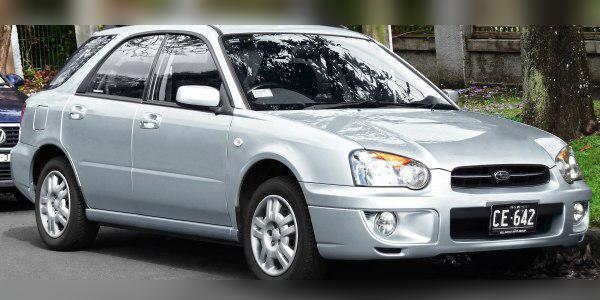
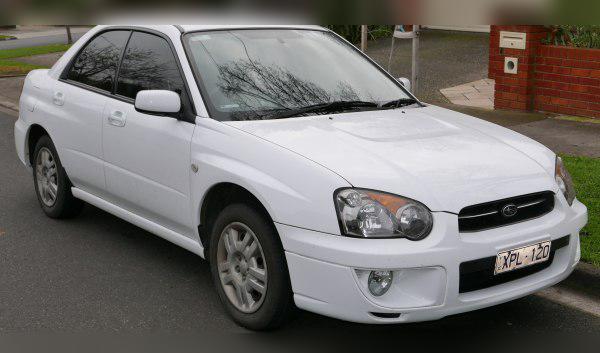
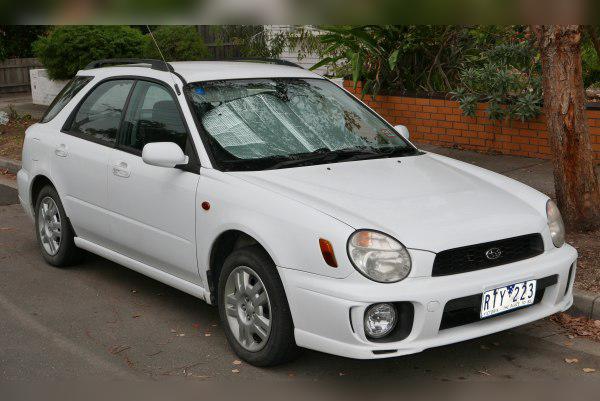
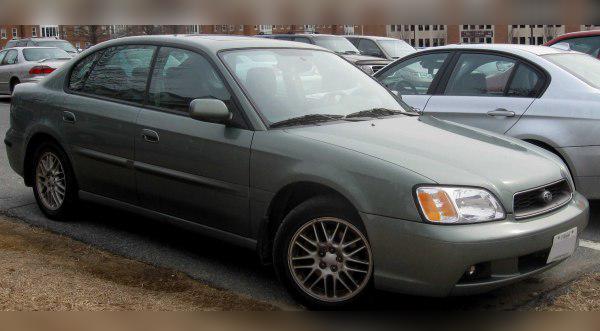
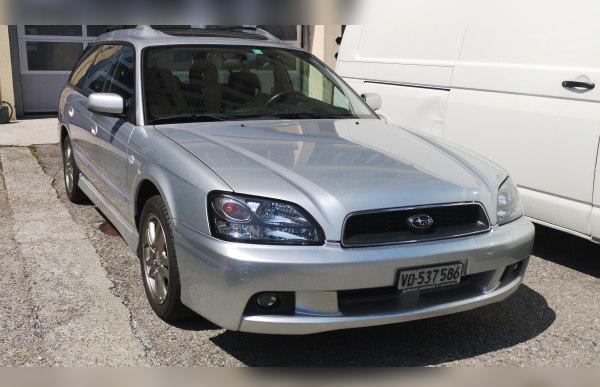
Subaru’s engine designated EJ201 is one of the most recognizable power units of this Japanese manufacturer. It is a 2.0-liter gasoline boxer engine with a single camshaft per cylinder head (SOHC) that produces 125 HP. Its horizontally opposed layout enables an extremely low center of gravity, which directly affects the vehicle’s stability and handling. It was primarily installed in Subaru Impreza II models (including Station Wagon versions) and Subaru Legacy III, mostly around and after the facelift in the early 2000s. Although it does not offer the sporty performance Subaru is known for in the WRX and STI series, the EJ201 was conceived as a workhorse for everyday use, paired with the legendary Symmetrical AWD system.
Technical specifications
| Parameter | Specification |
|---|---|
| Engine displacement | 1994 cc |
| Power | 92 kW (125 HP) |
| Torque | 184 Nm |
| Engine code | EJ201 |
| Injection type | Multi-point injection (MPI) |
| Induction | Naturally aspirated |
| Construction | Boxer (H4), SOHC, 16 valves |
Reliability and maintenance
This engine uses a timing belt for the valvetrain. The major service, which includes replacement of the belt, tensioner, idler pulleys and water pump, must be done every 100,000 km or every 5 to 7 years, whichever comes first. A snapped timing belt on EJ series engines leads to severe engine damage (piston-to-valve contact), so this is not an area where you should try to save money.
When it comes to failures, the boxer engine architecture dictates its weaknesses. The most common problem is oil leakage from the valve cover gaskets. A symptom the driver may notice is the smell of burning oil in the cabin, because the oil drips directly onto the hot exhaust manifold that runs under the engine. A more serious, although less frequent issue on SOHC versions compared to DOHC, is failure of the head gasket. Due to the horizontal position, fluids constantly sit on the gaskets. If you notice engine overheating (gauge reading over 90–100 °C), coolant loss without visible leaks, or white emulsion (“mayonnaise”) on the oil filler cap, these are clear signs that the head gasket has failed.
Another peculiarity is the so‑called "piston slap" (piston knocking). On a cold start, the engine can sound like a diesel. This occurs due to slight wear of the piston skirt, but if the knocking disappears once the engine reaches operating temperature, it is considered a cosmetic flaw that does not prevent these engines from covering hundreds of thousands of kilometers.
The engine takes about 4 to 4.5 liters of engine oil. The most commonly recommended grade is 5W-30 for normal conditions, while engines with higher mileage in warmer climates often use 10W-40. Oil consumption is present and normal for boxer engines. Topping up between 0.5 and 1 liter per 5,000 km is generally considered acceptable in practice, while Subaru tolerates even more, but any consumption higher than that points to worn piston rings or valve stem seals.
As a gasoline engine, the EJ201 requires regular spark plug replacement at around 60,000 km. However, due to the boxer layout, the plugs are squeezed between the engine block and the chassis rails. Replacement is quite a tedious job for the inexperienced, so mechanics often charge more labor hours for this service.
Specific parts and costs
Unlike modern diesels, the EJ201 is a simple naturally aspirated gasoline engine. There is no turbocharger, so there is no risk of expensive turbo overhauls. The fuel system is classic MPI (port injection into the intake manifold). The injectors are extremely robust and rarely cause problems. If clogging occurs due to poor fuel quality, symptoms include rough idle and jerking while driving, but this is usually resolved with ultrasonic cleaning, which is not expensive (depends on the market).
Since this is an older-generation gasoline engine, it does not have a DPF filter, nor does it use AdBlue fluid. An EGR valve is present on some versions to meet Euro 3/Euro 4 standards, but on this gasoline engine it very rarely clogs compared to diesels and does not represent a chronic issue.
Fuel consumption and performance
The weakest point of the EJ201 engine is its balance of performance and fuel consumption. Real-world city consumption rarely drops below 11 to 13 l/100 km, and with an automatic gearbox it can be even higher. The cause lies in the permanent Symmetrical AWD system, which adds weight and creates significant mechanical drag.
On the road, this engine is rather "lazy" for the Subaru Legacy body, and even for the Impreza wagon. With 184 Nm of torque available only at higher revs, the engine has to be revved high to pull properly. Overtaking requires planning and a lower gear.
On the highway, aerodynamics and short gear ratios become apparent. At a cruising speed of 130 km/h, the engine spins at a relatively high 3500 to 3800 rpm (depending on the gearbox). This results in increased cabin noise and fuel consumption between 8 and 9.5 l/100 km on open roads.
Additional options and modifications
Is the EJ201 suitable for LPG (autogas) conversion? The answer is yes, but with one major warning. LPG generates higher temperatures in the combustion chamber, which over time leads to valve seat recession. For this reason, regular valve clearance inspection and adjustment every 50,000 km is mandatory. Since this is a boxer engine, access to the valves is very difficult, and labor costs can be considerable.
As for software tuning (“chipping”), Stage 1 remapping on a naturally aspirated gasoline engine of this displacement is a waste of money. Without a turbocharger to push in more air, changes to ignition and fueling maps can yield barely 5 to at most 8 HP, which the driver will not really feel in practice.
Gearbox and power transfer
Two types of gearboxes were supplied with the EJ201: a classic 5-speed manual and an old 4-speed automatic gearbox (E-4AT).
The manual gearboxes are mechanically extremely robust. What can fail on them, related to the drivetrain, is the viscous coupling (center differential). If, when you turn the steering wheel fully at low speeds (e.g. parking), you feel the car resisting, hopping, shuddering or you hear scraping, it is a sign that the viscous coupling has locked up. Repair is usually quite expensive (depends on the market).
Does this model have a dual-mass flywheel? Most versions with the EJ201 engine have a solid (single-mass) flywheel, but some late-production series or specific market versions received a dual-mass flywheel to reduce AWD system vibrations. It cannot be determined 100% without the engine code and vehicle VIN, so a physical inspection is mandatory. If the flywheel is solid, the cost of replacing the clutch kit (disc, pressure plate, release bearing) is not excessively high, but labor is more expensive because the differential, exhaust and driveshaft have to be removed. Overall repair cost is medium to high (depends on the market).
The 4-speed automatic gearbox is technically outdated and extremely slow in shifting, but virtually indestructible if maintained properly. The most common automatic transmission failures occur due to neglecting oil changes, which leads to solenoid failure in the valve body. Maintenance intervals: Oil changes in the manual gearbox and differentials, as well as in the automatic gearbox, are recommended every 50,000 to 60,000 km.
Buying used and conclusion
Before buying a car with the EJ201 engine, the most important things to do are:
- Cold start check: Listen to the engine. If you hear pronounced knocking that sounds like metal hammering on metal and it does not stop after a few minutes, avoid that car.
- Inspection on a lift: Be sure to look at the engine from below. Are the exhaust manifolds oily from leaks at the valve covers? Is there oil leaking from the junction between the engine and gearbox (crankshaft rear main seal)?
- Cooling system inspection: Check the coolant reservoir for traces of oil or bubbles while the engine is running, to rule out a head gasket problem.
- Test drive: Turn the steering wheel fully to the left and right and drive in a circle at low speed to test the condition of the center differential.
Conclusion: Who is the Subaru with the EJ201 engine intended for? This is an ideal car for people who live in hilly or mountainous areas, where snow and mud are everyday conditions and absolute AWD security is needed. It is not intended for city drag racing from traffic light to traffic light, nor for drivers whose top priority is low fuel consumption. If you accept its maintenance specifics and somewhat higher fuel bills, this mechanical “rock” of an engine will faithfully serve you for hundreds of thousands of kilometers.