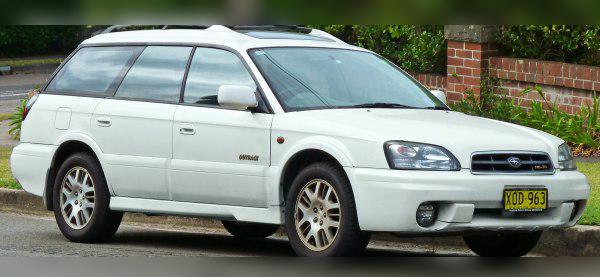
Subaru EJ25 Engine (156 hp): Ownership Experiences, Common Issues, Fuel Consumption and Used-Buying Tips
When someone mentions Subaru, the first association is the symmetrical all-wheel drive (AWD) system and the distinctive sound of the boxer engine. The unit designated EJ25 (naturally aspirated 2.5-liter version with 156 hp) was the core of the lineup for Legacy and Outback models in the late nineties and early 2000s. This engine is engineering-wise fascinating because of its low center of gravity, which contributes to outstanding vehicle stability, but it also comes with specific weaknesses every potential owner needs to know about.
Key points in short (TL;DR)
- Low center of gravity and smooth operation: The boxer layout provides excellent stability and minimal vibrations.
- Head gasket: This is the most well-known and most expensive weakness of early-generation EJ25 engines.
- Fuel consumption: High. In the city it rarely drops below 12–14 l/100 km due to the permanent 4x4 system.
- Service accessibility: Replacing spark plugs and working on the cylinder heads requires patience due to the lack of space in the engine bay.
- LPG (Autogas): It handles gas well, but requires regular valve clearance adjustment, which is labor-intensive.
- Drivetrain and gearbox: The automatic gearbox is sluggish but nearly indestructible, while the all-wheel drive system is among the best in the world.
Contents
- Technical Specifications
- Reliability and Maintenance
- Specific Parts and Costs
- Fuel Consumption and Performance
- Additional Options and Modifications
- Gearbox and Drivetrain
- Buying Used and Conclusion
Technical Specifications
| Feature | Data |
|---|---|
| Engine displacement | 2457 cc |
| Power | 115 kW (156 hp) |
| Torque | 223 Nm |
| Engine codes | EJ25 (EJ251, EJ252, depending on market and model year) |
| Configuration | Boxer (Flat-4), 4 cylinders |
| Injection type | Multi-point injection (MPI) |
| Aspiration | Naturally aspirated |
Reliability and Maintenance
Timing belt or chain?
This generation of the Subaru EJ25 uses a timing belt for the valve train. The system is quite long, as it has to connect the crankshaft with the camshafts on both sides of the boxer engine. The major service is usually done every 100,000 kilometers or every 5 to 7 years. During the major service, it is mandatory to replace all idler pulleys, the tensioner and the water pump, because failure of any of these components can cause the belt to jump teeth and lead to serious damage to valves and pistons.
Most common failures
Without a doubt, the biggest “Achilles’ heel” of this engine is the head gasket. Due to the specific block design and coolant flow layout, the factory gaskets tended to fail between 100,000 and 150,000 km. Symptoms include: rising temperature (overheating), bubbles in the coolant overflow tank, external oil leaks or mixing of oil and coolant (creating a milky “coffee with milk” emulsion). The solution is to install multi-layer steel (MLS) head gaskets, after which the engine becomes significantly more reliable.
Another common issue is the so-called piston slap (piston knocking when the engine is cold). Because of the shorter piston skirt, until the engine warms up and the material expands, you can hear a specific dull knocking noise. Although it sounds alarming, most of these engines cover hundreds of thousands of kilometers with this noise without any drastic impact on compression.
Engine oil
This engine takes about 4.2 to 4.5 liters of oil (depending on filter and sump capacity). The recommended viscosity for most climates is 5W-30, or 10W-40 if the engine has higher mileage and shows signs of oil consumption. Yes, this engine does consume oil between services. The boxer layout inherently leaves a bit of oil in the cylinders after shutdown, and consumption of around 0.3 to 0.5 liters per 1,000 km is considered acceptable for older examples. Because of this, regular dipstick checks are mandatory! Driving a boxer engine with low oil level is a guaranteed way to destroy the crankshaft rod bearings.
Spark plugs
For petrol versions, spark plugs are typically replaced every 60,000 kilometers (for standard plugs), while iridium plugs can last up to 100,000 km. The problem with Subaru engines is not the price of the plugs themselves, but their replacement. Due to the horizontal cylinder layout, the plugs sit very close to the side frame rails (strut towers). The mechanic has to remove the air filter box on one side and the washer fluid reservoir/battery on the other, and a specific set of swivel socket tools is required.
Specific Parts and Costs
Dual mass flywheel
Manual transmission versions from later production years of this model (and certain markets) came equipped with a dual mass flywheel (DMF). Replacement is expensive (varies by market), which is why many owners, when it’s time to replace the clutch, convert to a classic solid (single-mass) flywheel from older generations. This does not drastically affect driving comfort but permanently solves the problem.
Fuel injection system, Turbo, DPF and EGR
This is a naturally aspirated petrol engine with a conventional Multi-Point Injection (MPI) system. The injectors are extremely reliable and rarely cause problems. The system is not direct injection, which means the engine does not suffer from carbon buildup on the intake valves.
Since this is a naturally aspirated petrol engine: There is no turbocharger, no DPF filter, and no AdBlue system! This is great news for long-term maintenance. It does have an EGR valve, which can accumulate deposits and cause rough idle, but this is solved with simple and inexpensive cleaning.
Fuel Consumption and Performance
City and highway driving
To be completely honest – the EJ25 likes to drink. The permanent (symmetrical) all-wheel drive adds weight and mechanical drag, so real-world city consumption is around 12 to 14 l/100 km. With the A/C on and in heavy traffic, expect even 15 liters. On open roads and highways, consumption can drop to around 8 to 9 l/100 km.
Performance: Is it “lazy”?
With 156 hp and 223 Nm of torque, in the heavy Legacy and especially Outback bodies, this engine is no racer. Throttle response is linear, but the engine feels a bit lazy at low revs, especially when paired with the old 4-speed automatic gearbox. However, once it goes past 3,500 rpm, it shows decent agility. On the motorway, at 130 km/h, manual versions cruise at around 3,200–3,400 rpm, which creates a mild but noticeable noise in the cabin. Thanks to the symmetrical AWD, high-speed stability on the motorway is impeccable.
Additional Options and Modifications
LPG (Autogas) conversion
Because of the high fuel consumption, LPG (Autogas) systems are extremely popular on this engine. The good news is that the MPI injection system works very well with LPG and installation of a standard sequential system is not expensive. The bad news is valve sensitivity. Running on LPG raises combustion chamber temperatures, which over time leads to valve seat recession.
Therefore, on this engine it is essential to regularly check and adjust valve clearances (recommended every 40,000–50,000 km if you drive on LPG). Since on some DOHC head variants (twin cam) the clearances are adjusted with shims, and the space under the bonnet is tight, valve adjustment often requires removing the engine from the car, which is very labor-intensive and costly.
ECU remap (Stage 1)
Is it worth remapping this engine? In short: No. On old-school naturally aspirated petrol engines, a “Stage 1” remap brings almost nothing. You might gain at most 5 to 8 horsepower, which you will not feel in real driving. Saving that money for quality oil and a proper major service is a much smarter investment.
Gearbox and Drivetrain
Manual and automatic gearboxes
With this engine there were two main options:
- Manual gearbox (5-speed): Very robust, but over the years the shift linkage mechanism can become sloppy, making gear engagement harder. A sensitive part of the drivetrain is the center differential (viscous coupling). If the previous owner did not use identical tires on all wheels or did not rotate them regularly, the difference in tire circumference can overheat and destroy the viscous coupling. Symptom: the car hops, jerks and crunches when you turn the steering wheel to full lock in a parking lot.
- Automatic gearbox (4EAT – 4-speed): This gearbox is an engineering dinosaur; it is fairly slow when shifting and robs a good portion of engine power, which increases fuel consumption. However, in terms of reliability, the 4EAT is among the most durable gearboxes ever made. With regular oil changes, it is practically indestructible.
Gearbox servicing
Whether it is a manual or an automatic gearbox, the recommended oil change interval is 60,000 kilometers. On manuals you must also change the oil in the rear differential, while on automatics the corresponding transmission hydraulic filter is replaced as well.
Buying Used and Conclusion
What to check before buying?
- Cooling system and head gasket: After the test drive, open the bonnet. Check the coolant overflow tank (look for bubbles and excess pressure). Look from underneath the engine to see if the cylinder heads are oily and whether coolant/oil is dripping.
- Cold start: The engine must be started completely cold. Listen for strong knocking in the first few minutes (more serious piston slap or crankshaft issues).
- Drivetrain when turning: In an empty parking lot, turn the steering wheel fully to one side and then the other and drive full circles at low speed. If you feel jerking or hopping of the whole car, the center differential (viscous coupling) is probably due for replacement.
Conclusion: Who is this engine for?
The 156 hp Subaru EJ25 is not an engine for someone who wants to save on fuel or who is looking for sports-car acceleration at the traffic lights. This is a car (and engine) built for people who live in hilly or mountainous areas, winter driving enthusiasts, skiers or weekend adventurers who need flawless traction and appreciate old-school robustness. If you find an example where the head gasket issue has already been properly fixed, you will get a loyal companion that will pull you out of any snow or mud, provided you forgive it for the frequent visits to the fuel station.