Subaru EN07 Engine (64 hp): Experiences, Problems, Fuel Consumption and Used-Buying Tips
Key points in short (TL;DR)
- Rare gem: A true small four-cylinder engine with a displacement under 0.7 liters, created to meet strict Japanese Kei car regulations.
- Reliability: The mechanical side is extremely durable, but the engine is sensitive to overheating and irregular coolant changes.
- Maintenance: Uses a timing belt, and due to the small oil sump it requires strict monitoring of oil level.
- Costs: No dual-mass flywheel, DPF or complex turbo systems, so potential failures are relatively cheap to repair.
- Purpose: Brilliant in the city and for light delivery work, but it struggles badly on the highway and runs at extremely high revs.
- Parts availability: Although parts are affordable, you often have to wait for imports because the model is not widely present outside the Asian market.
Contents
- Introduction: Meet the Subaru EN07
- Technical specifications
- Reliability, failures and maintenance
- Specific parts and costs
- Fuel consumption and performance
- LPG and chip tuning
- Gearbox and power transfer
- Buying used and conclusion
Introduction: Meet the Subaru EN07
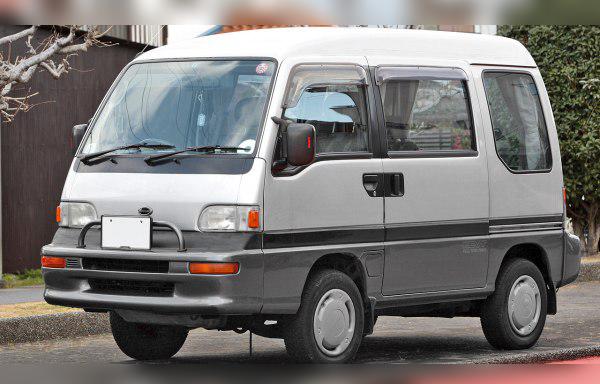
The Subaru EN07 is a true piece of engineering miniaturization. While most manufacturers use three-cylinder engines for displacements under one liter, Subaru developed a proper small four-cylinder unit with a displacement of just 658 cc (0.66 liters). This engine was developed to comply with strict Japanese regulations for Kei vehicles (micro cars). In our market it is most commonly found in the Subaru Domingo I (micro van), but also in models such as the Vivio or Sambar.
As an experienced mechanic, I have to point out one technical curiosity: extracting 64 hp from only 0.66 liters in naturally aspirated form (without a turbo) is an extremely high specific output. Although this power often came paired with a supercharger on some versions, we will focus on the naturally aspirated variant you mentioned. Due to its small displacement, this engine loves high revs, which directly dictates its service life and maintenance requirements.
Technical specifications
| Parameter | Value |
|---|---|
| Displacement | 658 cc (0.66 L) |
| Power | 47 kW (64 hp) |
| Torque | Around 85 Nm (figures vary) |
| Engine code | EN07 |
| Injection type | Electronic (MPI) |
| Turbo/Naturally aspirated | Naturally aspirated |
Reliability, failures and maintenance
Does this engine have a timing belt or chain?
The Subaru EN07 uses a timing belt for the valve train. This system is reliable and very quiet, but it requires strict adherence to replacement intervals. Due to the limited space in the engine bay (especially in the Domingo, where the engine is often mounted at the rear or at an angle), access can be difficult.
Major service and the most common failures
The major service is done every 80,000 to 100,000 km or every 5 to 6 years (whichever comes first). At that time the timing belt, tensioners, idler pulleys and water pump are replaced.
When it comes to the most common failures, the engine is generally mechanically robust, but it suffers from a few “childhood diseases”:
- Engine overheating: This is enemy number one. The cooling system has a small capacity. If the thermostat fails or the radiator clogs up, the head gasket will quickly blow. Symptoms include loss of coolant, white smoke from the exhaust and “mayonnaise” on the oil filler cap.
- Oil leaks: Due to age, the crankshaft and camshaft seals, as well as the valve cover gasket, start to leak oil. Oil loss on an engine that already has a small sump capacity is extremely dangerous.
- Distributor (on older versions): It can collect moisture or the rotor can wear out, causing jerking and hard starting.
Lubrication system and oil consumption
The sump of this small engine holds only about 2.5 to 3.0 liters of oil. High-quality oil of grade 10W-30 or 5W-30 is recommended, depending on climate conditions. Oil must be changed every 8,000 to a maximum of 10,000 km. Does it burn oil? A healthy engine should not consume more than 0.3 to 0.5 liters per 1,000 km. If consumption exceeds this limit, the usual culprits are valve stem seals hardened by heat or worn piston rings due to frequent high-rev driving.
Spark plugs and ignition
Since it is a petrol engine, standard spark plugs are replaced every 30,000 to 40,000 km. If you install higher-quality iridium plugs, the interval can be extended to 60,000 km. Bad spark plugs drastically increase fuel consumption on an engine with such a small torque figure.
Specific parts and costs
Dual-mass flywheel and clutch
Good news for your wallet – this engine does not have a dual-mass flywheel. It uses a conventional (solid) flywheel and a classic clutch kit (disc, pressure plate and release bearing). Clutch replacement is not expensive (depends on the market), but labor can be costly due to the complicated access to the gearbox on van models.
Fuel injection system and emissions equipment
The injection system is electronic (Multi-Point Injection – MPI). The injectors are very durable and rarely cause problems. If they clog due to dirty fuel, they can usually be cleaned in an ultrasonic bath. The in-tank fuel pump can fail if the car is constantly driven “on reserve”.
Since this is a small naturally aspirated petrol engine, it has no turbocharger, no expensive DPF filter, and does not use AdBlue fluid. There is a simple EGR valve on newer versions, but unlike diesels, it rarely clogs with soot and is easy to clean.
Fuel consumption and performance
City driving vs. body weight
Real-world fuel consumption in city conditions ranges between 6.5 and 8.0 l/100 km. This sounds low, but keep in mind that the engine has to run at higher revs all the time to move the bodywork.
Is the engine “lazy”? In the Subaru Domingo I, which can have four-wheel drive (4WD) and carry more passengers or cargo, this engine struggles badly under load. With its 64 hp and modest torque of around 85 Nm, acceleration is slow, and every incline requires shifting down and running above 4,000 rpm. For an empty vehicle in the city it is perfectly adequate, but for hauling loads – absolutely not.
Behavior on the highway
The highway is this engine’s natural enemy. Due to the short gear ratios (tuned for city and load), at 130 km/h this engine is spinning at an incredible 5,000 to 6,000 rpm (depending on the gearbox). Cabin noise is unbearable, fuel consumption rises sharply (even over 9 l/100 km), and prolonged driving at those revs can cause oil overheating and engine wear. Its comfortable cruising zone is 80 to 90 km/h.
Additional options and modifications
LPG installation
Although it is technically possible to install a sequential LPG system, it is not recommended. The valves on this engine are small, they cannot withstand the high temperatures LPG generates, and there are no hydraulic lifters (valve clearances often require manual adjustment). If LPG is installed anyway, a valve lubrication system (so-called “drippers” – Flashlube) is mandatory. Considering that it uses little petrol in normal driving, LPG investment is hard to recoup in the long run without risking cylinder head damage.
Chip tuning (Stage 1)
Chipping this tiny naturally aspirated engine is a complete waste of money. On small naturally aspirated units, changing ECU maps (Stage 1) can give you at most 2 to 3 hp, which you will not feel in real driving. Do not try to increase power this way.
Gearbox: Manual and automatic
The EN07 engine was mostly paired with five-speed manual gearboxes, while on some markets (e.g. in the Vivio) it could also be found with an ECVT (electronically controlled continuously variable automatic transmission).
Gearbox failures and maintenance
- Manual gearbox: Very durable, but the 2nd and 3rd gear synchros fail due to “sporty” driving (frequent grinding when shifting). Oil in the manual gearbox should be changed every 60,000 km.
- ECVT automatic: Known for problems with the magnetic powder clutch, which stops engaging properly and causes jerking when setting off. Repairs on this gearbox are expensive and parts are hard to find (depending on the market). Oil and filter in the ECVT must be changed at a maximum of 40,000 km.
Buying used and conclusion
What to check before buying?
When inspecting a vehicle with the EN07 engine, take a flashlight and focus on the following:
- Cold start: If on the first morning start it emits a cloud of blue smoke that disappears after a few seconds, the valve stem seals are worn.
- Coolant: Carefully open the radiator cap (only when cold). If the coolant smells of exhaust gases or the level is low, the head gasket has probably blown.
- Engine noise: The engine should idle smoothly. If you hear metallic “rattling”, valve clearance is excessive or the crankshaft bearings are in trouble.
- Suspension and drivetrain: On 4WD versions be sure to check the prop shaft and universal joints, which are prone to wear and corrosion.
Final verdict
The Subaru EN07 with 64 hp is a fantastic engineering achievement for its time. Who is it for? It is an ideal choice for people who need a nimble, small vehicle (like the Domingo) for squeezing through narrow city streets, trips to a weekend house or light local tool deliveries. It is excellent as a second car in the household.
Who is it NOT for? If you plan long-distance highway driving, transporting heavy materials or you are looking for sporty performance, steer clear of it. Keep in mind that due to the rarity of vehicles with this engine in some parts of the world, you may wait weeks for specific parts. Buy it only if mechanics is your hobby and you have a reliable source of spare parts.