Toyota 1JZ-GE 2.5 (200 hp): Ownership impressions, issues, fuel consumption and buying used
Key points (TL;DR)
- Outstanding mechanics: This is a legendary inline-six (even though some catalogs mistakenly list it as a V6), known for its incredible durability.
- Maintenance: The engine uses a timing belt, not a chain. The major service must be done on time to prevent catastrophic failure.
- Common issues: The main enemies are oil leaks from the valve cover gasket, aging ignition coils, and oil leaks from the VVT-i pulley on newer versions.
- Fuel consumption: It’s quite “thirsty” in city driving, where it easily exceeds 13 liters per 100 km.
- Transmissions: Usually paired with indestructible Aisin automatic gearboxes. Maintenance is basically just regular fluid changes.
- LPG (Autogas): The indirect injection system makes it a perfect candidate for LPG conversion.
- Performance: Very smooth, but a bit “lazy” at low revs considering the high weight of the sedans it was fitted to.
Contents
- Introduction: Getting to know the 1JZ-GE engine
- Technical specifications
- Reliability and maintenance
- Specific parts and maintenance costs
- Fuel consumption and real-world performance
- Additional options and modifications (LPG and remapping)
- Transmission and drivetrain
- Buying used and Conclusion
Introduction: Getting to know the 1JZ-GE engine
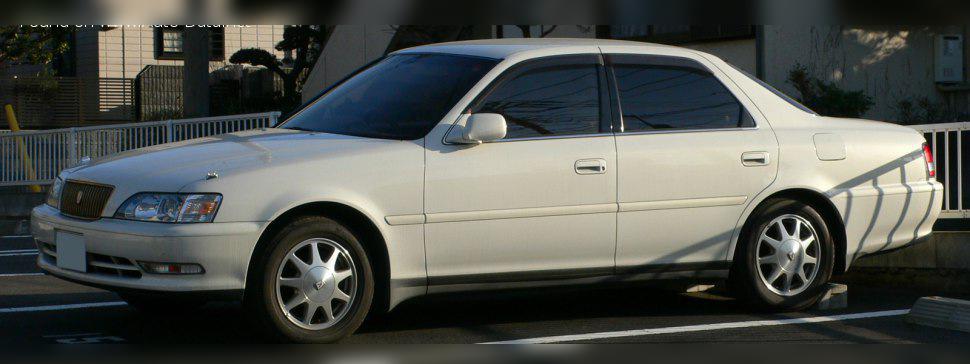
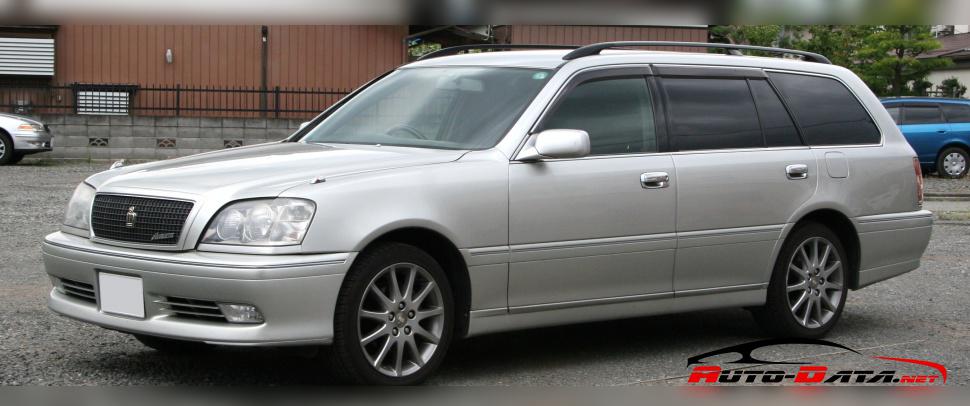
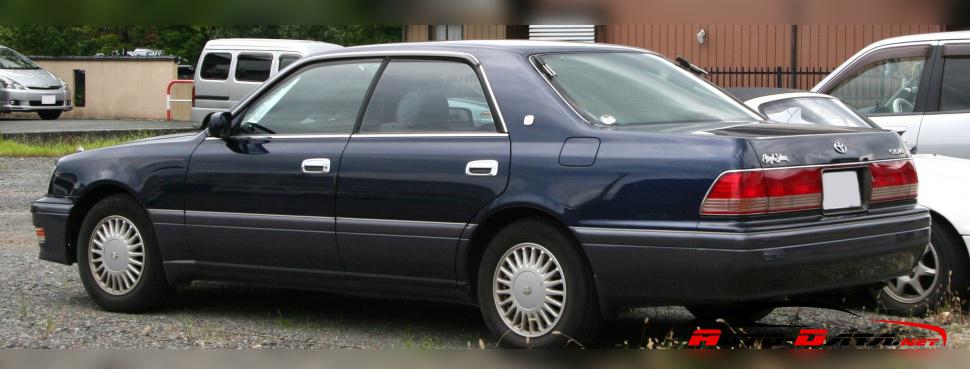
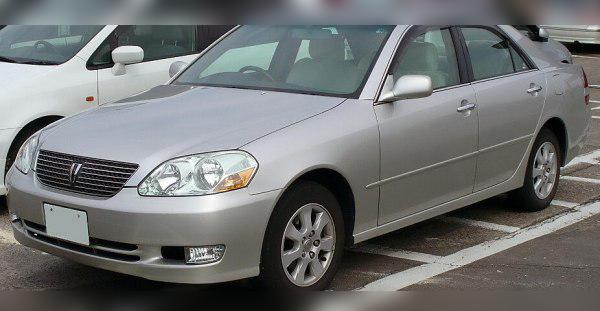
The engine designated as 1JZ-GE is one of Toyota’s most important engineering creations from the 1990s and early 2000s. Although some paperwork and catalogs confusingly list it as a V6 (as with the Cresta), it’s important to clarify right away, both as a mechanic and as an editor: this is a thoroughbred inline six-cylinder engine (R6 / I6). It was installed in large, heavy, rear-wheel-drive Japanese sedans such as the Toyota Crown, Mark II and Cresta.
The 200 hp (around 147 kW) version is equipped with the VVT-i system (variable valve timing), which allowed Toyota to smooth out the torque curve and reduce emissions to meet the regulations of the time. This is an engine built to last hundreds of thousands of kilometers, but it requires specific and regular maintenance. So let’s see what awaits you under the hood.
Technical specifications
| Parameter | Data |
|---|---|
| Engine code | 1JZ-GE (VVT-i version) |
| Displacement | 2492 cc (2.5 liters) |
| Configuration | Inline 6-cylinder (R6 / I6) |
| Power | 147 kW (200 hp) at 6000 rpm |
| Torque | 250 Nm at 4000 rpm |
| Injection type | Indirect (EFI - Multi-port) |
| Induction system | Naturally aspirated |
Reliability and maintenance
Does this engine have a timing belt or a chain?
Unlike many newer engines, the 1JZ-GE uses a timing belt to drive the camshafts. It’s very important to note that on the newer VVT-i versions of this engine (the ones rated at 200 hp), a snapped belt can lead to contact between valves and pistons (an “interference engine”). Older non-VVT-i versions were “non-interference”, where nothing would break if the belt failed.
What are the most common issues with this engine?
The crankshaft and block itself are virtually indestructible, but the peripheral components start showing their age over time. The most common problems include:
- Oil leaks from the valve cover gasket: Due to age and heat cycles, the rubber hardens and oil starts leaking directly onto the exhaust manifold (the driver smells burning oil in the cabin) or down into the spark plug wells.
- VVT-i pulley: The O-ring inside the pulley deteriorates. Symptoms are oil leakage from the front of the engine and a strange metallic noise at startup.
- Cracking of plastic ignition coil housings: This engine uses a “wasted spark” ignition system. Due to the massive heat under the hood, the coil connectors become brittle and break at the slightest touch, causing rough idle and misfires.
- Dirty idle air control valve (IACV): Causes fluctuating idle speed or stalling when coming to a stop. The fix is usually just a thorough cleaning.
At what mileage should the major service be done?
The major service, which includes replacing the timing belt, idler, tensioner and water pump, must be done every 90,000 to 100,000 km. Given the age of these vehicles, it’s recommended to respect a time interval of no more than 5 to 6 years, even if the mileage hasn’t been reached.
How many liters of oil does this engine take and which grade is recommended?
The 1JZ-GE takes about 5.1 to 5.4 liters of engine oil (with filter change). The factory-recommended grade is 5W-30, although many mechanics, on higher-mileage engines in warmer climates, recommend switching to a good quality 10W-40 synthetic or semi-synthetic oil to reduce valvetrain noise.
Does it consume oil between services?
It depends on the condition, but in general these engines are not known as heavy oil burners through the piston rings (unlike many modern TSI or TFSI engines). If the oil level is dropping, in 90% of cases it’s due to leaks from gaskets and seals (crankshaft and camshaft seals). Up to 0.3 to 0.5 liters per 1000 km is considered normal consumption, although a healthy engine will usually use significantly less.
At what mileage should the spark plugs be replaced?
If you use standard copper plugs, they should be replaced every 30,000 km. However, iridium spark plugs are strongly recommended (they were factory-fitted on VVT-i models), with an impressive service life of 90,000 to 100,000 km. When changing the plugs, the upper part of the intake manifold must be removed, which increases labor time.
Specific parts and costs
Does this engine have a dual-mass flywheel?
Most vehicles with this engine (Crown, Cresta) are equipped with an automatic transmission, which means they use a hydraulic torque converter, not a classic flywheel with a clutch disc. If you come across a rare manual gearbox (such as the factory W58), it usually uses a solid (single-mass) flywheel. Clutch replacement on manual versions ranges from 200 to 450 EUR (depending on the market).
What kind of fuel injection system does it have?
The engine features old-school indirect fuel injection (EFI - Electronic Fuel Injection). The injectors operate at low pressure in the intake manifold. They are extremely reliable and rarely fail; any issues usually come from using very poor, dirty fuel. Symptoms are hard starting and hesitation under acceleration, and in most cases an ultrasonic cleaning is all that’s needed.
Turbocharger, DPF, EGR and AdBlue
This is a naturally aspirated engine (“GE” in the code denotes a performance cylinder head with natural aspiration), so it does not have a turbocharger (unlike its 1JZ-GTE brother). That means you don’t have to worry about turbo rebuilds, intercoolers and boost leaks.
Since it’s a pure gasoline engine, it naturally doesn’t have a DPF filter or an AdBlue system. As for the EGR valve, some variants for specific markets do have it, but it doesn’t cause major issues here like on modern diesels, because gasoline exhaust gases produce far less soot. Cleaning it every 100,000 km is usually enough.
Fuel consumption and performance
What is the real fuel consumption in city driving?
Don’t expect fuel efficiency. A 2.5-liter inline-six, usually paired with a classic 4-speed or 5-speed automatic in a heavy sedan, means that real-world city consumption is between 12 and 15 liters per 100 km. Spirited driving easily pushes that towards 17 liters. On open roads it can drop to 8–9 l/100 km.
Is this engine “lazy” for the weight of the car?
Many drivers perceive it as slightly “lazy” when pulling away from a standstill. That’s because it’s a naturally aspirated engine that develops its peak torque (250 Nm) only at a relatively high 4000 rpm. Cars like the Toyota Crown weigh over 1.6 tons, so you shouldn’t expect diesel-like response from low revs. Its strength is smooth, linear acceleration from 3000 to 6000 rpm.
Behavior on the highway
This is where the 1JZ-GE really shines. It’s extremely refined and virtually free of vibrations. At a cruising speed of 130 km/h it sits at roughly 2600–3000 rpm, depending on whether the car has a four-speed or five-speed automatic gearbox. Cabin noise is minimal.
Additional options and modifications
Is this engine suitable for LPG (autogas)?
Yes, absolutely. Since it has indirect fuel injection (it draws an air–fuel mixture past the valves), this engine is an excellent candidate for a quality sequential LPG system. It’s only important to install fast gas injectors so the mixture isn’t disturbed at high revs. This drastically reduces running costs, which is highly recommended given its city fuel consumption.
How much power can you safely gain with a simple remap (Stage 1)?
The mechanic’s short answer: Don’t waste your money. The 1JZ-GE is a naturally aspirated engine. With a standard Stage 1 remap you can gain at most 10 to 12 hp and a small increase in torque. There is no turbocharger whose boost can be raised electronically, so remapping is financially pointless for everyday use.
Transmission: High-level reliability
Types of gearboxes and common failures
The most common transmissions paired with the 1JZ-GE are the well-known Aisin automatic gearboxes of the A340 series (four speeds) or newer five-speed variants. These gearboxes are absolute tanks. Failures are extremely rare, and slipping or harsh shifts occur only if the car has been driven with low or old fluid for decades.
Manual gearboxes (such as the W58) are harder to find in sedans and are more common in Mark II models; they are considered very reliable up to around 300 hp.
Transmission service interval
The automatic transmission fluid must be changed every 60,000 km. Using genuine Toyota ATF (usually Type T-IV) is recommended. The cost of changing the fluid and the filter in the transmission pan ranges from 100 to 250 EUR (depending on the market).
Buying used and Conclusion
What exactly should you check before buying?
If you’re looking at a Toyota Crown, Cresta or Mark II with this engine, here’s what you need to focus on:
- Listen to the engine on a cold start: Open the hood and listen for any rattling from the front of the engine (where the VVT-i pulley is) in the first few seconds. This indicates that the expensive pulley needs to be replaced.
- Check for oil leaks: Use a flashlight to inspect the area around the spark plugs on top of the engine cover, as well as the lower side of the engine block around the alternator.
- Exhaust smoke color: Bluish smoke at startup points to worn valve stem seals (a common issue on old 1JZ engines). This is not a cheap repair.
- Diagnostics (Transmission): Sit in the car, warm it up, hold the brake, shift into D, then into R. There should be no strong “kick” in your back.
Editor’s conclusion
Toyota 1JZ-GE is a fantastic piece of engineering for drivers who appreciate smooth operation, rock-solid reliability and the feel of classic rear-wheel-drive mechanics. It’s not meant for street racers (that’s what the GTE version is for) and it’s definitely not for those who count every drop of fuel. If you give it good oil, replace the aging rubber parts and install LPG, this is a powerplant that can easily take you well past half a million kilometers without opening the block.