Toyota 2RZ-FE 2.4 (142 hp) – Owner experiences, problems, fuel consumption and used-buying tips
Key points in short (TL;DR)
- Exceptional reliability: This is an old-school Toyota engine designed to cover hundreds of thousands of kilometers without serious failures.
- Timing chain: The engine uses a very durable timing chain, which significantly reduces regular maintenance costs.
- High fuel consumption: Since it is installed in heavy off-road and pickup vehicles, expect city consumption of up to 15 l/100 km.
- Excellent for LPG: It handles LPG well, but requires strict checking and adjustment of valve clearances.
- No expensive parts: No dual-mass flywheel, no turbo, no DPF and no direct injection. Maintenance is simple and relatively affordable.
- Sluggish on the road: The engine offers good torque for work and towing, but it’s not made for fast overtaking and high cruising speeds.
Contents
- Introduction: Old-school Japanese engineering
- Technical specifications
- Reliability, failures and maintenance
- Specific parts and costs
- Fuel consumption and performance
- Extras, LPG and remapping
- Gearbox and drivetrain
- Buying used and conclusion
Introduction: Old-school Japanese engineering
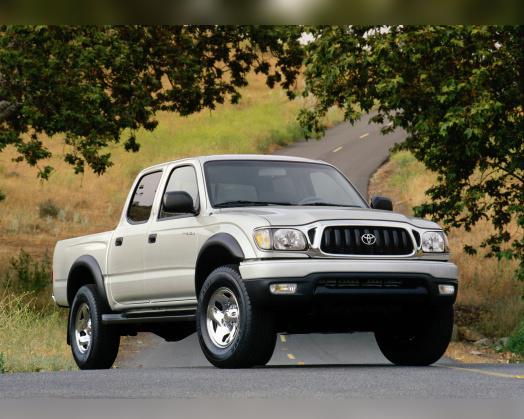
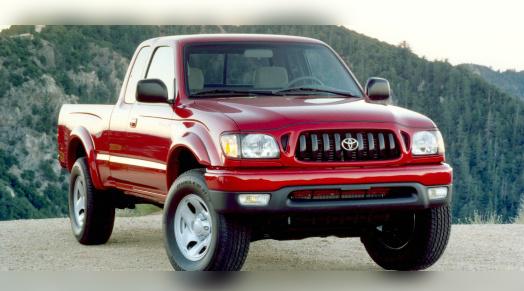
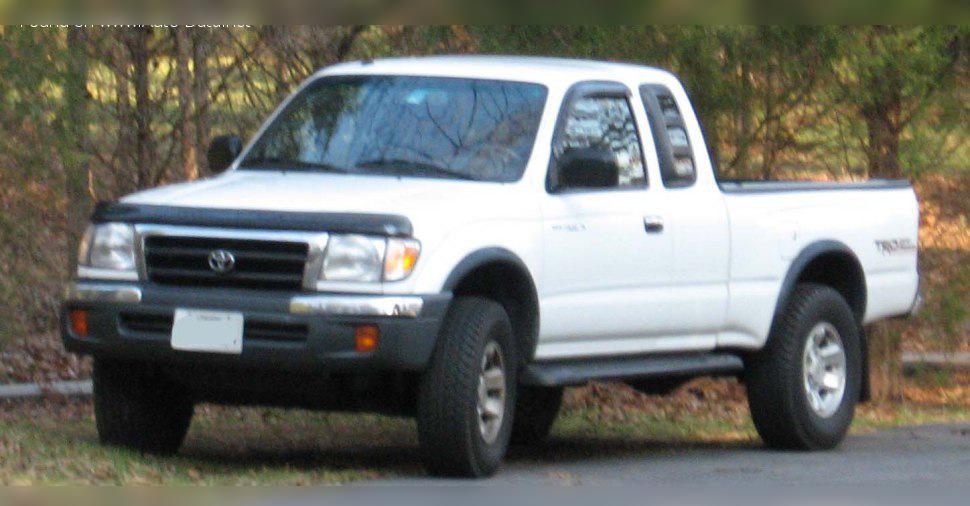
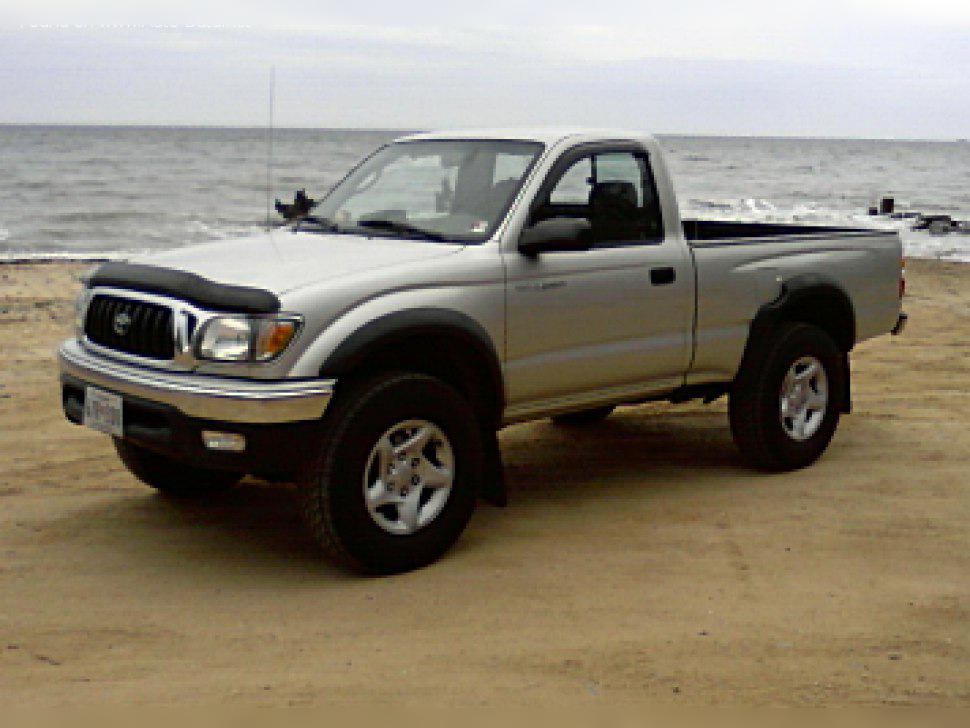
When people talk about indestructible workhorses, Toyota engines from the “RZ” family always come up. The 2RZ-FE is a 2.4‑liter naturally aspirated four‑cylinder petrol engine, designed primarily for heavy commercial vehicles and pickups. Its best‑known application is in the first generation of the Toyota Tacoma (including Double Cab, Xtracab and Single Cab versions, with RWD or 4WD).
This unit is not built to impress you with traffic light sprints, but to start every single morning at −20 °C and haul a ton of cargo to the end of the world. Thanks to its simple design, it is one of the most desirable choices for drivers who want absolute reliability without the hidden costs of modern technologies.
Technical specifications
| Specification | Data |
|---|---|
| Displacement | 2392 cc (2.4L) |
| Engine power | 106 kW (142 hp) |
| Torque | 217 Nm (at 4000 rpm) |
| Engine code | 2RZ-FE |
| Injection type | Indirect, multi‑point (Multi‑Port EFI) |
| Aspiration | Naturally aspirated |
| Camshaft drive | Chain |
Reliability, failures and maintenance
Timing chain and major service
To the delight of many owners, the 2RZ-FE uses a timing chain instead of a belt. The chain is massive, extremely high‑quality and usually lasts as long as the engine itself, often over 300,000 to 400,000 km without needing replacement. A classic “major service” in the form of a fixed‑interval timing replacement doesn’t really exist here. Still, at around 100,000 to 150,000 km it is recommended to check the chain tensioner and guides. At that mileage it is common to replace the water pump, thermostat and auxiliary (serpentine) belts that drive the alternator and power steering pump as preventive maintenance.
Most common failures and symptoms
Mechanically speaking, this is one of the most reliable engines Toyota has ever built. However, due to the age of the vehicles it was installed in, the following issues can appear:
- Cracked exhaust manifold: Because of thermal stress, the exhaust manifold on these engines tends to crack. The symptom is a characteristic ticking sound and exhaust smell in the cabin while the engine is cold. Replacement or welding is inevitable, and a used part in good condition is not always easy to find. Repair cost: not expensive (depends on market).
- Valve clearance: This engine does not have hydraulic lifters, but uses so‑called “buckets” (shims) for valve clearance adjustment. Mechanics often neglect this job. If the valves are too tight, the engine idles roughly, loses compression and valve burning may occur. Clearance should be checked every 100,000 km.
- Starter and alternator: At higher mileage the copper contacts in the starter wear out, so the car just “clicks” when you try to start it. Overhaul is simple and cheap.
Engine oil and oil consumption
The engine takes between 5.0 and 5.4 liters of oil (depending on the oil pan shape, as RWD and 4x4 versions differ slightly). The recommended grade is 5W‑30, although in warmer climates mechanics often use 10W‑30. As for oil consumption, a healthy 2RZ‑FE uses practically no oil between 10,000 km service intervals. On engines with over 300,000 km there may be slight consumption due to hardened valve stem seals (visible bluish smoke on first cold start in the morning). Consumption of up to 0.5 liters per 10,000 km at that mileage is considered completely normal.
Spark plugs
As a classic petrol engine, it requires regular spark plug replacement. Standard nickel plugs (NGK or Denso) are replaced every 40,000 km. If you opt for iridium plugs, the interval extends to around 100,000 km, which makes maintenance easier given that access to the plugs is very simple from the top of the engine.
Specific parts and costs
If you’re coming from the world of modern diesels, the 2RZ‑FE will feel like a real relief. This engine does not have a dual‑mass flywheel – it uses a classic solid flywheel that practically never fails. It also has no turbocharger, no DPF filter and no complicated AdBlue system. As a result, the risk of clogging due to city driving is virtually zero.
The fuel injection system is electronic but indirect (into the intake manifold). The injectors are extremely durable, not very sensitive to poorer fuel quality and very rarely fail. If they do get clogged, ultrasonic cleaning is a quick and fairly cheap solution. Older versions of this engine rely on a simple EVAP system, while later models may have EGR, but without serious soot build‑up issues like on diesels.
Fuel consumption and performance
On‑road behavior and load capacity
With 142 horsepower and 217 Nm of torque, the 2RZ‑FE is more of a pack mule than a racehorse. If you expect sharp acceleration, you’ll be disappointed. For a heavy body like that of the Toyota Tacoma (especially in 4x4 double‑cab form), this engine can feel somewhat “lazy”. However, maximum torque is available already in the mid‑range, which makes it excellent for towing a trailer, off‑road driving or carrying loads.
Fuel consumption and highway driving
The aerodynamics of the vehicles it’s installed in are brick‑like, and the engine itself is heavy. Because of this, real‑world city consumption is between 12 and 15 liters per 100 km. On open roads things are somewhat better, around 9 to 11 liters.
On the highway, the engine is not in its natural environment. Gearboxes are short‑geared for off‑road capability, so at a cruising speed of 130 km/h the engine spins at a fairly high 3000 to 3300 rpm (depending on differential ratio). Cabin noise is noticeable at that point, and fuel consumption rises sharply. The ideal cruising speed for this engine is between 90 and 110 km/h.
Extras, LPG and remapping
LPG conversion
Thanks to its indirect injection, the 2RZ‑FE is an excellent candidate for a sequential LPG system. Many owners choose this route to halve the huge fuel costs. However, there is one major caveat: running on LPG raises combustion chamber temperatures. Since this engine has no hydraulic lifters, it is essential to check and adjust valve clearances more frequently (recommended every 50,000 km). If you ignore this, the exhaust valves will, due to LPG operation, slowly sink into the cylinder head and eventually burn.
Remapping (Stage 1)
Can the 2RZ‑FE be remapped? Technically yes, but in practice it is completely pointless. As an older‑generation naturally aspirated engine, a Stage 1 remap yields a gain of barely 5 to 8 hp, which you absolutely won’t feel in a heavy vehicle. Save the money you planned for remapping and invest it in quality tires or regular servicing.
Gearbox and drivetrain
This engine is paired with fantastic gearboxes:
- 5‑speed manual gearbox (mostly W59 series): Considered virtually indestructible. Failures are extremely rare and usually occur only if the gearbox runs completely dry. The cost of a clutch kit replacement (since it has a classic solid flywheel) is quite reasonable – not expensive (depends on market).
- 4‑speed automatic gearbox (A340E / A340F for 4WD): This is arguably one of the most reliable automatic transmissions from the 1990s and 2000s (it was even used in the Supra). It’s not quick, shifts are fairly slow, but it’s a tank. The most common issue is harsh shifting due to wear or a complete lack of maintenance.
Gearbox maintenance is crucial. On manual gearboxes the oil should be changed every 60,000 to 80,000 km, while for the automatic it is recommended to refresh the oil and replace the filter every 60,000 km. On 4WD models, don’t forget to change the oil in the transfer case and differentials as well.
Buying used and conclusion
What to check before buying?
When looking at a used vehicle with the 2RZ‑FE engine, pay attention to the following:
- Noise at cold start: Listen to the engine during the first 5 seconds of running. Rattling can indicate a stretched chain or bad tensioners.
- Idle quality: If the engine shakes or idles unevenly, it is very likely that the valves haven’t been adjusted for years, which requires removing the valve cover.
- Oil leaks: Check the crankshaft seals and valve cover gasket. The engine should be dry.
- Bodywork condition: Even though the engine is indestructible, the chassis of the vehicles it’s installed in (such as the Tacoma) are notorious for rusting. A perfect engine is useless if the truck is breaking in half.
Who is this engine for?
The Toyota 2.4 2RZ‑FE is not an engine for prestige, performance or long highway trips. Its appeal lies in its raw mechanics, lack of complicated electronics and the ability to withstand the harshest operating conditions without complaint. If you need a dependable work vehicle, a truck for a farm, orchard, hunting or construction site, you’ll struggle to find a better petrol engine. Accept the higher fuel consumption as a tax for the fact that you will never have to replace injectors, a DPF, a dual‑mass flywheel or expensive turbos.