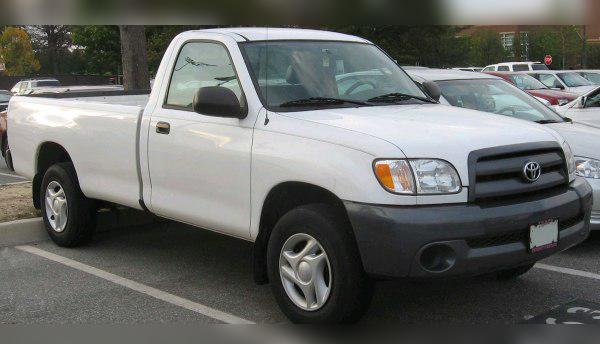
Toyota 4.7 V8 2UZ-FE engine (271 hp) – Experiences, issues, fuel consumption and used-buying tips
Key points in short (TL;DR)
- Legendary reliability: This engine is known for easily covering over a million kilometers with proper maintenance.
- Timing belt, not chain: Requires belt replacement every 100,000 to 150,000 km. A snapped belt on this engine version causes catastrophic damage.
- High fuel consumption: Expect city consumption above 20 l/100 km, but it is an excellent candidate for LPG (autogas) conversion.
- Specific weak point – Starter: Located in the “V” valley under the intake manifold, so replacement is very labor-intensive and expensive.
- Cracking exhaust manifold: A common issue that manifests as ticking on cold start.
- No turbocharger or DPF: Old-school naturally aspirated V8 means no modern, expensive eco-components.
Contents
- Introduction: About the engine and its applications
- Technical specifications
- Reliability and maintenance
- Specific parts and costs
- Fuel consumption and performance
- Additional options and modifications
- Transmission and drivetrain
- Buying used and conclusion
Introduction: About the engine and its applications
When indestructibility is mentioned in the automotive world, Toyota’s UZ engine family is usually at the very top of the list. Specifically, the 2UZ-FE is a 4.7-liter V8 with a cast-iron block (unlike the aluminum 1UZ and 3UZ), designed primarily for heavy-duty off-road vehicles, pickups and SUVs. The 271 hp (202 kW) version is equipped with VVT-i (variable valve timing), which provides better throttle response and optimized fuel consumption compared to earlier generations.
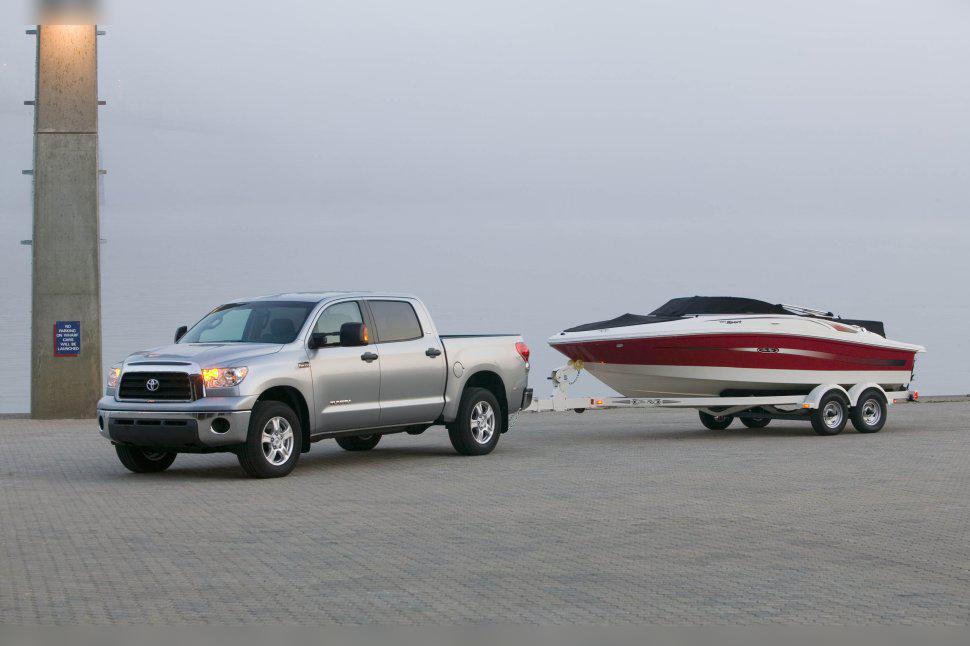
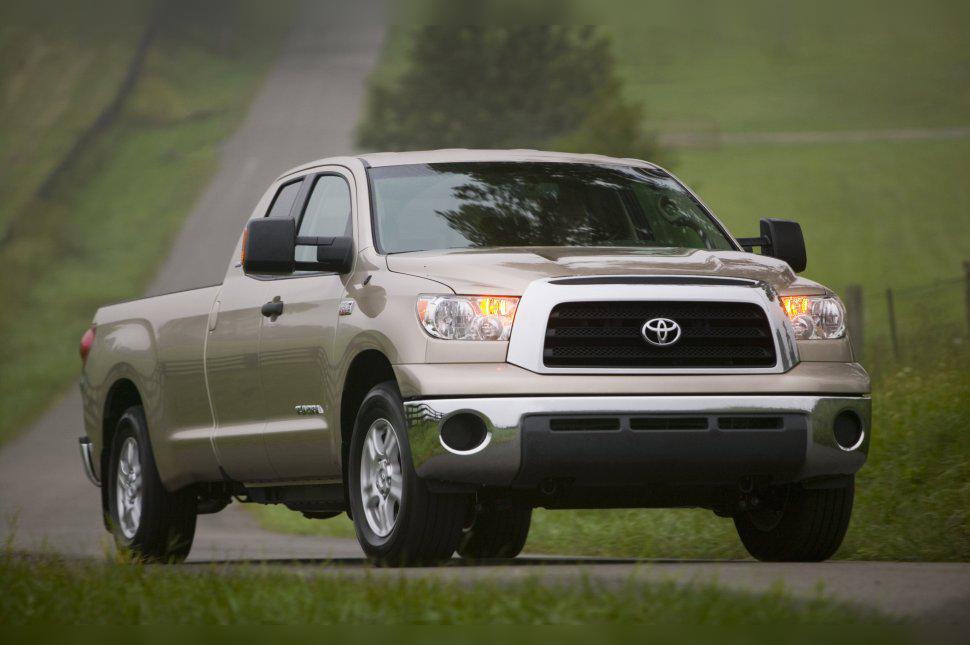
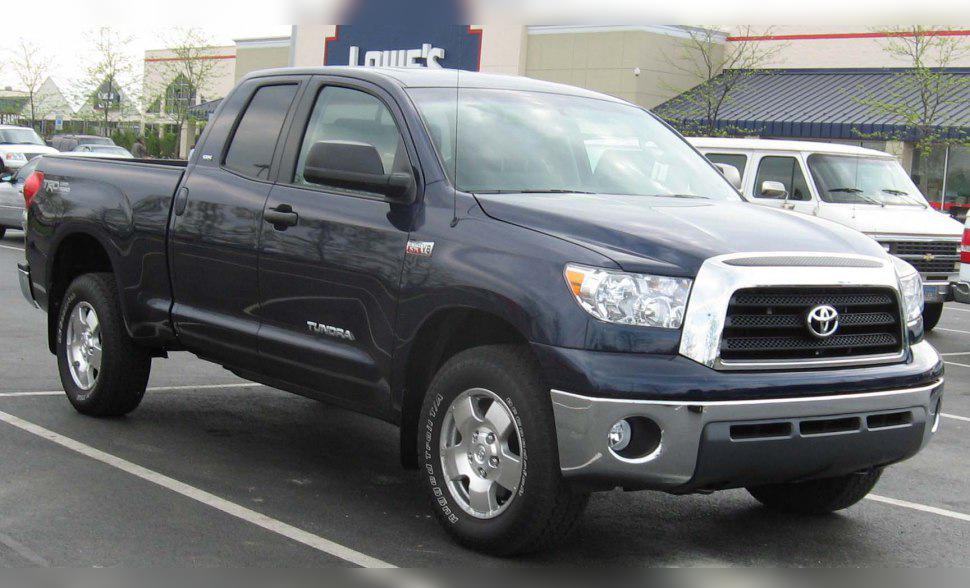
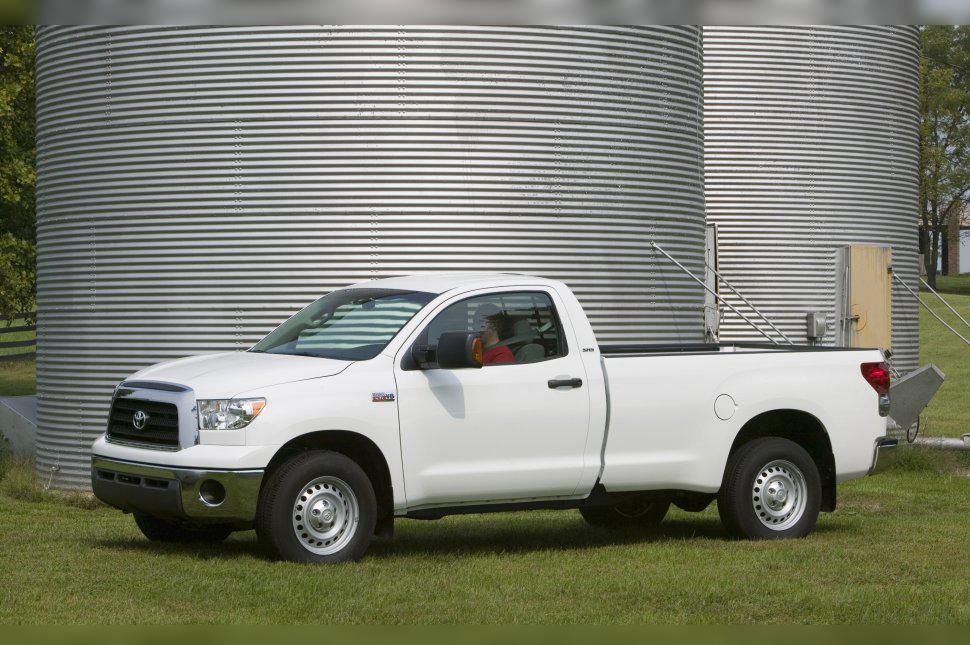
This engine became famous in models such as the Toyota Tundra (first and second generation), where it was offered in various cab and drivetrain configurations (including 4x4 systems). Thanks to its massive low-end torque, the 2UZ-FE is an ideal workhorse, designed for towing heavy trailers, but also for comfortable cruising on open roads all over the world.
Technical specifications
| Parameter | Value |
|---|---|
| Engine displacement | 4664 cc |
| Power | 202 kW (271 hp) |
| Torque | 427 Nm |
| Engine codes | 2UZ-FE (VVT-i version) |
| Injection type | Indirect (Multi-port EFI) |
| Aspiration | Naturally aspirated |
| Engine block type | Cast iron with aluminum heads |
Reliability and maintenance
Does this engine have a timing belt or chain?
The 2UZ-FE uses a timing belt. This is extremely important because the 271 hp VVT-i version is an interference engine – which means that if the belt snaps while driving, pistons and valves will collide, causing total engine failure. The belt is robust, but must not be neglected.
What are the most common failures on this engine?
Although mechanically this engine is almost indestructible, it does have a few known, specific issues:
- Cracked exhaust manifolds: A very common problem on Toyota V8 engines. The manifold cracks, and the symptom is a distinct ticking noise (similar to a sewing machine) during cold start. The sound usually disappears once the metal heats up and expands, closing the crack. Repair requires replacement or welding, which can be quite expensive (depends on the market).
- Starter motor failure: The starter itself is not particularly failure-prone, but when it wears out, its location becomes the problem. It is placed in the valley between the two banks of the V-block (under the intake manifold). Replacement requires removal of the entire top of the engine, which significantly increases labor cost.
- Water pump: Usually replaced together with the timing belt. If this is not done, the pump can start leaking, leading to overheating.
- Secondary Air Injection Pump (AIP) system: On VVT-i versions, this system reduces cold-start emissions. Pumps and valves often fail (usually due to moisture and rust). The symptom is a “Check Engine” light and the engine frequently going into limp mode, losing power.
At what mileage should the major service be done?
The major service (replacement of timing belt, tensioner, idler pulleys and water pump) is recommended every 100,000 to a maximum of 150,000 km or every 7 to 9 years, whichever comes first.
How many liters of oil does this engine take and which viscosity is recommended?
The oil pan holds about 6.2 to 6.5 liters of oil (with filter change). The recommended viscosity for most climates is 5W-30, while 0W-20 can be used in colder regions. Regular oil changes every 10,000 to 15,000 km are crucial for the longevity of the VVT-i system.
Does it consume oil between services?
Under normal conditions, the 2UZ-FE does not consume oil, even at very high mileages. Consumption of 0.2 to 0.5 liters per 10,000 km on engines with over 300,000 km is considered completely normal. If the engine is burning a lot of oil, the problem usually lies in hardened valve stem seals (the PCV valve should also be checked before any major work).
At what mileage should the spark plugs be replaced?
It is recommended to use only iridium or platinum spark plugs (as per factory specification). Due to difficult access to some cylinders, installing high-quality plugs is important, as they are replaced only every 90,000 to 100,000 km. Symptoms of worn plugs include rough idle and a slight increase in already high fuel consumption.
Specific parts and costs
Does this engine have a dual-mass flywheel?
No. Since vehicles with this engine (such as the Tundra) are paired with an automatic transmission in 99% of cases, instead of a flywheel there is a torque converter. Manual transmissions with this specific VVT-i engine are extremely rare (if they exist at all outside of some special fleet runs) and typically use a solid flywheel with a heavy-duty clutch designed for pickups.
What kind of fuel injection system does it have and are the injectors problematic?
The engine uses classic indirect injection (Multi-port EFI). The gasoline injectors on this engine are extremely durable and rarely fail. Occasional ultrasonic cleaning after 200,000+ km is usually all that’s needed. Thanks to indirect injection, there is no carbon buildup on intake valves, which is a huge advantage over modern direct-injection engines.
Does this engine have a turbocharger?
No, this is a classic naturally aspirated V8. No turbos, no issues with cooling them or expensive rebuilds.
Does this model have a DPF, EGR valve or AdBlue?
Since this is a gasoline engine, it has no DPF filter and does not use AdBlue. All those clogging and sensor issues are specific to diesel engines. As for EGR, the 2UZ-FE does have an exhaust gas recirculation system (in some markets) and a PCV valve. The biggest “eco problem” on this engine is actually the aforementioned Secondary Air Injection (AIP) pump, not the EGR.
Fuel consumption and performance
What is the real fuel consumption in city driving?
There is no nice way to put this: the 2UZ-FE loves gasoline. In a heavy body like the Toyota Tundra, real-world city consumption in stop-and-go traffic is between 18 and 22 l/100 km. If you use the A/C and drive in winter with 4x4 engaged, the numbers can go even higher.
Is this engine “lazy” for such a heavy vehicle?
Absolutely not. Although 271 hp may not sound like much in the era of 400+ hp engines, the magic of this V8 lies in its 427 Nm of torque available at relatively low rpm. Power delivery is linear, it pulls very strongly from a standstill and never struggles with a body weighing over two tons. It is designed to easily tow a 3–4 ton trailer without “running out of breath”.
How does the engine behave on the highway and at what rpm does it cruise at 130 km/h?
On the highway it is very refined, quiet and smooth. Paired with the 5-speed automatic, at 130 km/h the engine usually turns a relaxed 2,000 to 2,300 rpm (depending on the specific differential ratio). Highway fuel consumption can drop to about 13 to 15 l/100 km, provided you don’t have a roof box or huge off-road tires.
Additional options and modifications
Is this engine suitable for LPG (autogas) conversion?
Yes, absolutely! Indirect injection and massive, durable valves make the 2UZ-FE an excellent candidate for LPG. Due to its displacement and power, it is important that the LPG system is top quality, with fast injectors and a strong vaporizer (or two vaporizers) so it can supply enough gas under hard acceleration. The only thing to watch is periodic valve clearance checks (even though the valves are robust, LPG raises combustion temperatures), although in practice they cover hundreds of thousands of kilometers on gas without issues.
How much power can be safely gained with a simple “Stage 1” remap?
In short: It’s not worth it. Since this is a naturally aspirated gasoline engine, a typical Stage 1 remap will gain at most 10 to 15 hp and maybe slightly smooth out the torque curve. Money spent on chiptuning this engine is basically wasted. If someone wants more power, Toyota TRD (Toyota Racing Development) offered a factory supercharger kit that raised power to nearly 400 hp, and the cast-iron block handled it without any problems.
Transmission and drivetrain
Which transmissions are paired with this engine?
The 271 hp (VVT-i) version in Toyota models is most commonly paired with the fantastic 5-speed Aisin automatic transmission (A750E for RWD or A750F for 4x4). Manual transmissions combined with this specific VVT-i engine are factory non-existent or so rare (possibly some special fleet runs) that you will not see them on the used market.
What are the most common automatic transmission issues?
The Aisin A750 automatic is a tank among gearboxes. It has no known design flaws. Failures usually occur only due to neglected fluid changes or if the vehicle has been heavily abused for constant towing of very heavy loads without an additional transmission oil cooler. Symptoms of wear are harsh engagement when shifting from “Park” to “Drive” or slipping between gears under full throttle.
At what mileage should the transmission be serviced and the fluid changed?
Although many manuals state that the transmission fluid is “lifetime”, any serious mechanic will tell you that this is not true. Regular fluid and filter changes in the automatic transmission are needed every 60,000 to 80,000 km. If the vehicle is frequently used for towing, the interval should be halved.
Buying used and conclusion
What exactly should be checked before buying?
When buying a Tundra or another SUV with the 2UZ-FE engine, pay attention to the following:
- Listen to a cold start: Start the engine when it is completely cold and listen around the wheel wells/exhaust manifolds. Ticking that sounds like valve noise usually indicates a cracked exhaust manifold.
- Timing belt history: Always ask for proof (invoice or sticker under the hood) of timing belt replacement. If there is none, factor a full major service into the purchase price, because this is not something to gamble with.
- Look under the intake manifold: Try to shine a light and visually inspect the area around the starter for accumulated dirt or coolant.
- Check the 4x4 system: Vehicles are often not put into “4 Lo” (low range) for years, which can cause the actuator to seize. Test the transfer case operation before buying.
- Check the AIP system: Scan the ECU with diagnostics for stored or recently cleared codes related to the Secondary Air Injection system.
Final verdict: Who is this engine for?
The Toyota 4.7 V8 2UZ-FE is not for those who count every drop of fuel. It is intended for people who need absolute, uncompromising reliability. This is an engine for fans of robust, heavy pickups, owners of boats, horses or large travel trailers. If you are ready to pay for its “thirst” at the pump (or invest in a quality LPG system) and if you regularly replace the timing belt, this V8 will probably outlive you.