Toyota 4A-FE 1.6 (110 hp) – Experiences, problems, fuel consumption and used-car buying tips
Key points in short (TL;DR)
- Outstanding reliability: One of Toyota’s most durable petrol engines from the “golden era” of the Japanese car industry.
- Low maintenance costs: Timing belt driven, without expensive components such as a dual-mass flywheel, turbocharger or DPF.
- Great on LPG: The engine handles the installation of a sequential LPG system very well.
- Main downside – Oil consumption: At higher mileage, valve stem seals and piston rings wear out, resulting in bluish exhaust smoke.
- Sound insulation: Due to short gear ratios, the engine runs at higher rpm and is noisy on the motorway.
- Body before engine: The biggest enemy of these cars is not the engine itself, but body corrosion.
Contents
- Introduction: An icon of Japanese durability
- Technical specifications
- Reliability, failures and maintenance
- Specific parts and repair costs
- Fuel consumption and real-world performance
- LPG conversion and tuning potential
- Gearboxes, clutch and drivetrain
- Used-car buying tips and conclusion
Introduction: An icon of Japanese durability
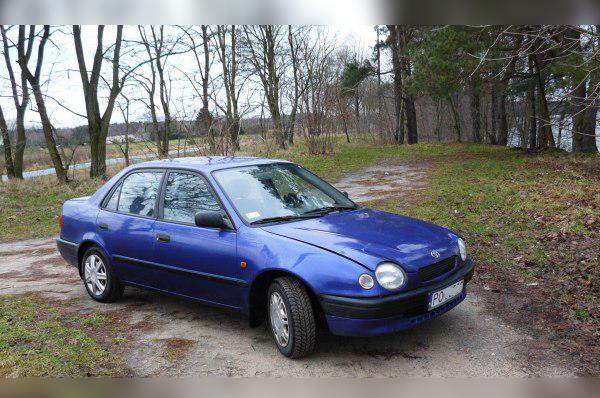
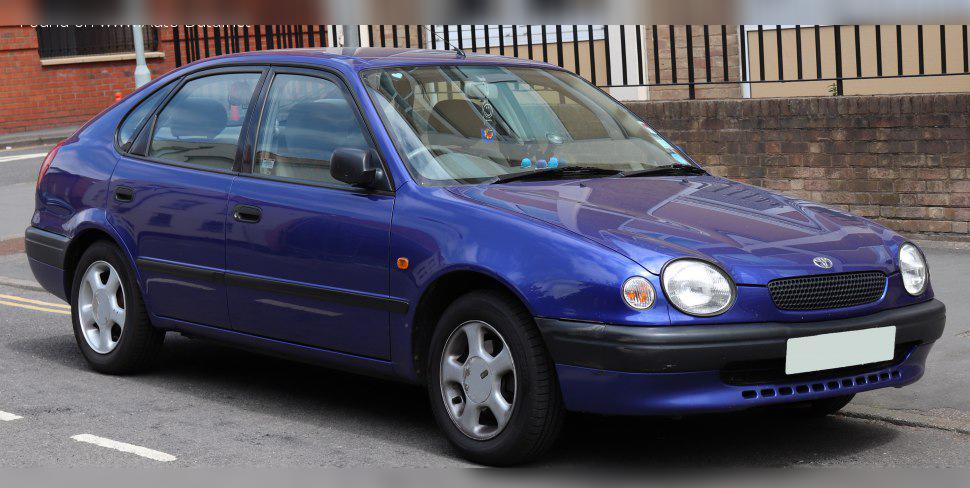
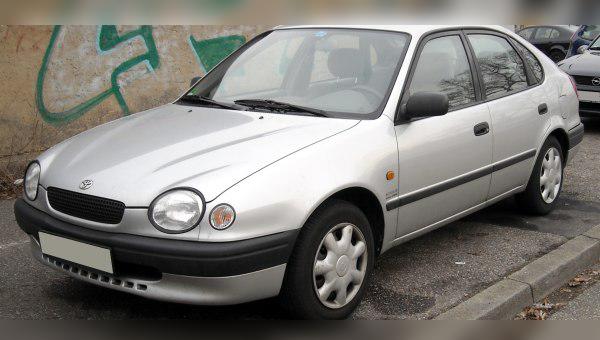
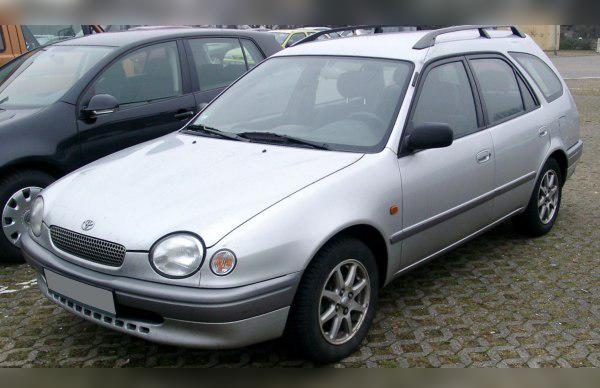
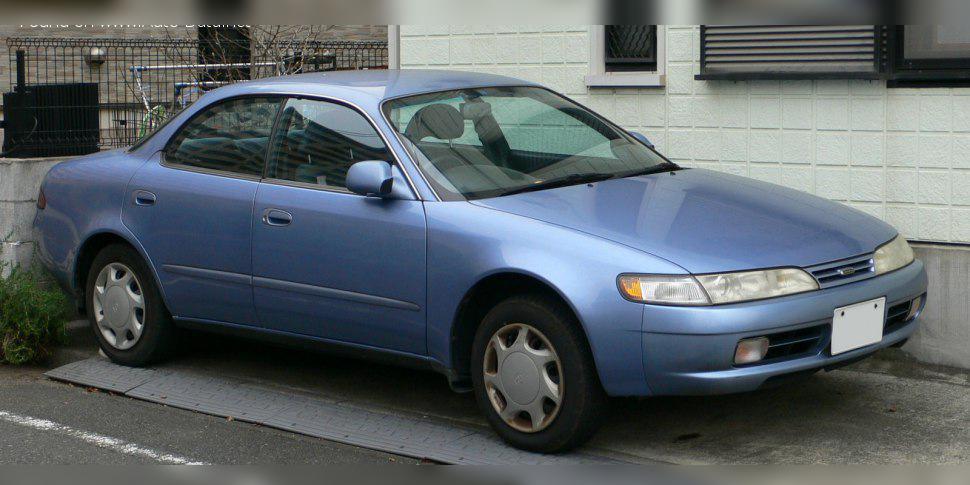
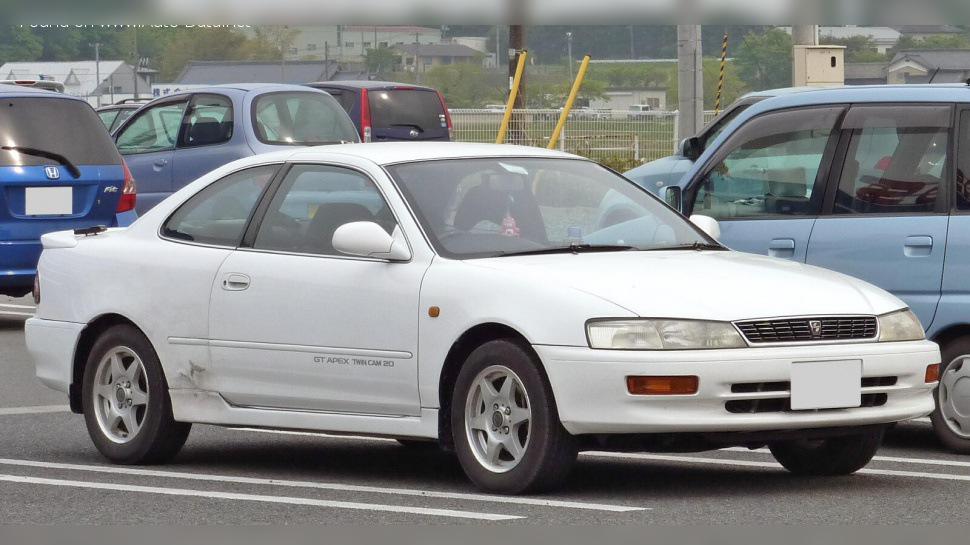
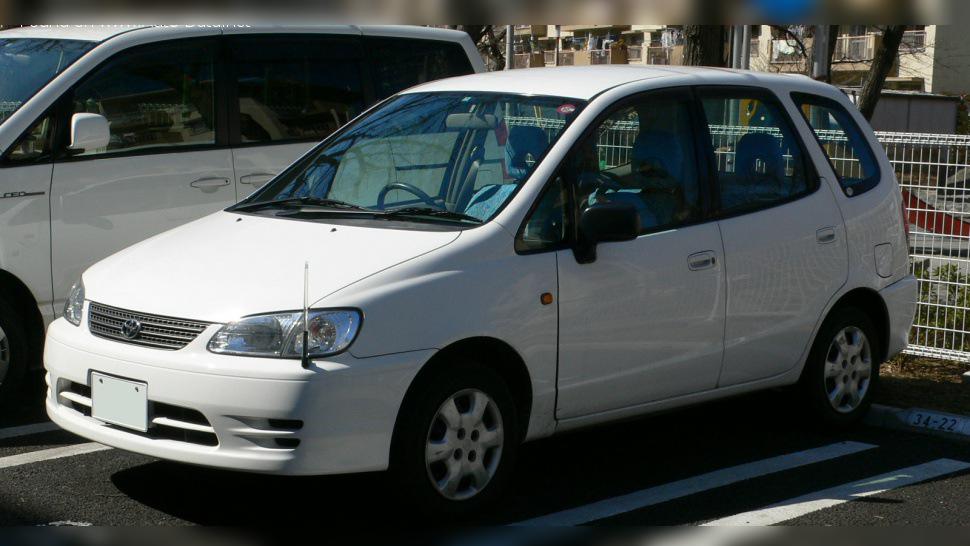
If you ask any experienced mechanic about the Toyota 4A-FE engine, they’ll probably smile and say these are engines that “can survive the apocalypse”. This naturally aspirated 1.6-litre petrol engine was a backbone of Toyota’s lineup throughout the nineties and early 2000s. It was fitted mainly to the eighth generation Corolla (E110) in all its forms – from hatchback and wagon to specific variants such as Levin, Ceres and Spacio.
Its engineering is focused purely on longevity. Because of that, it doesn’t boast revolutionary technologies, but relies on simple and robust mechanics. Today, buying a car with this engine means entering the world of old-school engineering, where displacement is valued more than turbo pressure.
Technical specifications
| Parameter | Value |
|---|---|
| Engine displacement | 1587 cc |
| Engine power | 81 kW (110 hp) at 6000 rpm |
| Torque | 145 Nm at 4800 rpm |
| Engine code | 4A-FE |
| Injection type | Electronic fuel injection (EFI – multi-point) |
| Induction type | Naturally aspirated engine |
| Valves per cylinder | 4 (DOHC – 16V total) |
Reliability, failures and maintenance
Timing belt and major service
Unlike more modern Toyota engines (such as the VVT-i generation) that use a timing chain, the 4A-FE uses a classic timing belt. An interesting technical feature of this engine is that in most iterations it is designed as a “non-interference” engine. This means that if the timing belt snaps, the pistons and valves usually won’t collide, so you’re unlikely to face catastrophic engine damage (bent valves). Still, it’s not worth gambling. The major service (replacement of timing belt, tensioner, idler pulleys and water pump) must be done every 90,000 km or every 5 years, whichever comes first.
Most common failures and symptoms
This is an extremely reliable unit, but due to age and mileage it does show certain weaknesses. The biggest issue with this engine is oil consumption due to wear. The most common causes are hardened valve stem seals or stuck oil control rings on the pistons.
- Valve stem seal symptoms: If the car emits a puff of blue smoke from the exhaust right after the first cold start in the morning, or when you accelerate after long engine braking downhill, the seals are due for replacement.
- Piston ring symptoms: If it constantly blows bluish smoke under hard acceleration, the rings are the problem (a significantly more expensive repair).
- Oil leak at the distributor (cam cover area): The rubber O-ring on the distributor hardens over time from heat and starts to leak oil. The symptom is an oily engine block on the rear right side. The O-ring is cheap, but mechanics often overlook it.
- Ignition coil: It is integrated into the distributor. If the engine jerks, stalls when warm or has trouble starting in damp conditions, the coil is the prime suspect.
Engine oil and spark plugs
The engine is not particularly demanding. The sump holds about 3.2 litres of engine oil. For our climate and engines of this age, the recommended viscosity is generally 10W-40, although 5W-40 can be used in regions with harsher winters. Oil consumption of around 0.5 to 1 litre per 10,000 km is considered completely normal and acceptable for this engine in its later years. If it uses more than 2 litres, it’s time to open the engine.
As for ignition, high-quality spark plugs from reputable Japanese manufacturers (Denso or NGK) are recommended. They should be replaced every 30,000 to 40,000 km, unless you use iridium plugs, which last significantly longer – but for this older engine there is realistically no real need for them.
Specific parts and repair costs
What every buyer will appreciate is the absence of modern “wallet killers”.
- Dual-mass flywheel: This engine DOES NOT have a dual-mass flywheel. It uses a classic solid flywheel, which means that clutch replacement (disc, pressure plate and release bearing) is quite affordable and is an intervention that is not expensive (depends on the market).
- Fuel injection system: The electronic multi-point injection (EFI) is extremely reliable. Petrol injectors rarely fail. They can clog due to poor-quality fuel or if the car is driven exclusively in the city with frequent stop-and-go cycles. Cleaning the injectors in an ultrasonic bath every 100,000 km is excellent preventive practice.
- Turbocharger: The engine is naturally aspirated, it has no turbo, which means no turbo lag and no potentially expensive failures related to oil leakage from the turbo.
- Emission systems (DPF, AdBlue, EGR): There is no DPF filter, no AdBlue system (this is a classic old-school petrol engine). Certain versions for specific markets have an early form of EGR valve to meet emission standards. Even if it’s present, it’s quite primitive, doesn’t clog as easily as on modern diesels, and cleaning it is trivial.
Fuel consumption and real-world performance
Performance and acceleration
With 110 hp and 145 Nm of torque, the 4A-FE offers surprisingly good driving dynamics. Considering that cars like the Corolla E110 weigh only about 1050–1150 kg, this engine is far from sluggish. It revs willingly, is lively in the mid-range and allows safe overtaking. Throttle response is very direct (there is no electronic throttle delay that is so annoying in newer cars).
Fuel consumption
On the other hand, this is an older-generation engine, so don’t expect miracles at the fuel pump.
- City driving: Real-world consumption is between 8.5 and 10 l/100 km, depending on traffic and how heavy your right foot is.
- Open road: On country roads, consumption drops to a respectable 6.0 to 6.5 l/100 km.
Behaviour on the motorway
The main criticism of this engine is related to its pairing with the gearbox. To compensate for the lack of torque, engineers used very short gear ratios. Because of this, at a cruising speed of 130 km/h in fifth gear, the engine spins at a rather high 3800 to 4000 rpm. This directly results in more noise in the cabin and a slight increase in fuel consumption on the motorway (around 7.5–8 l/100 km). It’s not designed for all-day driving at speeds above 140 km/h, as the engine noise becomes tiring.
LPG conversion and tuning potential
LPG (autogas) installation
If you want economical motoring, the 4A-FE is a perfect candidate. It handles LPG (autogas) extremely well. The valves and valve seats are very durable thanks to factory alloys, so this engine, unlike some newer Toyota VVT-i units, rarely suffers from so-called valve seat recession. The only important thing is to install a proper sequential LPG system and the car will cover hundreds of thousands of kilometres without issues. It is recommended to check valve clearances every 80,000 km when running on LPG.
Chiptuning (remap)
For power enthusiasts, here comes a disappointment. This engine is absolutely not worth “chipping” (Stage 1). Since it’s a classic naturally aspirated petrol engine, changing ECU parameters (remap) will give you at best 5 to 7 hp more, which is completely imperceptible in real driving. Any investment in electronic tuning of this engine is a waste of money.
Gearboxes, clutch and drivetrain
Manual gearboxes
In Europe you’ll most often find a 5-speed manual gearbox. It is surgically precise and very durable. The most common failure on examples that have covered close to or over 300,000 km is wear of the second or third gear synchro. Symptom: during fast shifting from first to second at higher revs you hear a characteristic gear “grinding” noise. It is recommended to change the oil in the manual gearbox every 100,000 km or every 5 years. Regular oil changes dramatically extend synchro life.
Automatic gearboxes
Models such as the Ceres, Spacio or regular Corollas with automatic transmission were equipped by Aisin with 3-speed or 4-speed hydraulic automatics. These gearboxes are virtually indestructible if serviced regularly, but they do have their downsides. They completely “kill” the engine’s liveliness (the car is noticeably slower) and increase city fuel consumption by more than 1.5 l/100 km. If you find such a model, check whether the gearbox jerks when engaging “D” or “R”. The oil and filter in the automatic gearbox must be replaced every 60,000 km.
Used-car buying tips and conclusion
What to check thoroughly before buying?
Considering that cars with this engine have usually covered serious mileage (often twice as much as what’s shown on the odometer), here’s what to pay attention to:
- Body condition: This is far more important than the engine itself. Japanese cars from that era have a serious problem with corrosion protection. Check the sills, rear wheel arches, strut towers and the underside of the doors. A perfect 4A-FE is useless if the suspension has nothing solid to bolt to.
- Cold-start sound test: Ask the seller not to start the car before you arrive. On a cold start, watch the exhaust for smoke (blue smoke means valve seal/ring issues). Listen to the engine – a slight valve “ticking” until it warms up is normal, but loud knocking from the bottom end (crankshaft area) means a serious problem.
- Coolant condition: Look into the expansion tank (and under the radiator cap, only when the engine is cold!). If you see a “mayonnaise” emulsion, oil and coolant have mixed (likely a blown head gasket). Coolant colour should be clean red/pink, with no rust traces. Rust indicates the car has been run on tap water.
- Signs of leaks: Run your hand around the rear part of the cam cover and around the distributor.
Who is this engine for?
The Toyota 4A-FE 1.6 16V is an ideal choice for drivers looking for a reliable, “indestructible” means of transport from point A to point B, who are not obsessed with modern gadgets and absolute cabin silence at 150 km/h. This is a car for someone who wants to do basic servicing themselves, who appreciates cheap suspension parts and who needs a car that gets the job done with minimal unexpected visits to the mechanic. If you can forgive it a slightly noisier operation and somewhat higher city fuel consumption, you’ll be rewarded with a machine that will almost never leave you stranded.