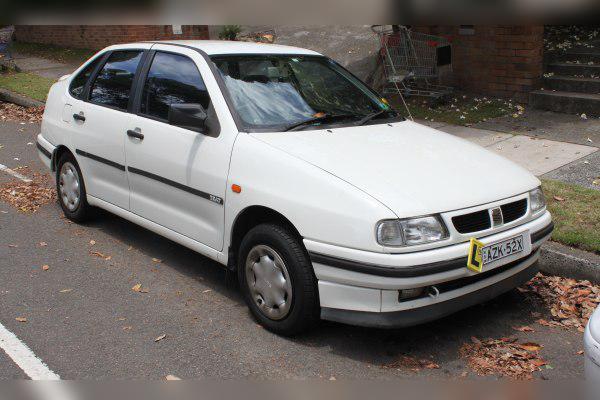
VW / Seat AGG 2.0 8v (115 hp) – Experiences, issues, fuel consumption and used-car buying guide
Key points (TL;DR)
- Old-school mechanics: Naturally aspirated engine without turbo, dual-mass flywheel or sensitive injectors.
- Drive: Uses a timing belt, maintenance is extremely affordable.
- Reliability: The mechanical side is virtually indestructible, but it suffers from minor electrical faults (crankshaft sensor, ignition coil, distributor).
- Fuel consumption: Quite thirsty in city driving, realistically expect between 10 and 12 l/100 km.
- LPG (Autogas): One of the best engines from the VAG group for LPG conversion.
- Performance: The engine offers excellent low-end torque; in light cars like the Seat Cordoba it feels very lively.
Contents
- Introduction: Engine and models
- Technical specifications
- Reliability and maintenance
- Specific parts (Costs)
- Fuel consumption and performance
- Additional options and modifications
- Gearbox and drivetrain
- Buying used and Conclusion
Introduction: Engine and models
The engine with the code AGG is part of the legendary VAG EA827 engine family. It is the so‑called “2.0 8v” engine that gained cult status in the late nineties and early 2000s. It was installed in many models across the Volkswagen group (VW Golf Mk3, Passat B4, Vento), but also found its place in smaller cars such as the Seat Cordoba I 2.0 i (115 hp).
Its core philosophy is simplicity: eight valves, a single overhead camshaft (SOHC), displacement just under two litres and plenty of torque at low revs. Thanks to this concept, the engine earned a reputation as a workhorse capable of covering huge mileages with only basic maintenance, even though by today’s standards it does use somewhat more fuel.
Technical specifications
| Parameter | Specification |
|---|---|
| Displacement | 1984 cc |
| Power | 85 kW (115 hp) at 5400 rpm |
| Torque | 166 Nm at 3200 rpm |
| Engine code | AGG |
| Injection type | Multi-point injection (Simos system) |
| Intake type | Naturally aspirated |
Reliability and Maintenance
Timing belt or chain?
The AGG engine uses a classic timing belt to drive the camshaft. There are no complex and expensive chain systems typical of newer TSI generations.
Most common failures
Since the mechanical side is robust, problems are usually related to the “peripherals” and engine electronics:
- Hall sensor (crankshaft and camshaft position sensor): Its failure is one of the main reasons this engine can leave you stranded. Symptoms include the engine cutting out when hot while driving and refusing to start again until it cools down.
- Ignition coil: The coil housing eventually cracks due to heat, allowing moisture to get inside. The engine then misfires under acceleration or has trouble starting in damp weather.
- Throttle body (idle control stepper motor): Carbon deposits and oil vapours build up, causing fluctuating idle speed or even stalling at traffic lights. Cleaning the throttle body and performing an “adaptation” via diagnostics usually solves the issue.
- Vacuum hoses: Due to the age of these cars, rubber hoses become brittle, crack and draw in “false air”, resulting in a lean mixture and jerking.
Major and minor service
The major service (replacement of timing belt, tensioner, idler and water pump) must be done every 60,000 to 90,000 km or at most every 5 years. A snapped belt leads to serious engine damage (valves hitting the pistons), so this is not something to gamble with.
Oil: Capacity and grade
The engine takes roughly 4.0 litres of engine oil. Due to older design tolerances, by far the most common and safest recommendation is semi‑synthetic 10W‑40 that meets the VW 502.00 specification.
Oil consumption
For the AGG engine, oil consumption of around 0.3 to 0.5 litres per 10,000 km is considered normal. However, if the engine uses more than 1 litre, the cause is usually worn valve stem seals (characteristic bluish smoke after idling at a traffic light) or stuck oil control rings. Fortunately, cylinder head repair on this generation is not expensive (depends on the market).
Spark plugs
Since this is a petrol engine, standard copper spark plugs (as recommended by the manufacturer) are replaced every 30,000 km. If more expensive iridium or platinum plugs are installed, the interval can go up to 60,000 km. Replacing them on time protects the coil and leads from premature failure.
Specific Parts (Costs)
Dual-mass flywheel and clutch
This is great news for your wallet: with the AGG engine and manual gearbox there is no dual‑mass flywheel. It uses a simple solid flywheel, so the price of a clutch kit (pressure plate, disc, release bearing) is very reasonable and replacement is cheap in the long run (depends on the market).
Fuel injection system
It uses the classic “Simos” electronic multi‑point injection system (MPI). The petrol injectors are incredibly durable and rarely fail, unless the car is run for a long time on dirty fuel or driven exclusively on LPG so that the injectors seize up from lack of use.
Turbocharger, DPF and AdBlue
The engine has no turbocharger; it draws in air naturally (NA engine). This means there are no expensive turbo repairs or overhauls. Also, since this is an older petrol engine, it has no DPF filter and no complex electronic EGR valve (it uses a simple PCV crankcase ventilation system), and AdBlue fluid is not used on this type of engine.
Fuel Consumption and Performance
City driving and economy
If you’re looking for a frugal city engine – look elsewhere. The 2.0‑litre displacement and old‑school injection technology take their toll. Realistic city fuel consumption is between 10 and 12 l/100 km, depending on how heavy your right foot is and traffic conditions (heavy congestion can push it up to 13 litres).
Power-to-weight ratio (Is it sluggish?)
Absolutely not. The Seat Cordoba I weighs just over 1,000 kg, which means that 115 hp and, more importantly, 166 Nm available already at 3200 rpm are more than enough to make the car “take off”. The engine pulls “like a diesel” from low revs, doesn’t require constant shifting in city driving and is very pleasant to drive. In a heavier Passat B4 it can feel a bit tired with a full boot, but in lighter cars it is more than adequate.
Behaviour on the motorway
On the motorway the engine copes well in terms of power, but the 5‑speed gearbox is geared quite short. At a cruising speed of 130 km/h on the motorway, the engine spins at around 3,600 to 3,800 rpm. Because of this, long‑distance driving can be somewhat noisy, and at these speeds fuel consumption rarely drops below 8 l/100 km.
Additional Options and Modifications
LPG conversion (Autogas)
This unit is one of the best engines ever made for LPG (autogas) conversion. It has no direct petrol injection, the valves handle LPG very well, and a sequential system can be installed very easily and cheaply. With LPG you can drastically solve the problem of high city fuel consumption without any noticeable loss in performance.
Remapping (Stage 1)
Although ECU remapping (chiptuning) is popular, on this naturally aspirated engine it simply doesn’t pay off. A “Stage 1” tune might extract only an extra 5 to 8 hp, which in practice you won’t feel in either acceleration or fuel consumption. If you want more power from an engine like this, your money is better spent on regular maintenance.
Gearbox and drivetrain
Types of gearbox
The AGG was typically paired with two options:
- 5‑speed manual gearbox: (most commonly the 02A series with cables instead of linkages).
- 4‑speed automatic gearbox: (old‑school, 01M series).
Gearbox failures
With the manual gearbox, problems are very rare and usually come down to worn synchros in 2nd or 3rd gear (grinding during fast shifts), as well as play in the cables and gear selector, which causes imprecise shifting.
With the automatic gearbox, things can get more expensive. Since these are very old‑generation gearboxes, poor maintenance often leads to valve body failure (valves clog up), so the car “bangs”, jerks or skips when changing gears. Overhauling an old automatic can be uneconomical (very expensive compared to the value of the car, depending on the market).
Gearbox service
As a preventive measure, for the manual gearbox it is advisable to check and replace the gearbox oil (about 2 litres of 75W‑90) every 60,000 to 80,000 km, even though the manufacturer claims it is “lifetime fill”. For automatics, changing the oil and filter every 60,000 km is absolutely essential if you want the gearbox to last.
Buying Used and Conclusion
What to check before buying?
- Idle sound: The engine should run smoothly. “Hunting” idle (revving up and down between 600 and 1200 rpm) points to a dirty throttle body, faulty idle control valve or hoses drawing false air.
- Exhaust smoke colour: At the first cold start of the day, as well as when you suddenly blip the throttle after a short idle, watch the exhaust. Bluish smoke is a clear sign that the valve stem seals are gone and the engine will consume oil aggressively.
- Oil leaks: Oil most often leaks from the valve cover gasket or around the distributor. These are not expensive repairs, but they can contaminate the coil or sensors.
- Radiator and coolant: Make sure the coolant flange (water outlet) is not leaking, as they are plastic and prone to cracking from heat.
Final verdict – Who is this engine for?
The 2.0 8v (AGG) engine is a true relic of the past, but in the most positive sense when it comes to mechanics. It is intended for drivers who don’t want headaches with turbos, injectors and dual‑mass flywheels. Its maintenance is affordable for virtually anyone, and spare parts are available on every corner. The only real compromises are higher city fuel consumption and noise on the motorway, but with a sensible LPG conversion you get a cheap, quick and extremely reliable partner on the road.