1.9 TDI AGR Engine (90 HP): Experiences, Problems, Fuel Consumption and Buying Used
Key points (TL;DR)
- Old-school durability: One of the most reliable diesel engines ever made, can easily exceed 500,000 km without opening the block.
- Cheap maintenance: In most front-wheel-drive models it does not have a dual-mass flywheel, which drastically reduces clutch replacement costs.
- More reliable turbo: Uses a classic fixed-geometry turbocharger (wastegate), which does not suffer from stuck vanes like more modern versions.
- No modern emissions headaches: The engine does not have a DPF filter or AdBlue system from factory. The only emissions-related component is the EGR valve.
- Minimal fuel consumption: Expect average consumption of around 5.5 to 6.5 l/100 km, even in heavier body styles.
- Timing belt: The engine requires regular major services; a snapped belt leads to severe engine damage.
- Time is the main enemy: Today the biggest problem is finding an example that hasn’t been worn out, poorly maintained, or whose bodywork hasn’t deteriorated.
Contents
- Introduction: The Legend of the 1.9 TDI Engine
- Technical Specifications
- Reliability and Maintenance
- Specific Parts and Costs
- Fuel Consumption and Performance
- Additional Options and Modifications
- Gearbox and Drivetrain
- Buying Used and Conclusion
Introduction: The Legend of the 1.9 TDI Engine
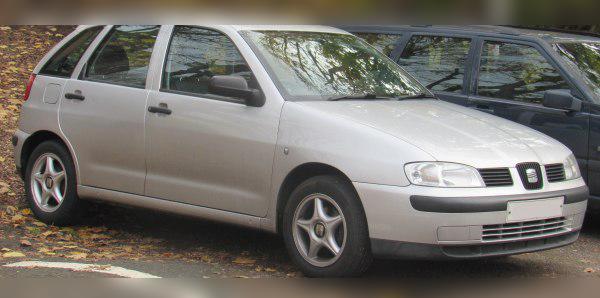
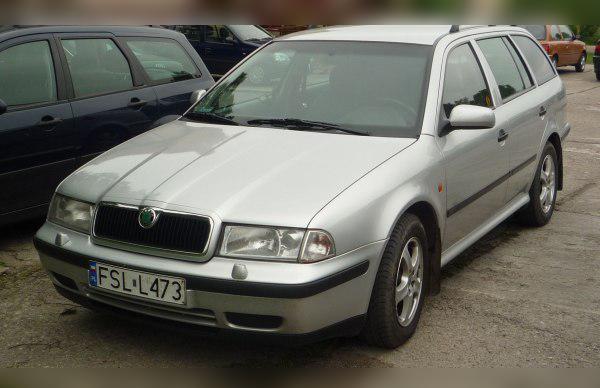
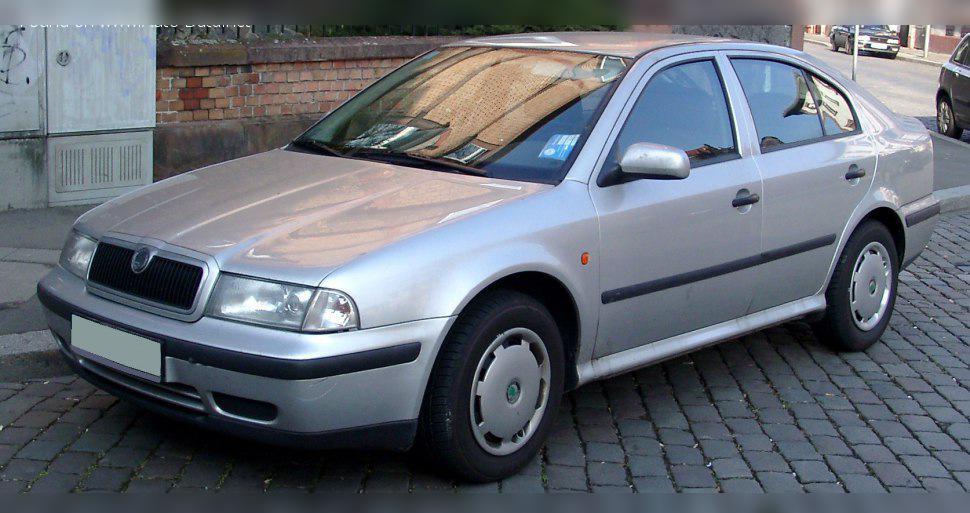
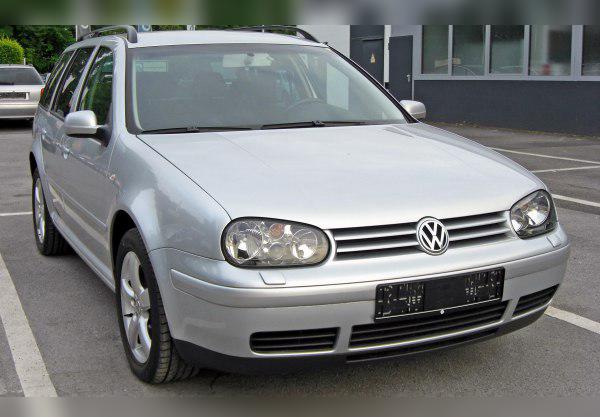
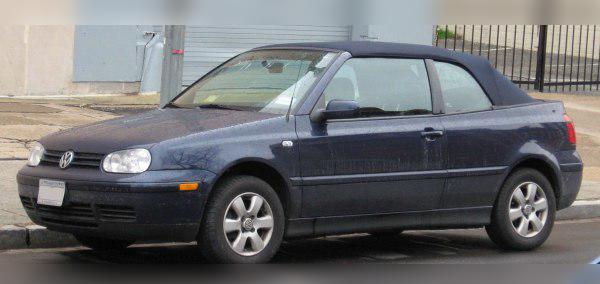
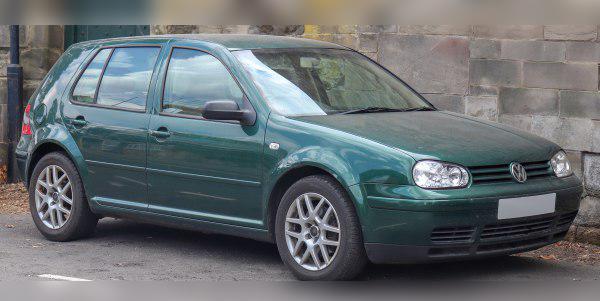
When mechanics talk about engines that “could survive the apocalypse”, the AGR code is always near the top of the list. This is an old-generation 1.9 TDI engine with a rotary Bosch VP37 pump (the famous “Bosch pump”). It was installed in the late nineties and early 2000s in a whole range of vehicles: from the lightweight Seat Ibiza II (1999 facelift), through the robust Volkswagen Golf IV (including Variant, Cabrio and 4motion versions), all the way to the indestructible first-generation Škoda Octavia (Tour and Combi).
What sets this engine apart from the sea of other 1.9 TDI units (such as the ALH version, which also has 90 HP) is its simplicity. It is intended for drivers who want to go from point A to point B with minimal costs and without the stress of expensive failures typical of modern diesel technology.
Technical Specifications
| Specification | Data |
|---|---|
| Displacement | 1896 cc |
| Power | 66 kW (90 HP) |
| Torque | 202 Nm at 1900 rpm |
| Engine code | AGR |
| Injection type | Direct injection, rotary pump (Bosch VP37) |
| Camshaft drive | Timing belt |
| Turbo/Naturally aspirated | Turbocharger (fixed geometry) with intercooler |
Reliability and Maintenance
This engine block is made of heavy cast iron and is extremely thermally stable. However, like any machine, it requires adherence to service intervals.
Timing belt or chain?
The AGR engine uses a timing belt to drive the camshaft and Bosch pump. If this belt snaps, valves and pistons collide, which means total engine failure. The major service (replacement of timing belt, tensioner, idler pulleys and water pump) is, according to factory specifications, done every 90,000 km. Still, due to the age of these vehicles, experienced mechanics recommend replacement every 60,000 to 70,000 km or every 5 years. A major service kit is not expensive (depends on the market).
Most common failures
The mechanical part itself rarely fails. The usual headaches are caused by the peripherals:
- MAF sensor: Symptoms are sudden loss of power, the car barely accelerates and cannot go over 3000 rpm. It should be replaced only with an original or high-quality aftermarket part.
- Vacuum hoses: Due to age they become brittle and crack. Because of vacuum loss the turbo does not work properly. Replacing the hoses is extremely cheap.
- Turbo pressure control valve (N75): Controls the operation of the wastegate valve. When it fails, the engine goes into “safe mode” (limp mode) under load on an uphill.
- Oil leaks: It often “sweats” oil on the valve cover and on the crankshaft and camshaft seals.
Engine oil
The system holds exactly 4.5 litres of oil. The recommended grade is 10W-40 (semi-synthetic) or, for colder climates, 5W-40 (synthetic), with the condition that the oil must fully comply with the VW 505.00 specification. Oil consumption between services (at 10,000 km) of up to 0.5 litres is considered perfectly normal and is a consequence of oil vapours and minimal seepage through the turbo. If the engine consumes more than 1 litre per 1000 km, the problem lies in worn piston rings, valve stem seals or a bad turbo.
Injector condition
The system uses classic, mechanical two-stage injectors, one of which has a needle lift sensor. These injectors are extremely reliable and can easily cover more than 300,000 km with regular fuel filter changes. Symptoms of bad injectors are difficult starting, bluish or black smoke from the exhaust and “diesel knock” (sharp metallic sound) while running. Refurbishment (replacement of injector nozzles) is not expensive and is done by local diesel specialists (depends on the market).
Specific Parts and Costs
Does it have a dual-mass flywheel?
Here we come to the biggest advantage of the AGR engine: in the vast majority of front-wheel-drive models it is fitted with a solid (rigid) flywheel. This means that the most expensive failure on modern diesels simply does not apply here. A clutch kit (pressure plate, disc, release bearing) is very affordable. Note: Certain 4x4 versions (e.g. Golf IV 4motion or Octavia 4x4) may have a dual-mass flywheel to reduce propshaft shudder, so it is necessary to check by VIN.
Bosch pump (VP37)
Injection is controlled by an electronic rotary pump. The main problem over the years is the deterioration of seals (gaskets) inside the pump due to the use of modern Euro diesel, which is “drier” compared to the old D2 diesel. Symptoms are diesel stains under the car and a noticeable fuel smell. Resealing the pump solves the problem and is relatively affordable (depends on the market).
Turbocharger
While the more advanced 90 HP ALH engine uses a variable-geometry turbo (VNT), the AGR engine uses a simpler fixed-geometry turbo with a wastegate valve. These turbochargers are much more resistant to soot build-up during city driving. Their service life is excellent; they often outlive the rest of the car if the oil is changed on time. In case of failure (whistling, clouds of blue smoke due to oil leaking into the intake), a rebuild is very reasonably priced.
DPF, EGR and AdBlue
Since this engine was designed before the strict Euro 4 and Euro 5 standards, it does not have a DPF filter or an AdBlue system. Forget about expensive emissions-related worries. It only has an EGR valve that returns part of the exhaust gases back into the intake. Over time, a thick mixture of soot and oil vapours builds up in it, restricting the intake manifold. Symptoms are black smoke under acceleration and loss of power. The EGR is very easy to clean, and many owners physically block it off with a plate so that the engine “breathes” only clean air.
Fuel Consumption and Performance
Real-world fuel consumption
The AGR is a fuel-saving champion. In a light Seat Ibiza, city consumption rarely exceeds 6.0 l/100 km. In heavier vehicles such as the Škoda Octavia Combi or Golf IV Variant, in summer city driving you can expect around 6.5 l/100 km, and in winter, in heavy traffic with short trips (when the engine is cold), it can rise to about 7.5 l/100 km. On open roads at 80–90 km/h, consumption drops below 4.5 l/100 km.
Performance (Is it sluggish?)
With 90 HP and 202 Nm of torque, the AGR engine in a smaller body (Seat Ibiza) is quite lively thanks to the low revs at which it delivers maximum torque. However, if you buy it in a Škoda Octavia Combi (estate) or Golf IV 4motion version, especially when loaded with luggage and passengers, the engine is definitely “sluggish”. Overtaking requires planning ahead, because after 3000 rpm it suddenly runs out of breath.
Motorway and cruising
At 130 km/h in fifth gear, the engine spins at a relatively high 2800 to 3000 rpm (depending on the gearbox ratio). In this driving mode, the cabin becomes noisy due to the old direct-injection technology, and fuel consumption is around 6.0 litres. This is an excellent engine for country roads and city driving, but for frequent and long motorway trips at high speeds it requires a higher tolerance for noise.
Additional Options and Modifications
Because of its robust construction, many drivers want more power than the stock 90 HP. Fortunately, the AGR is very easy to remap (chip tune). A safe Stage 1 chip tune done only via software raises power from 90 HP to about 115–120 HP, and torque increases to around 260 Nm.
Since in most cases it has a solid flywheel, the clutch handles this torque very well without slipping. The driving feel changes dramatically for the better, especially in estate versions. For anything beyond Stage 1 (over 120 HP), you will need larger injectors (e.g. from the 110 HP ASV/AFN engines) and a bigger turbo.
Gearbox and Drivetrain
Manual gearboxes
It is most commonly paired with a five-speed manual gearbox (02J series). The gearbox is precise, but over the years problems appear with the gear selector (the car is hard to shift into first or reverse) due to wear of the plastic linkages under the bonnet (the so-called “ball joints”). The repair is minor and cheap. Also, the second-gear synchro can wear out, causing grinding when shifting quickly from first to second. It is recommended to change the oil in the manual gearbox every 100,000 km to extend the life of the bearings.
Automatic gearboxes (Warning)
If you come across an Octavia Tour or Golf IV with an automatic gearbox (01M series with 4 speeds), be very careful. This gearbox is now completely outdated, it is slow, it drastically increases fuel consumption (by more than 1 to 1.5 l/100 km) and “steals” power from the engine. The most common failures relate to the valve body, so the gearbox shifts harshly between gears. The oil and filter in it must be changed strictly every 60,000 km. Rebuilding this gearbox is very expensive compared to the purchase price of the vehicle itself (depends on the market).
Buying Used and Conclusion
What to check before buying?
- Cold start: The engine should start “on half a turn” when completely cold. Long cranking with thick white smoke indicates bad glow plugs, incorrect injection timing on the Bosch pump or poor compression.
- Coolant condition: Look into the expansion tank. The coolant should be pink/red and clean. Traces of engine oil (brown sludge) indicate a blown head gasket.
- Engine bay walls: Inspect the engine block around the Bosch pump. It should be dry, there must be no diesel leaks.
- Test drive with heavy throttle: In second and third gear, floor the accelerator (when the engine is warm). There should be no clouds of thick blue smoke in the rear-view mirror (the engine is burning oil). If the turbo “cuts” power on an uphill, the pressure control valve or the vacuum system is faulty.
Final verdict
The 1.9 TDI engine with the AGR code is mechanics from the golden era. It is intended for drivers with a rational approach, those who care about cheap registration, extremely low repair costs (thanks to the absence of a dual-mass flywheel, DPF and complex turbo) and reliability. You don’t buy it for racing or to enjoy exceptional silence and comfort, but to have a workhorse that will never leave you stranded. When buying, be less afraid of the engine itself and pay more attention to corrosion on arches, sills and the floor on Golf 4 and first-generation Octavia models.