1.8T 20V (AJL) 180 HP Engine: Experiences, Issues, Fuel Consumption and Used Car Buying Tips
Most important in short (TL;DR):
- One of the most robust turbo petrol engines of its time, with the famous 20V head (5 valves per cylinder).
- The main timing is driven by a timing belt, but it also has a specific chain that links the camshafts.
- Very prone to oil sludge formation if service intervals are not strictly followed.
- Huge tuning potential (a safe Stage 1 brings a noticeable power increase).
- Very suitable for LPG (autogas) conversion thanks to conventional, indirect fuel injection.
- Excellent performance for the body styles it is installed in, but with somewhat higher fuel consumption in city driving.
- Maintenance is widely available and cost-wise falls into the category: not expensive to moderately expensive (Depends on the market).
Contents
- Introduction: Engine overview and applications
- Technical specifications
- Reliability and Maintenance
- Specific Parts and Costs
- Fuel Consumption and Performance
- Additional Options and Modifications
- Gearbox and Drivetrain
- Buying Used and Conclusion
Introduction: Engine overview and applications
When people mention the golden era of engineering from the VAG group, the 1.8 Turbo 20-valve engine is always near the top of the list. The engine code AJL denotes a specific, factory‑uprated version of this block that delivers 132 kW (180 HP). Compared to the standard 150 HP versions, the AJL offered a sportier feel and better throttle response.
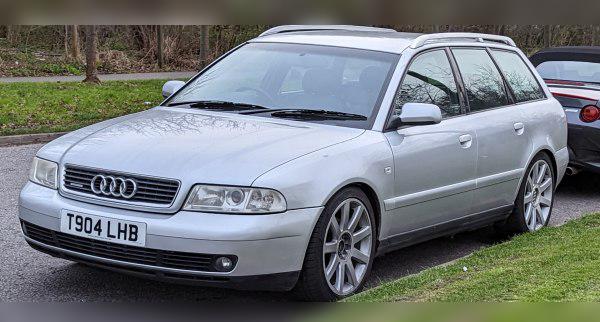
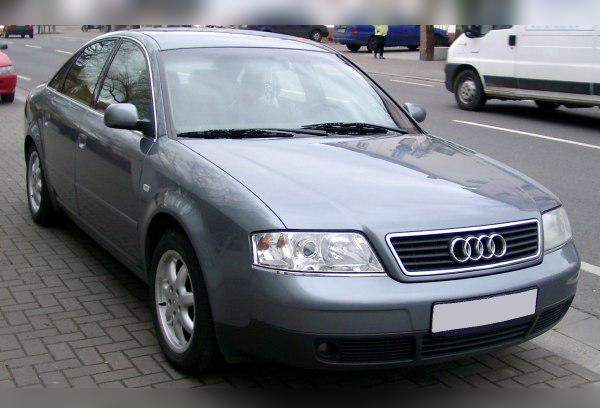
It was mostly installed in the late nineties and early 2000s in mid-size and upper mid-size models, primarily in the Audi A4 (B5 facelift) and Audi A6 (C5), in both sedan and Avant (wagon) versions, often paired with the famous quattro all‑wheel drive. This is an engine for drivers who want good old‑school power, simpler technology than modern TFSI units, and reliability that can handle very high mileage with proper maintenance.
Technical specifications
| Engine displacement | 1781 cc |
| Engine power | 132 kW (180 HP) |
| Torque | 235 Nm |
| Engine codes | AJL |
| Injection type | Indirect injection (MPI) |
| Intake system | Turbocharger (K03 / K03s) |
Reliability and Maintenance
Timing belt or chain?
This engine uses a hybrid system. The main drive from the crankshaft to the exhaust camshaft is via a timing belt. However, on the rear side of the cylinder head (towards the cabin) there is a short chain that links the exhaust and intake camshafts. This chain has its own hydraulic tensioner that deserves special attention, because when it fails it causes a characteristic rattling noise at cold start.
Most common failures and symptoms
Although the base is extremely durable, after 20+ years the engine has its quirks. The crankcase ventilation system (PCV valve) often cracks or clogs, which leads to increased pressure in the engine and oil leaks at the valve cover gasket. The symptom is a clear smell of burnt oil in the cabin when the car stops. The ignition coils are consumable parts – their failure manifests as rough running on three cylinders (misfire), loss of power and the "Check Engine" light coming on. Also, the deterioration of numerous vacuum hoses due to age and heat causes turbo boost leaks and an uneven idle.
Major service, oil and spark plugs
The major service (replacement of timing belt, rollers, tensioner and water pump) is typically done every 90,000 to 120,000 km or at most every 5 years. If you wait too long, a snapped belt means serious cylinder head damage (bent valves).
The engine takes about 3.5 to 3.8 liters of oil. Fully synthetic oil with a 5W-40 grade is recommended. It is extremely important to change the oil at a maximum of 10,000 km, not at 15,000 or 20,000 km. The reason is that the small block and hot turbo quickly degrade the oil, creating so‑called sludge (tar‑like deposits) that clog the oil pump pickup screen, which can lead to crankshaft seizure.
As for oil consumption, due to the specific 20V design and age, consumption of about 0.3 to 0.5 l/1000 km is considered normal. If it uses more, it is usually worn valve stem seals or oil leaking through the turbo. The spark plugs on these petrol engines are replaced every 60,000 km (platinum or iridium plugs are recommended).
Specific Parts and Costs
Dual‑mass flywheel and injection system
Yes, this engine is equipped with a dual‑mass flywheel. Replacing the complete set (clutch disc, pressure plate, release bearing and dual‑mass flywheel) is quite expensive (Depends on the market). That’s why, when buying, you should check whether the clutch is slipping, whether it is heavy and whether there are vibrations when taking off from a standstill.
The injection system is usually indirect (MPI - Multi Point Injection) into the intake manifold. These petrol injectors are very long‑lasting and rarely cause serious problems. If they do get clogged due to poor fuel, ultrasonic cleaning usually solves the issue and is not expensive (Depends on the market).
Turbo, EGR, DPF and AdBlue
The turbocharger on the AJL engine is a modified BorgWarner (KKK) K03 series unit. With regular oil changes and proper cool‑down after hard driving, the typical lifespan of this turbo usually exceeds 200,000 km. Symptoms of a worn turbo are loud whistling under load, loss of power and bluish smoke from the exhaust under full throttle. Rebuild services are widely available and the price is moderate (Depends on the market).
This is an older‑generation petrol engine. Accordingly, it has NO DPF filter, NO AdBlue system, so you are spared the modern environmental nightmares. Instead of the classic EGR valve that causes problems on diesels, this model uses a secondary air injection (SAI) system and the aforementioned PCV system, which are much easier and cheaper to live with.
Fuel Consumption and Performance
Real‑world fuel consumption
Considering this is late‑90s technology, don’t expect the fuel economy of modern engines. Real‑world consumption in city driving ranges between 11 and 13 l/100km, and in winter, with short trips or if the car has the heavier quattro drivetrain, it easily exceeds 14 liters.
Dynamics and behavior on the open road
Unlike naturally aspirated 1.8 engines, the AJL is anything but sluggish. Its 235 Nm of torque is available very low in the rev range, which makes it elastic and pleasant to drive around town despite the weight of the A4 or A6 models. Turbo lag is minimal.
On the motorway, the AJL performs excellently. At a cruising speed of 130 km/h in fifth gear of the manual gearbox, the engine runs at about 3100 - 3300 rpm. It has enough power reserve for safe overtaking even uphill. Fuel consumption on the open road varies between 7.5 and 8.5 l/100km, which is perfectly acceptable.
Additional Options and Modifications
LPG (autogas) conversion
If you want cheaper running costs, there is good news: the AJL engine is a fantastic candidate for an LPG installation. Since it uses indirect fuel injection, a standard sequential LPG system is installed (which falls into the category: not expensive, Depends on the market). The engine handles LPG very well, power losses are negligible, and fuel savings in city driving are dramatic.
Chiptuning (Stage 1)
The 1.8T engine block is known for being "over‑engineered" (built to withstand much higher loads than stock). With a standard software remap (Stage 1), the AJL engine easily goes from 180 HP to about 205 to 215 HP, while torque jumps to nearly 300 Nm. Acceleration becomes significantly sharper. However, before chiptuning you must check the condition of the turbo, the vacuum system and, most importantly, the oil pump pickup screen.
Gearbox and Drivetrain
Types of gearboxes and failures
The AJL engine was most commonly paired with a 5‑speed manual gearbox or, more rarely, a 5‑speed Tiptronic automatic gearbox (usually the ZF 5HP19).
The manual gearbox is of excellent quality and can be considered virtually indestructible under normal driving conditions. Only at very high mileage can the synchronizers for first or second gear start to wear, making it harder to engage, but this is rare. The biggest expense with the manual gearbox is, as mentioned, replacement of the dual‑mass flywheel and clutch, which is costly (Depends on the market).
The automatic gearbox (Tiptronic) is more sensitive. The most common issues include jerking when shifting from second to third gear, which indicates a problem with the valve body (mechatronics) or solenoids. The torque converter can also wear out, causing slipping when you press the accelerator (revs rise, the car accelerates poorly). Rebuilding this gearbox is very expensive (Depends on the market).
Gearbox service intervals
Although manufacturers once claimed that the oil in the manual gearbox is "lifetime", in practice changing the oil in the manual gearbox at 100,000 km significantly extends the life of the bearings and synchronizers. For Tiptronic automatics, it is mandatory to change the gearbox oil and filter every 60,000 km. Ignoring this interval leads straight to a certain and costly rebuild.
Buying Used and Conclusion
What to check before buying?
- Rattling from the rear of the engine: Let the car sit overnight before inspection. If you hear a "krrk" sound lasting a few seconds at cold start, the hydraulic cam chain tensioner is done.
- Exhaust smoke: A sharp press of the accelerator up to 4000 rpm followed by sudden lift‑off must not produce a cloud of blue smoke. If it does, the turbo is leaking oil or the valve stem seals are burnt.
- Oil pressure warning light: If the car flashes the red oil can symbol while driving or at idle, walk away from that car! The oil pump pickup screen is probably clogged with deposits and the crankshaft may already be damaged.
- Condition of the front suspension: The Audi A4 B5 and A6 C5 have a complex aluminum multi‑link front suspension. Check for play and knocking over speed bumps, because a full replacement of the control arms is quite expensive (Depends on the market).
- Diagnostics (VCDS): Always read the measuring block for misfires on the cylinders. Irregular running usually points to failed coils or clogged injectors.
Conclusion
The 1.8T AJL 180 HP engine is a mechanical classic and a real joy for enthusiasts of powerful cars who want something outside the world of modern problematic diesels. It is intended for drivers who know what they are driving – enthusiasts willing to change the oil early and meticulously, who will enjoy the excellent throttle response and reliable quattro drivetrain. If combined with a quality LPG system, you get a spacious car with serious performance that is very economical for everyday use. If you come across an example that hasn’t been neglected by its previous owner, it is worth every cent.