Volkswagen 2.3 VR5 20V (AQN): Experiences, problems, fuel consumption and used car buying tips
Key points in short (TL;DR)
- Sound and refinement: This VR5 engine delivers a fantastic, deep sound, similar to the legendary VR6, with an extremely smooth operation thanks to its specific construction.
- Fuel consumption: Be prepared for high numbers. In city driving it easily gulps more than 12–13 l/100 km.
- Timing system: It is driven by a chain, not a timing belt. The catch? It is located at the back of the engine (next to the gearbox), so replacement is very expensive.
- Reliability: The mechanical side is robust, but the auxiliary components (ignition coils, plastic thermostat housings, vacuum hoses) are prone to cracking due to age and heat.
- Dual-mass flywheel: Yes, versions with a manual gearbox have it, and replacement is costly.
- LPG (autogas) conversion: Possible and recommended due to high fuel consumption, but it requires an experienced specialist because of the 5 cylinders.
- Chiptuning: Completely not worth it since this is a naturally aspirated engine.
Contents
- Introduction: What exactly is the AQN engine?
- Technical specifications
- Reliability and maintenance
- Specific parts and costs
- Fuel consumption and performance
- Additional options and modifications
- Gearbox and drivetrain
- Buying used and conclusion
Introduction: What exactly is the AQN engine?
The AQN engine is an evolution of Volkswagen’s specific VR5 architecture. While the older VR5 engines (such as the AGZ) had 10 valves and 150 hp, the AQN comes with a cylinder head featuring 20 valves (4 per cylinder) and a serious 170 hp (125 kW). It is designed so that the cylinders are arranged at an extremely narrow 15-degree angle in a single block with a single cylinder head. Because of this it is significantly shorter than an inline-five, yet offers similar performance and a distinctive “growl” at higher revs.
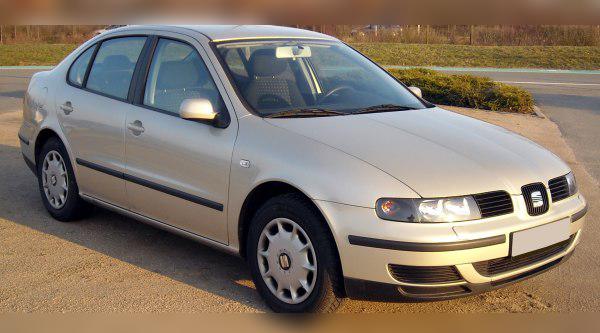
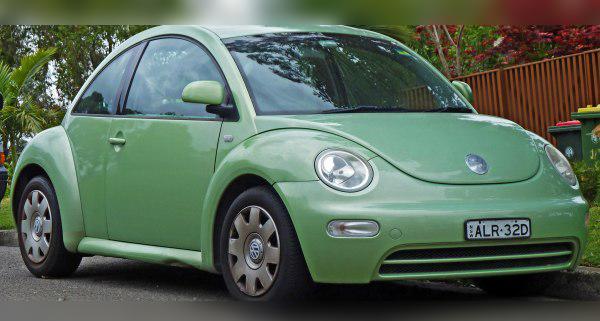
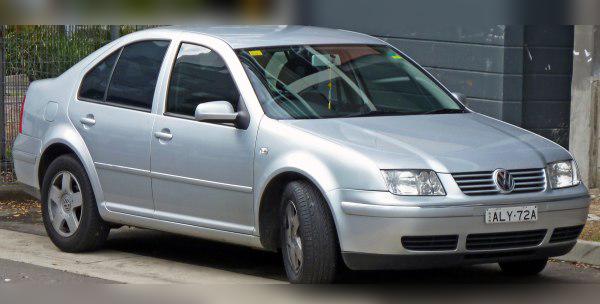
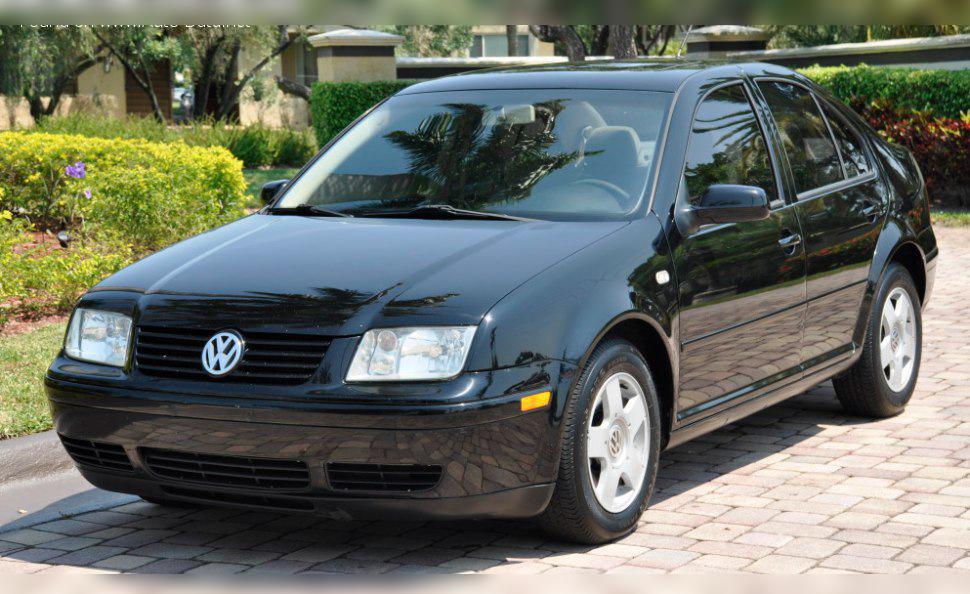
This powerplant was installed in the late nineties and early 2000s in models based on the Golf IV platform: Volkswagen Bora, Bora Variant, New Beetle, Jetta IV, as well as Seat Toledo II. Although today it is a real rarity on the roads, it has remained a favorite among enthusiasts who appreciate naturally aspirated power and a unique sound, but it does demand a deeper pocket for regular maintenance.
Technical specifications
| Parameter | Value |
|---|---|
| Engine displacement | 2324 cc |
| Engine power | 125 kW (170 hp) |
| Torque | 220 Nm (at 3300 rpm) |
| Engine codes | AQN |
| Injection type | MPI (Multi-Point Injection) into the intake manifold |
| Aspiration | Naturally aspirated |
| Fuel type | Petrol |
Reliability and maintenance
Does this engine have a timing belt or a chain?
The AQN engine uses a timing chain. However, this is where the biggest engineering headache for mechanics lies: the chain is located at the back of the engine, more precisely between the engine block and the gearbox. Because of that, there is no classic interval for a “major service”. It is replaced only when it starts to make noise (rattling on cold start), which usually happens between 200,000 km and 250,000 km. When the time comes to replace the chain, tensioner and guides, the gearbox has to come off, which makes this job very expensive (depends on the market).
Most common failures:
The core mechanics (block, crankshaft, pistons) are extremely robust, but the “peripherals” are problematic:
- Ignition coils: Since it has 5 individual coils, they often fail due to the high temperatures under the bonnet. Symptoms include engine misfire, loss of power and the “Check Engine” light.
- Cooling system: The plastic thermostat housing, coolant junctions and water pump are prone to cracking. The engine does not tolerate overheating – if it boils over, the head gasket will inevitably fail.
- PCV valve and vacuum hoses: The crankcase ventilation system eventually clogs up or the hoses crack with age. Symptoms include unstable idle and increased oil consumption.
Oil and spark plugs:
This engine takes about 4.6 liters of engine oil. High-quality synthetic oil of 5W-40 grade is recommended (or 5W-30 depending on climate and manufacturer’s recommendation).
Oil consumption: Yes, VAG engines from this era do consume oil. An amount of 0.2 to 0.5 liters per 1000 km, especially on engines with more than 200,000 km on the clock, is considered normal and is mostly due to worn valve stem seals or piston rings. Regularly checking the dipstick is therefore mandatory!
Spark plugs on this naturally aspirated petrol engine are typically replaced every 60,000 km. Do not skimp on them, because bad spark plugs will quickly kill the coils.
Specific parts and costs
Given that the AQN is a traditional naturally aspirated petrol engine from a period when emission standards were not as strict, it has been spared many modern-day headaches.
- Dual-mass flywheel: Unfortunately, models paired with a manual gearbox do have a dual-mass flywheel to smooth out the vibrations of the five-cylinder. Its replacement (together with the clutch kit) is expensive (depends on the market), and the first symptoms are juddering when taking off and metallic “clattering” at idle.
- Fuel injection system: It uses classic MPI (Multi-Point) fuel injection at low pressure. There are no troublesome high-pressure pumps. The injectors are extremely durable and rarely fail; they can only get dirty if the car is driven exclusively in the city, which is solved by ultrasonic cleaning.
- Turbocharger, DPF and AdBlue: Luckily for your wallet, this engine has none of these! It is a pure naturally aspirated unit, with no turbo, no DPF (because it’s petrol) and absolutely no AdBlue system.
- EGR valve: The engine is equipped with an exhaust gas recirculation (EGR) system, which can get clogged with soot, causing unstable idle, but cleaning usually solves the problem and is not expensive (depends on the market).
Fuel consumption and performance
This is not an engine for those who count every liter of fuel.
Fuel consumption:
In urban stop-and-go driving, real-world consumption ranges between 12.0 l and 14.0 l/100 km. On open roads and highways, it can drop to around 7.5–8.5 l/100 km with a light right foot. On the motorway at a constant 130 km/h, consumption is around 9.0–10.0 l/100 km.
On-road performance:
With 170 hp and 220 Nm, this engine is definitely not sluggish. However, due to its naturally aspirated nature, it delivers power linearly – there is none of that sudden shove in the back that the 1.8T (turbo) engine from the same era provides. Maximum torque is reached at 3300 rpm, which means it likes to rev higher to show what it can do. The sound above 4000 rpm is fantastic.
Keep in mind that the VR5 block is heavy. That weight over the front axle makes cars like the Bora or Golf more prone to understeer (pushing wide over the front) in fast corners, and the front suspension and bushings wear out faster than on versions with lighter 1.6 or 1.8 engines.
On the motorway, at 130 km/h in fifth gear (with the manual gearbox), the engine spins at about 3300 to 3500 rpm. The engine itself is smooth and great for cruising, but how much of that sound you hear inside depends on the cabin insulation.
Additional options and modifications
Is it suitable for LPG (autogas)?
Absolutely yes. Since it uses indirect MPI injection, the AQN is a perfect candidate for a sequential LPG system. This is also the only realistic way to cope with its high fuel consumption. However, you need an LPG ECU that supports 5 or 6 cylinders. It is very important that the LPG map is properly tuned so that the engine does not run on a “lean” mixture, which can lead to overheating and burnt valves.
Can it be chipped (Stage 1)?
The answer is: Don’t waste your money. Since this is a naturally aspirated engine, a remap (Stage 1) will give you a marginal gain of maybe 10 hp and 15 Nm of torque. In practice, you will not feel this difference behind the wheel at all. At best, it may slightly improve throttle response.
Gearbox and drivetrain
Depending on the car model, the AQN was offered with several types of transmission:
- Manual gearboxes (5 or 6 speeds): Very reliable and precise. The biggest expense with them is not the gearbox itself, but the aforementioned clutch kit and dual-mass flywheel. If the flywheel starts to cause excessive vibration, it can damage the bell housing and crankshaft, so replacement should not be postponed.
- Automatic gearboxes (Tiptronic): These are classic automatic transmissions with a torque converter (usually 5 speeds). They are comfortable but quite slow by today’s standards and increase fuel consumption by about 1 to 1.5 l/100 km.
Failures: The most common issues arise from dirty oil (failure of the valve body), causing the gearbox to “jerk” or hesitate when shifting gears. - 4MOTION: All-wheel-drive versions use a first-generation Haldex coupling. For the system to work properly, the oil and filter in the Haldex unit must be changed every 60,000 km. Otherwise, you are left with front-wheel drive only, and repairs are expensive.
Although Volkswagen at the time did not prescribe strict intervals for changing oil in manual gearboxes, any good mechanic will tell you that the oil in the manual gearbox, as well as in the Tiptronic automatic, should be changed every 60,000 to 80,000 km to avoid premature wear.
Buying used and conclusion
When looking at a used car with the 2.3 VR5 (AQN) engine, pay attention to the following:
- Cold start: Ask the seller not to start the car before you arrive. Stand next to the engine and listen at the moment of starting. If you hear metallic rattling or scraping from the gearbox side in the first few seconds, the chain is due for replacement. In that case you should demand a drastic reduction in the car’s price.
- Exhaust smoke: Have someone blip the throttle while you watch from behind. Bluish smoke when lifting off the throttle (or on startup) indicates worn valve stem seals and piston rings, meaning the engine needs an overhaul.
- Coolant color: Be sure to open the coolant reservoir. It should be clean and pink (G12/G12+). If it is rusty, brown or has oily traces, walk away from that car – oil and coolant are mixing, the head gasket has failed.
- Vibrations and clutch: On manuals, feel the clutch when taking off on a slight incline. Shuddering of the whole car is a clear sign of a worn dual-mass flywheel.
Conclusion: Who is this engine for?
Volkswagen’s 2.3 VR5 (AQN) engine is an engineering rarity and a “guilty pleasure” for enthusiasts. It is absolutely not the choice for drivers who seek maximum fuel economy or a car for city deliveries. If you cover a lot of mileage, a TDI from that era is a more logical choice.
However, if you want a car for weekend drives, or you install an LPG system to soften the fuel costs, you will get an engine that offers excellent refinement, enough power for safe overtaking, and one of the best sounds Volkswagen has ever made. Maintain it on time, keep an eye on the cooling system and oil level, and it will cover many more kilometers on European roads.